Detroit Art Review

Critical art reviews of Detroit galleries and museums weekly

Susan Yamasaki @ Center Gallery

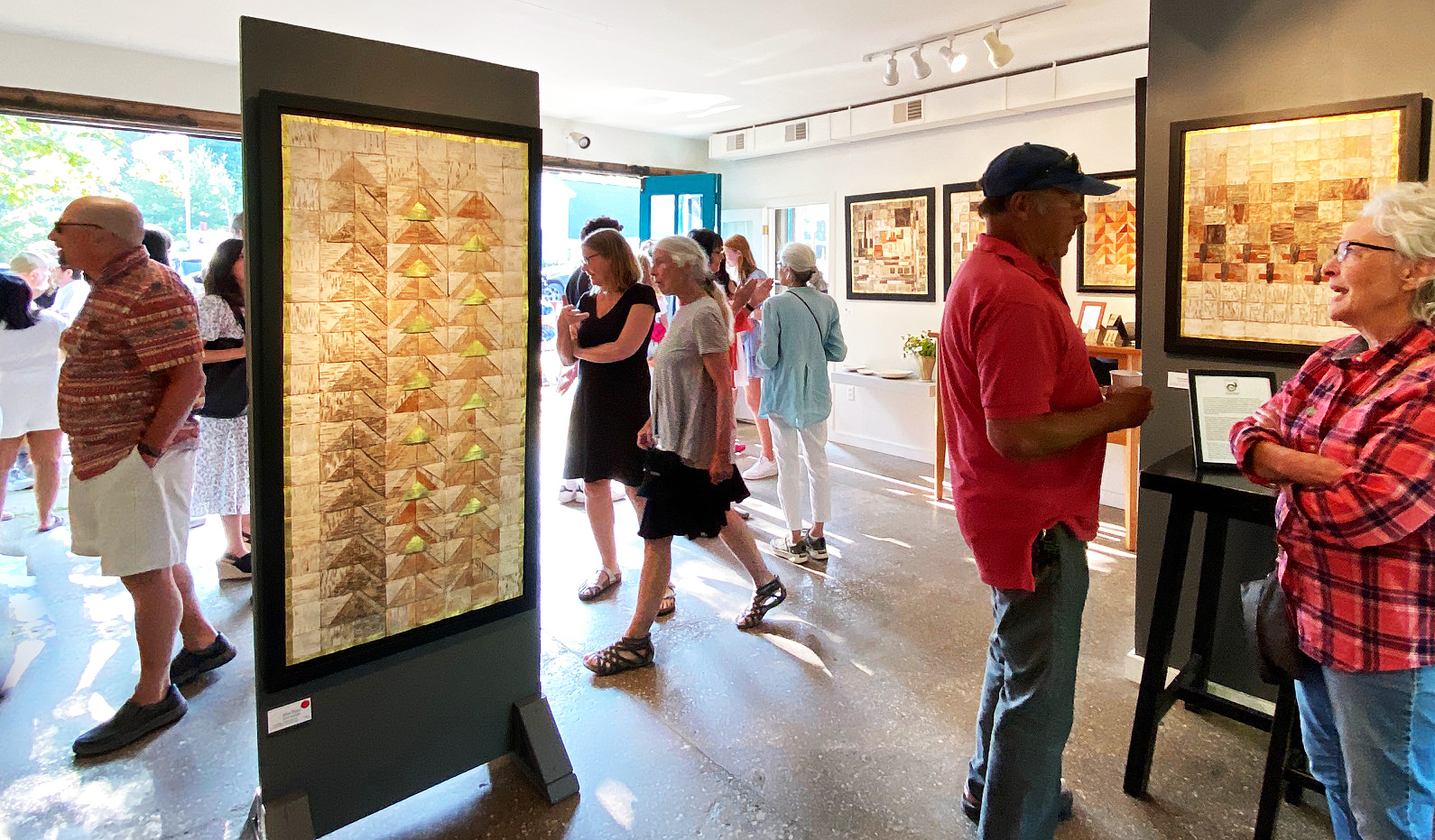
A Collection of Birch Assemblages at the Center Gallery in Glen Arbor, Michigan.

Installation image, work by Susan Yamasaki at Center Gallery, Glen Arbor, 2023  Image courtesy of Susan Tusa

It has been nineteen years since Susan and Taro move from Birmingham, Michigan, to the glacial moraine in Leelanau County, where their property rises upward to look out over Lake Michigan and the Sleeping Bear Dunes.  The forest comprises thick oaks, pines, black ash, beech/maple, and birch.  A devastating storm in 2015 snapped birch trees in half, and Susan foraged her land to discover this bark from birch trees with a wide diversity of color and texture.

The following birch assemblages are a sample of what is now on display at Center Gallery, opening August 4 -10th, 2023, in Glen Arbor, Michigan.

She says in her statement, “My heart would break as I would step over the wreckage of trees whose lives had ended.  But upon taking a closer look, I could see that the bark of the birch beautifully reveals the experience of the tree.  I chose to use the bark of the fallen birch to make my art.  The panels become sacred objects, honoring the link between earth and sky.  They pay homage to the struggle and adaptability of each tree.”

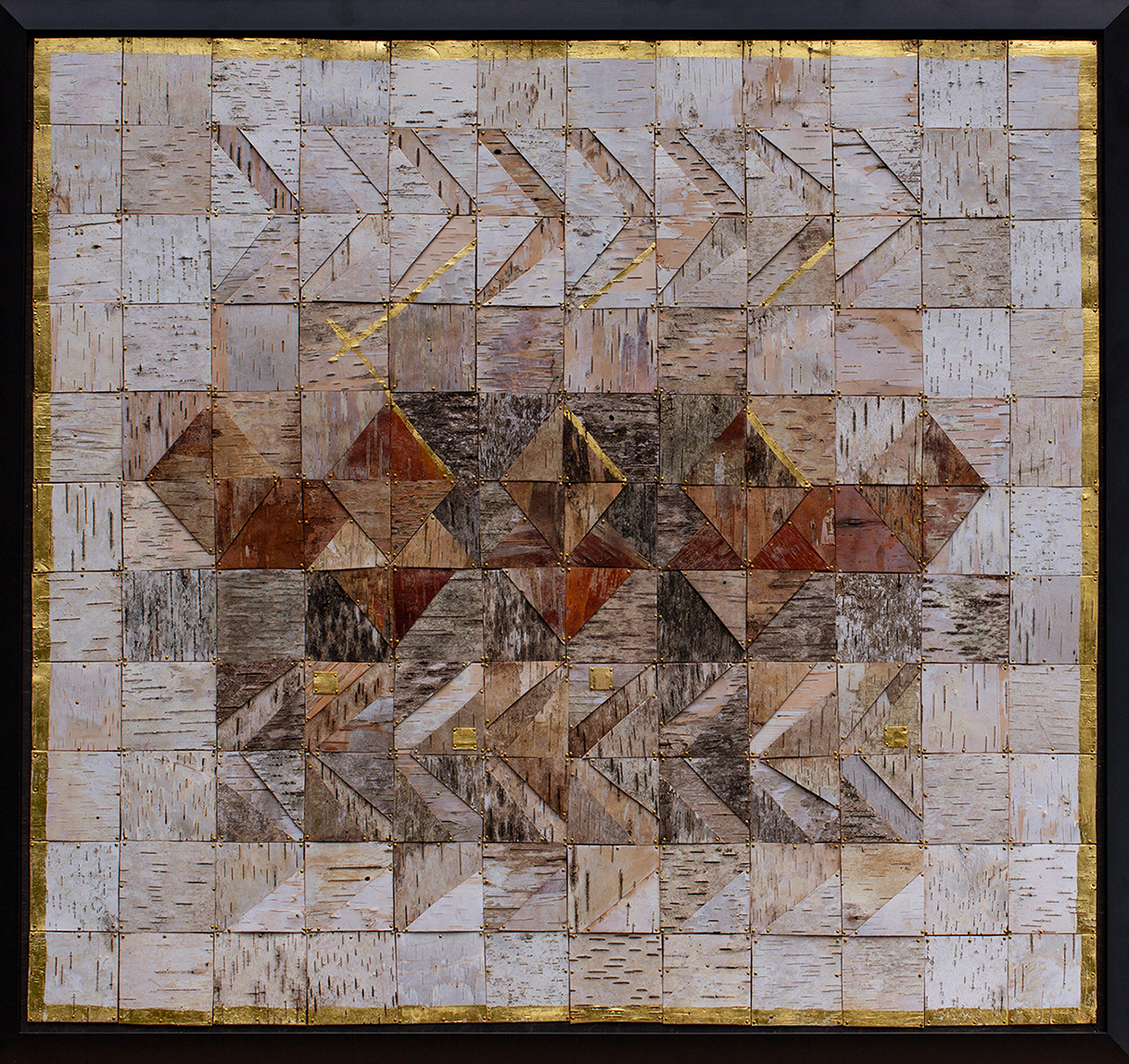
Susan Yamasaki, Shift, 26 x 31″, Assemblage, 2023  Image courtesy of Taro Yamasaki.

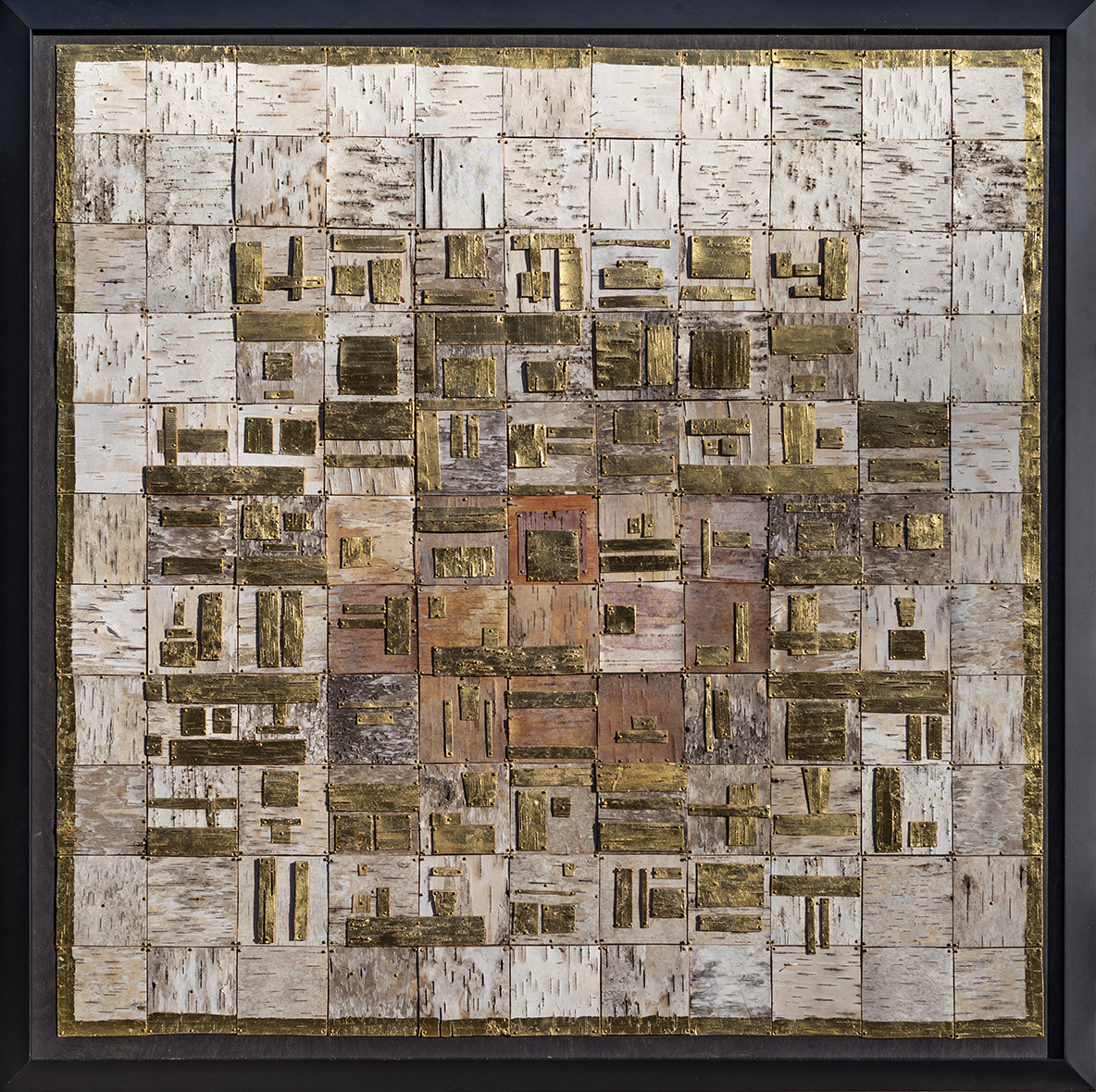
The assemblage is composed formally on a grid and is abstract.  Shift has chevrons on the top and bottom of the center staged rectangle, and the overall pieces are squares with bits and pieces of gold leaf as a border and a punctuated black frame.

Assemblage is the art of creating a three-dimensional sculptural composition from found objects.  One of the best-known assemblage artists of the 20th century was the Russian-born American sculptor Louise Nevelson. She transformed these found objects into large wall-mounted and free-standing reliefs, which often take the form of stacked boxes and compartments.  Once assembled, the sculpture was spray-painted with a single color – usually black, white, or gold – to unify the complex sculptural elements and bring symbolic meaning.

Susan Yamasaki, Hieroglyphs, 35 x 35″, Assemblage, 2021. Image courtesy of Taro Yamasaki.

It is easy to say squares and rectangles dominate the motifs in a background of white in Hieroglyphs, as the square abstraction surrounds a cluster of gold leaf objects.  Found in ancient Egyptian art, the stylized shapes represent a word, syllable, or sound, where gold is designed to elevate the symbol’s value.

Susan Yamasaki, Burnt, 34 x 34″, Assemblage, 2020.    Image courtesy of Taro Yamasaki.

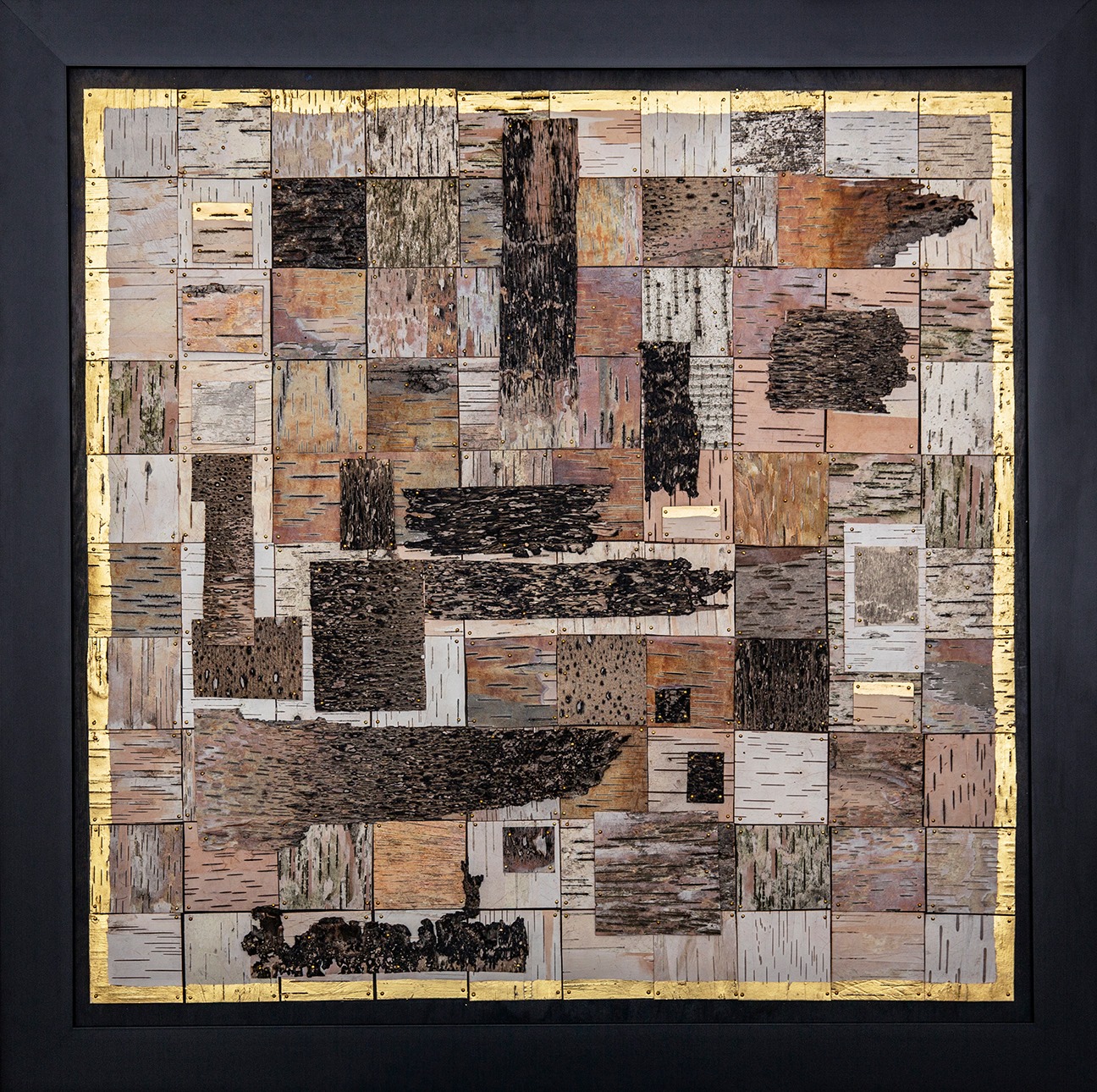
In the work, Burnt, although its background is a field of squares, an overlapping darkened color represents the birch that was touched by fire.  The effect contrasts the composition and moves the action of larger pieces of bark from left to right, repeating the small horizontal lines in many of the squares.

Susan Yamasaki, Underbark, 35 x 30″ Assemblage, 2023, Image courtesy of Taro Yamasaki.

The image Underbark, illustrates how the artist handles color (red and orange), which opens the door to expanding the option to future compositions.  It is noticeable that Susan Yamasaki has a comfort level using a grid-based composition of squares and working overtime on variations of well-established designs of gold leaf borders and black frames until she gets to a point where there are options that present themselves.

Until now, she has created a very personal oeuvre: abstract assemblages based on her relationship with material that is part of her natural environment, but raises the question, where will the work go from here?

Susan Yamasaki, Installation, Assemblages, 2023.  Image courtesy to Taro Yamasaki.

Susan Yamasaki studied art at Michigan State University and then finished at Wayne State University, ultimately with a degree in Art History.  She earned a teaching certificate and taught science at Roeper School in Suburban Detroit.  After moving to northern Michigan, she taught at a public Montessori school in Traverse City.

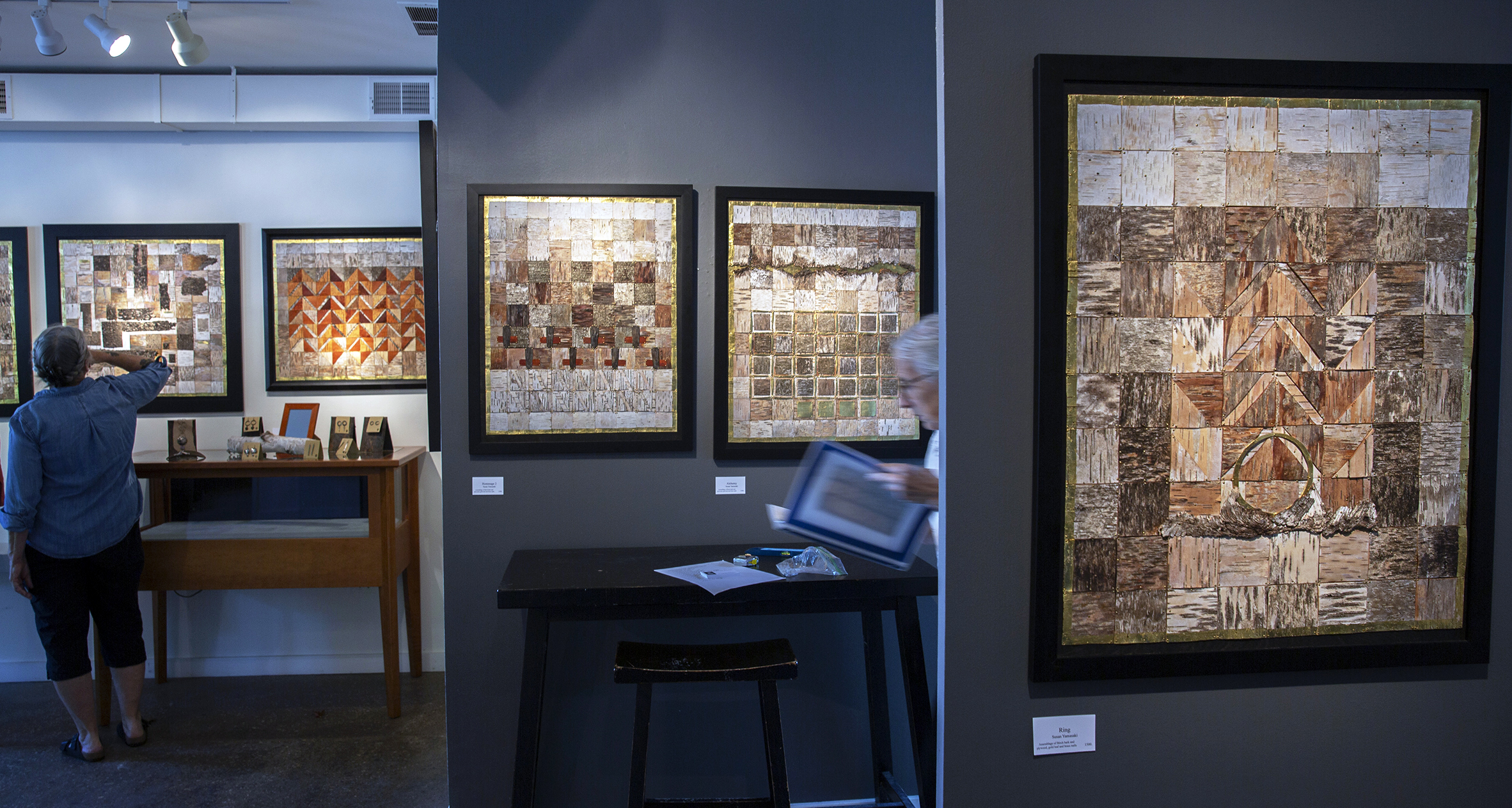
Susan Yamasaki, Birch Assemblages, Center Gallery in Glen Arbor, Michigan, August 4 – 10, 2023.

[adrotate group=”2″]

James Barnor @ DIA

James Barnor: Accra/London – A Retrospective at The Detroit Institute of Arts

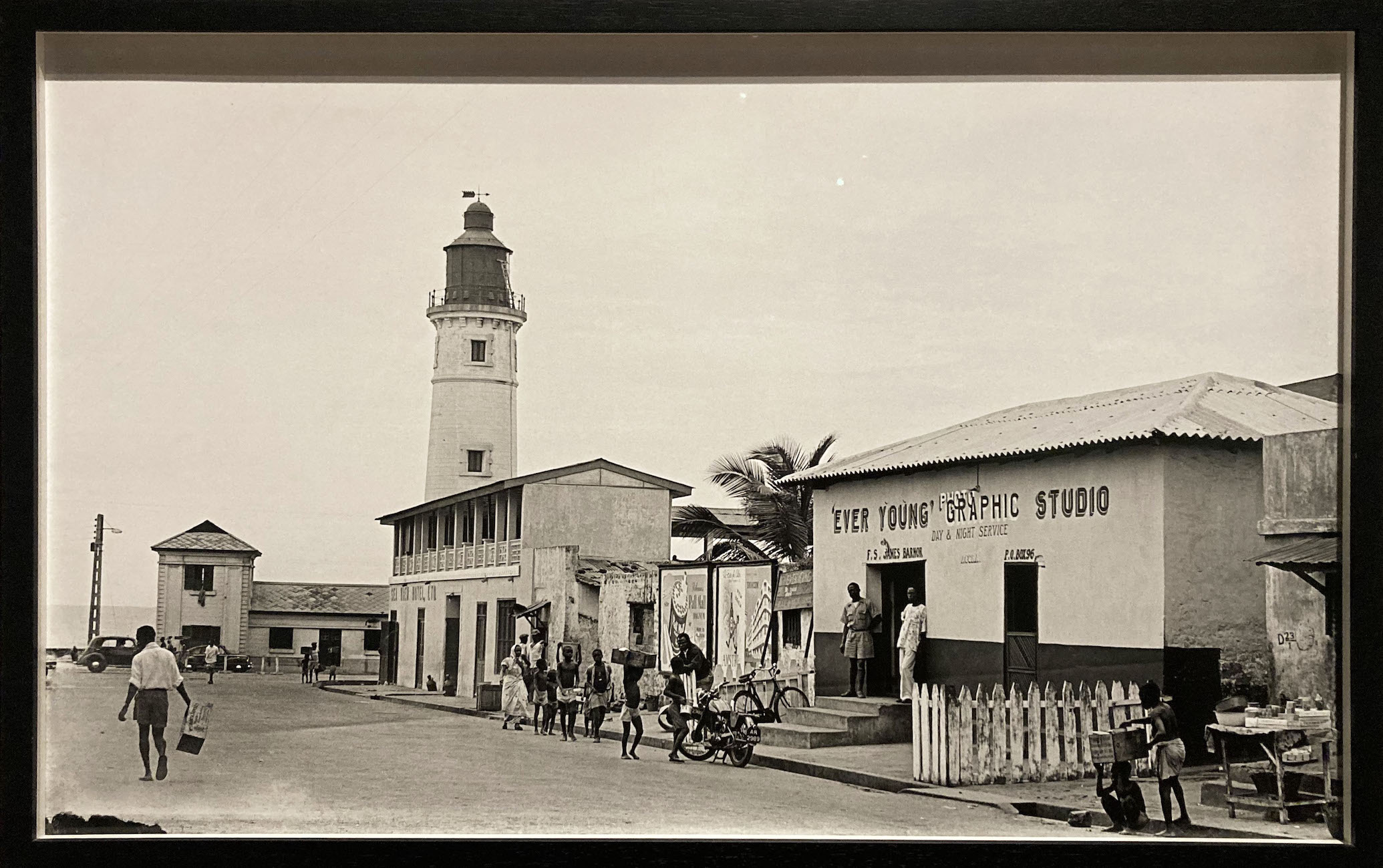
Ever Young Studio, Jamestown, Accra. 1953 (printed 2010-20) Gelatin silver print. Autograph, London.  All photos images: Ashley Cook

On May 28, The Detroit Institute of Arts celebrated the opening of Accra/London, a comprehensive retrospective of photographs by African photojournalist James Barnor. This exhibition illustrates his dynamic career as a photographer whose work documented the everyday life of Africans in Ghana and the diaspora as well as major turning points in the socio-political landscapes of Accra and London between 1950-1980. Born in 1929, Barnor was a first-hand witness to life under British rule on the Gold Coast. The influence of this experience on his view of the world undeniably guided his choice of subject and composition, and his perspective as a person of African descent led to particularly careful considerations of lighting, framing, and the use of tone and color. As the largest exhibition of his work to date, with over 170 photographs spanning three decades, visitors can now learn not only about James Barnor as an artist, but about the history and evolution of photojournalism as well as the impact that the medium of photography has had on social and political change on race relations between Africa and Great Britain.

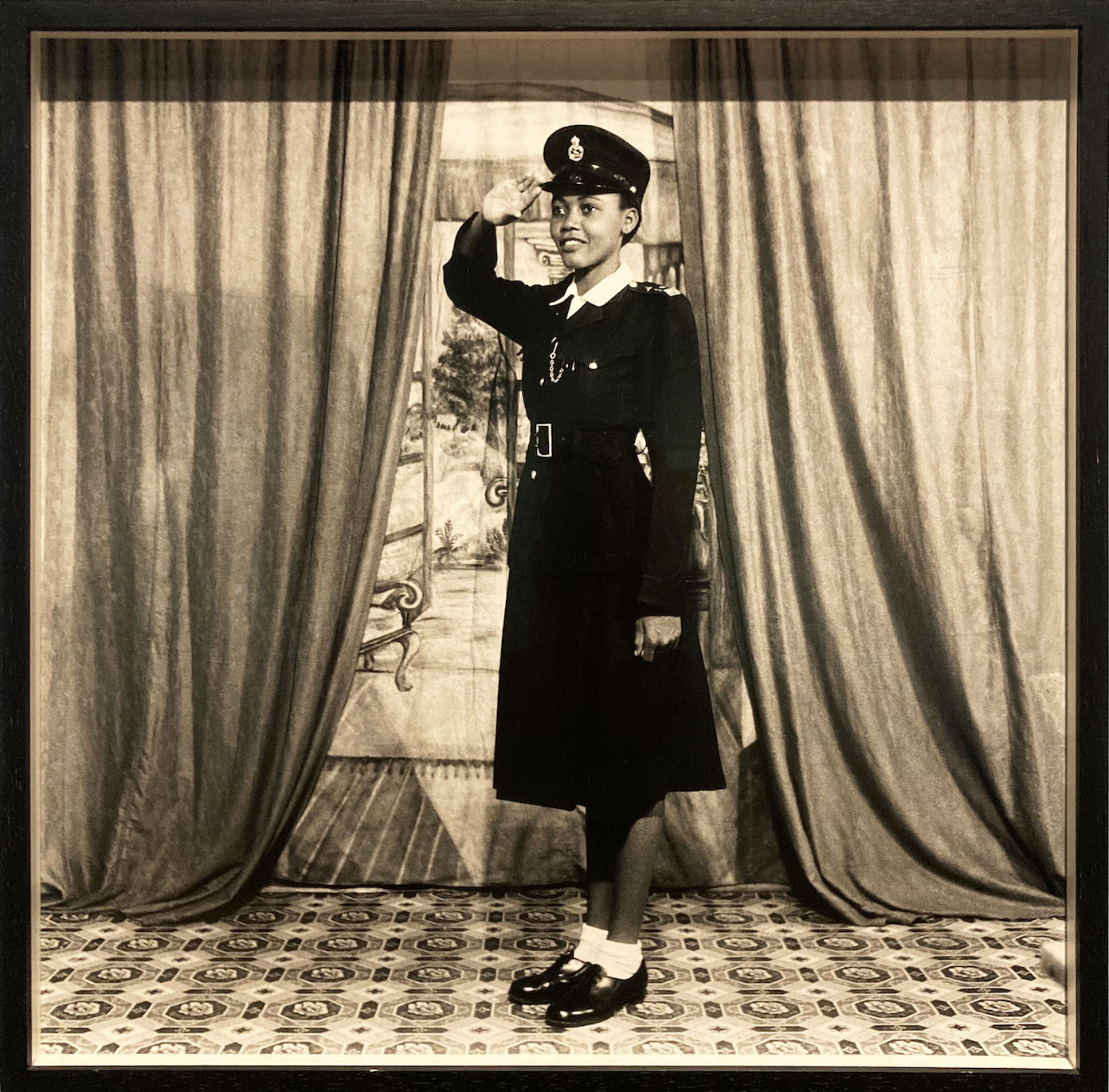
Selina Opong, Policewoman No. 10, Ever Young Studio, Jamestown, Accra. 1954 (printed 2010-20) Gelatin silver print. Autograph, London.

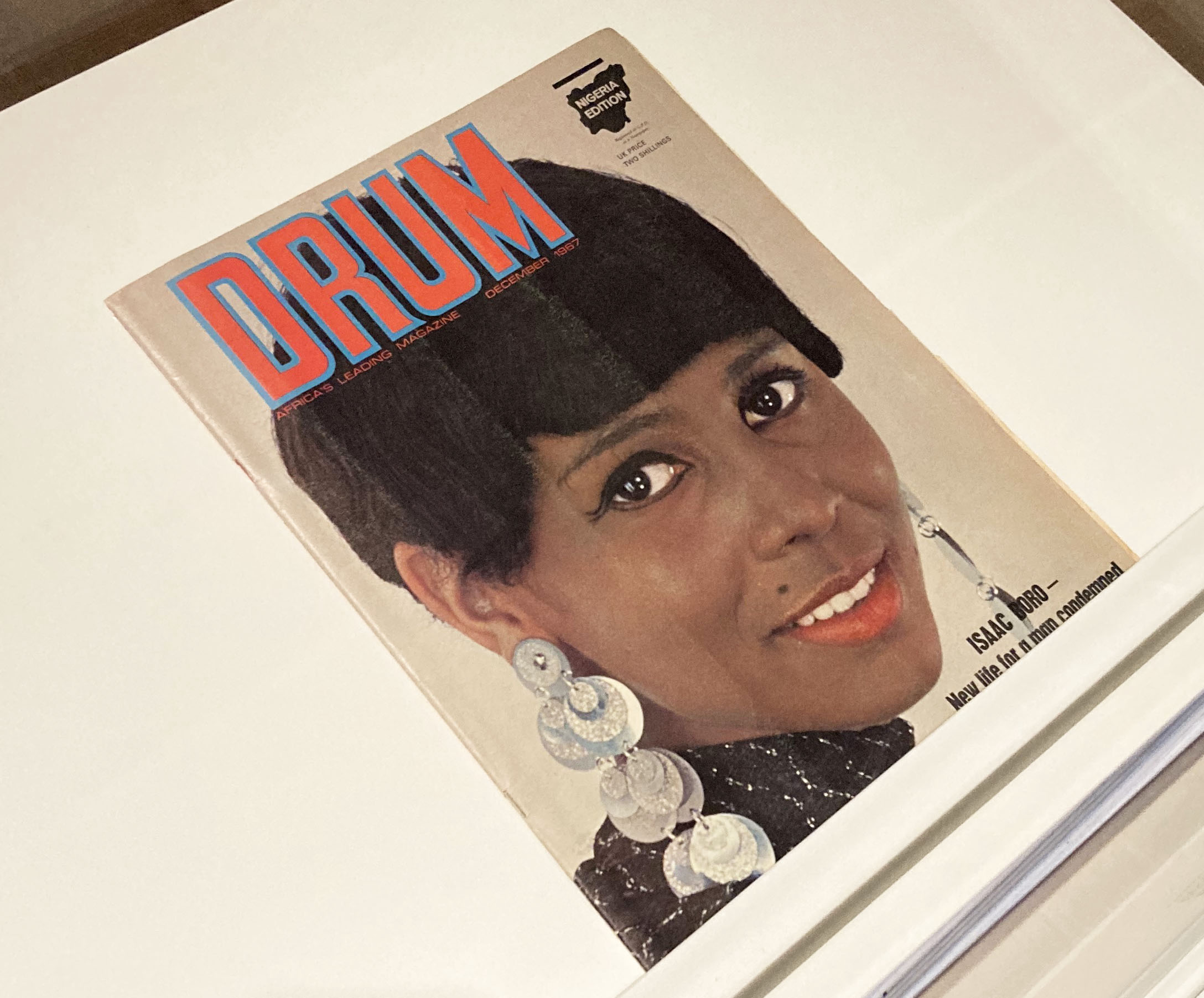
The short film presented at the exhibition’s entrance introduces us to the artist as a 91-year-old man keenly recalling details of his life and career. He recounts his youthful experience learning how to use a camera to photograph his friends, family, politicians, and professional athletes. He reflects on his role in documenting the history of Ghana from colonial to post-colonial life, his involvement with DRUM Magazine, and the expansion of his practice from Accra to London. Barnor’s light-hearted disposition in the film helps us understand how he could easily access people of various backgrounds, a trait that has proven to be critical to his professional success over time. Joy is the most consistent emotion detected in his photographs, despite their being taken in a world troubled with political unrest and racial discrimination.

DRUM Magazine, Nigerian Edition, December 1967.

The story told through this retrospective begins with Barnor’s entrance into the professional world of photography. He started to work with the Daily Graphic newspaper in 1950 and established the Ever Young Graphic Studio in 1953 as an open-air studio on the streets of Accra. Eventually, Ever Young moved to a permanent location, and Barnor used his autonomy as the business owner to explore and develop his approach to taking portraits. He depicted African life on the coast of the Atlantic and its backdrop of colonial oversight. Indigenous fishing boats share a frame with James Fort, Barnor’s friends drive a car with an iconic lighthouse in the background; elsewhere, men and women are photographed in the studio dressed in their professional uniforms. His portraits of men, women, youth and children portray the successes of local people who he recounted in interviews as having been motivated by the excitement for liberation that was on their minds and in their hearts at that time.

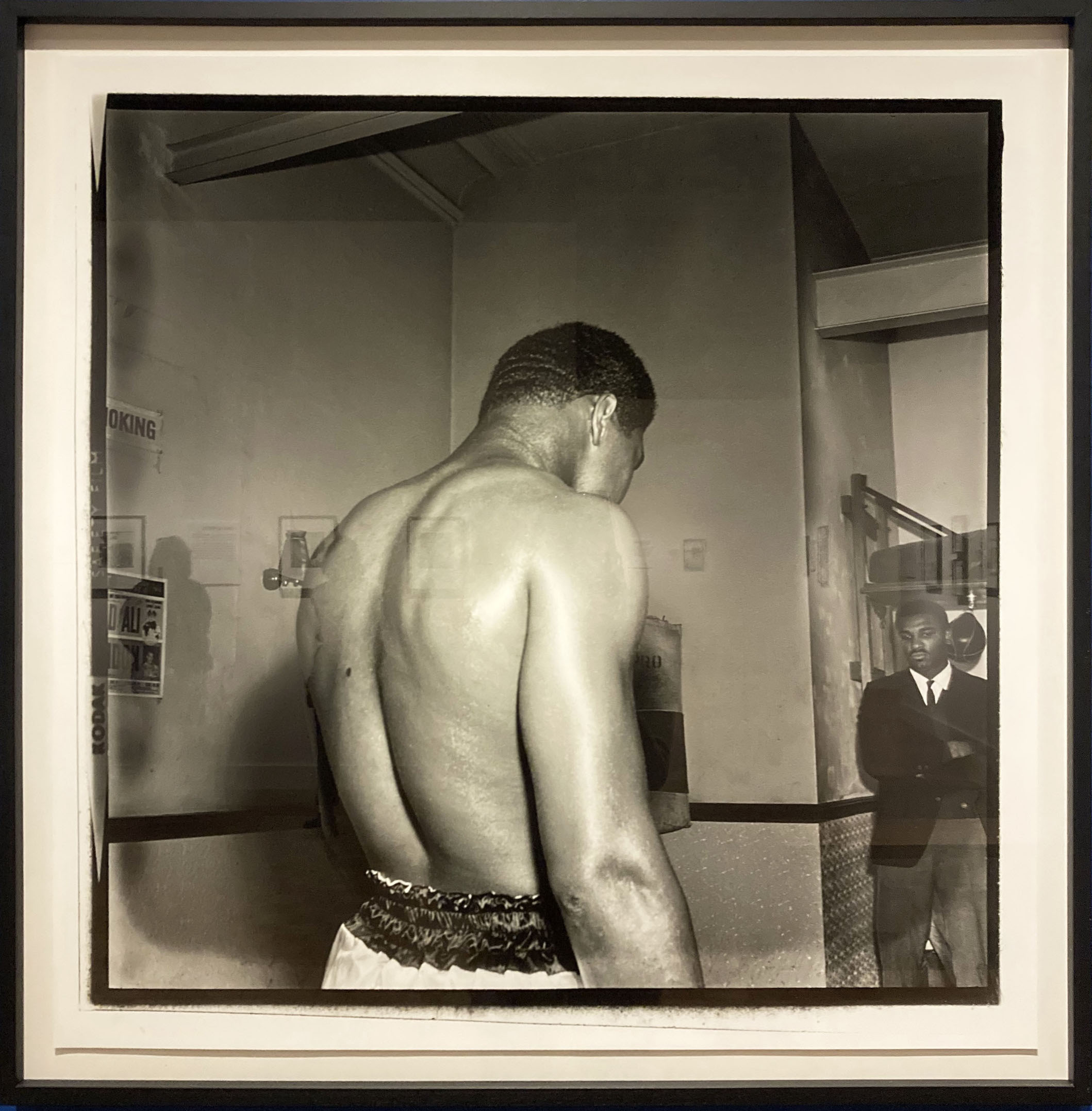
Muhammad Ali preparing for his fight against Brian London, 1966 (printed 2010-20) Gelatin silver print. Galerie Clémentine de la Féronnière , Paris.

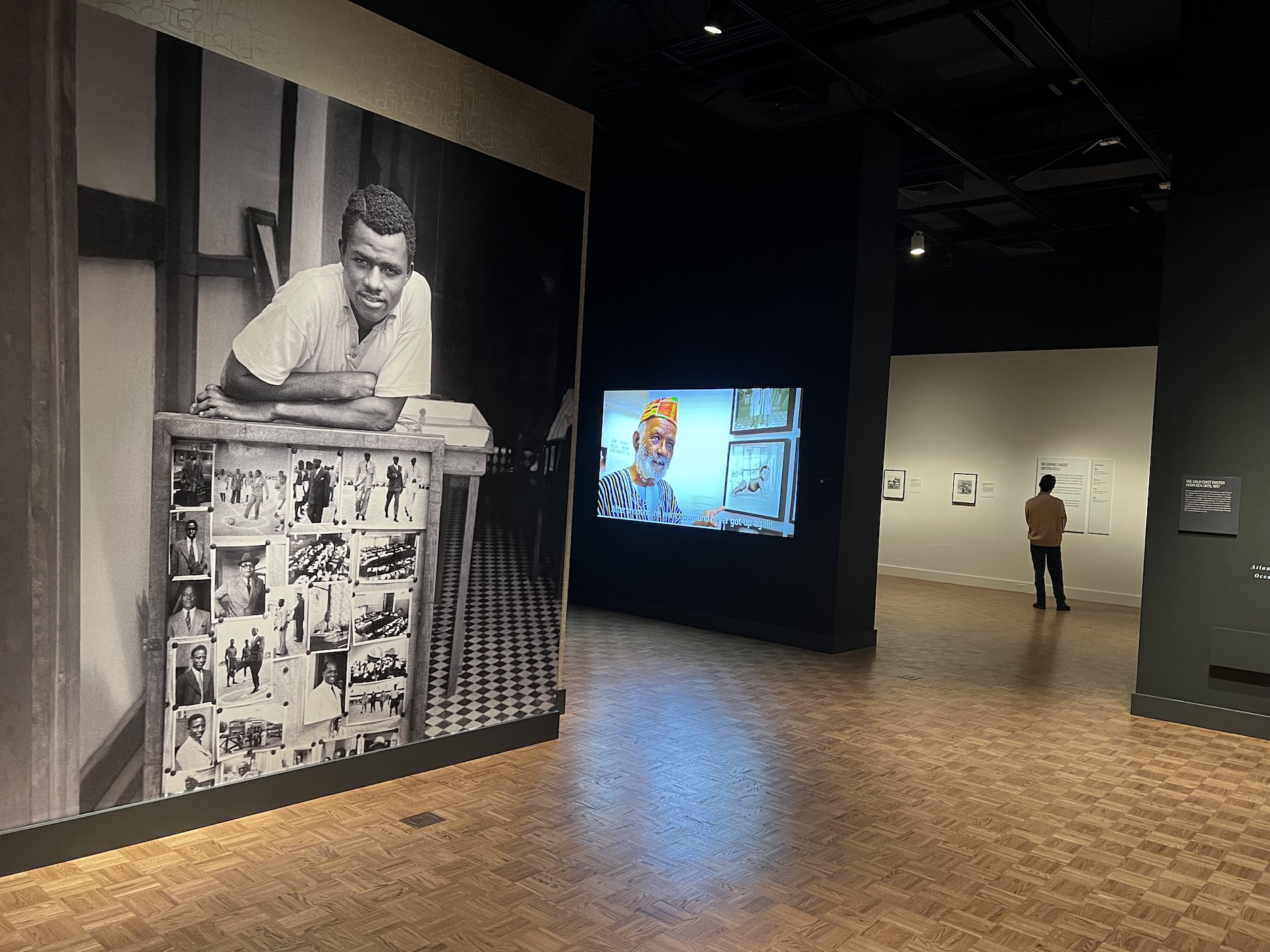
Enlarged wall images, detailed placards, vintage cameras and copies of magazines are on view throughout the space to further support the storytelling efforts of the curators. Accra/London initially debuted at the Serpentine Gallery, London in 2021. Organized by Chief Curator Lizzie Carey-Thomas in collaboration with Awa Konaté, the Assistant Curator of the Culture Art Society, Clémentine de la Féronnière, Sophie Culière of the James Barnor Archives and Isabella Senuita. The exhibition was presented at MASI in Lugano, Switzerland in 2022 before coming to Detroit. The Detroit Institute of Arts recently acquired 22 of Barnor’s photographs (now included in the Detroit-based installation of Accra/London) in an effort to diversify the museum’s world-renowned collection and to enhance its holdings of works by living African artists.  Nii Quarcoopome, the DIA’s Curator of African Art, and Nancy Barr, the James Pearson Duffy Curator of Photography, worked together to bring this exhibition to a Midwest audience as part of the Detroit Institute of Art’s ongoing effort to promote its representation of people of color.

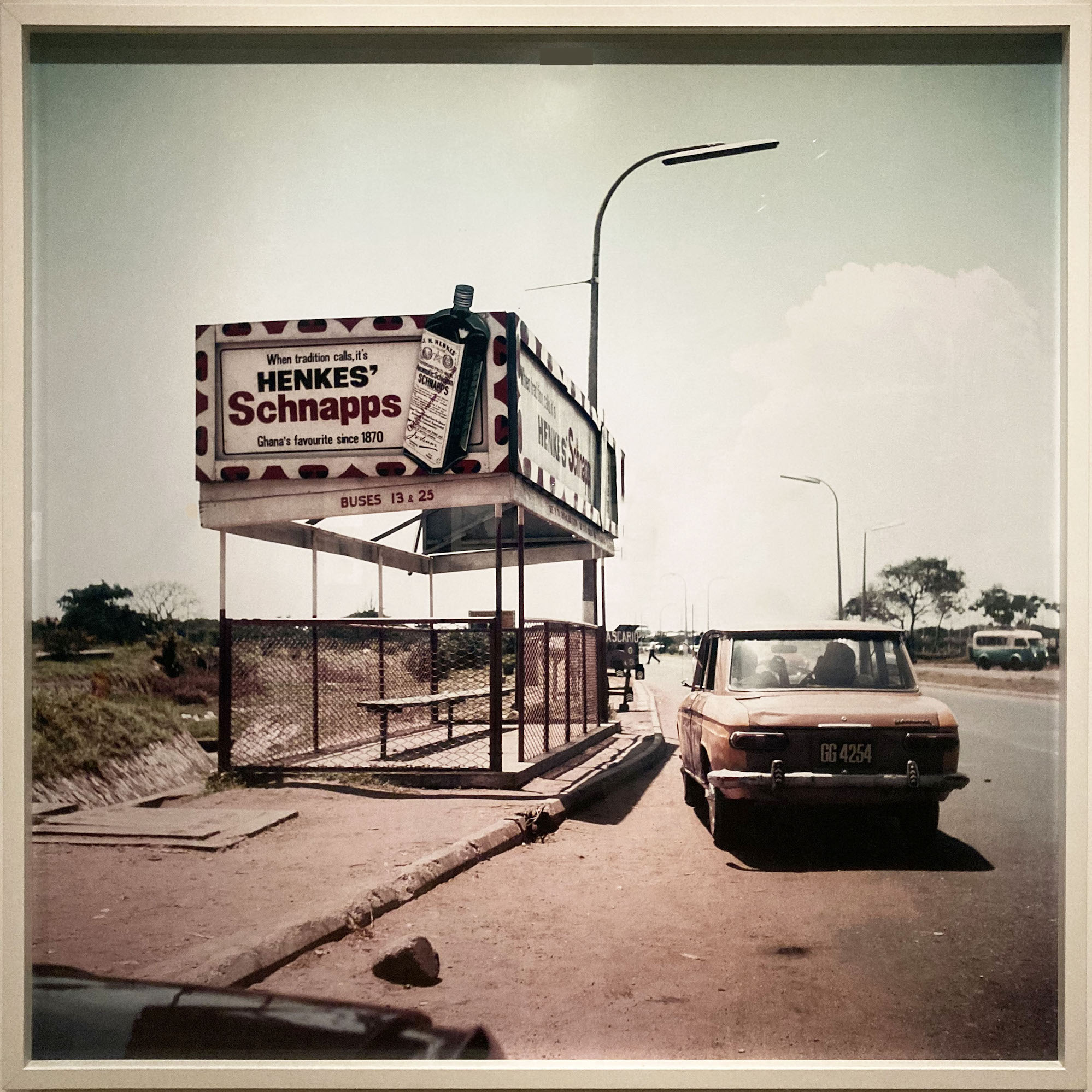
Ring Road, Accra, 1974 (printed 2010-20) Chromogenic print. Galerie Clémentine de la Féronnière, Paris.

Despite the collection on view being only a small sampling of Barnor’s entire archive of more than 32,000 images spanning six decades, it acts as a marker of the global growth in representation between 1950-1980 of people of color. In Accra, the photographer witnessed Ghanian boxer Ginger Nyarku publicly defeat his British opponent which challenged contemporary ideas of European superiority. He witnessed nurses, accountants, teachers and lawyers on the Gold Coast working together to weaken Britain’s control from within their government positions. He witnessed the transition of power from Queen Elizabeth II of Great Britain to Kwame Nkruma of Ghana. He witnessed a growing presence of African models on the covers of magazines in London and Barnor participated in all of this by presenting opportunities for them to be seen. His sitters were these mothers with their children, these models, these athletes, these politicians. They were carefully photographed with lighting that complimented their skin tone, and angles that framed their traditional hairstyles. They were positioned in ways that displayed the traditional patterns on their clothing. They were all shown to be confident and proud.

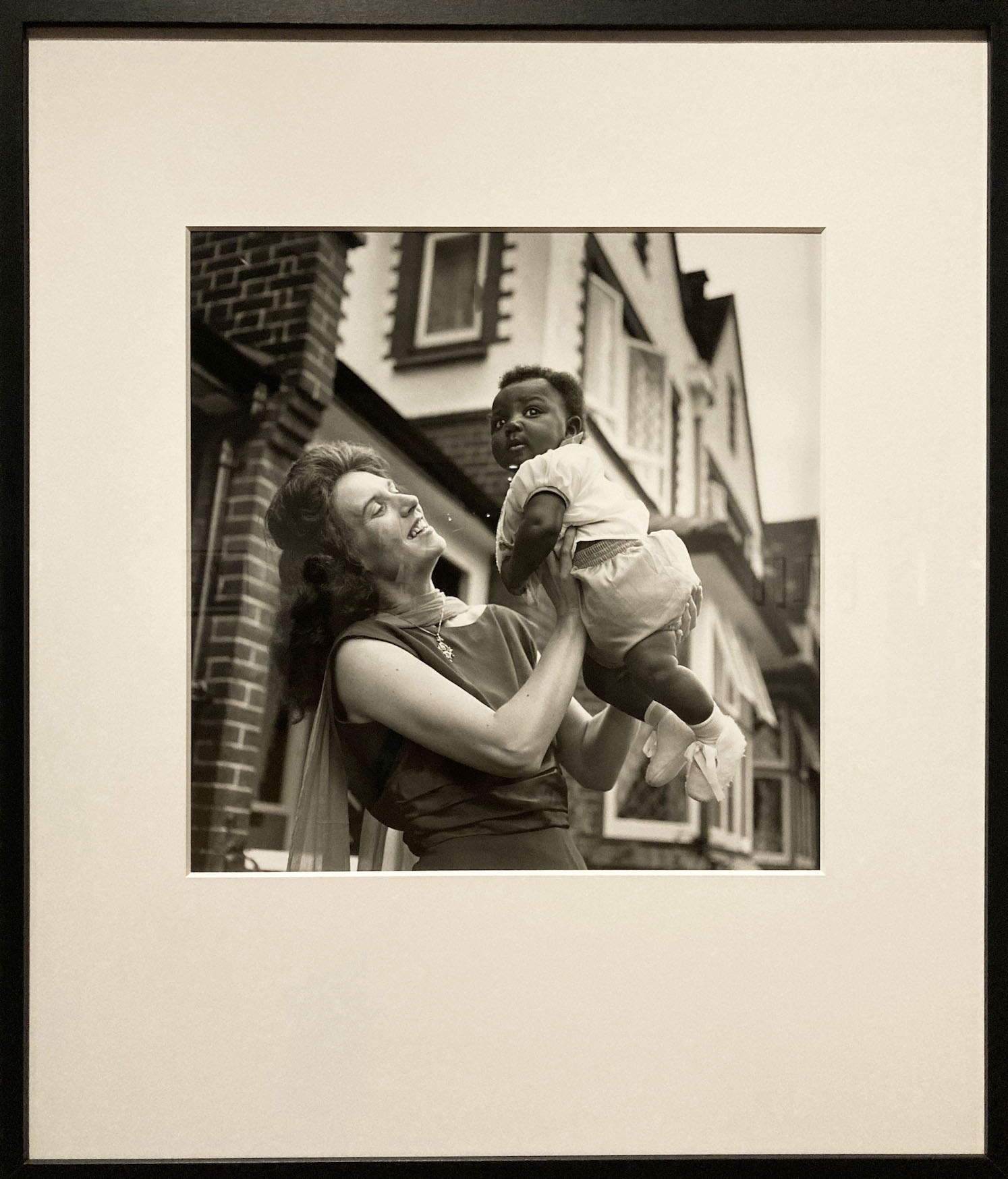
A woman holding a baby after the wedding of Mr. and Mrs. Sackey, Balham, London, about 1966 (printed 2010-20) Gelatin Silver print. Galerie Clémentine de la Féronnière, Paris.

 Although Barnor found racism embedded throughout the United Kingdom and its colonies from the time he arrived in London until he left, the discriminatory laws and customs were not strong enough to prevent a growing appreciation for Black culture. People of both African and European descent crossed strict boundaries and protested discrimination by actively celebrating the intermingling of cultures and the exchange of knowledge it allowed. Because of this, white subjects became increasingly prevalent in Barnor’s work. Joyful dissent was recorded in everyday-life moments of interracial couples and multi-racial friend groups while a growing number of Black figures began to appear in roles they previously were not allowed to have and in places that they were previously not permitted to be.

Installation, James Barnor: Accra/London – A Retrospective at The Detroit Institute of Arts. Image courtesy of DAR

James Barnor: Accra/London – A Retrospective is on view at The Detroit Institute of Arts until Closing October 15, 2023

[adrotate group = “2”]

Mark Newport and Jane Lackey @ Simone DeSousa Gallery

Mark Newport and Jane Lackey: Correspondence  @ Simone DeSousa Gallery

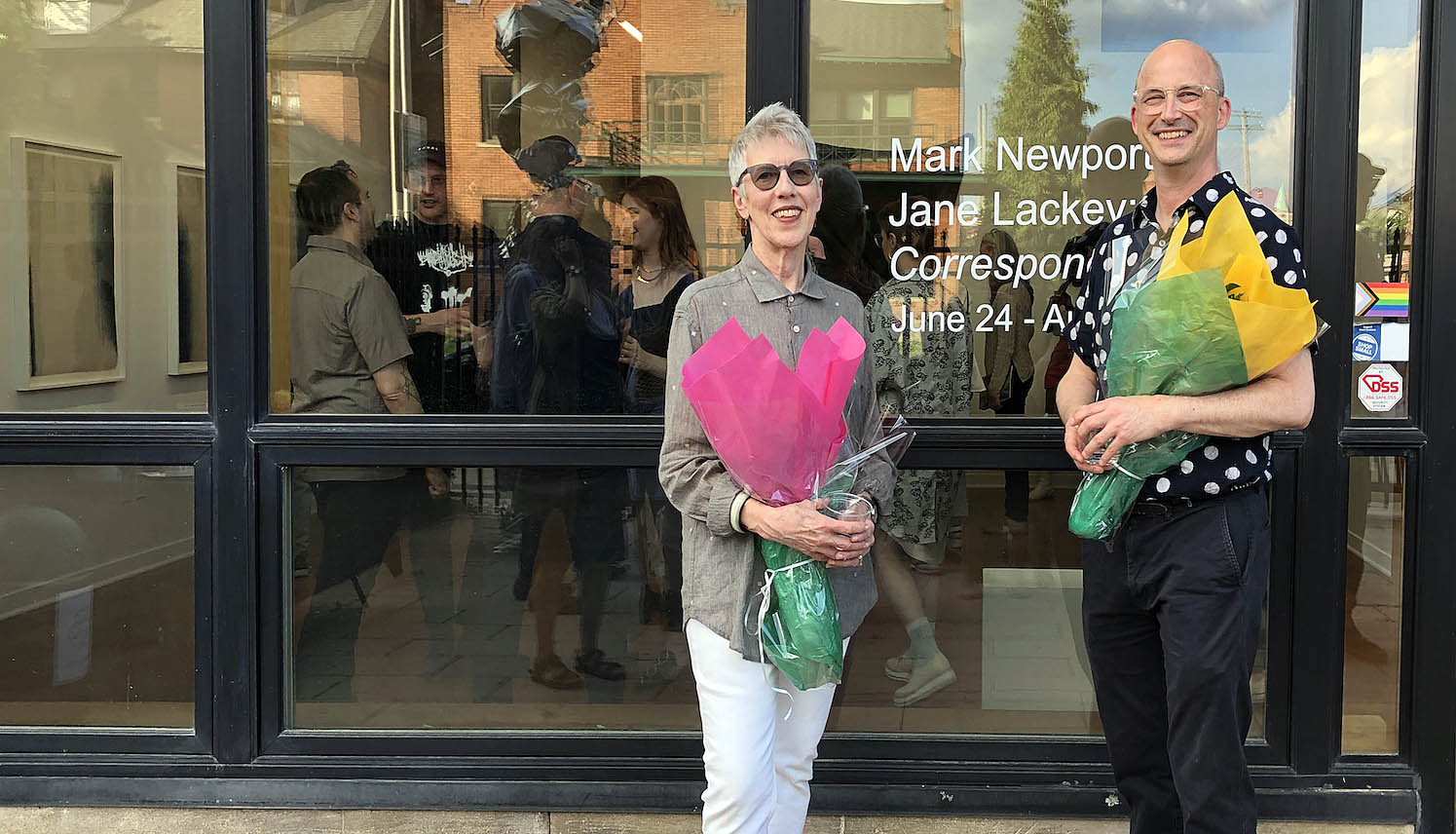
Installation image out front of Gallery. All images courtesy of Simone De Sousa Gallery

Former Fiber Artists-in-Residence, Mark Newport (2007-2023) and Jane Lackey (1997-2007), who served long tenures at Cranbrook Academy of Art, have reunited in a two-person exhibition at Simone DeSousa Gallery in Detroit. Though both have developed singular practices and careers, their show, self-titled Correspondence, showcases underlying similarities in their art-making processes. Indeed, despite their physical distance from one another–Newport works in the Detroit area while Lackey has resided in New Mexico since 2009–they remain in touch and together initiated the exhibition concept.

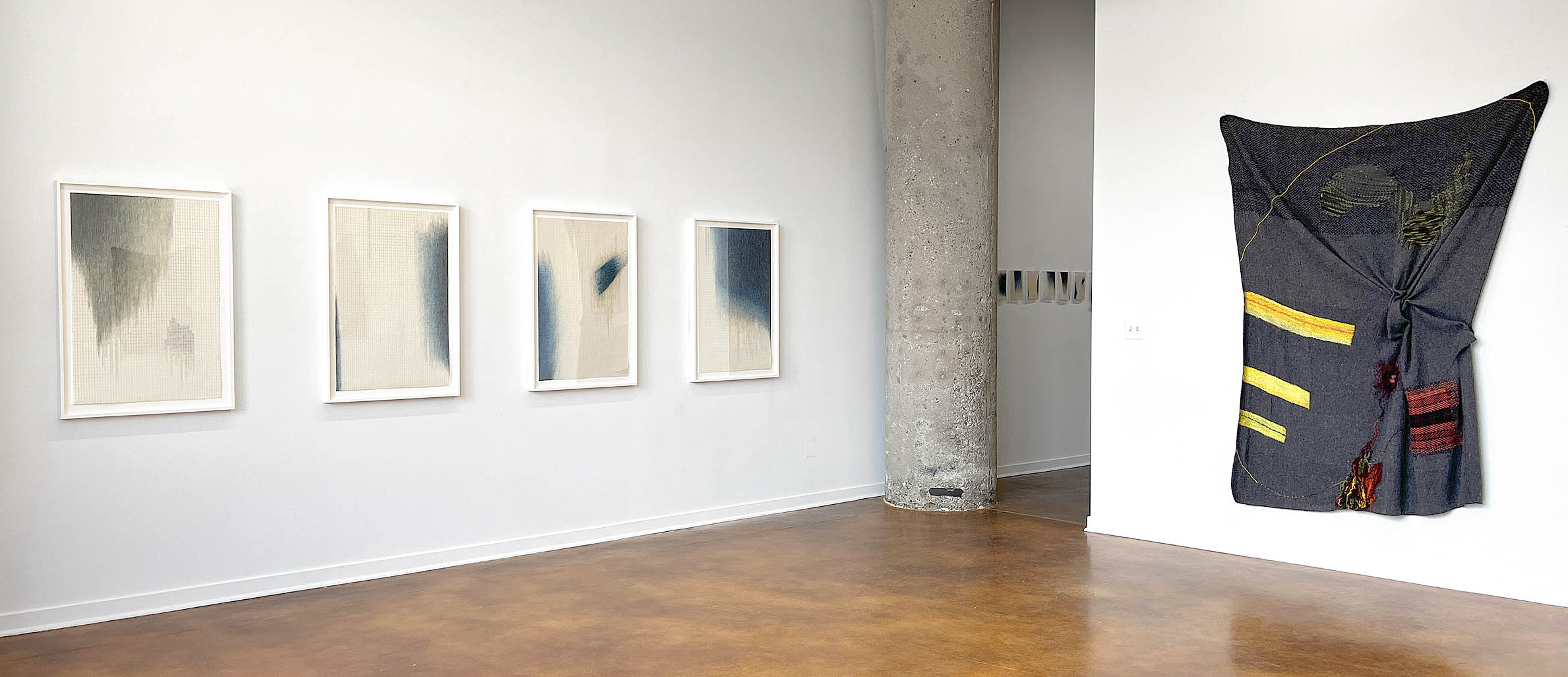
Installation view of Mark Newport and Jane Lackey: Correspondence

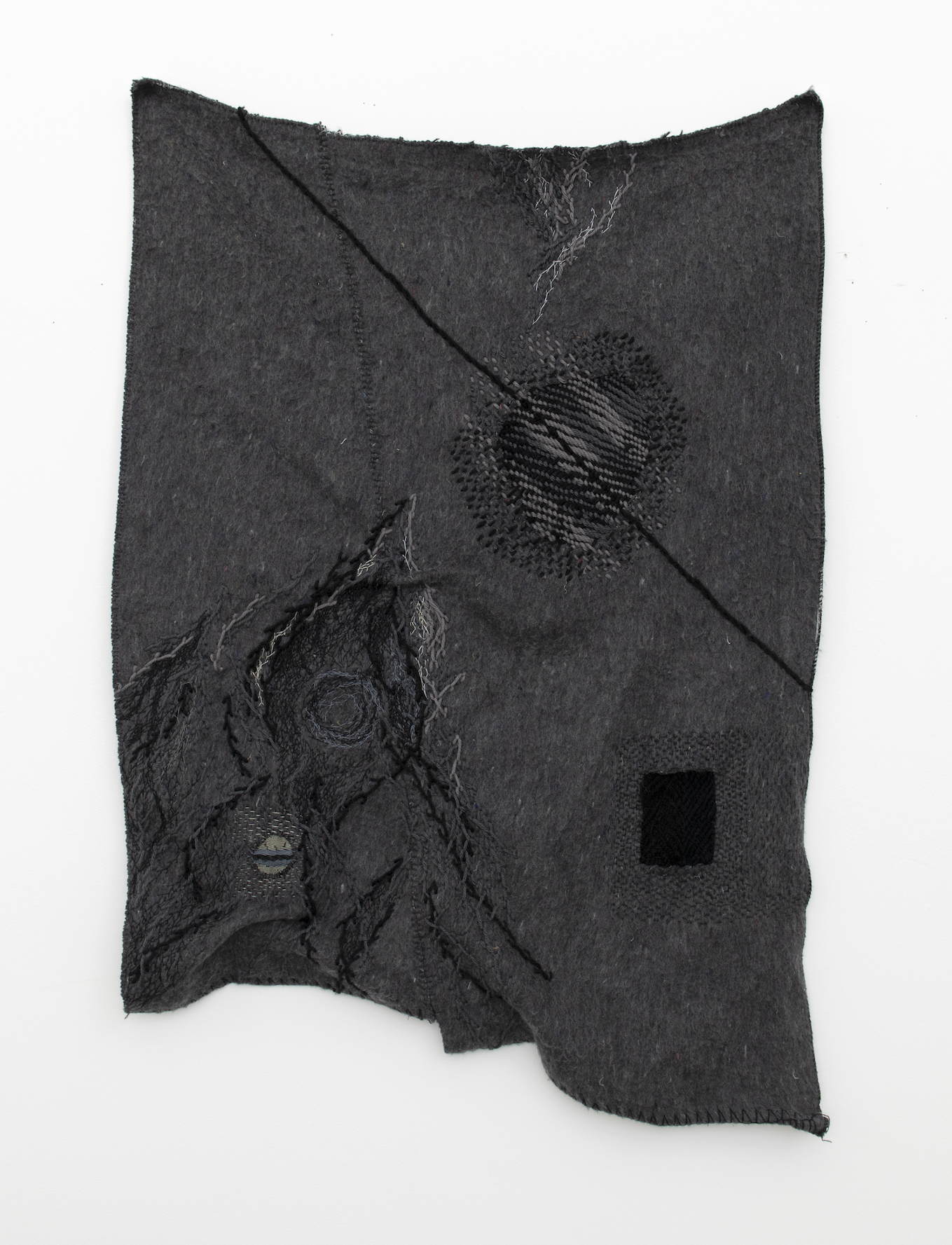
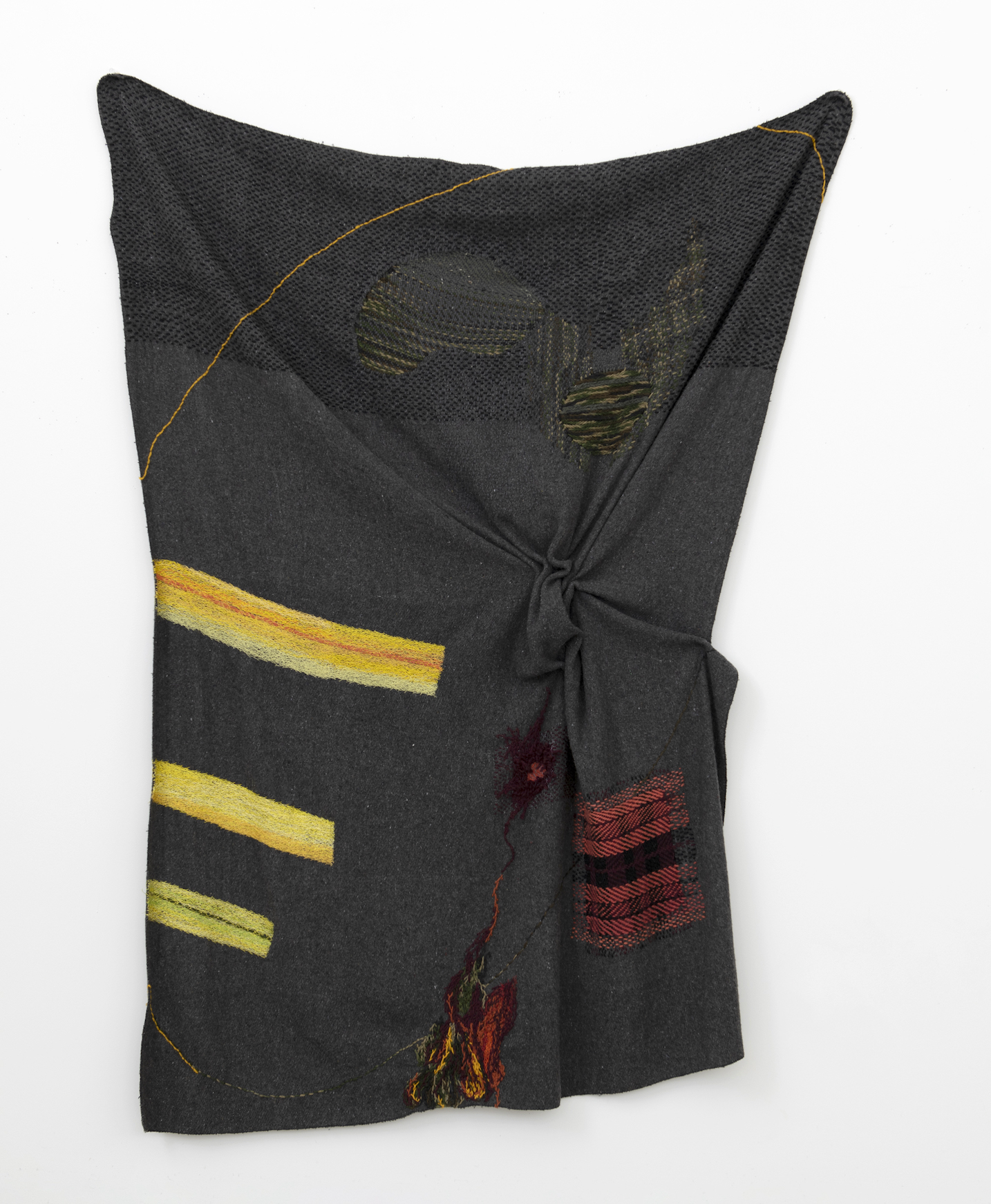
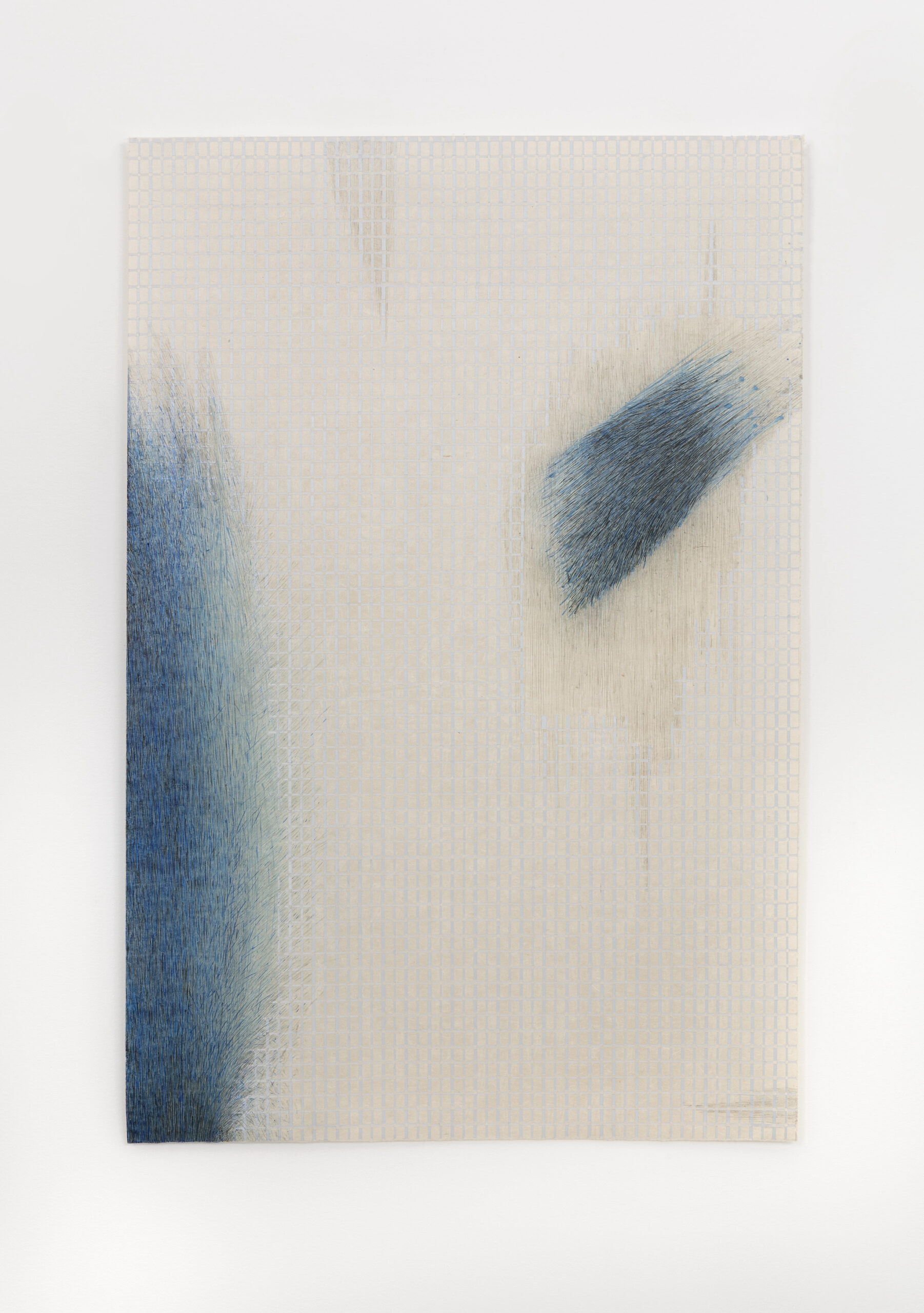
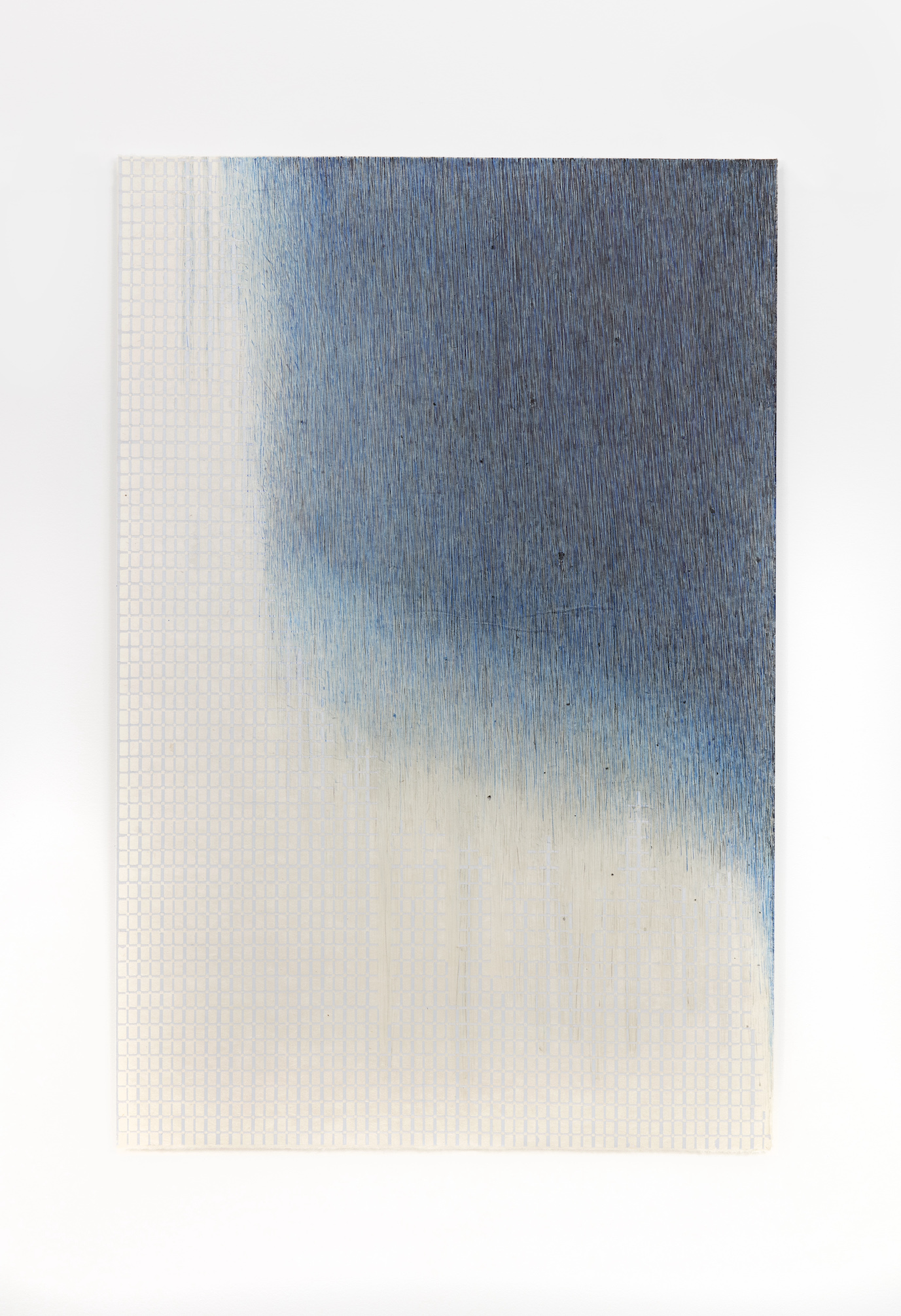
At first glance, observing their art on opposite walls in the main gallery, one might think the two clusters of art represent antithetical points of view and execution. Newport’s robust stitchery versus Lackey’s inclination to highlight the process of flowing; his darkling monochromatic palette, her startling cobalt blues; his army blanket supports, her meticulously hand-drawn grids on paper; his gnarly surfaces, her neat, calm meshes; his irregularly shaped compositions, her Spartan rectangles.

Yet correspondences, as Newport and Lackey remind us, emerge upon further viewing: their vertical compositions convey a kind of order and classical uniformity; asymmetric shapes and forms enliven and colorize the pictorial spaces; both employ open ended, ad hoc creative techniques; and repetitive titles emphasize the seriously serial explorations of mending and flowing, the common but enthralling modus operandi of these two makers.

Mark Newport, Mend 21, Wool, acrylic, cotton, 40 x 28 in., 2021. Photo: George P. Perez

Mend 21 (2021), a prime example of one of Newport’s ongoing Mending series, began, like most, with a cut into the wool army blanket material, indicative of the inevitable tears and abrasions in a fabric used to warm and protect a vulnerable body. The subsequent mending of the cut, via darning and embroidery, leaves a physical reminder of the repair or “scab,” as per the artist.  Executed with thick or thin thread, the circular or rectangular halos surrounding these wounds add subtle color and texture to the gray wool ground of the blanket.

Mark Newport, Swathe, Wool, acrylic, cotton, 83 x 59 in., 2023. Photo: George P. Perez

Swathe (2023), the largest and one of the latest Newport works on view, is boldly and brazenly colorful, sporting three swaths of yellow at the left, a squiggly yellow line above, green, black, and brown horizontal stitching within two amoebic forms near the top, plus an organic oozing of multicolor hues at mid-center countered by a punchy red and black plaid patch at lower right. Moreover, the scrunched and bunched ball of fabric right of center heightens tactility and tautens Swathe’s irregular shape.

Jane Lackey, Almost being said, flow 3, Acrylic, ink, graphite, paper, 35 x 23 in., 2022. Photo: Addison Doty

Lackey’s Almost being said, flow 3 (2022), one of her identically titled drawings (with numerical designations), establishes the format for a quartet of spare, asymmetric arrangements of flowing cobalt forms encroaching upon precisely drawn paper grids. Like Newport, she too begins with consistent support, his an army blanket, hers a grid, that each artist then disrupts or interrupts. Here, in flow 3, two cobalt forms appear to be advancing toward the center, one on the left edging in slowly, the other at the upper right moving (hurtling?) comet-like toward the center. As Lackey’s lyrical titles imply, something undefined is being said, thought or felt, but provocatively, what that is, is only “almost” laid bare.

Jane Lackey, Almost being said, flow 4, Acrylic, ink, graphite, paper, 35 x 23 in., 2022. Photo: Addison Doty

Similarly, in Almost being said, flow 4 (2022), the slowly descending blue form appears to be on the verge of enveloping the tight, orderly grid. The tempo varies from composition to composition, evoking states of mind, emotional ups and downs, shifting moods and, as Lackey observes, “assertions of self within a plaid of connective tissue.”

Hence, Mark Newport and Jane Lackey: Together and apart, singular but connected, Midwesterner and Southwesterner, two makers linked across the miles via stitching and flowing. Correspondence, not competition, as they’ve confirmed, is the order of the day.

Correspondence is on view at Simone DeSousa Gallery, 444 W. Willis St., Detroit, MI, through August 12, 2023.

[adrotate group = “2”]

Abstraction @ David Klein Gallery

Together & Apart: A Legacy of Abstraction at the David Klein Gallery, Detroit.

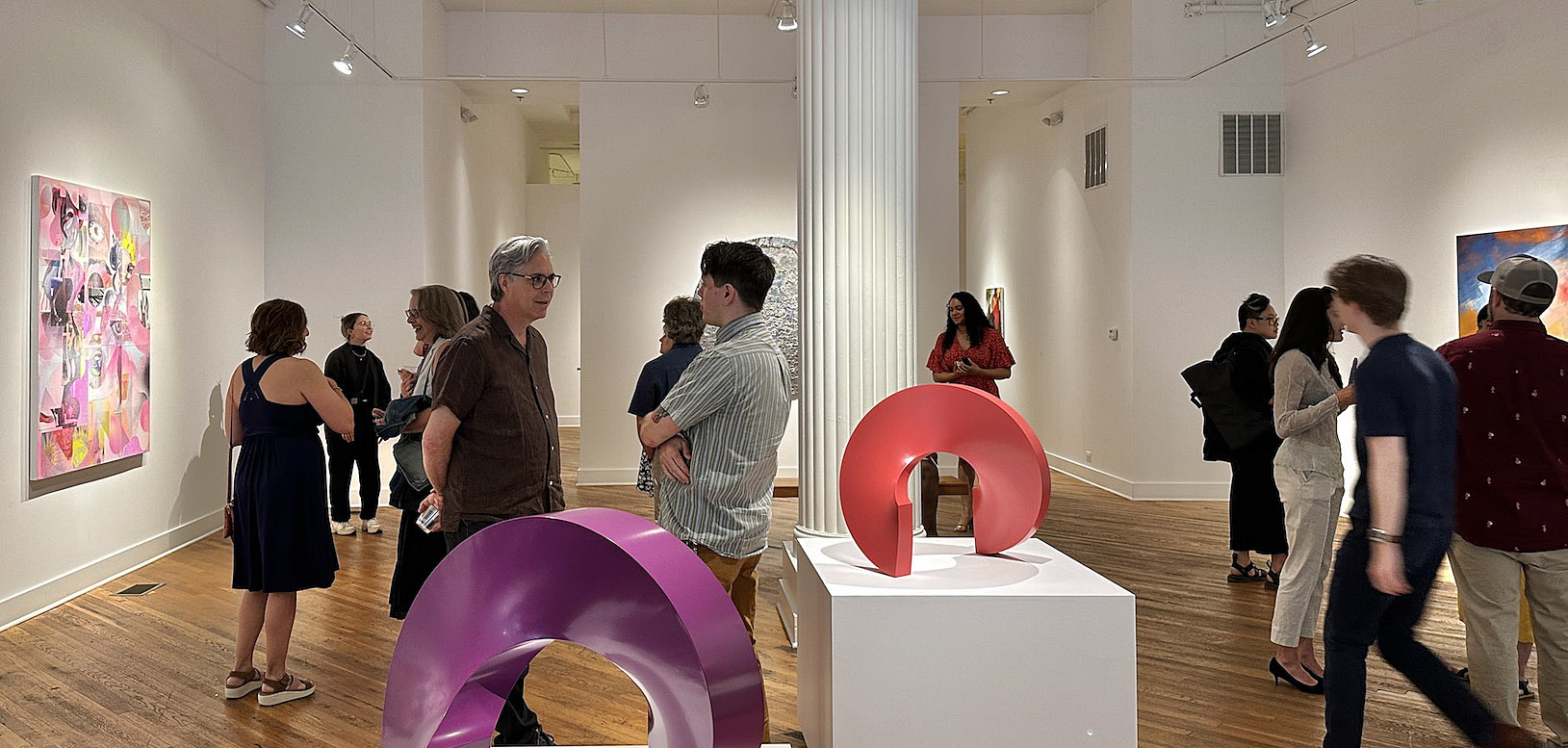
An installation shot from the opening of Together & Apart: A Legacy of Abstraction at the David Klein Gallery in Detroit, up through July 22.  All images courtesy of David Klein Gallery

The abstract revolution that rocked New York City and the art world in the late 40s and 50s was, famously, a mostly male affair — in the popular narrative, at least, a testosterone-fueled explosion of masculine energy and creativity.

Except, of course, there were women working in abstraction and producing epic work at the same time, like Lee Krasner, Louise Nevelson or Helen Frankenthaler. They just didn’t get the headlines, a phenomenon Mary Gabriel explores at length in her 2018 book, “Ninth Street Women.”

Rebutting the notion that abstraction and machismo are connected at the hip, the David Klein Gallery in Detroit is hosting Together & Apart: A Legacy of Abstraction, which will be up through July 22. The Klein show spotlights four artists – Elise Ansel, Caroline Del Giudice, Alisa Henriquez and Rosalind Tallmadge. (The title, Together and Apart, comes from a Virginia Woolf short story from 1925 that explored artistic affinity among several women friends.)

“In the history of American art,” said gallery director Christine Schefman, “the New York school is where abstraction happened, with all those macho guys – DeKooning, Pollack, and so on.   There were women there, and some of them became quite successful,” she added, “but they were definitely secondary to the men. The men were the geniuses.”

The women on display at David Klein pursue very different paths, from painting-and-collage to welded steel geometric forms, to name two. Drawing from different genres was, of course, part of the fun of pulling the show together, but Schefman says the women work well in unison, with their differing visions bumping up against one another. “They all have,” Schefman said, stopping for a second to pick the right phrase, “a feminine take. When you see their work together, there’s a certain harmony.”

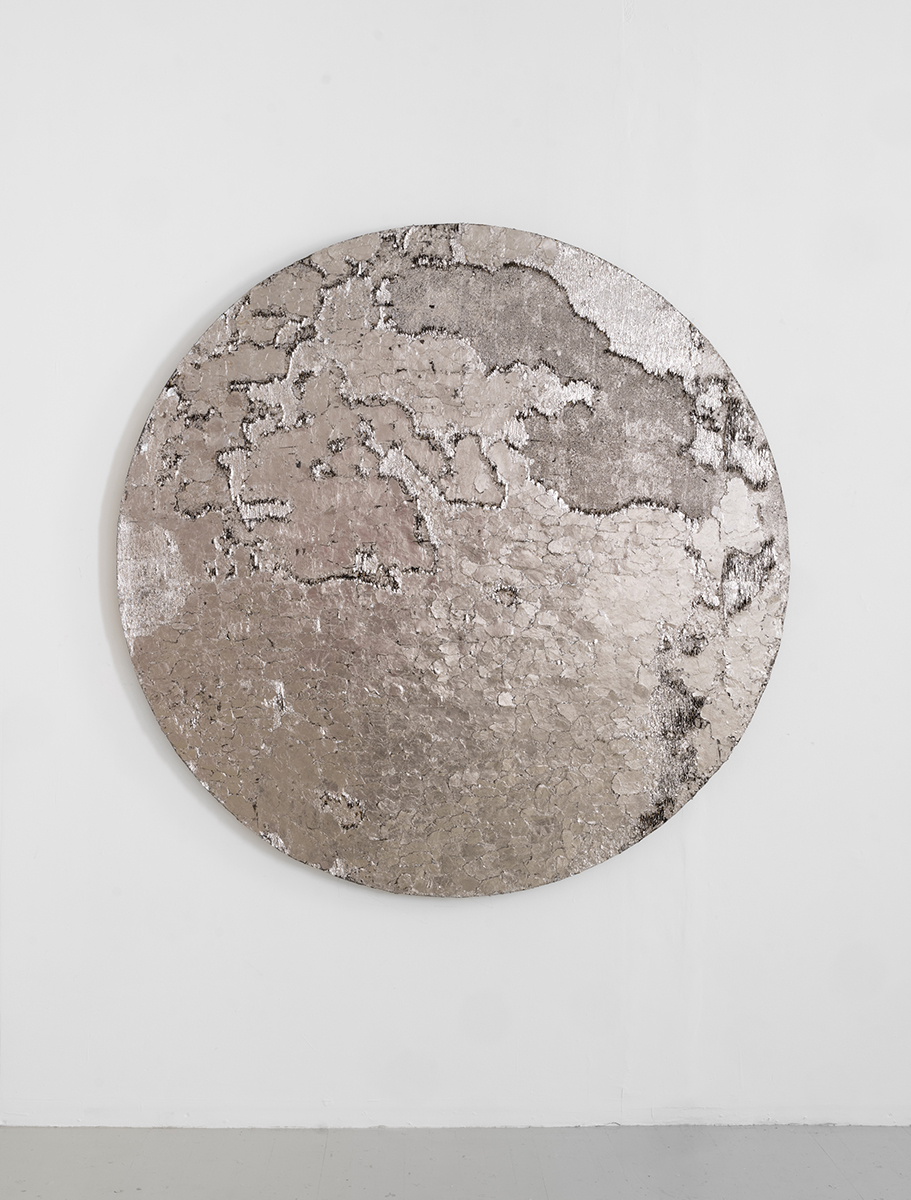
Rosalind Tallmadge, Oberon, Mica, glass beads, sumi ink, Caplain gold leaf and sequin fabric on panel, 60-inch diameter, 2023.

Brooklyn artist Rosalind Tallmadge works with the most-exotic materials in the show, including mica, glass beads, Caplain gold leaf and sequin fabric. The majority of these works-on-panel are round, giving the distinct impression of alien worlds seen from outer space — deeply fissured and cratered landscapes with a dull metallic glint, both otherworldly and surprising.

A 2015 graduate of Cranbrook, Tallmadge was featured in that institution’s 2021 retrospective, With Eyes Opened: Cranbrook Academy of Art since 1932. The artist lives and works in Brooklyn. She was the subject of a solo show, Terrain, at David Klein in 2021.

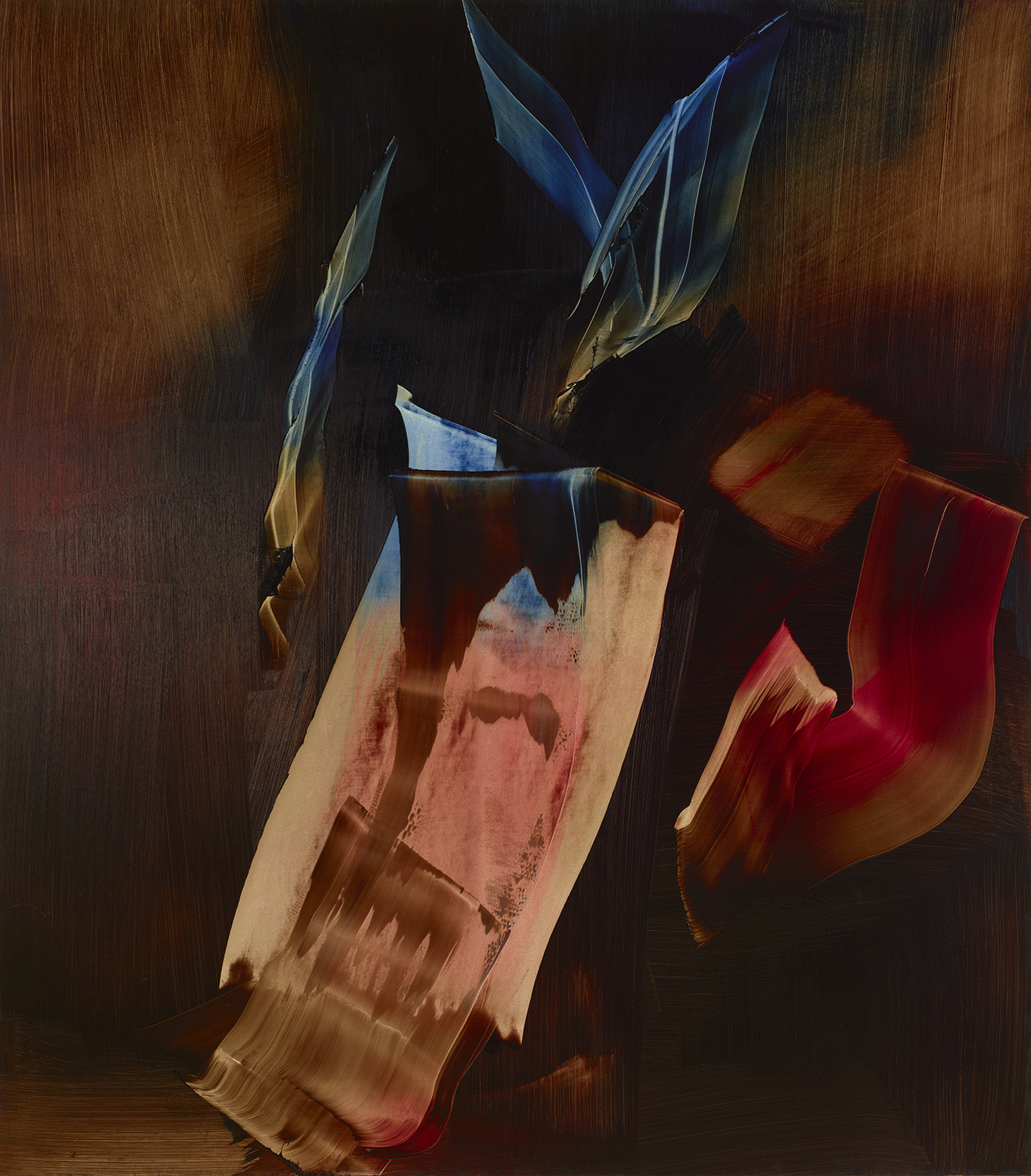
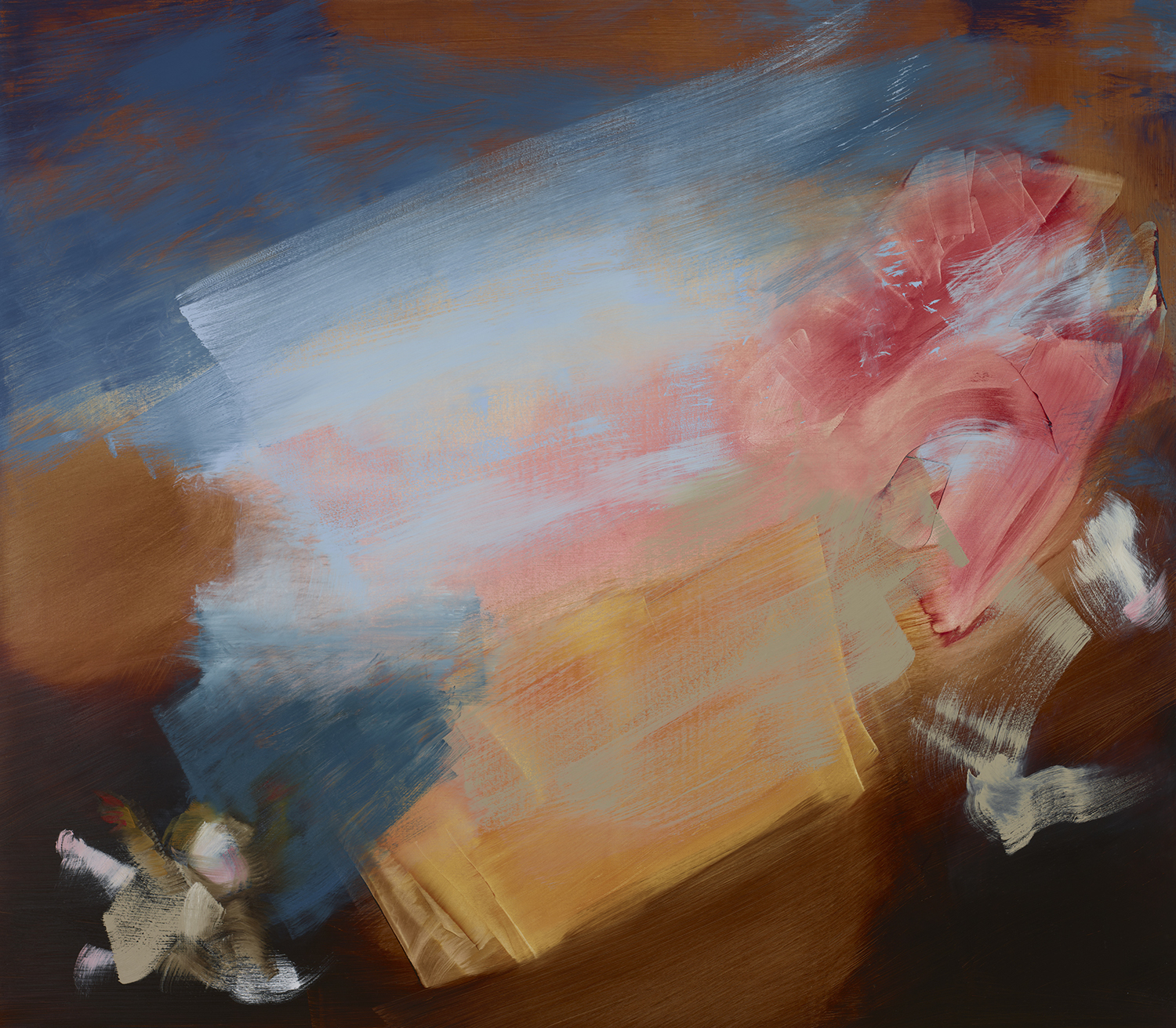
Elise Ansel, Obsidian Butterfly II, Oil on linen, 50 x 44 inches, 2022.

 As an undergrad at Brown University, Elise Ansel fell back in love with Old Master paintings of the sort she’d seen as a child at the Frick Collection in New York City, and their drama and grandeur inspired her contemporary abstract oil-on-linen canvases – albeit reinterpreted and stripped of all figurative and narrative elements.

All the same, these canvases pack much the same emotional and visual drama, which Ansel, who got her MFA at Southern Methodist University, pumps up with deft use of color, and gestural forms that often appear to be in motion.

In editing out stories from great masterpieces, Ansel universalizes the pieces, broadening their possible meanings. She also, perhaps, feminizes the great masterpieces of yore, at once creating images both subtle and evocative – with not a Great Man in sight.

“I realized that these exquisite paintings were presented from the male point of view—as if that was the only one that mattered,” Ansel told Boston Magazine in 2022. With force and delicacy, the Maine-based artist succeeds in subverting the art-historical male gaze.

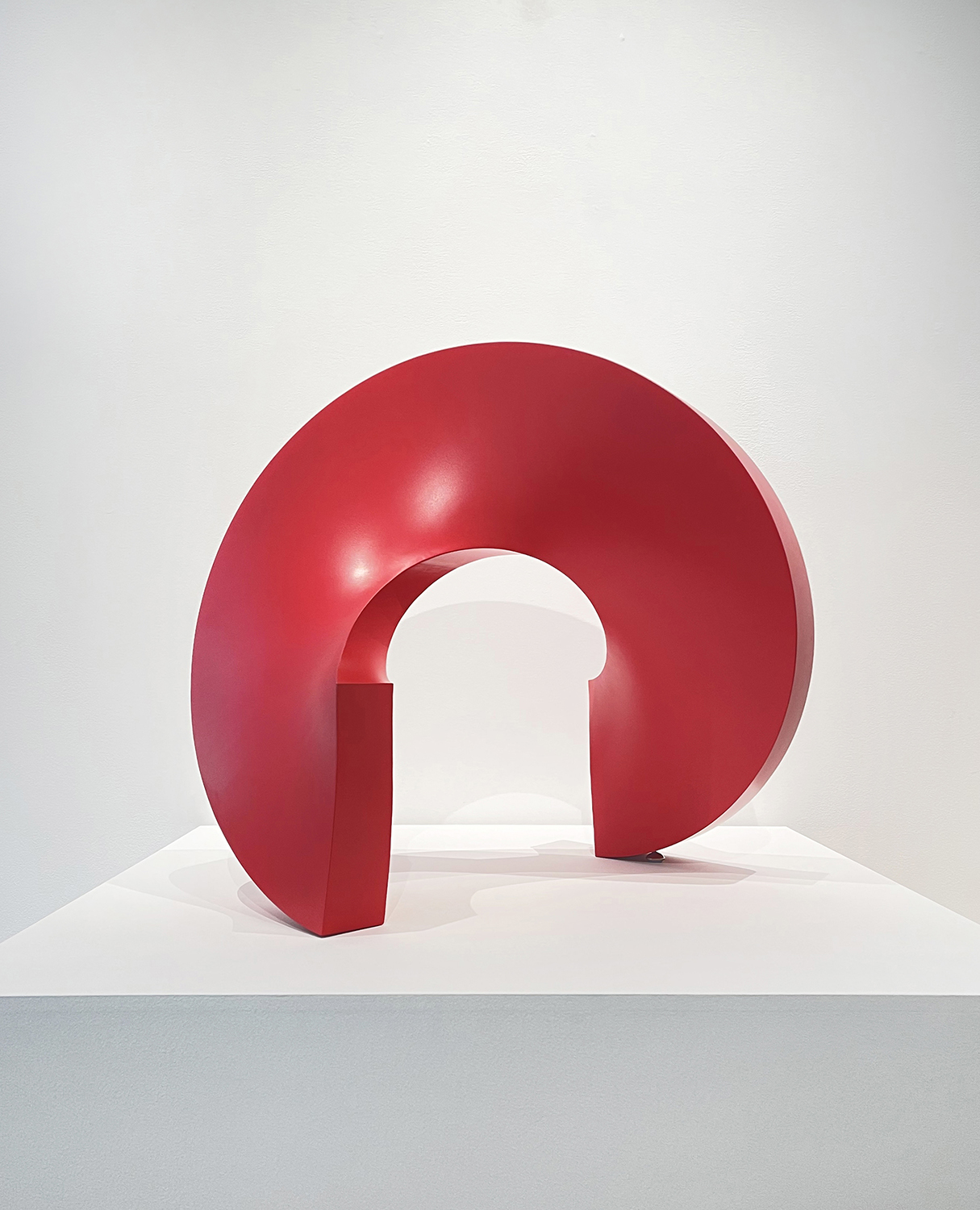
Caroline Del Giudice, Twirl III, Powder-coated steel, 24 x 29 x 25 inches, 2023.

 Caroline Del Giudice, another Cranbrook grad, is a Detroit-based artist with a metalworking studio in Redford where she crafts a range of welded-steel sculptures. The three brightly colored distorted arches that greet you as you enter read as massive, heavy objects – even though they’re actually only two feet tall and just a bit wider.

Each sports a great colored, slightly reflective surface  – crimson, purple and yellow, respectively – that’s kind of magnetic, looking very much like some industrial product of the highest order. And while their shapes describe a rounded arch of sorts, the geometry has been stretched, as it were, with one leg of the broken circle a step behind the other.

This contradicts your first assumption that these must be circular forms, at the same time that the staggered legs invest the structures with much greater visual stability. You could knock over a regular arch. Not these constructs. They stand their ground.

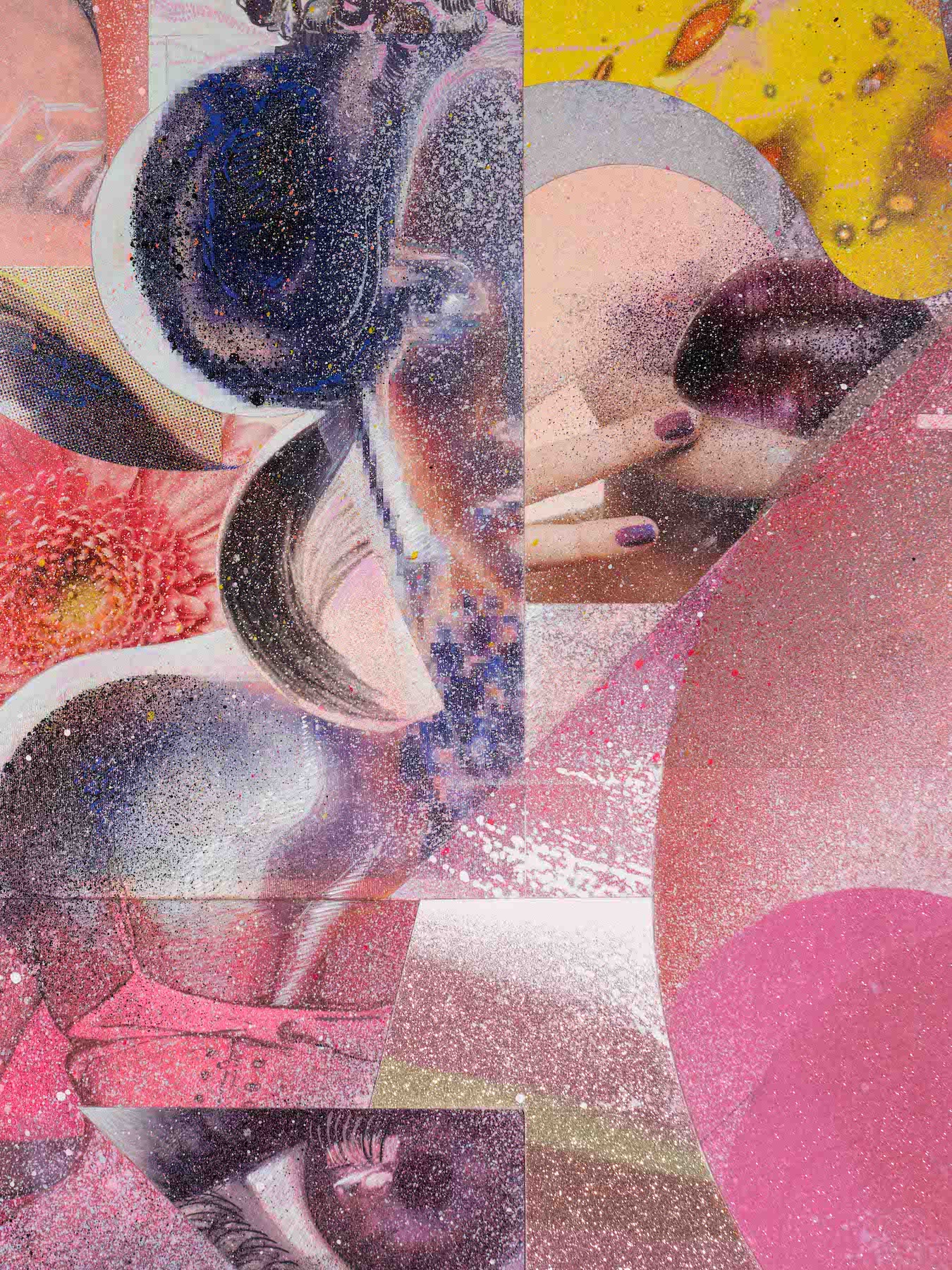
Alisa Henriquez, Sweet Nothings (detail), Acrylic, oil, digital prints, fabric and glitter on canvas, 63 x 53 inches, 2023.

Alisa Henriquez, who teaches at Michigan State University and got her MFA at the Rhode Island School of Design, in some ways gives us the most obviously feminine works in the whole show. At least, that’s the case with Sweet Nothings, in which a woman’s eye and fingers with painted nails play starring roles in this absorbing collage. The eye, in particular, is hard to avoid – just off-center and nicely done up in mascara, it stares out at the viewer with a questioning gaze that feels just a little sad.

In all six of her painted collages, Henriquez mixes colors with abandon, sketching out geometric objects and oddball shapes that often overlap or bleed into one another. These are crowded, active works – each quadrant, cut from the rest, could be a freestanding painting. In that sense there’s no real center, more of an intriguingly disordered visual universe.

Elise Ansel, Rosy Fingered Dawn, Oil on linen, 44 x 50 inches, 2022.

Together & Apart: A Legacy of Abstraction will be at Detroit’s David Klein Gallery through July 22.

[adrotate group = “2”]

Jennifer Harge and Devin Drake @ Museum of Contemporary Art Detroit

Jennifer Harge comes together with Devin Drake to present a clearing, a 13-minute film that was created as part of the five-chapter series called FLY|DROWN. This collection of films is a multiform project involving performance, film and installation. The artists’ consideration for context sets the stage as the chapters of the series are screened within installations that resemble a post-Great Migration home in Detroit. Harge is an artist, a teacher of dance and a 2017 Kresge Arts in Detroit recipient who is recognized for her focus on Black feminist thought, spirit work and folklore. The long-time collaboration between Jennifer Harge and Devin Drake has culminated in this project that plays a part in the larger conversation concerning ongoing erasure of tribal histories and our contemporary relationships with nature and time.  The film a clearing is a fable. Its exhibition text acts as a forenote that engages us like a story-teller introducing their tale. This text provides stepping stones to navigate the abstract waters of the film, linking it to previous works by Harge, and highlighting her ongoing investigations into the capabilities of our imaginations and what it means to construct and occupy dreamscapes. We learn about the film’s main character, elder, and her challenges with shame. We also learn about nyeusi and her role as elder’s disembodied spiritual guide. This story of supernatural communication has the potential to evoke discussions surrounding mental health, spiritual health and the daydream as a necessary component in the process of healing.

All images are stills from a clearing., 2023, photo: Ashley Cook

The darkened room in the Museum of Contemporary Art Detroit encompasses four gold cushioned chairs on the right side, placed as if they are gazing up at the film projected on the left wall. This decorative seating possesses an animistic quality, imbued with an adoration for the moving images and the story they are about to tell. The chairs invite you to relax and comfortably enter the dreamscape of elder. Opening with a shuffling of an 8mm film, scenes of the skyline, an old telephone, an ice cream truck and inner-city nature transition to elder’s unnaturally accelerated and mechanical body movements. She arrives as an embodiment of restlessness and anxiety, showing vulnerability through a presentation of fear and pain. She then re-arrives as a dreamer.  In a chair that mirrors those mentioned above, elder lands, sleeping. Viewers of the film take the journey with elder. Our simultaneous experience becomes activated and sustained through a delicate weaving of abstraction and familiarity. Mystical humming sounds overlay birdsong and waves on a beach, and transparencies dance around each other, entering and exiting the frame at varying intervals as we sit in the same chair as she does. Our hearing, sight and touch are activated to not only tell us the story but to mentally and physically transport us into it ourselves.

a clearing., 2023, photo: Ashley Cook

The sudden arrival to this dream-space, where time is limitless and pacing is personal, emphasizes the stark contrast between her waking life and her dream. The chaos that is illustrated through dark lighting and rapid motion shifts to natural lighting and a slowed-down pace. The visualization of a place to comfortably exist is a common practice for artists. It is a way to take into account our current situation and produce alternative solutions in order to impact the future. While her observation of the world from an abandoned boat in the middle of a field hints at surrealist compositional techniques, her white mask and architectural headdress alludes to afro-futurism. Both creative movements actively work to bring things together in unexpected ways to challenge the norms and expand the boundaries of what is possible. Relative to the fast pace world that we live in today, another aspect of the film that feels quite unreal is the ease at which time passes. In her dream, elder is allowed to be unhurried in her gentle exploration. Jennifer Harge’s appreciation for relational ecosystems is visually communicated through elder’s curiosity and admiration for this world around her. With permission to be in reverie, elder plays with a tiny ladybug, embraces a large rock on the beach, wades in the water, and writes in the sand. She pulls pedals and leaves from a tulip and submits it to the tide. Her interaction with these things is serenely empathic, her choices seem symbolic and mystical and the barrier between her and everything else seems thin.

a clearing., 2023, photo: Ashley Cook

The distinct emphasis on pacing is established in the exhibition text accessible at the entrance of the dimmed room, and is reiterated through the natural repetitions found in the film. Wave after wave hits the shore, birds repeat their call, wind faintly shakes the brim of her hat, seasons change. As a continuation of the FLY|DROWN series, we are encouraged to think about pacing as a practice that allows us to take the time we need, listen to our bodies, our minds and the land. A verbal and written narration concludes the short film with an introduction to a fictional tribe called the “air people”. This final commentary establishes their connection to the true legendary people of Igbo Landing1 who, like the people of the Great Migration, made extreme sacrifices on their journey to achieve self-sovereignty. 

a clearing., 2023, photo: Ashley Cook

The FLY|DROWN series was created over the span of six years with the first chapter being premiered at Detroit Artists Market in 2019. Subsequent chapters premiered as part of larger exhibitions and festivals at institutions including the Wexner Center for Arts, Sidewalk Detroit and the University of Iowa.

The film a clearing, at the Museum of Contemporary Art Detroit is supported by the John S and James L. Knight Foundation. The film opened on April 14, 2023, and is on view until September 3, 2023   https://mocadetroit.org/a-clearing/

1 Igbo Landing at Dunbar Creek on St. Simons Island in Georgia, USA, is a historic site that marks the location of the largest mass suicide of enslaved people. In 1803, captives from Igbo (now Nigeria) rebelled against their captives, taking control of the ship and drowning them before marching into the water themselves, choosing death over slavery.  Samuel Momodu, “Igbo Landing Mass Suicide (1803),” January 9, 2023,

https://www.blackpast.org/african-american-history/events-african-american-history/igbo-landing-mass-suicide-1803/.

[adrotate group =”2″]

Page 15 of 84

Powered by WordPress & Theme by Anders Norén