Critical art reviews of Detroit galleries and museums weekly

Author: Ron Scott Page 1 of 36

Susan Yamasaki @ Muskegon Museum of Art

Material World: Ten Women is an invitational exhibition that features women artists working with non-traditional materials or using traditional materials in non-traditional ways. The exhibition highlights the use of the physical characteristics of material and technique as a component of both visual and conceptual themes.

Many of the works use found objects common to the everyday household, or bring elements from nature into inside spaces. Painting, sculpting, weaving, and assemblage merge in surprising ways throughout the show— crocheted metal wire is transformed into complex organic shapes, steel rod is welded into traditional vessel forms and animal shapes, paintings are cut apart and reassembled on the loom, birch bark becomes quilt-like in complex geometric arrangements, and quilts become soft sculptures and drawings, amidst many other approaches that surprise and delight.

This review will highlight the artwork of  Susan Yamasaki, whose work combines the materials of birch bark and gold leaf.   The bark is gathered from decomposing trees, then washed, flattened, and cut into pieces. The pieces are arranged and nailed to a birch plywood panel.  The designs are abstract, telling a story of transformation. The panel becomes a devotional object, honoring this living link between earth and sky. The panels pay homage to the struggle and adaptability of each tree. The colors reveal the diversity and the beauty of the tree’s experience.

In the Japanese tradition of Kintsugi, gold leaf makes whole the imperfections of the bark. In the traditional Byzantine devotional objects and icons, the gold leaf heightens the panel’s presentation as a sacred object.
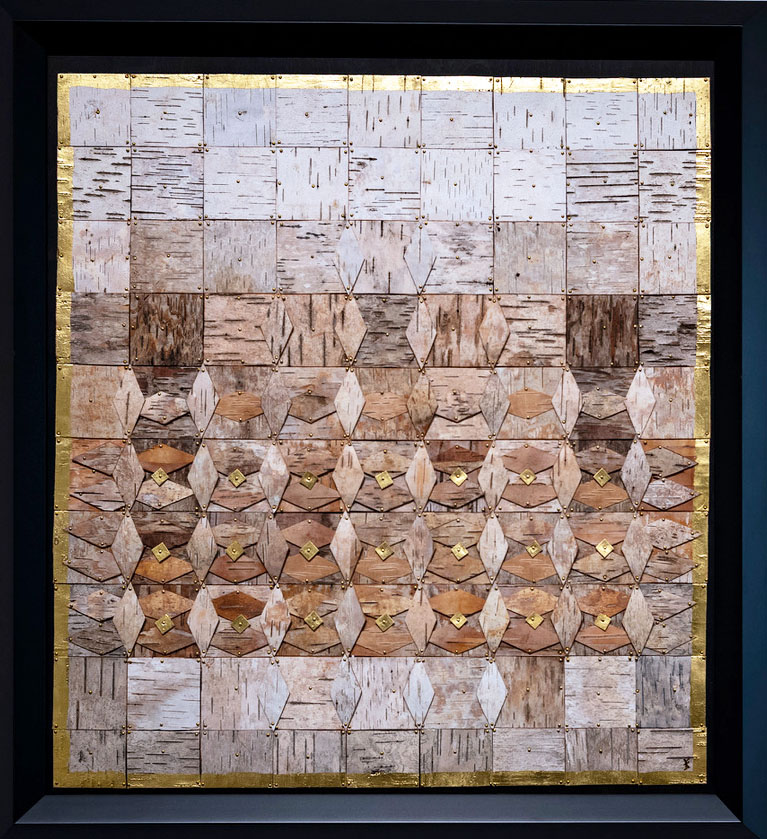
Susan Yamasaki No. 66. Rhombus 28’x30 ” Birch bark and gold leaf, 2025.

She says here in her statement:

My work begins in the forests of Northern Michigan, where the landscape is constantly shifting, and there is a natural die-off of trees by wind, erosion, and disease. When a tree dies, it continues to provide shelter and food for insects, animals, and fungi.  As time goes on, a dead tree’s skin can easily be lifted or peeled away, revealing the dark, loamy humus that the tree has become. Birch tree bark, in particular, is quite resistant to decomposition. It remains strong and beautifully maps a tree’s experience.  Colors in the bark may show where the sun hit the trunk year after year, or disclose the mineral content of the soil where it stood.  There might be indications of a forest fire, a year of drought, or a woodpecker’s work.

These remnants of a birch tree’s life are the materials I work with.

After weeks of collecting, I wash, flatten, and cut the bark into squares. Then I arrange and rearrange the pieces before nailing them to a plywood birch panel. In the process, this once living material continues to tell a story, a story of transformation.  The panels become sacred objects, honoring the link between earth and sky.  They pay homage to the struggle and adaptability of each tree. They honor and bring to focus the diversity, the strength, and the beauty of our natural world. Gold leaf is used in the tradition of Byzantine devotional objects and icons. 
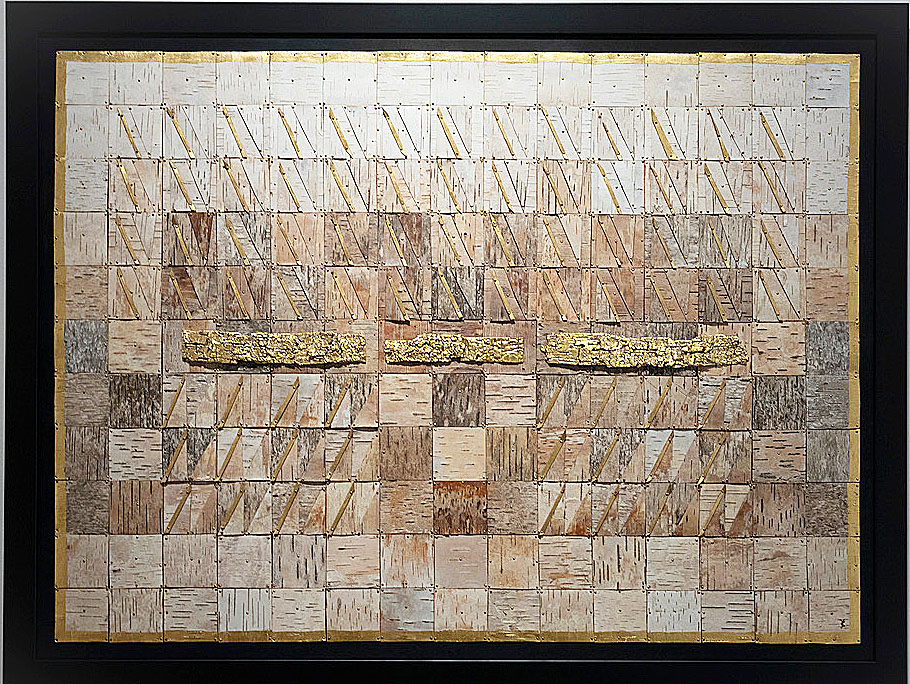
Susan Yamasaki, No. 70 Three Gold Bars,  33×43″,2025.

Yamasaki’s artwork, Three Gold Bars,  is a geometric composition created from birch bark pieces that contrast in that the material is organic from cut pieces of birch bark, juxtaposed to a symmetrical and balanced arrangement of squares on the top and bottom, with an intricate collection of shapes at its core center. The three gold bars become a more essential element in the composition.  The abstraction is one of the most complex sets of designs that keep the viewer engaged.
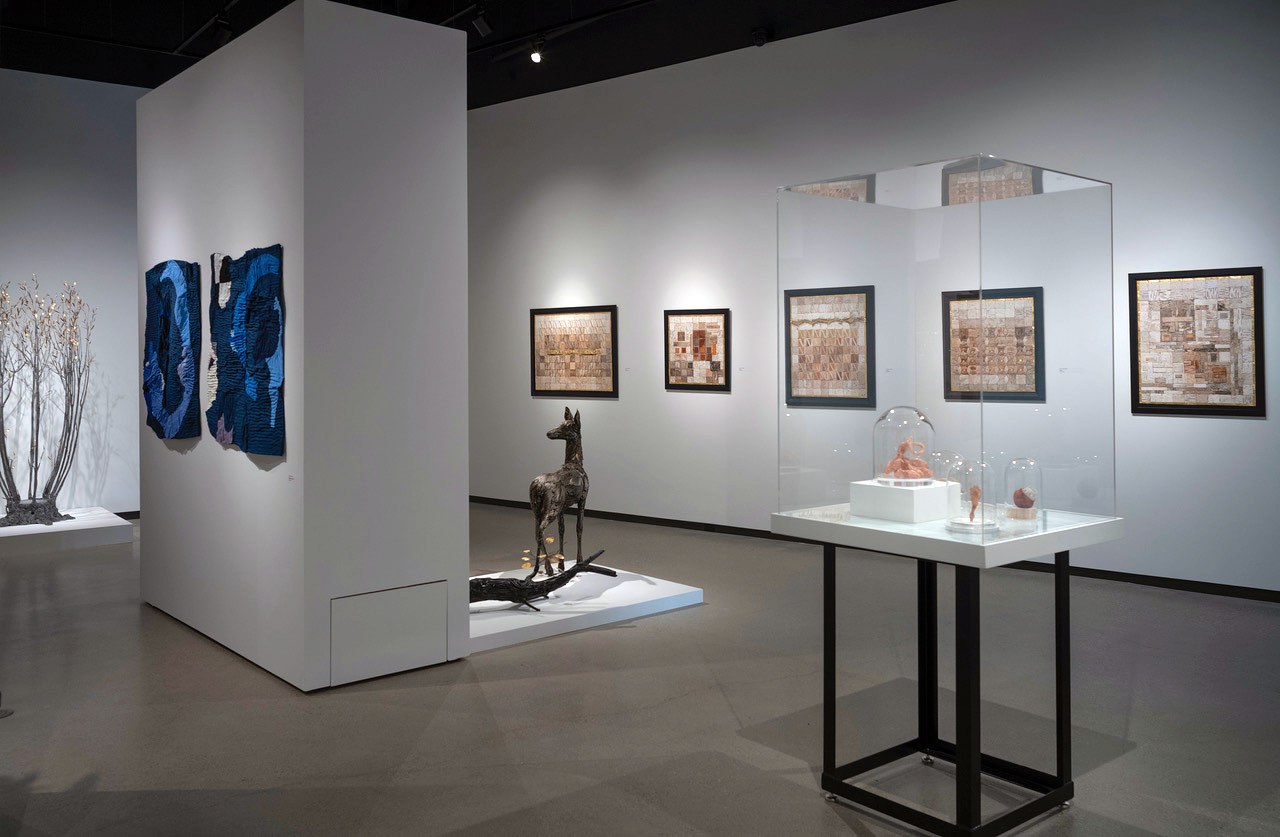
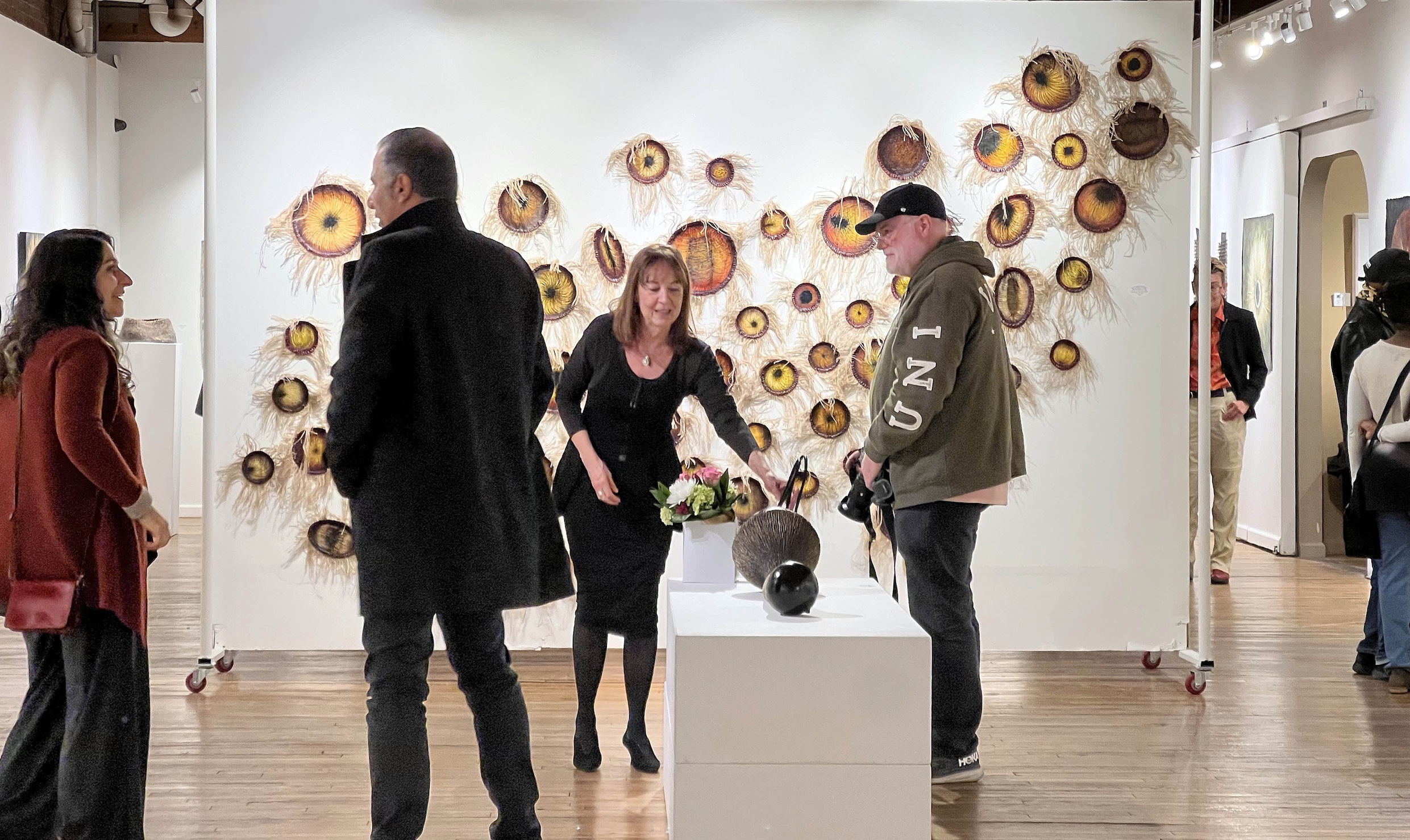
Installation image from, Material World – Ten Women” 2026.
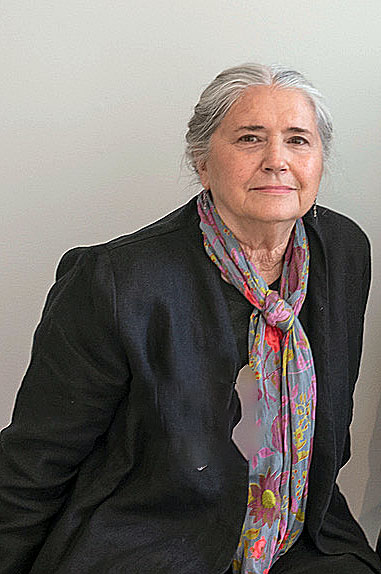
Susan received her BA in Art History after studying art at Michigan State and Wayne State University. She studied sculpture at Académie de Feu, Sainte-Just-en-Chaussee.  She later earned a Master’s degree in child development from Oakland University. She is currently retired after a long career in teaching.  She and her husband, Taro, reside north of Traversity Michigan.  Images were taken and provided by Taro Yamasaki.


May 21, 2026 – August 23, 2026

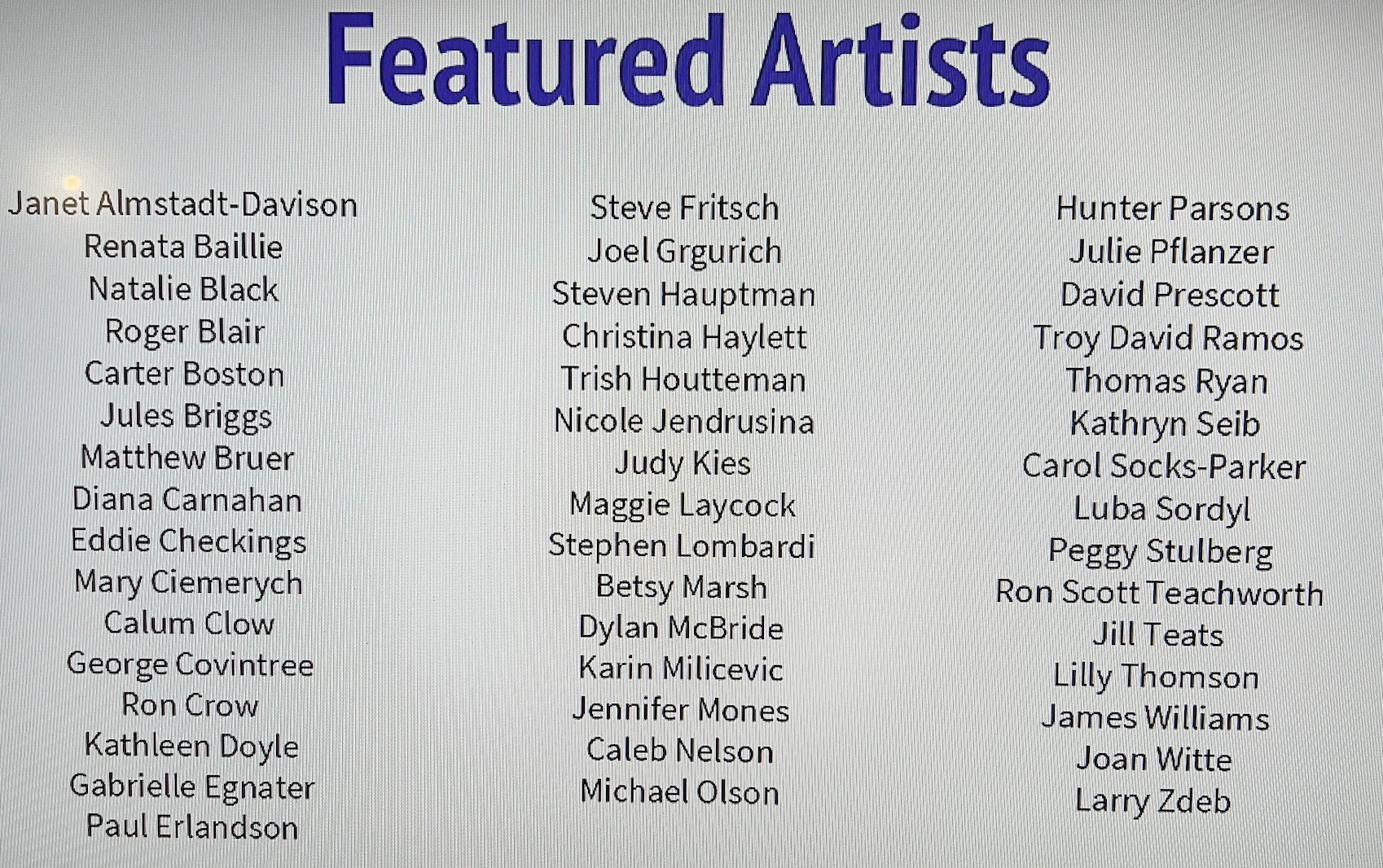
FEATURED ARTISTS Click the artist’s name for their full bio

EXHIBITION SPONSORS

Susan & Frank Bednarek

Michigan Water Color Society 78th Annual Exhibition @ PCCA

The 78th Michigan Water Color exhibition and awards is now on display at the Paint Creek Center for the Arts, through February 15, 2026.  The traveling show is made up of 30 of the award winning work and will travel through out the state at five locations: Downriver Council for the Arts, February 19 – March 21, 2026, Village Arts Factory, April 2-28, 2026.

The Michigan Watercolor Society (MWCS)’s Awards Travel show is a collection of the top 30 award winning pieces selected from their most recent Annual Exhibition. MWCS Awards Travel Exhibition has a long history of sharing the best of the best from the annual exhibition to areas around the State of Michigan. For the 78th Annual Exhibition, Paint Creek Center for the Arts is hosting the fourth stop of this travelling show, with an opening reception that opened on January 23, 2026..

Michigan Water Color Exhibition Paint Creek Center for the Arts, Installation image


Stan Meyers, Trish’s Clothesline No. 3, 30×22″ Watercolor, Best of Show, Gold Award.

The watercolor, by artist Stan Meyers from Rockford, Michigan with the title, Trish’s Clothesline, No. 3 was given the Best in Show award. The watercolor is 30×22″ demonstrates how negative space is effectively used to dominate the space using existing paper to deliver the white sheet and clothing.  The juror, Cuck McPherson, says “There is a variety of styles, abstract, point of view, realism, conceptual, and graphic.  The MWCS did not disappoint.

In this painting, the composition takes the viewer back to the horizon, while leaving the empty clothes basket front and center, waiting for the owner to return.

Jerry Bowman, Happy Cricket, Watercolor, 32×36″

Abstraction and graphic design battle it out in the large 32×36″ watercolor with black line.  It is easy to image this painting acting as an illustration for a children’s short story.


Lori Zurvalec, Fragmented Leaves, 22×30″ watercolor.

Lori Zurvalee, reminds this viewer of Paul Cezanne, the French Post Impressionist painter who bridged the gap between 19th century Impressionism and 20th century Cubism. His unique style, characterized by small brushstrokes and planes of color, is credited with launching Modernism. 

Coming up at the PPCA:

2026 Members Biennial

Occurring every other year, the Members Biennial exhibition showcases artwork from Michigan resident artists who have contributed to, and shown support for, Paint Creek Center for the Arts’ mission through the purchase of an annual membership.   Member artists are invited to submit work in a broad range of themes and subject matter, so long as it suits the all-ages nature of PCCA’s public gallery space. The Opening Reception: May 8, 2026 from 5pm – 8pm

The Reality Show @ Paint Creek Center for the Arts

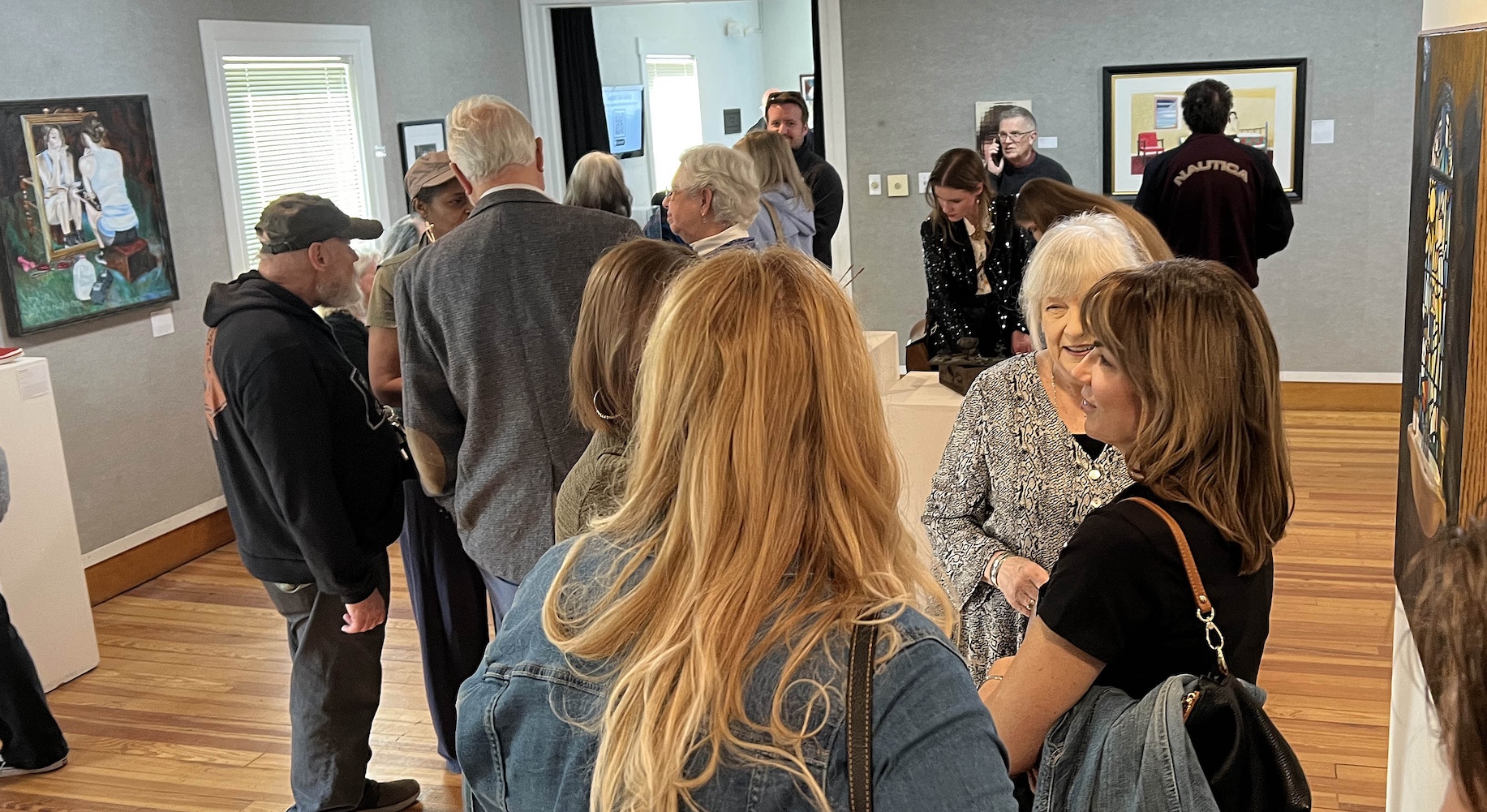
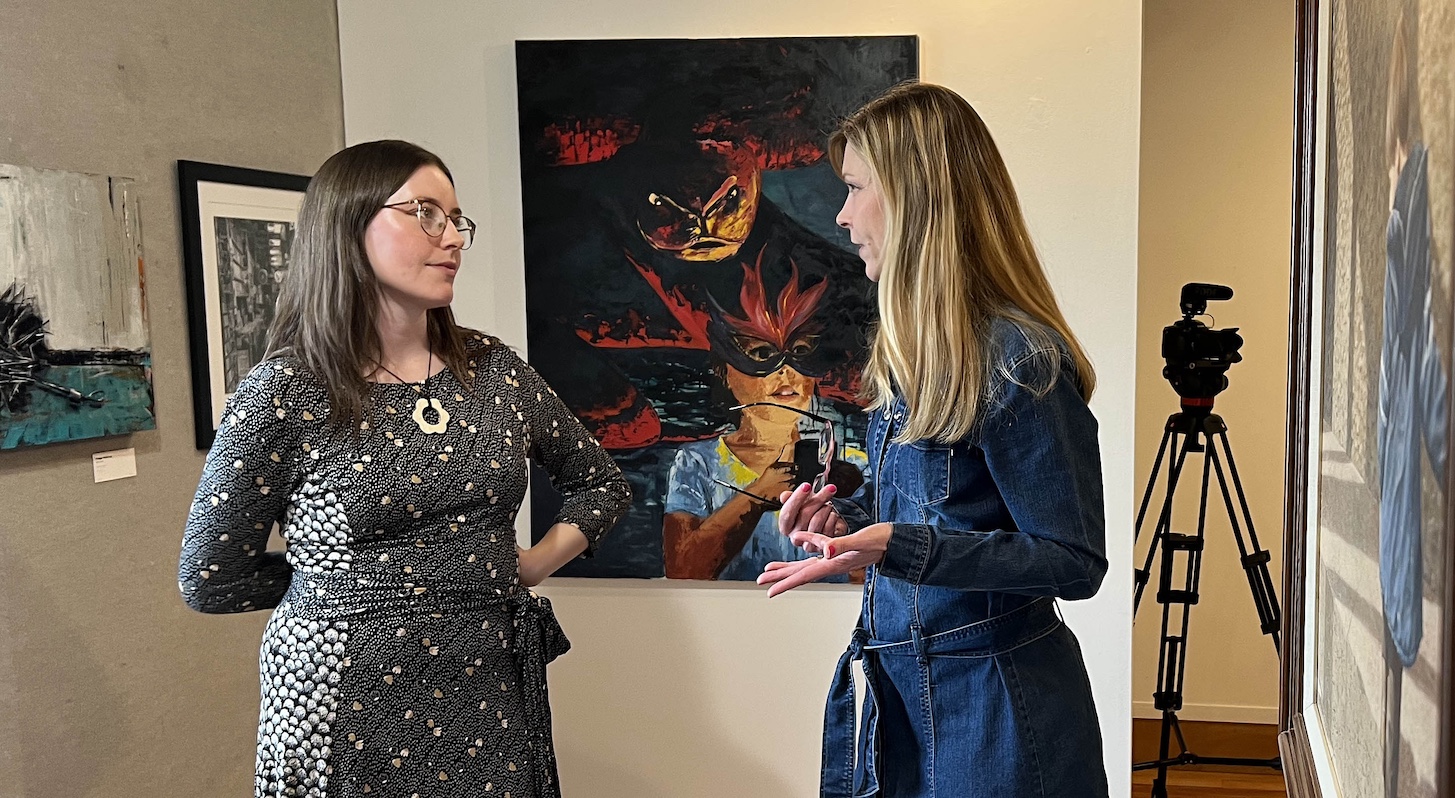
Paint Creek Center for the Arts,  Installation image   Courtesy of DAR

The Paint Creek Center for the Arts opened its 2025 season on March 28th, 2025. Two hundred twenty viewers came to the opening to see art by forty-five artists whose work was accepted into an exhibition titled The Reality Show.

In a statement by Julia Felts, gallery director, “In a time when reality television, social media and spam can shape our perceptions of everyday life, how do we know what is real?  Whether you’re capturing your own reality through life’ pleasures, struggles, and monotonies, interpreting the reality of someone else or exposing pop culture’s simulated perfection, we invited artists to submit their artwork showcasing and defining what reality means in the modern world.”

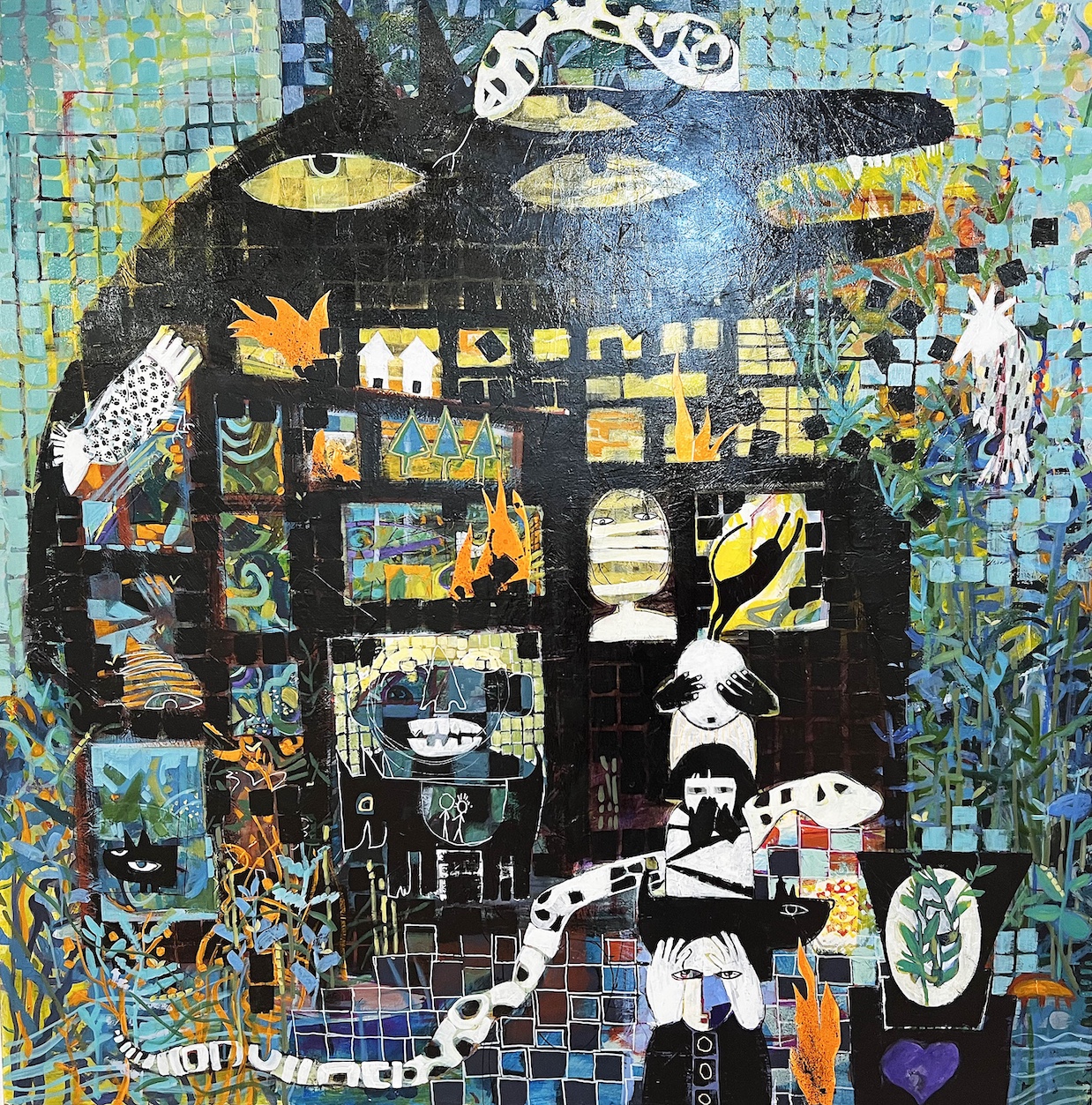
Christine Heylett, Nature of Things, 48×48″, Board, Paint, Paper  Courtesy of DAR

Awarded Best in Show, artist Christina Haylett’s large collage titled The Nature of Things, “48 x 48”  creates a grid of symbols set over a large black imaginary animal. A montage of small squares provides the adhesive in this surreal fantasy of imaginary reptiles and objects. She says,  “Climate change is part of our daily concerns and every day there are programs in our media about all of this.”

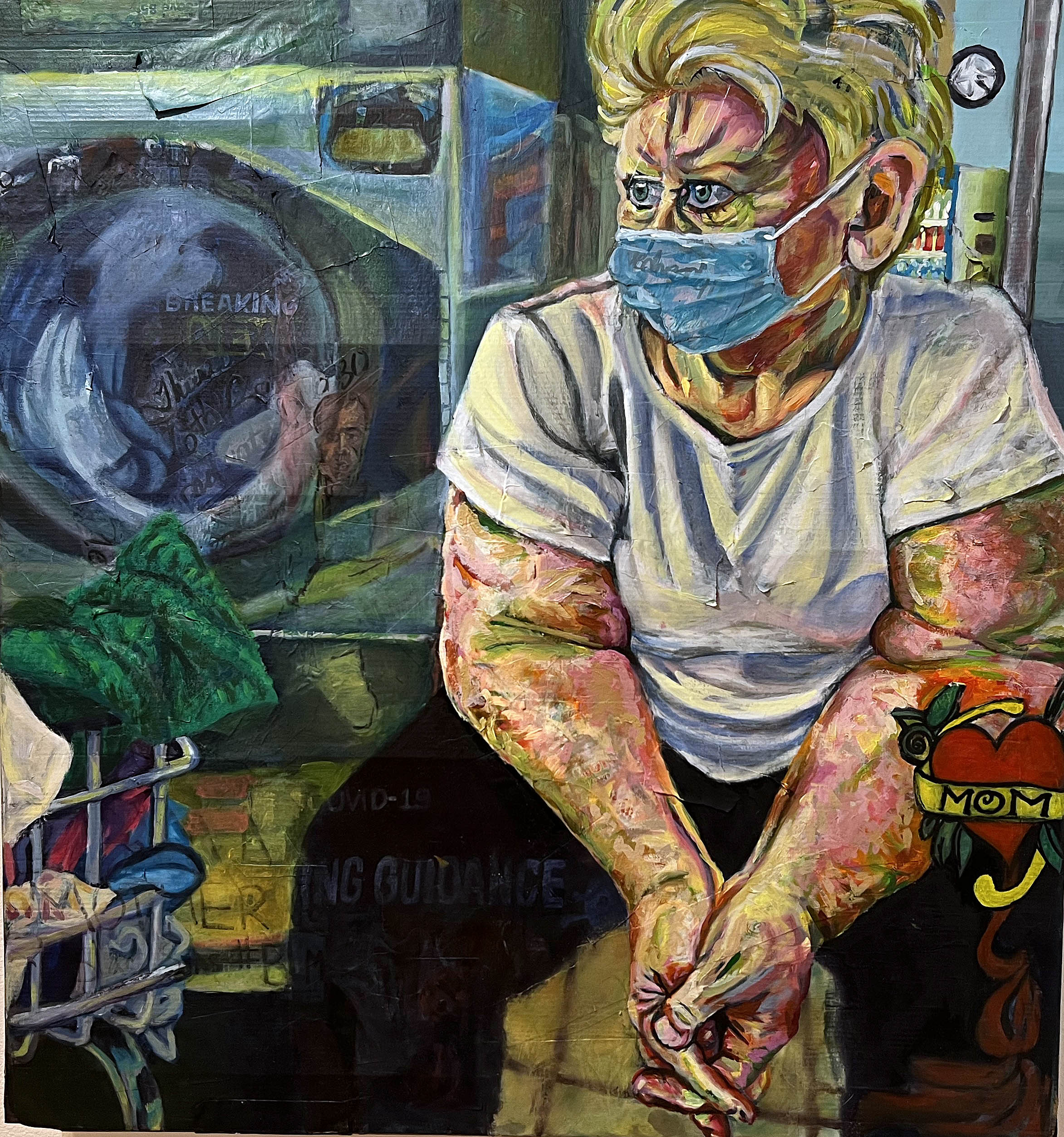
Calum Clow, Hindsight and 2020, 30×28″ Cardboard on Wooden Panel,   Courtesy of DAR

This nearly square figure painting was created using Oil, Mixed Media, and Cardboard on a wood panel illustrates a female mom seated at the laundromat during the Covid-19 virus pandemic using a ¾ profile looking off to the left. In his notes the artist  provides the audience with a story.

“In the Summer of 2020, our laundry machine broke. So we donned our masks and cleaned our clothes at the laundromat.  The portrait is from a photo I took of my mother, watching another day of breaking news stories on multiple televisions while doing laundry.  This painting documents our reality within this moment of a global pandemic, a civil rights movement, and a tumultuous political landscape.  It questions how the perspective of our own reality is changed through reflecting upon the realities of the world around us.”

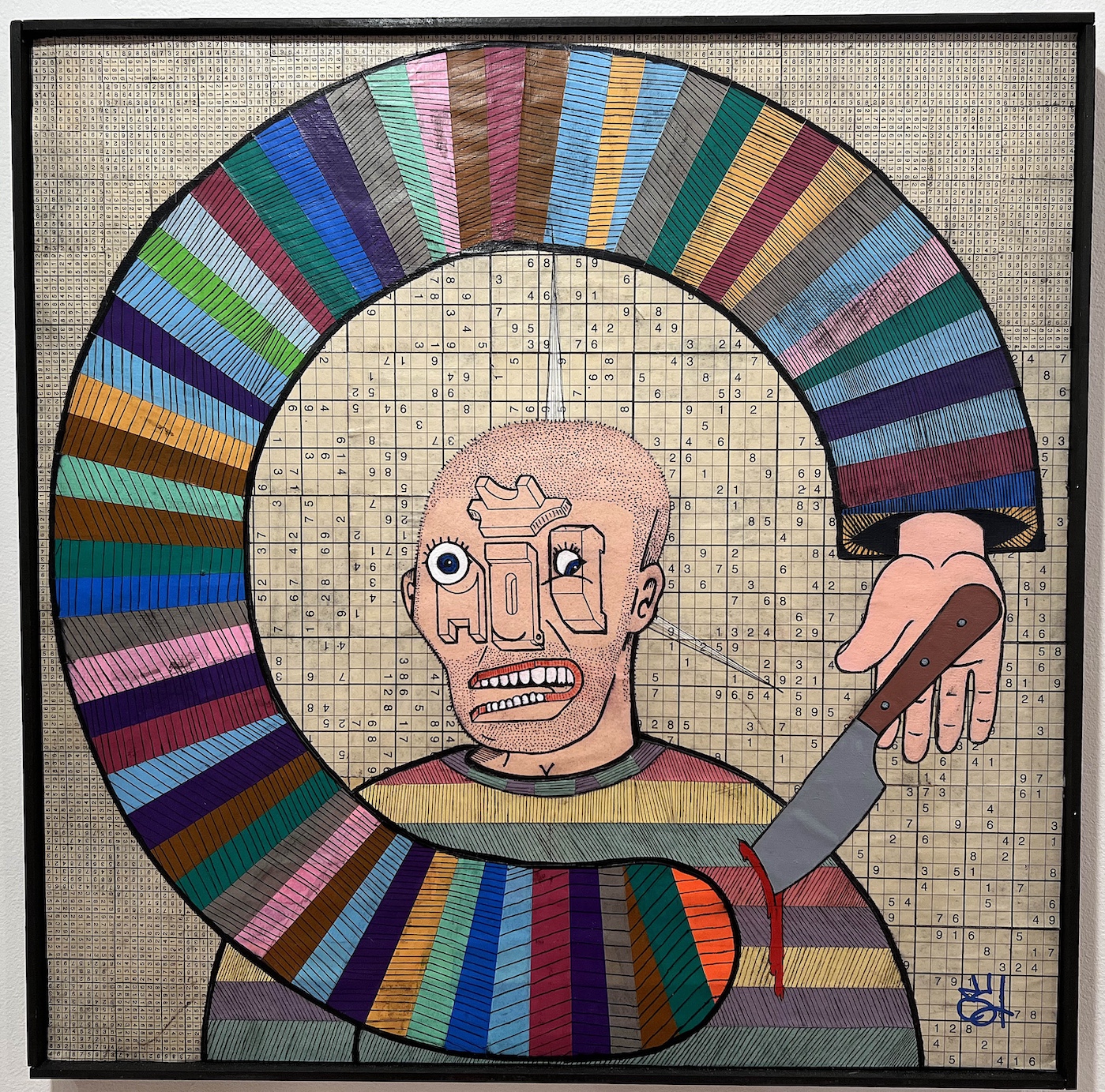
Eddie Checkings, Backstabber, 24×24″ Collage, Acrylic, on Wood, Courtesy of DAR

Eddie Checkings is an artist mostly recognized on Instagram with work that is more illustrative than, let’s say, traditional forms of painting. Backstabber’s square composition is a collage on a wood panel that might reflect a story. The surreal figure is set on a field of numbers that flattens out the facial expression, where the emphasis could be more dependent on an event. In looking at the artist’s other work, the range of subjects varies greatly, relying on line, color, and composition.

Installation image, Paint Creek Center for the Arts,   Courtesy of DAR

The title of the PCCA exhibition, The Reality Show, provides a platform to call on artists to provide a tremendous range in personal subjects and experiences. The expressions of art in the show widely vary to include paintings, sculptures, photographs, drawings, and multimedia works of art.

Paint Creek Center for the Arts (PCCA) is a nonprofit art center in downtown Rochester dedicated to promoting the arts and artistic excellence through various cultural programs, including exhibitions, studio art classes, outreach programs, community involvement projects, and the Art & Apples Festival.  PCCA programs reach many different segments of the region and serve as tools for community enhancement and economic development by improving quality of life and drawing visitors to the area. PCCA is an important cultural resource and destination and a vital presence in greater Rochester’s diverse and growing business and residential community.   https://pccart.org       248.651.4110

[adrotate group=”2″]

Detroit Art Review

Dear DAR Friend,

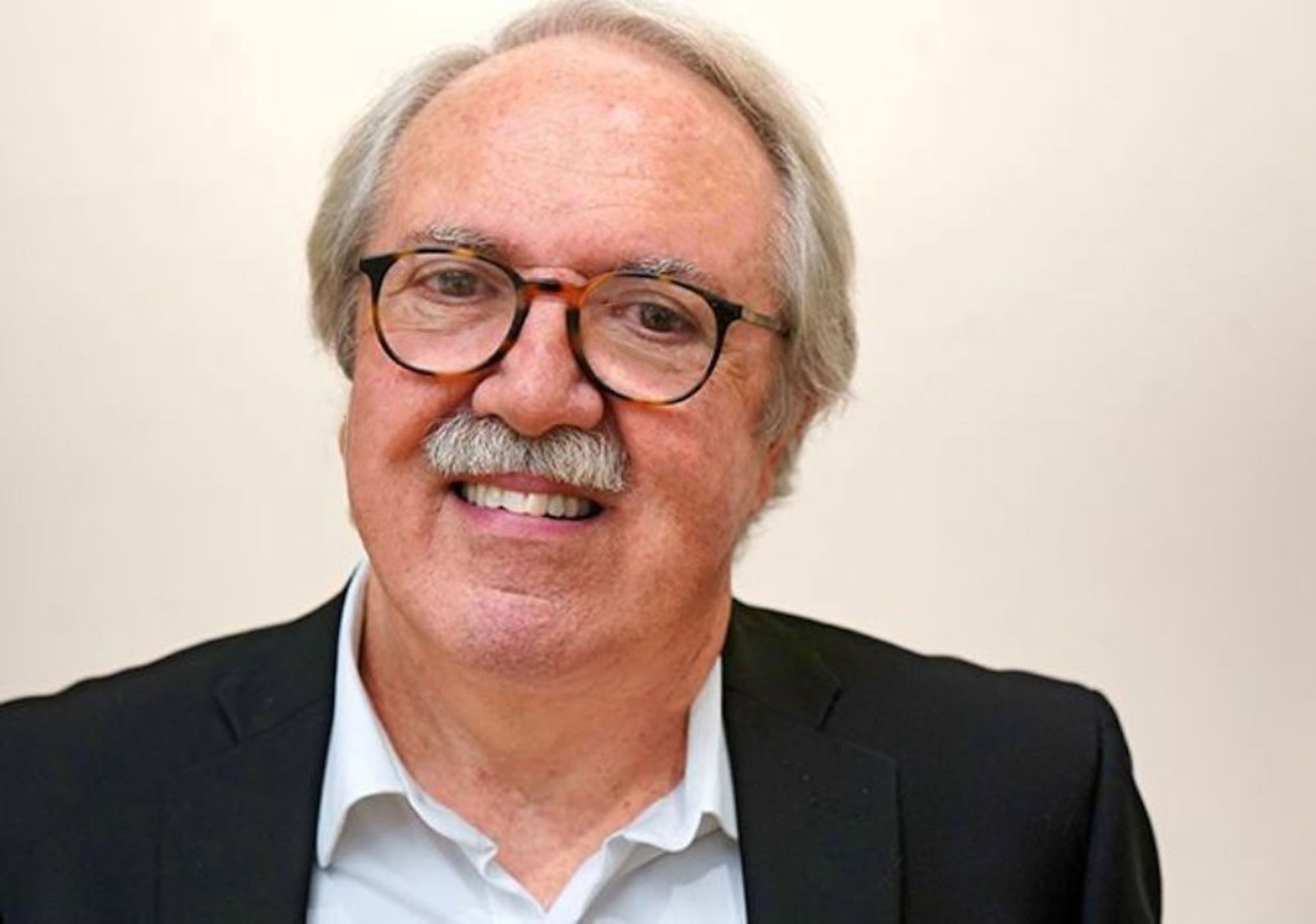
Hello and Happy Holidays! I am Ron Scott Teachworth, founder and writer at the Detroit Art Review. I am writing to express my gratitude for your support. Thank you for visiting our website and reading the reviews by our writers.

The Detroit Art Review explores the visual art exhibitions in South Eastern Michigan, focusing on Detroit Metro. Publishing our reviews is an honor and a privilege to provide this important coverage. We are a 501-c3 non-profit and accept donations. Please consider donating.

Today is Giving Tuesday. The occasion brings together like-minded individuals, providing an opportunity to demonstrate the power of collective kindness and generosity. The donation process is available on the website: https://detroitartreview.com. Look for the yellow donation button.

From everyone here at the Detroit Art Review, Thank You!

Heloisa Promfret @ N’Namdi Center for the Arts

Heloisa Pomfret, Installation image, and image of the artist in a black dress.  All images courtesy of DAR

On November 1, 2024, the George N’Namdi Gallery opened a solo exhibition, “The Brain,” by Brazilian-American artist Heloisa Promfret. This collection of 45 artworks builds on her earlier work, including abstract paintings using the palimpsest process, where layers of paint are scratched into the surface, revealing further colors beneath. Despite lacking a specific context in contemporary art history, Pomfret’s work combines mysterious marks, multiple colors, and shapes executed on burlap, paper, and ceramic objects.

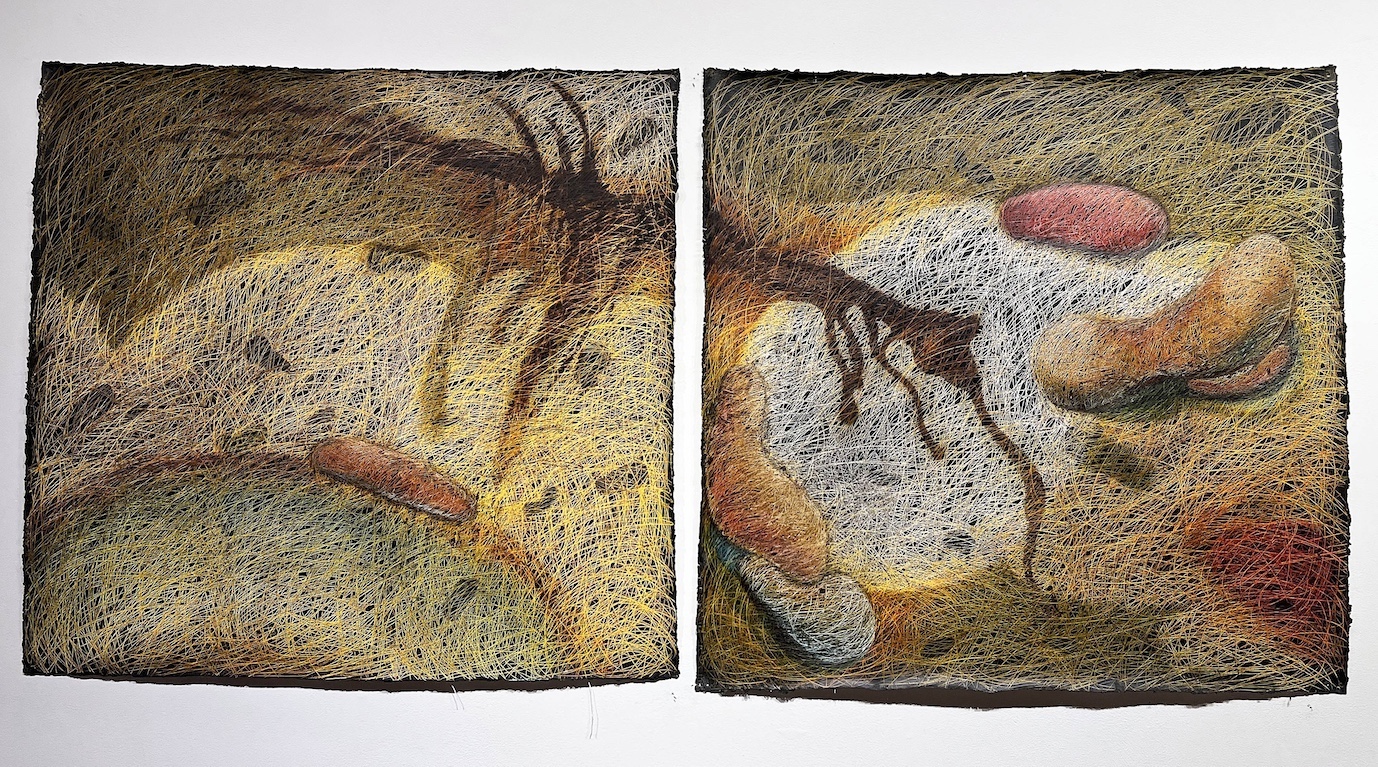
Helosia Pomfret, Untitled #7, Diptych 34 x 36″ 2024

Diptych, Untitled #7, displays a multicolored, organic, abstract composition in which the canvas is cut, re-arranged, and re-stitched. She says, “My work involves the transformation first from the idea of an impulse to scientific representation and measurement, and second, from scientific representation back to abstracted mark-making, color, texture, and re-purposed and re-constructed materials.”    These plant-like shapes illustrate a new environment for the viewer to ponder.

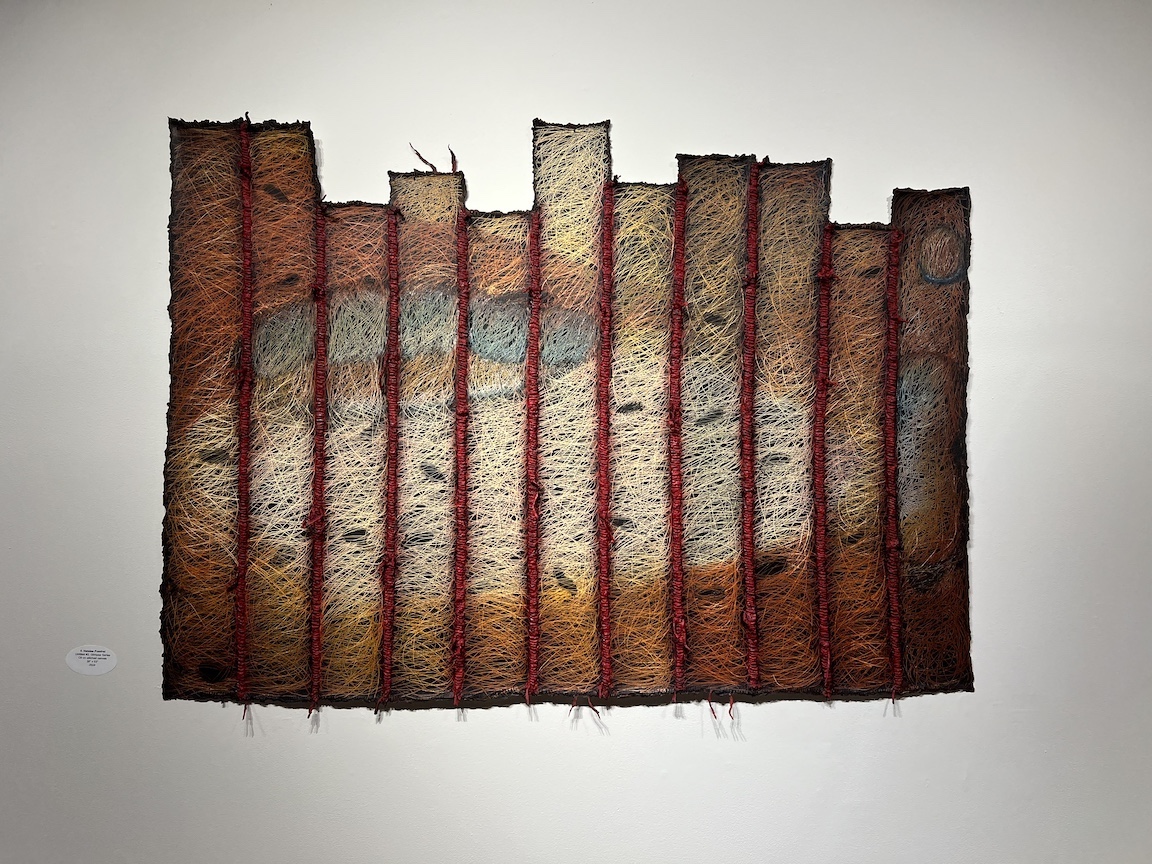
Helosia Pomfret, Glimpse Series, #2, Oil on Stitched Canvas, 38 x 53″. 2024

In the painting Untitled #2, the artist confronts her audience with a wall of movement that contrasts these vertical panels against a sea of shapes and colors moving from right to left in the background. The small, dark shapes feel like microbes swimming over the scratched surfaces. It is a primitive dance, as energy, order, and chaos co-occur during the movement concert. Raised in Brazil and later relocated to Detroit for her study of art, one wonders if something in her South American DNA makes these compositions so unusually new and fresh.

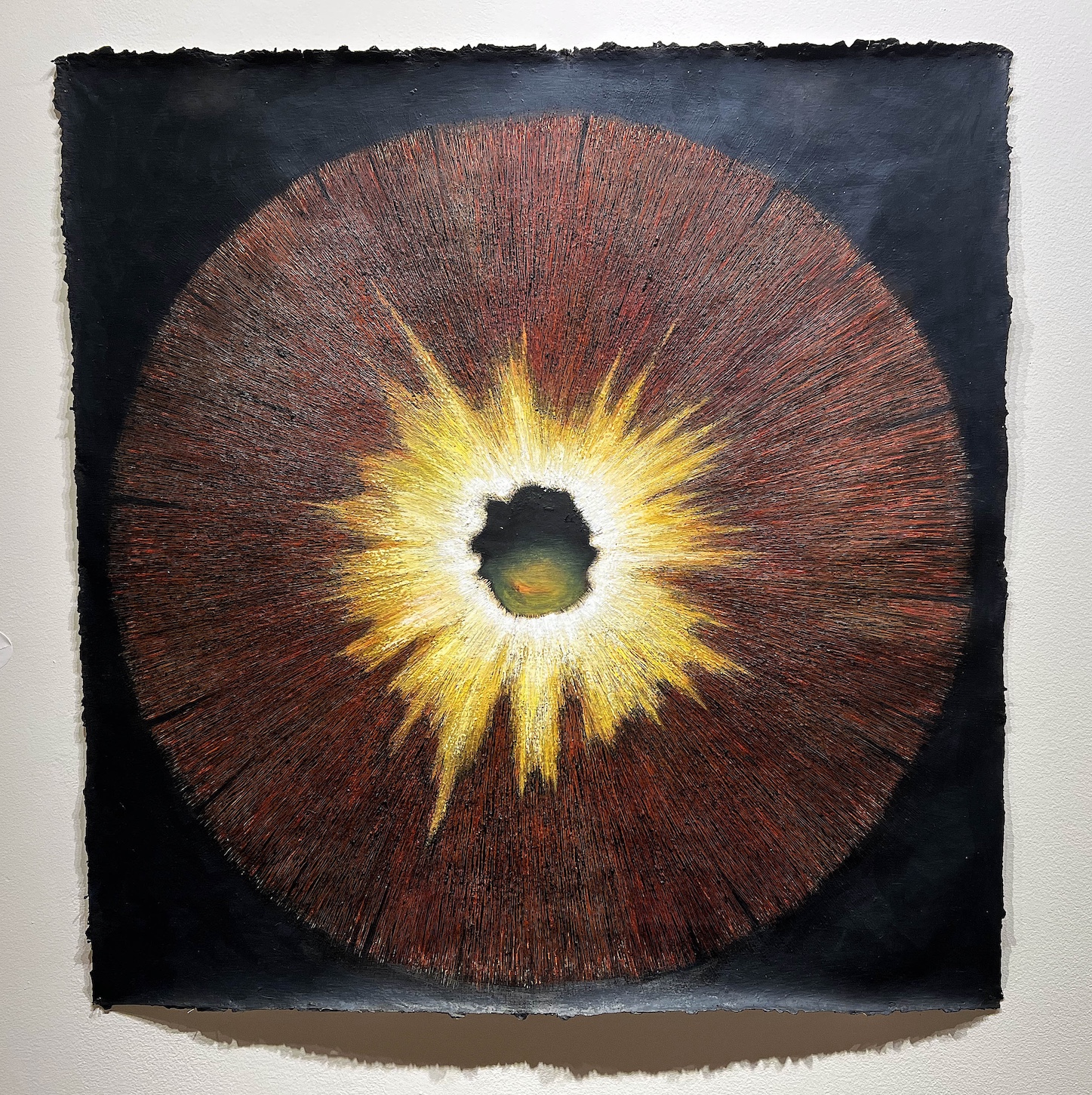
Heloise Pomfret, Untitled # 6, Glimpse Series, 36×34″ 2024

The series of Mandala-like circular paintings located in the gallery provides a contrast to the horizontal compositions and flirts with the idea of scientific explosions on the planet. They are an entirely different kind of sensibility that occupies the artist’s conceptions, especially when making the transition from rectangle to circle.

She says in her statement, “My work involves the transformation first from the idea of an impulse to scientific representation and measurement, and second, from scientific representation back to abstracted mark-making, color, texture and re-purposed using re-constructed materials.” There is a mobile and versatile side of Heloise Pomfret’s work in the exhibition when you consider the paintings, the structures, and the ceramics.

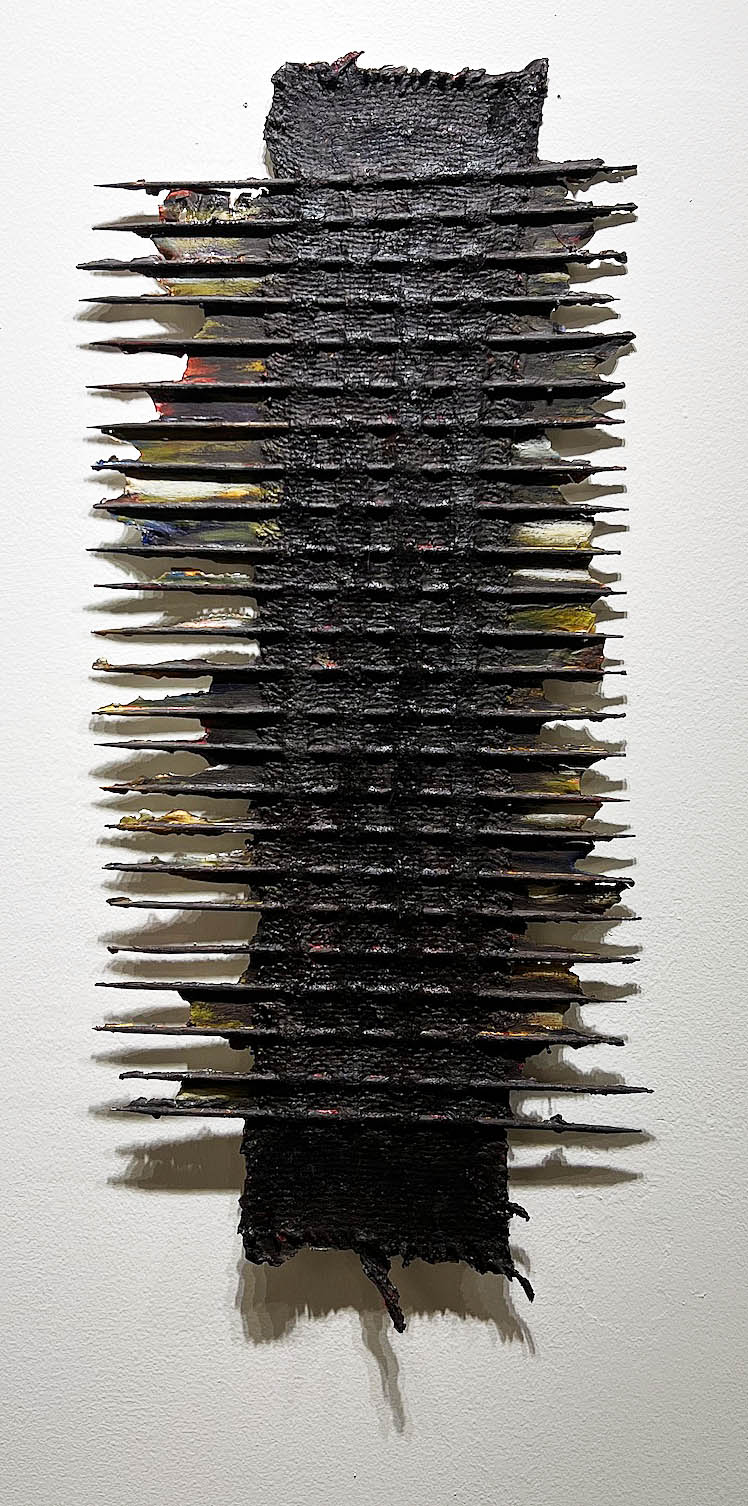
Heloise Pomfret, Construction # 8, Burlap, oil, and Bamboo, 25 x 12″. 2024

In Bamboo, the relief construction uses oil to create a dark vertical grid that feels like something produced by native people of South America. Stitched onto burlap, it suggests some spiritual practice to this viewer. She says, “The philosophy of my work is about the energy, order, and chaos that occurs during psychological or physical stress, which serves as theoretical support to the mark-making and constructs of my work. The surface is often an analogy to the body and memory, in which experience occurs and is transformed.”

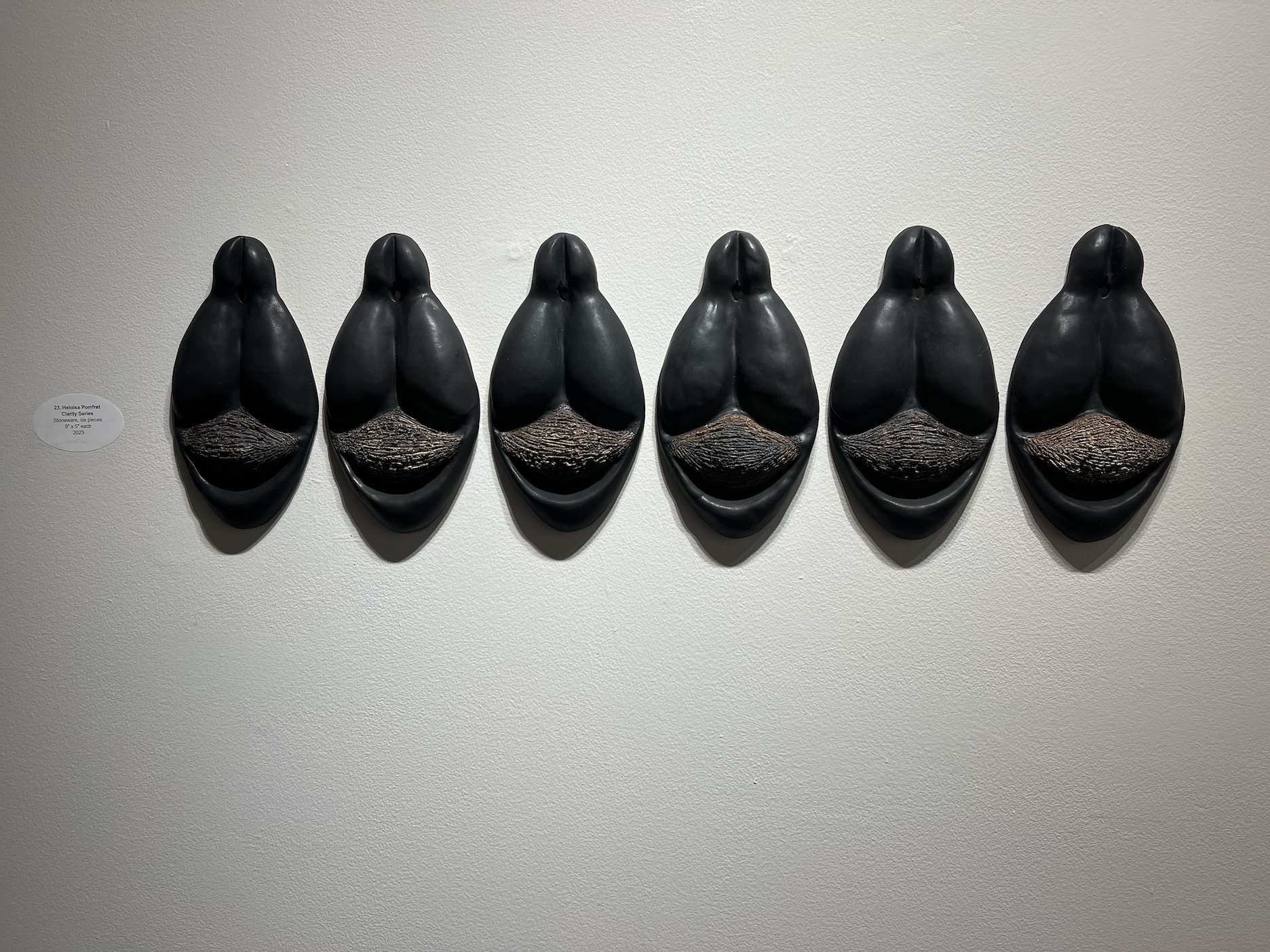
Heloise Pomfret, Clarity Series, Stoneware, 6 Pieces, 9×5″, 2023

It is not often that an artist whose primary work is two-dimensional will make drawings, prints, or photographs, but even less frequently will they create a ceramic body of work. Yet, in this exhibition, Heloisa Pomfret presents a series of 15 ceramic objects. Most are wall reliefs; she chooses stoneware with a black glaze to express her ideas. In the Clarity series, she scratches her motifs into the glaze, in keeping with the other bodies of work she has created for this exhibition.

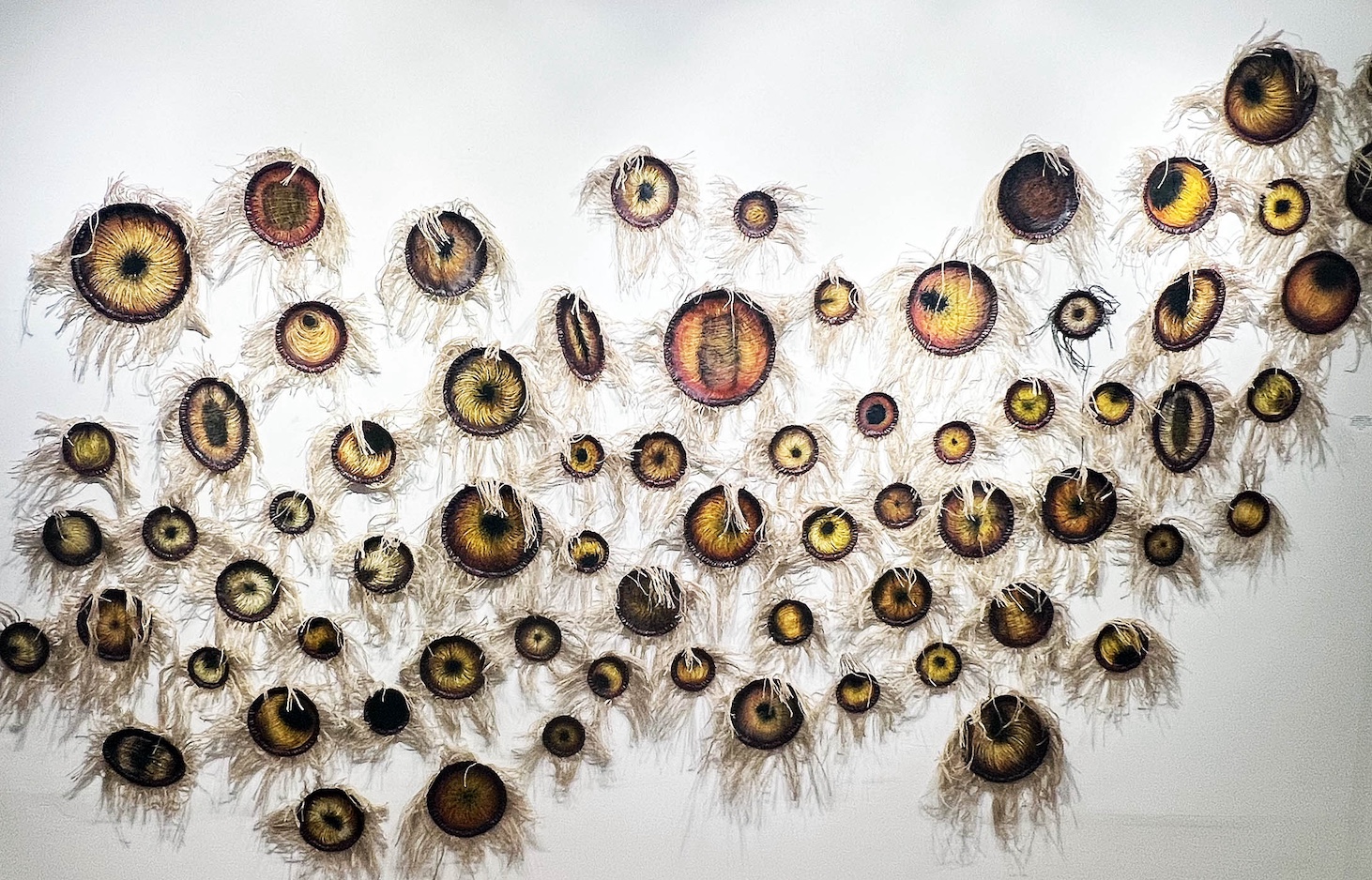
Heloise Pomfret, Installation, small circular objects on plywood.

The work in this exhibition reflects the varied mediums and materials that Pomfret employs to explore her personal psychology in paintings, installations, and ceramic objects. A large piece of plywood displayed in the center of the gallery demonstrates yet another approach, reflecting the diversity of the artist’s aesthetic means. These circular stitched and scratched smaller pieces reflect the translation of her emotional impulses into physical form, “The Brain” is a delightful and multifarious collection of original objects, literally unlike anything this writer has seen.

Heloisa Pomfret is a Brazilian-American interdisciplinary visual artist. She earned an M.A. and an M.F.A in Painting/Drawing from Wayne State University in Detroit, Michigan. She also earned a bachelor’s degree in journalism from Casper Libero College in Sao Paulo, Brazil.

The Helosia Pomfret’s exhibition is on display through the Christmas Holiday at the N’Namdi Center for Contemporary Art, Detroit Michigan.

[adrotate group=”2″]

Page 1 of 36

Powered by WordPress & Theme by Anders Norén