Detroit Art Review

Critical art reviews of Detroit galleries and museums weekly

InterStates of Mind @ MSU Broad

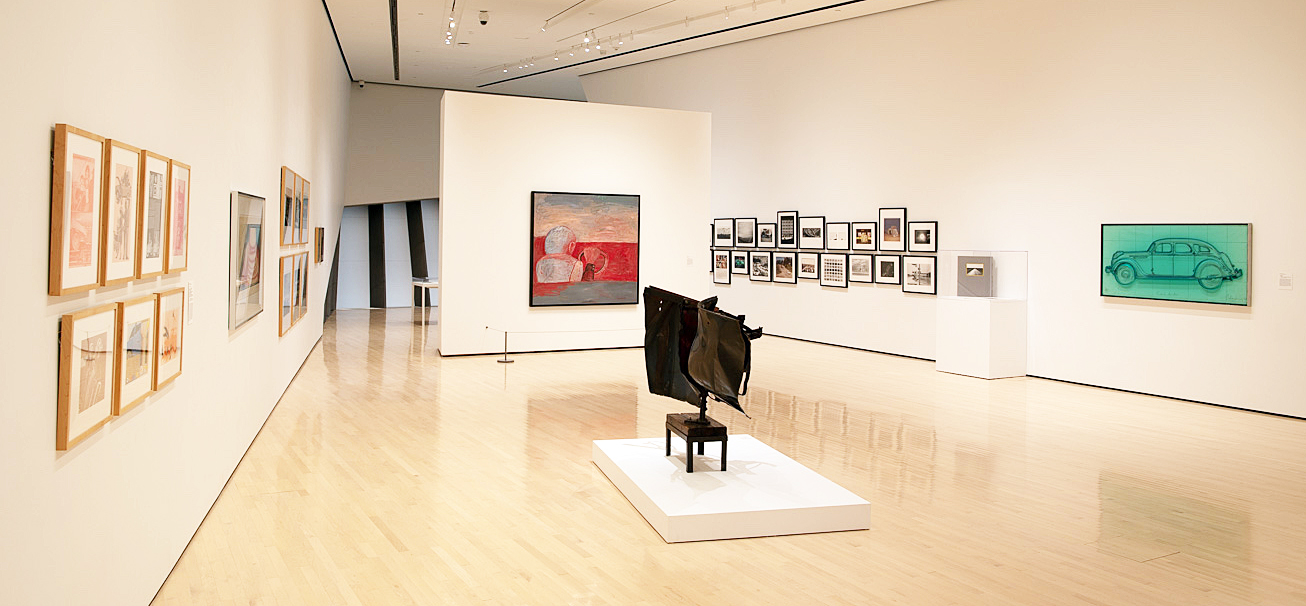
InterStates of Mind: Rewriting the Map of the United States in the Age of the Automobile installation view at the Eli and Edythe Broad Art Museum at Michigan State University, 2020. Photo: Eat Pomegranate Photography.

In 1928, Ford Motor Company acquired 2.5 million acres of forest in the middle of the Brazilian Amazon with the intent of supplying the company’s Michigan factories with a reliable supply of cheap rubber. Here it erected Fordlandia, a pop-up town populated by locals who, coaxed by competitive wages, worked in the employ of Ford Motors. Ford aggressively pushed American culture onto the workers, mandating, among other things, required poetry readings (in English), community sing-alongs, and American cuisine. In 1930, the workers revolted, and the Brazilian army had to restore order.  The endeavor was a failure.  The region wasn’t sufficiently conducive to growing rubber trees, and by 1934, the project was abandoned; however,  Fordlandia’s buildings still stand, and the town attained immortality as a major inspiration for Aldous Huxley’s dystopian Brave New World.  Fordlandia is just one of many examples of the automotive industry’s influence on culture presented in the MSU Broad’s excellent exhibition InterStates of Mind: Rewriting the Map of the United States in the Age of the Automobile.

This large exhibition fills the entirety of the Broad’s second floor gallery suite with a multimedia selection of art and ephemera largely (though not entirely) selected from its own collection. While it sometimes addresses the automobile industry in broad strokes, the exhibition also addresses how the automotive industry shaped Lansing in particular. InterStates of Mind gives special attention to some of the economic, environmental, and social problems exacerbated—if not always directly caused—by the automotive industry.

InterStates opens with a trilogy of early, iconic films which emphatically proclaimed an unfettered optimism of the automobile (and in technology in general) to realize an earthly American utopia.  In 1939, for the New York World’s Fair, General Motors constructed an impressively large animated diorama of a city of the future, at the heart of which was the automotive industry and the highway system.  The 23 minute film Futurama slowly pans through this sprawling model (designed by GM’s Norman Bel Geddes) as a narrator envisions a future in which science, technology, and the highway system are harnessed to create an ideal society. Though many of the film’s predictions indeed came true, its flamboyant optimism in a technology-driven utopia certainly rings hollow in retrospect.

Master Hands, a film also produced by General Motors, artfully walks the viewer through the manufacturing process of a 1936 Chevrolet.  Underscored by a triumphant, Wagneresque soundtrack composed by Samuel Benavie and performed by the Detroit Symphony Orchestra, the film’s visuals really are aesthetically beautiful, and the music engages with action on the assembly line in a perfectly coordinated dance. Master Hands showcases the undeniable ingenuity behind the assembly process.

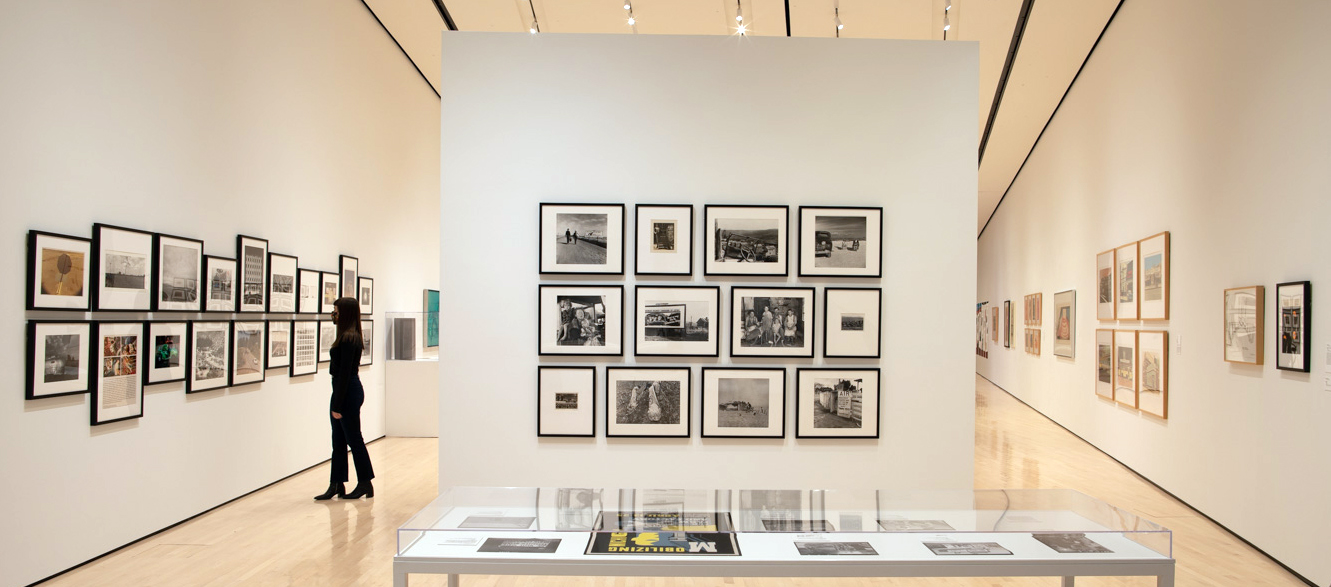
As a foil to the optimism of these films, InterStates also presents an ensemble of the socially poignant photographs of Dorothea Lange, Walker Evans, and other photographers whose work documented the lives of those worst hit by the Great Depression.  “There’s no way like the American way,” a billboard loudly proclaims in a photograph by Arthur Rothstein, though the blighted buildings in the background brutally undercut this cheerful sentiment.  While some of these photographs don’t directly reference the automobile itself, they collectively push against the utopic, concurrent visions of Futurama.  

Arthur Rothstein, Sign, Birmingham, Alabama, 1937, printed 1987. Eli and Edythe Broad Art Museum, Michigan State University, purchase

Dorothea Lange, Gas station. Kern County, California, 1939, printed 1987. Eli and Edythe Broad Art Museum, Michigan State University, purchase.

This exhibit gives prominence to an ensemble of eight large photographs by Brazilian artist Clarissa Tossin, whose conceptual project When Two Places Look Alike addresses the overtly colonialist nature of Fordlandia.  Many of the American-style homes built for the workers in Fordlandia still stand, and Tossin’s photographs wittily draw visual parallels between the architecture of Fordlandia’s homes with those of Alberta, Michigan, also a company town established by Ford in the 1930s.

Clarissa Tossin, When two places look alike, 2012. Courtesy the artist, Luisa Strina Gallery São Paulo, and Commonwealth Council, Los Angeles.

Given Lansing’s prominence in the automotive industry, it seems fitting that this show localizes much of its content.  A generous portion of the exhibit explores the social impact of I-496, the expressway which serves as a main artery Eastward and Westward through Lansing, and the construction of which displaced a mostly African-American population from their homes.  A massive enlargement of an aerial photograph shows a stretch of these houses prior to the construction of the expressway, hinting at the many lives that it would seriously interrupt.

While much of this show examines the automobile’s influence through a jaundiced eye, it certainly refrains from being drearily pessimistic.  There’s a whole ensemble of photographs highlighting the phenomena of the roadside attraction.  And some works celebrate the visual potential of the materiality of the automobile itself, such as Chakaia Booker’s rubber sculptures that playfully flaunt the aesthetic potential of used tires, which she manages to cut, sculpt, twist, and manipulate into forms that look almost organic.

InterStates of mind offers a considered and thoughtful re-assessment of the automotive industry’s impact on society.  Though this exhibit is certainly informative (expect to find yourself reading your way through large parts of this exhibit), it’s also visually rewarding, offering visitors a veritable cornucopia of works which snugly make the most of the Broad’s exhibition space.  While these works certainly aren’t disparaging of the automobile’s influence on culture, they collectively approach the subject with an honest ambivalence, and the early 20th Century visions and promises of a technology-driven American utopia, in retrospect, ultimately seem to ring hollow.

InterStates of Mind: Rewriting the Map of the United States in the Age of the Automobile installation view at the Eli and Edythe Broad Art Museum at Michigan State University, 2020. Photo: Eat Pomegranate Photography.


Video courtesy of the Eli and Edythe Broad Art Museum
InterStates of Mind is currently on view at the Eli and Edythe Broad Art Museum, and runs through August 2021.  The exhibition is free, but to ensure a safe experience timed tickets must be ordered in advance.

Jaume Plensa Sculpture @ UMMA

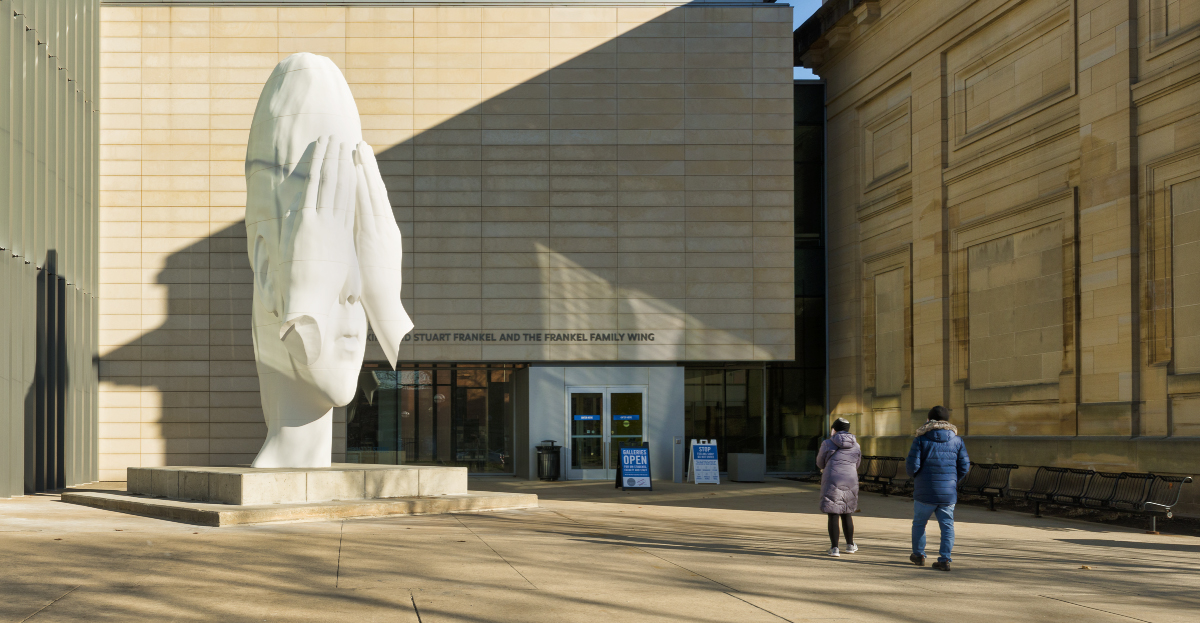
Jaume Plensa, 2018, polyester resin and marble dust, 24.5’ h x 9’ x 10’. Gift of J.Ira and Nicki Harris. Photo: Patrick Young, Image Works


We knew this would happen.

After a certain amount of hand-wringing and wheel-spinning at the beginning of the pandemic, museums and galleries have begun to come up with increasingly creative ways to engage the public’s interest in art,  both in person and digitally.

The University of Michigan Museum of Art (UMMA) has just installed a major new sculpture by Spanish artist Jaume Plensa on the museum grounds, where it can be seen all day and all night. (Plensa may be best known to the region’s art-loving  public as the creator of the Crown Fountain, the interactive video sculpture in Chicago’s Millennium Park.)

Behind the Walls  was on view for the Frieze Sculpture Festival in May 2019 at Rockefeller Center in New York City, but since its purchase and recent installation in November 2020, will be permanently on display outside UMMA. The pure whiteness of the young girl’s head, with her disembodied hands shielding her face, references classical marble sculpture, but its colossal size and slightly distorted perspective bring it into the twenty-first century.

Curriculum/Collection @ UMMA

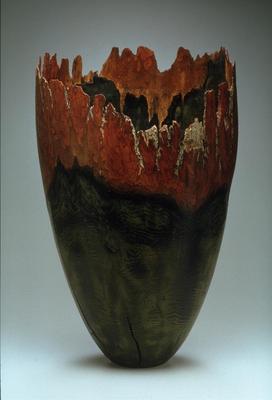
Hemlock Canyons, Mike Irolla, 2001, hemlock, 25” x 16” x 16” photo: UMMA

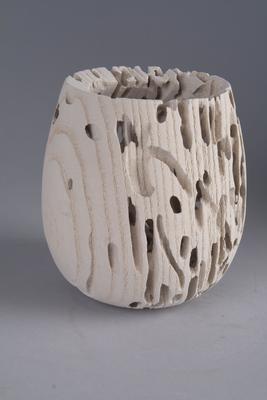
Wormwood Vase, David Nish, 1997, wormy ash, 4 1/2” x 4” x 4” photo: UMMA

And if you are lucky enough to have a university i.d. (UMMA is currently closed to the general public during the pandemic) and can get inside the museum, an inventive new and ongoing program called Curriculum/Collection has recently launched. The project integrates art objects from the museum’s collection into the study of university subjects as diverse as philosophy, design and architecture, and as seemingly improbable as health care, data science and social work.  For this project, which will run from October 2020 through June 2021, Andrew W. Mellon Curator David Choberka has enlisted 7 classes from throughout the university to integrate artworks into their course of study to–as he says–“explore the infinite value of art in shaping our understanding of …well, everything.” In addition to the art objects on display in the A. Alfred Taubman Gallery I, the Curriculum/Collection has a robust and constantly changing online presence, with plentiful video and textual content to amplify and clarify the explorations of the subject matter through art. Online material will be updated and expanded throughout the year as the classes progress.

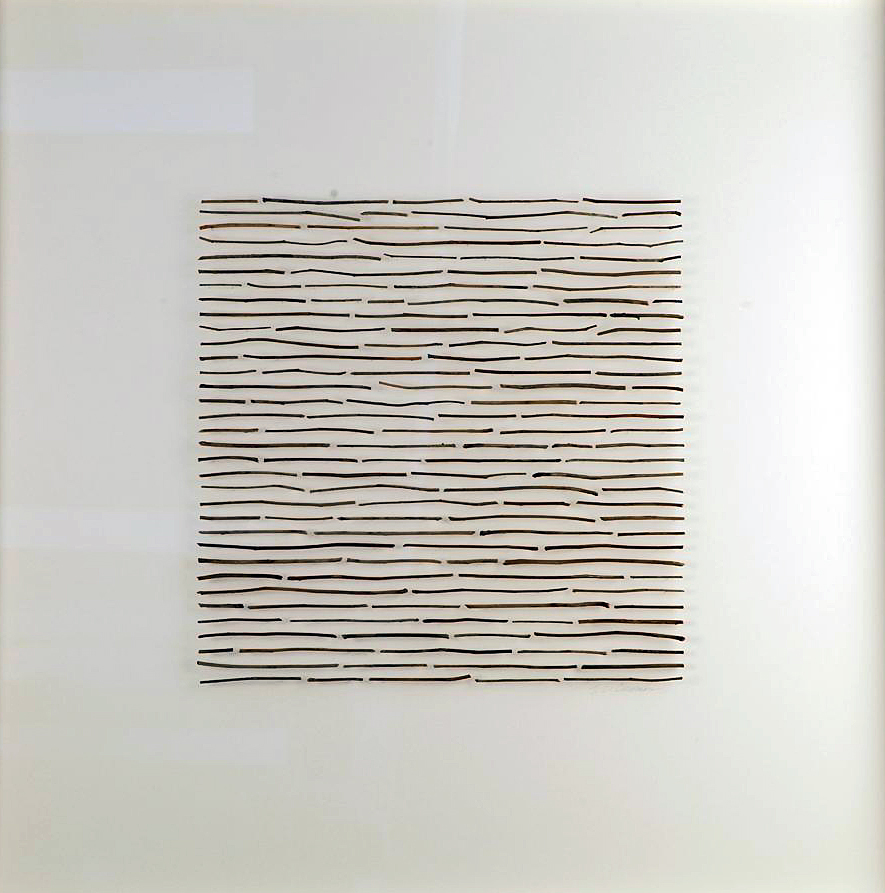
Field Notes II, Larry Cressman, 2009, raspberry twigs, polymer, pins, 32 5/8 x 32 ½ “ photo: UMMA


Some areas of study are more obviously related to the visual arts than others. For her undergraduate art and design class, Florilegium: Creating a Plant Compendium,  Penny Stamps School of Art and Design lecturer Cathy Barry has chosen a variety of works by artists who engage in the forms, life processes and cultural meaning of plants. Three of the pieces Barry has selected show how artists can enlist natural systems in creating artworks that meaningfully connect human and natural forces.  For his elegant turned-wood vase Hemlock Canyons, Michigan artist Mike Irolla leaves residual bark on the surface to suggest natural rock formations referenced in the title, and employs fire as the finishing element, adding texture and color the surface. Nearby, Wormwood Vase by David Nish, can be described as a work of art collaboratively created by an insect and a human. In contrast, a delicate assemblage by Larry Cressman implies the careful labor of a natural historian, collecting and cataloging slender twigs in a serene post-minimalist composition that hums with nature’s quiet buzz.   There is clearly a lot of material for the students to work with here, in addition to their field work and their own studio practice.  The final product of all this thought and reflection will be a book-form summation of their studies based on the florilegium, a compendium of plant illustrations popular among the British landed gentry in the 18th century.

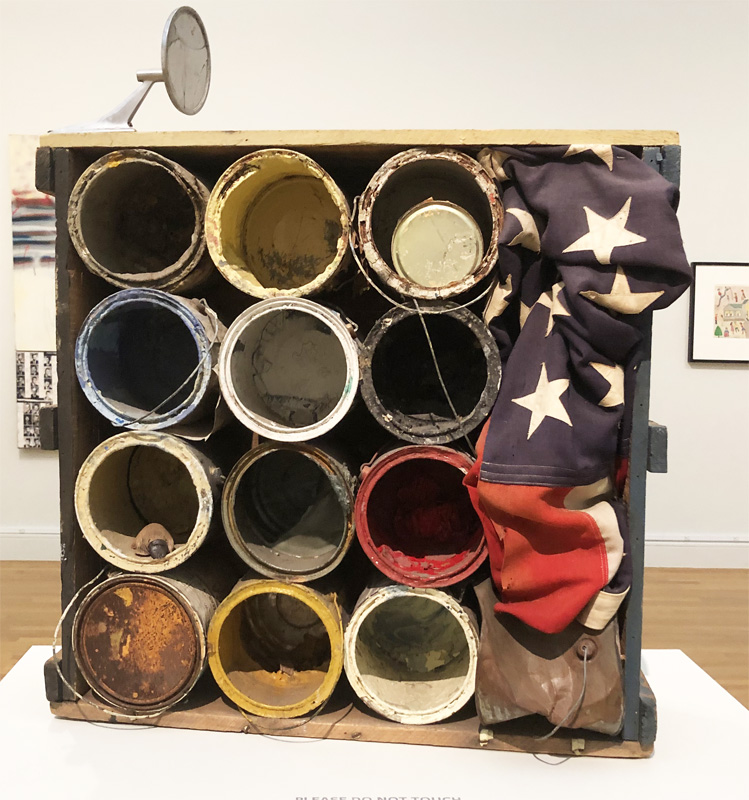
Untitled (Paint Cans), Tyree Guyton, 1989, paint cans, wooden crate, American flag, rearview mirror, ceramic figure. Photo: K.A. Letts

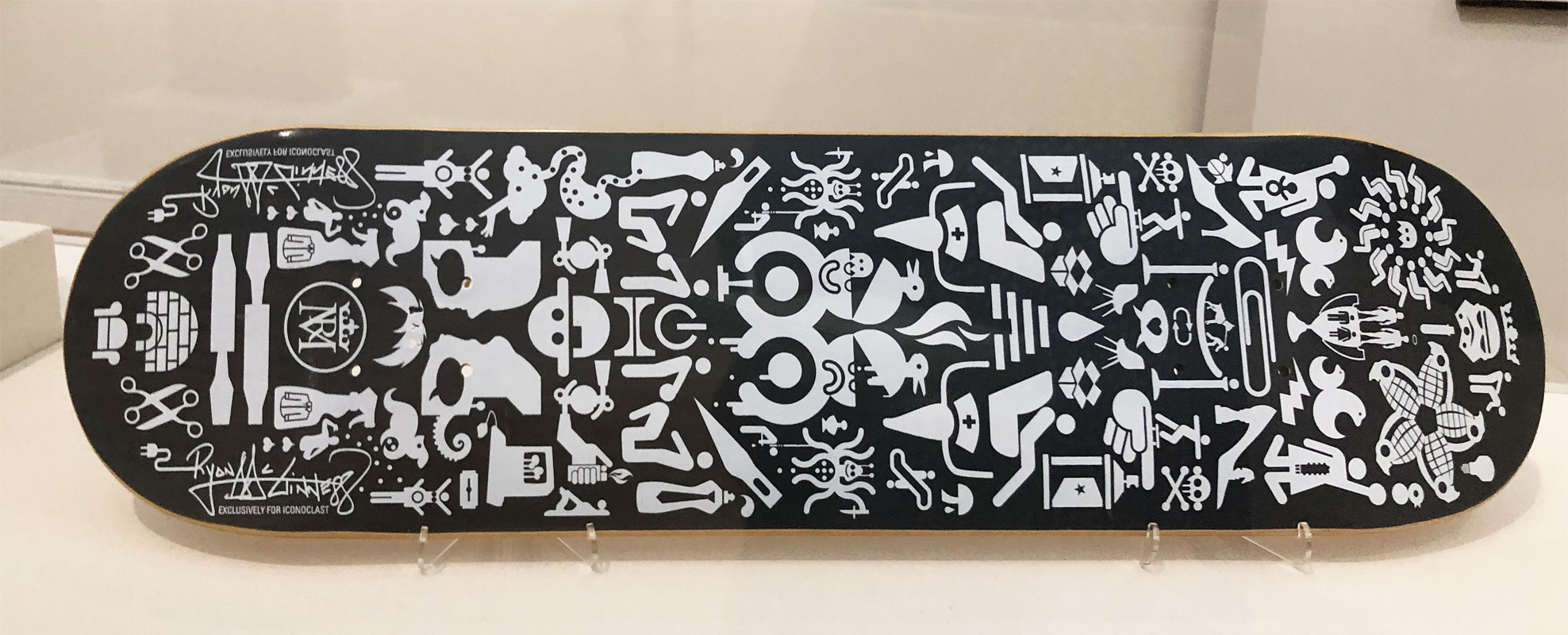
Hopeless Gifts to Material Culture, Ryan McGinness, ca. 2000-2008, silkscreen on skateboard. Photo: K.A. Letts

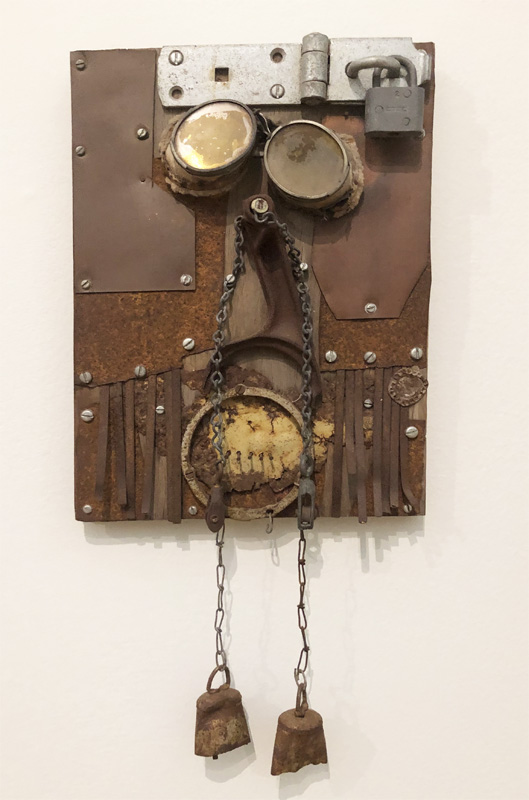
Another particularly interesting collection of objects and images by artists with ties to southeast Michigan will support Introduction to Community Organization, Management and Policy/Evaluation  Practice. Course leader Larry M. Gant, who holds professorships in both the School of Social Work and at the Penny  Stamps School of Art and Design, premises the idea for this course on his view that conventional social work focuses too narrowly on quantifiable socio-economic assets and deficits, while neglecting intangible social capital, such as community based art. Selected artworks include an assemblage by Tyree Guyton, whose Heidelberg Project has famously waxed and waned in Detroit for over 30 years. In a nearby case, a hipster skateboard by Ryan McGinness features cryptic hieroglyphics of urban signage and graffiti. A mask-like assemblage entitled Michigan Worker, by George Garcia, succinctly expresses both drudgery and endurance, and is typical of Detroit artists that use the found detritus of the city as raw material for their art practice.  These artworks make the case for a more nuanced appreciation of visual culture within the context of urban communities, and it will be interesting to watch this class progress and what  conclusions can be teased from the materials provided.

Michigan Worker, George Vargas, 1985,welding goggles, metal, hanging belts, rusty bottle cap, pulleys, chains, padlock mounted on plywood, 20 7/8” x 10 3/8” x 2 9/16” Photo K.A. Letts.

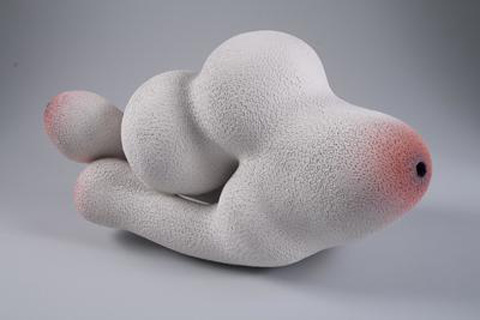
Nociceptor-Heart Sutra, Susan Crowell, 2009, white stoneware, industrial ceramic pigment, 9” x 18” x 9” Photo: UMMA. Class: Perspectives on Health and Health Care.

The direction that the other five classes will take in their exploration of their selected artworks remains to be discovered, as Curriculum/Collection is in its early stages. The museum will provide supporting information on the progress of each class on the museum website, updated throughout the academic year. I, for one, am interested in finding out how art and philosophy, architecture and neural networks, data science, political protest and health science will cross-pollinate and enrich each other. An occasional virtual visit  to Curriculum/Collection to see how the U of M students are doing might be just the thing to get us through this dark pandemic winter.


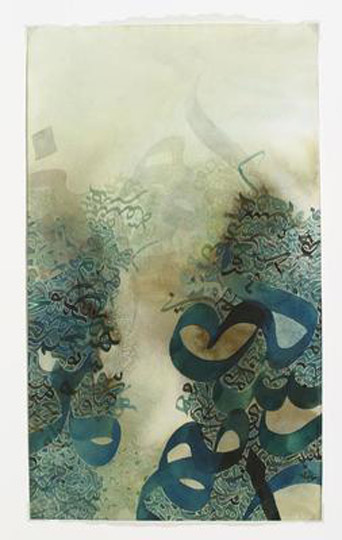
Winter in Ann Arbor, Khaled al-Saa’i, 2002, natural ink, tempera and gouache on paper, 14 1/16” x 8 5/16” Photo: UMMA. Class: Data Science and Predictive Analytics

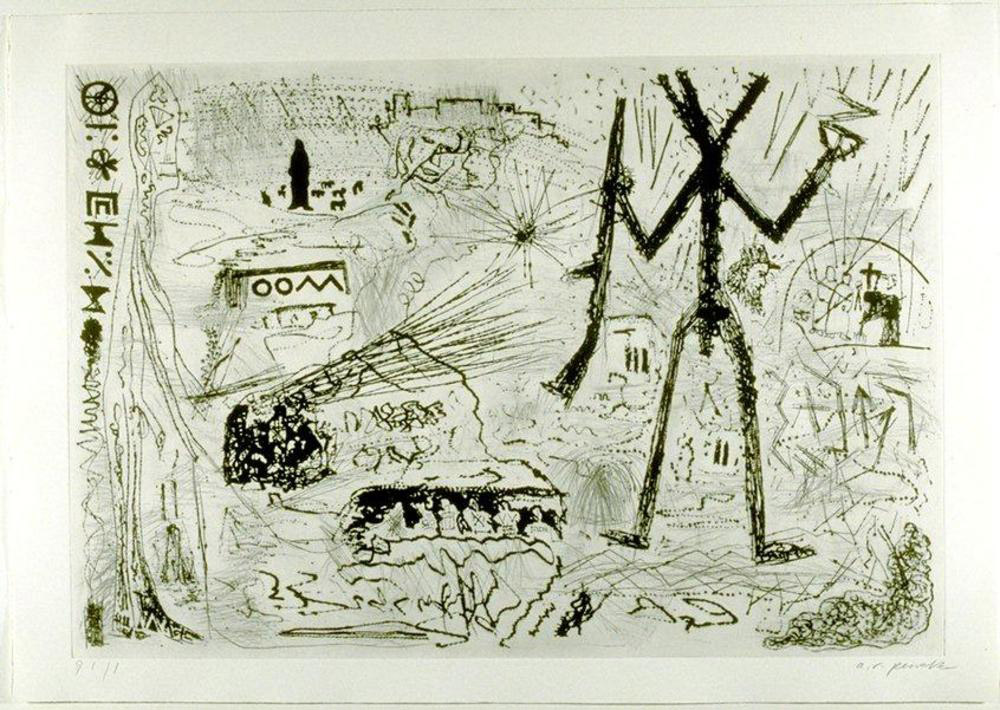
A Taste of the Desert, A.R. Penck, 1983, drypoint on Arches vellum paper, 29” 5/8” x 41 7/8” Photo: UMMA. Class: Art and Resistance: Global Response to Oppression.


Car Design in the Motor City @ DIA

Detroit Style: Car Design in the Motor City, 1950 – 2020 at the Detroit Institute of Arts

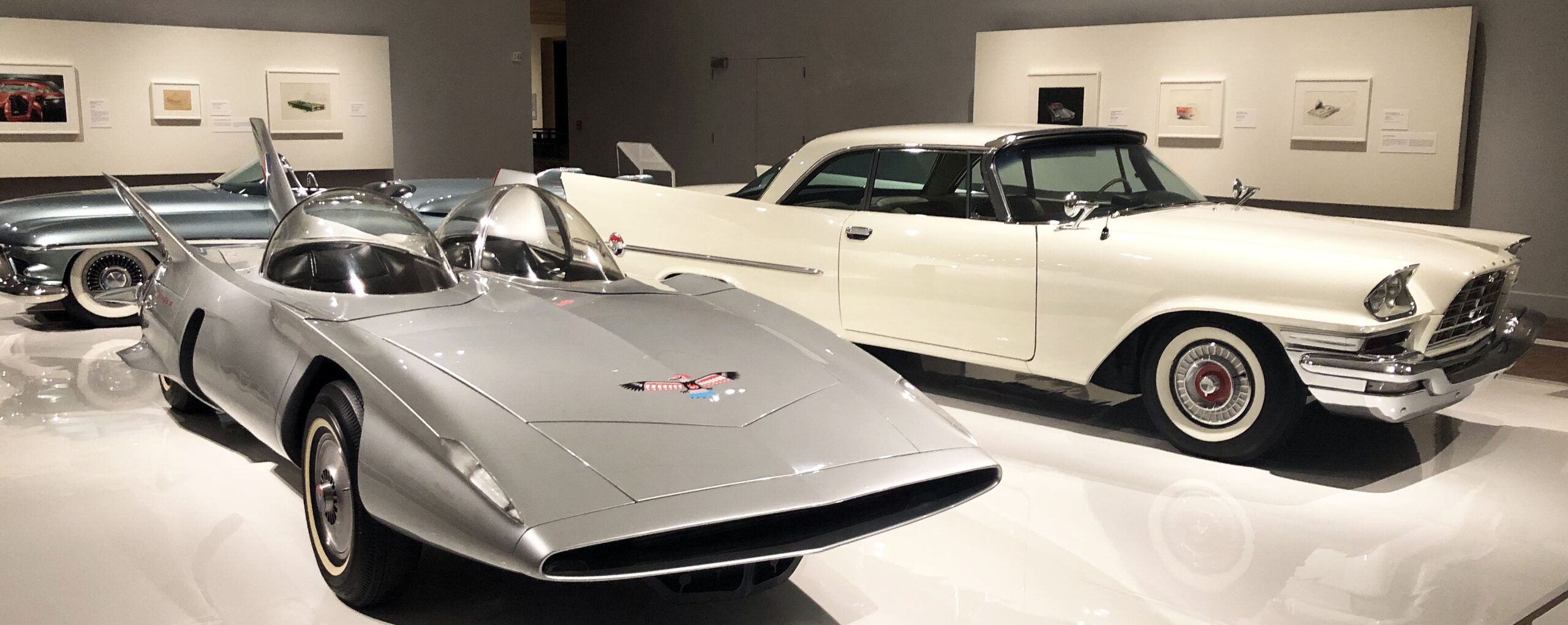
Installation: counterclockwise, Firebird III, General Motors, 1958; 300C, Chrysler Corporation, 1957; Le Sabre, General Motors, 1951

As a visitor arriving at the Farnsworth Street entrance of the Detroit Institute of Arts to take in “Detroit Style: Car Design in the Motor City, 1950 – 2020,” you’ve just begun your journey. After entering the Farnsworth doors of the South Wing of the building, one begins a colorful and eye-catching hike across the width of the museum. The tour passes through the hallowed halls and treasure laden galleries of the Institute until reaching the North Wing and the now deinstalled modern/contemporary galleries and the exhibition entrance. There, a wide doorway (definitely not a columned portal) leads into the first show-stopping gallery of “Detroit Style.” Unlike any other gallery in the DIA, arrayed before you is a breathtaking trio of sleek, shiny automobiles seemingly floating on an expansive white vinyl plinth: a silvery gray Firebird III (General Motors, 1958), a pristine white 300C (Chrysler Corporation, 1957), and a lush misty blue Le Sabre (General Motors,1951). Their elegantly understated hues allow the clean lines, crisp edges and creases, wings, fins, and upswept taillights to protrude and project into space. After all, as a curator once wittily claimed, “Automobiles are hollow, rolling sculptures.”

This, the first and largest gallery, focuses on the 1950s in an exhibition that unfolds chronologically decade by decade. Organized and overseen by DIA curator Benjamin Colman, twelve cars in all are displayed, four from each of the Big Three manufacturers. (And, tactfully, a different car graces three distinct covers of the indispensable catalog–in red, silver, or blue, your choice.) Each of the sequential galleries showcases one or more concept and/or production vehicles. In addition to automobiles, the show offers design drawings, archival photos, paintings, a sculpture, and short videos in which designers discuss their works. (Access the videos at end of this text.)

In the opening gallery, for instance, devoted to the 1950s and presenting the cars described above, a drawing by Art Miller, Rendering of Automobile Interior (1952), features a cutaway view of a gleaming red and black interior and the startling sight beyond the opposite window of a tiny, low flying jet zooming by in the distance, an apt reflection of the influence of aircraft forms on auto design then as well as of the au courant lingo of the 50s: “The Forward Look.”

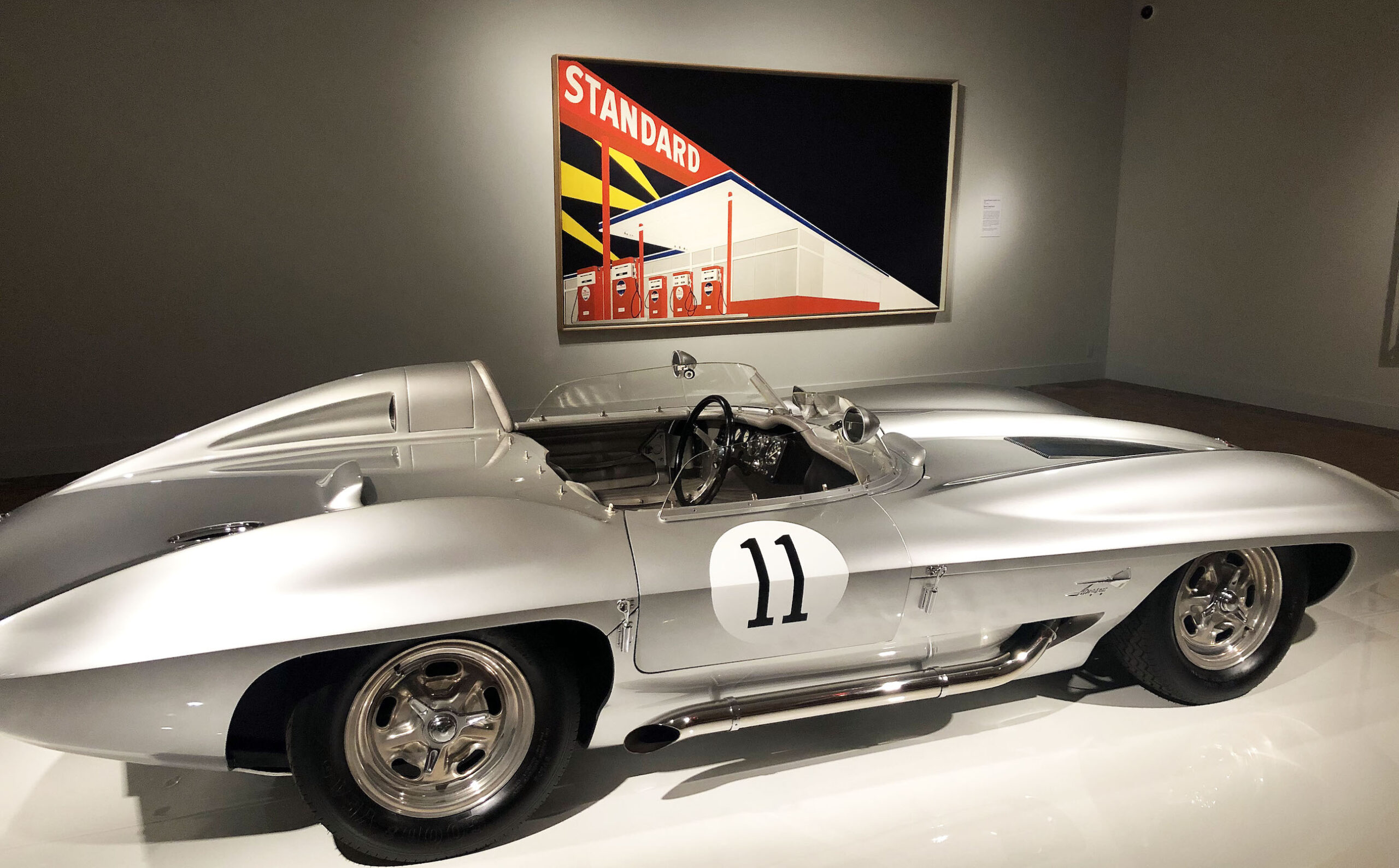
Installation: foreground, Corvette Stingray Racer, General Motors, 1959; background, Edward Ruscha, Standard Station, Amarillo, Texas, oil on canvas, 1963

In one of the subsequent galleries addressing the 1960s, a Corvette Stingray Racer (General Motors,1959) is backgrounded by Edward Ruscha’s Standard Station, Amarillo, Texas (1963). Sharp, crisp lines exaggerating length and emphasizing edges and creases earmark both objects. The iconic red, white, and blue gas station, defined by thrusting diagonals that recede into infinity, is silhouetted against a dark sky with criss crossing searchlights that highlight both the glowing filling station and silvery Stingray in the foreground.

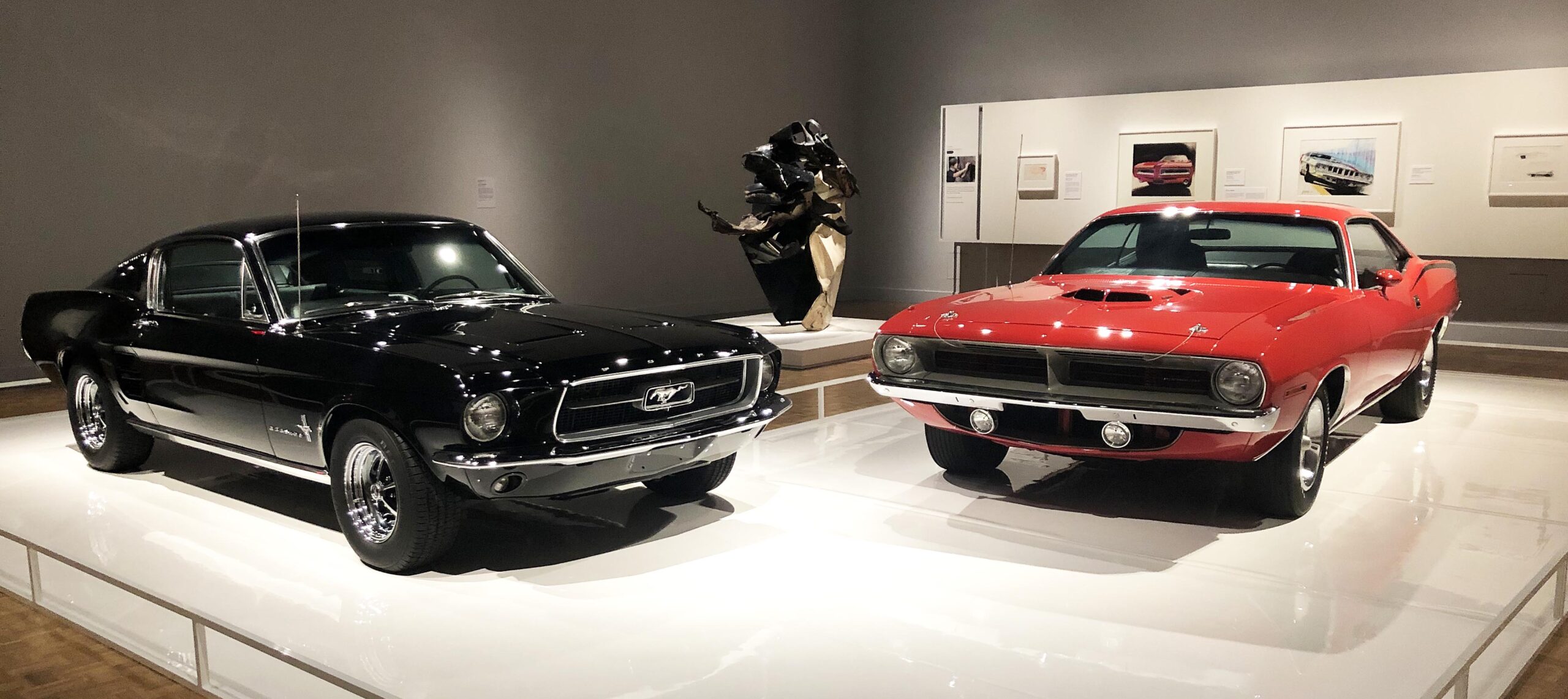
Installation: left, Mustang, Ford Motor Company, 1967; right, Plymouth Barracuda, Chrysler Corporation, 1970; middle, John Chamberlain, Coo Wha Zee, painted steel, 1962

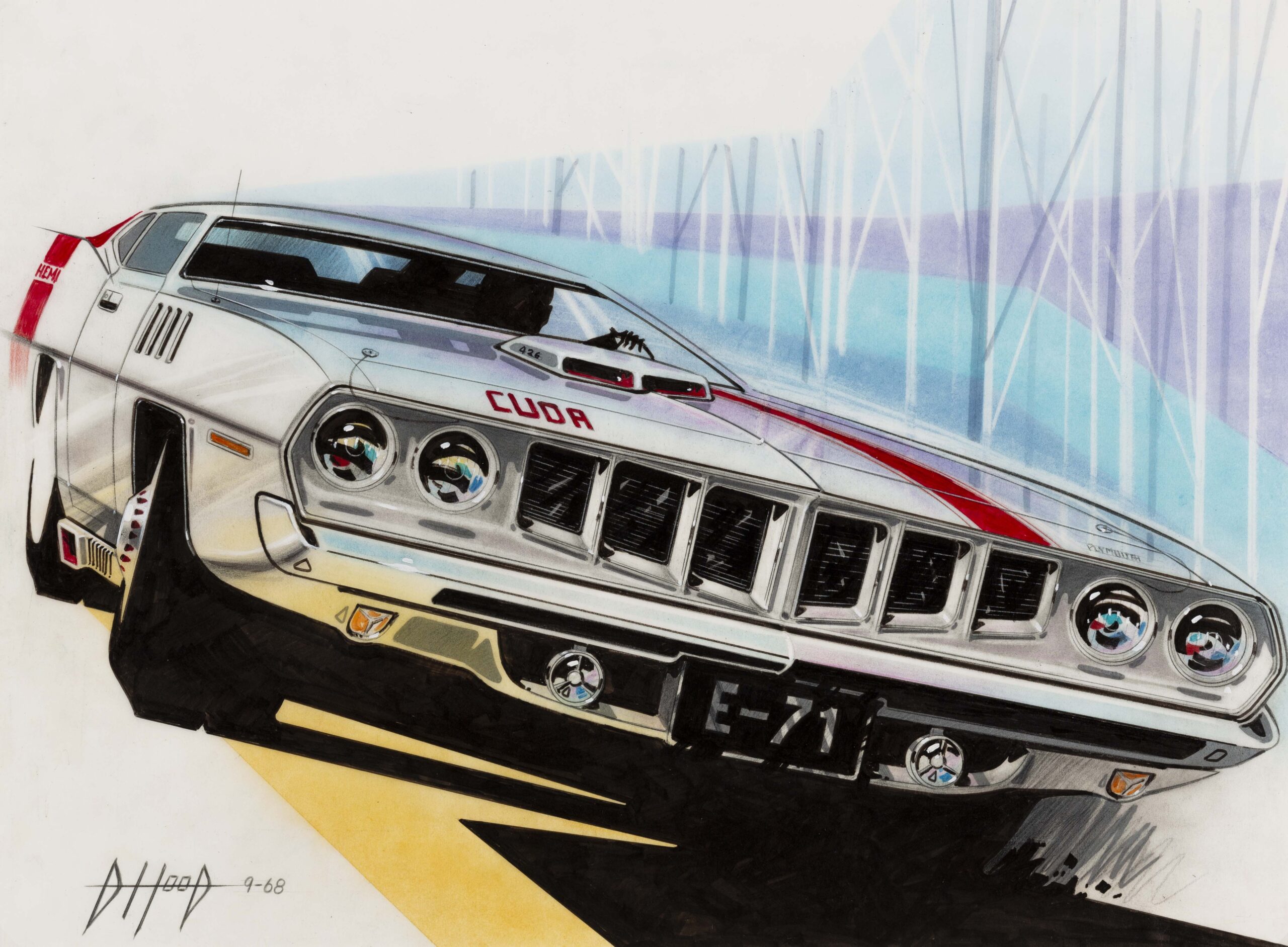
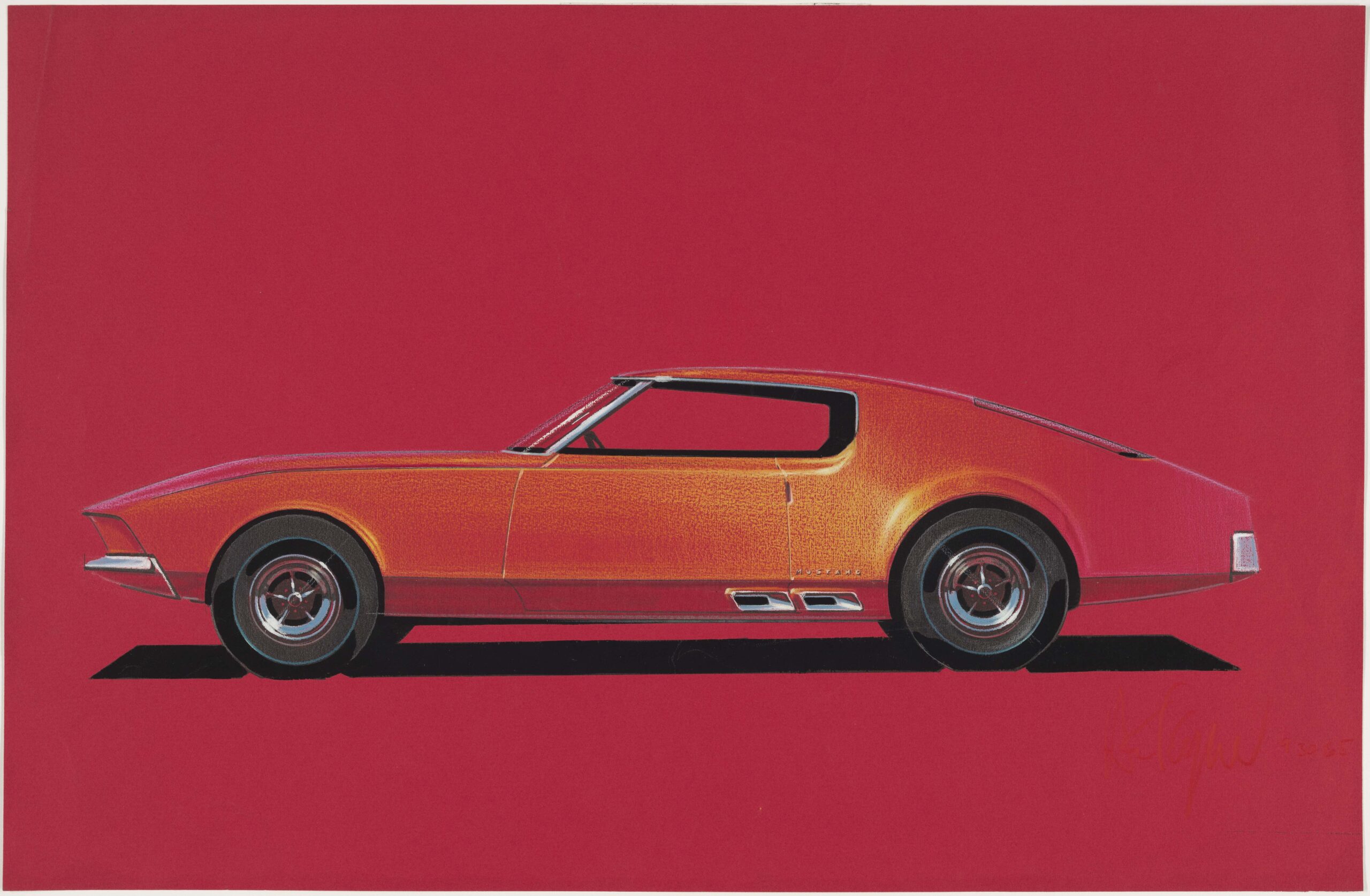
Moving further along into the 60s, two so-called pony cars, the Mustang ((Ford, 1967) and Plymouth Barracuda (Chrysler, 1970), enter the scene. Viewed head on, as here, these sporty, youthful, and spirited vehicles present contrasting hues, one gutsy black, the other flaming red, each with a broad, mouthy grille suggestive of a tense, one-on-one confrontation. Nestled between them is John Chamberlain’s brawny black and white sculpture, Coo Wah Zee (1963). Fabricated from discarded car parts bent and contorted into a tall, rough-edged abstraction, it is, as the title intimates, one “crazy” sculpture. Two drawings, the rakishly tilted 71 Barracuda Front End Facelift Concept (1968) by Donald Hood and Howard Payne’s smoldering Ford Mustang(1965)–a ripe orange body profiled on red paper–attest to the visceral appeal of these feisty, automative rivals.

Donald Hood, ’71 Barracuda Front End Facelift Concept, mixed media on vellum, 1968


Howard Payne, Ford Mustang, Prismacolor and gouache on red charcoal paper, 1965

Just beyond midpoint in the exhibition, rather like a palate refresher, the 4-door, aerodynamic Probe IV (Ford, 1983) comes into view. Its soft, pristine white hue, integrated forms, rounded corners, quiet, whispering demeanor, and four wheel covers minimizing the presence of tires and implicit speed, denote what one commentator described as a “wind cheating supercar.”  Accompanying its calm presence are a number of fluid, ovoid renderings by Howard “Buck” Mook, Maurice Chandler, Taru Lahti, and Ken Okuyama (c. 1982 -1991).

GT, Ford Motor Company, 2017


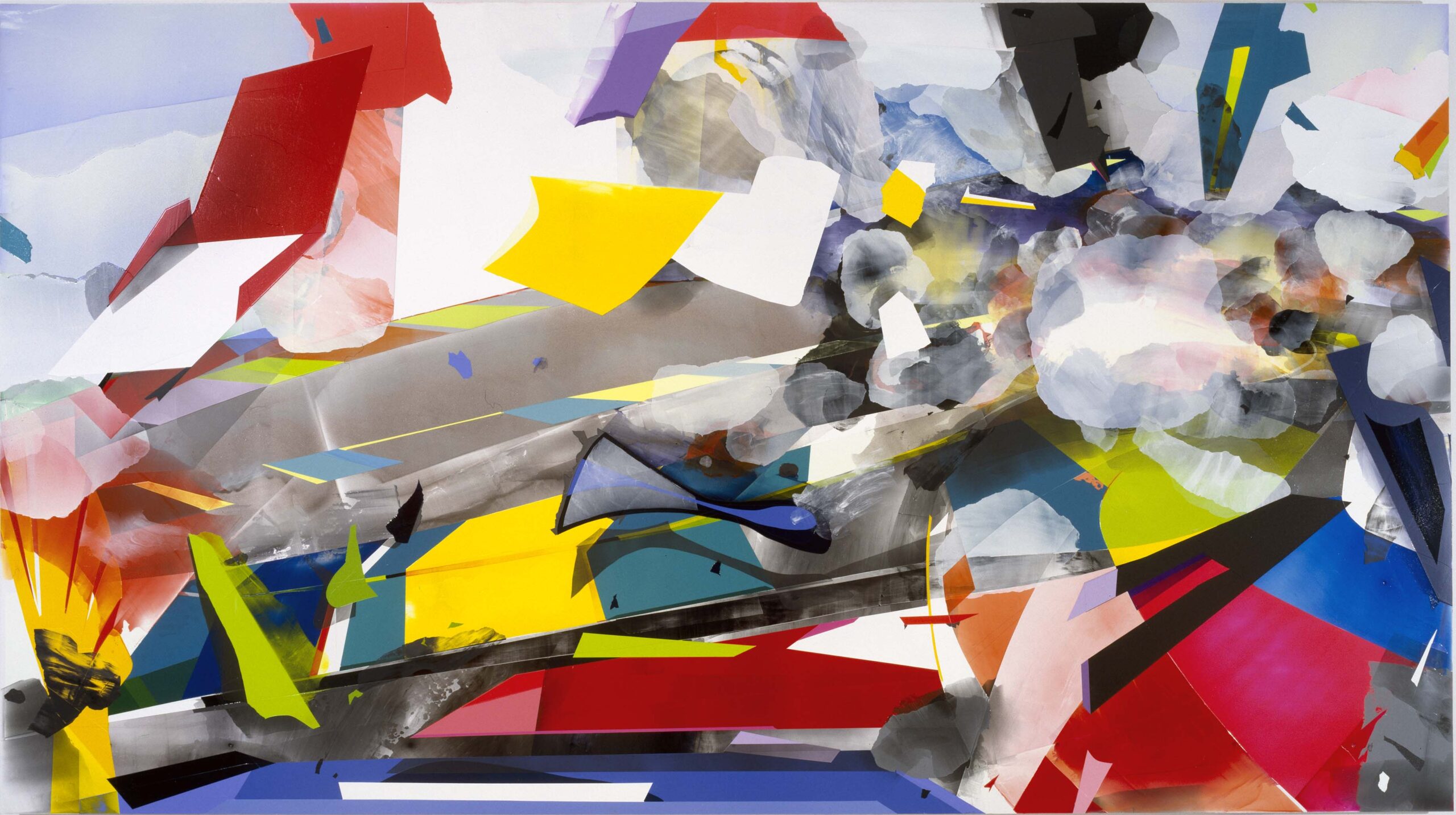
Kristin Baker, The Unfair Advantage, acrylic on PVC on board, 2003

The final gallery, sparely installed, is home to just two works: an electric blue, sinuous, teardrop shaped GT (Ford, 2017) and Kristin Baker’s large scale, mixed media composition The Unfair Advantage (2003). The swept-back lines of the low-slung GT, a reinterpretation of a racing car legend of 1966, telegraph power, speed, machismo. Baker, alternatively, presents a cautionary work, an updated Futurist scene (landscape, raceway?) that evokes jagged, colorful forms whizzing by AND, as a counterpoint, the blurred, roiling smoke and fire indicative of a catastrophic crash. Nothing like ending the show with a bang!

Videos, accessible here,  provide perspective on how Detroit’s iconic vehicles are created with this interview series featuring car designers Ralph Gilles, Emeline King, Craig Metros, and Ed Welburn.  The four designers share their insights on favorite cars, the use of materials, and the collaboration between designers and engineers.

“Detroit Style: Car Design in the Motor City, 1950 – 2020” is on display at the DIA through June 27, 2021. Keep in mind that to view the exhibition you will need to reserve in advance a specific day and time for your visit.

Sarah Rose Sharp @ UM Institute of the Humanities Gallery

Map of the Interior: Sarah Rose Sharp’s “Results or Roses” at UM Institute of the Humanities Gallery

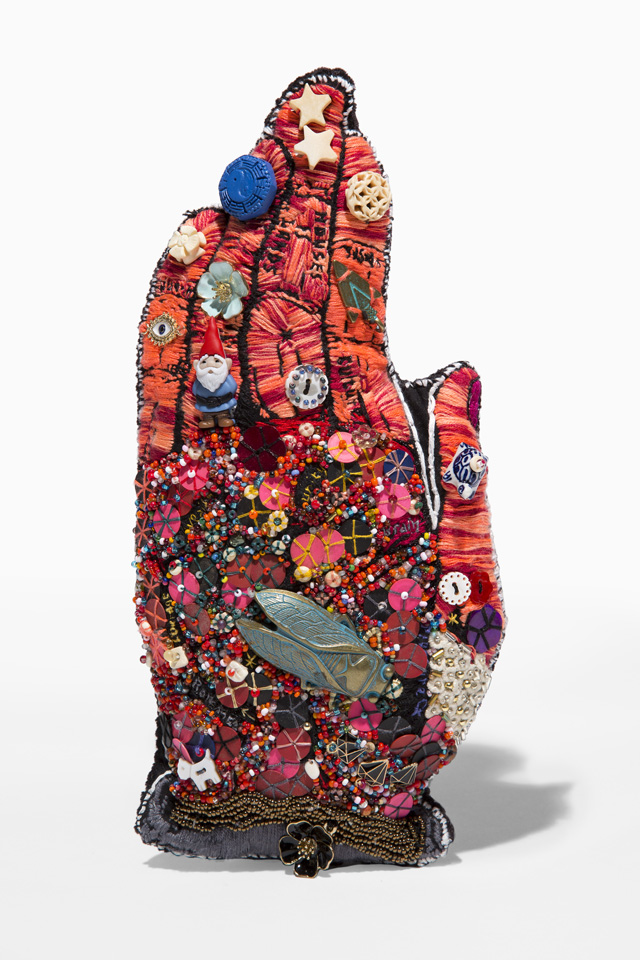
Sarah Rose Sharp, Hand of Fate, 2019, screen print by Too x Nail, fabric, embroidery thread, charms, beads, etc., 11.5” x 6” x 2.5

During these Covid times, visual artists’ exhibitions have migrated to online locations, with mixed results. For some whose work is photographic or text-based in nature, the effect is hardly noticeable.  But for artists making very tactile or three-dimensional work, like the artworks in Detroit artist Sarah Rose Sharp’s Results or Roses at UM Institute of the Humanities Gallery, much is lost in translation.  I felt some guilty delight when the gallery curator, Amanda Krugliak, consented to open the gallery (now temporarily closed to the public during the pandemic) for my visit.

Sharp employs traditional needlework and sewing techniques to create a diaristic map of her interior life. The intimately scaled artworks illustrate several different trains of the artist’s thought and share the walls of the gallery and an adjacent vitrine, providing a virtual tour of the artist’s memories, observations and preoccupations. The overarching intention of the work seems to be located somewhere in the psychic territory between nostalgia and satire.

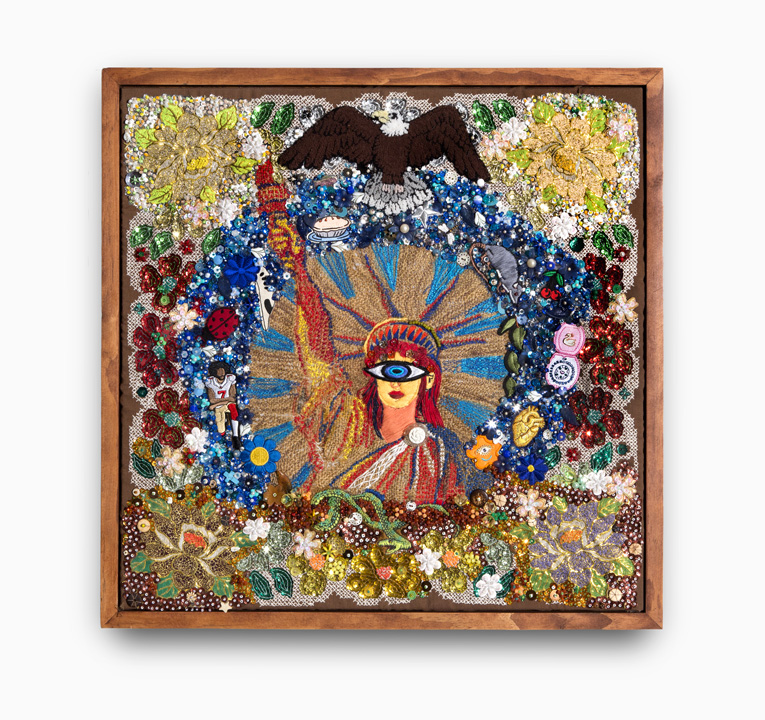
Sarah Rose Sharp, Immigrant Song, 2020, tablecloth by Rose Blaug, rice bag, embroidery thread, sequins, patches, beads, fake flowers, plastic table covering, etc., 24.75 x 24.75”

The modestly-sized but obsessively decorated wall hangings, flags, throw pillows–and some three dimensional assemblages too strange to name–add up to an untamed fantasia of tat and glitz. Sharp combines an improbable array of materials in her free-hand, free-associational compositions, some vintage, some newly minted. Found objects, beads, applique and embroidery seem to boil over the surfaces, threatening to encase the fabric ground entirely. Immigrant Song, perhaps the signature piece of the show, is a demented version of the Statue of Liberty, her single, oversized eye gazing out at the world and radiating energy. The surface is sequin-encrusted, and free-hand needlework decoration vies with store-bought embroidery patches for control of the surface. The fabric base for the artwork is part of a tablecloth that belonged to the artist’s great grandmother, which the artist cherishes as a meaningful collaboration with a woman she never met. Sharp has a real gift for the creative manipulation of materials, but is clearly more interested in their expressive potential  than with conforming to any conventional notion of craft.

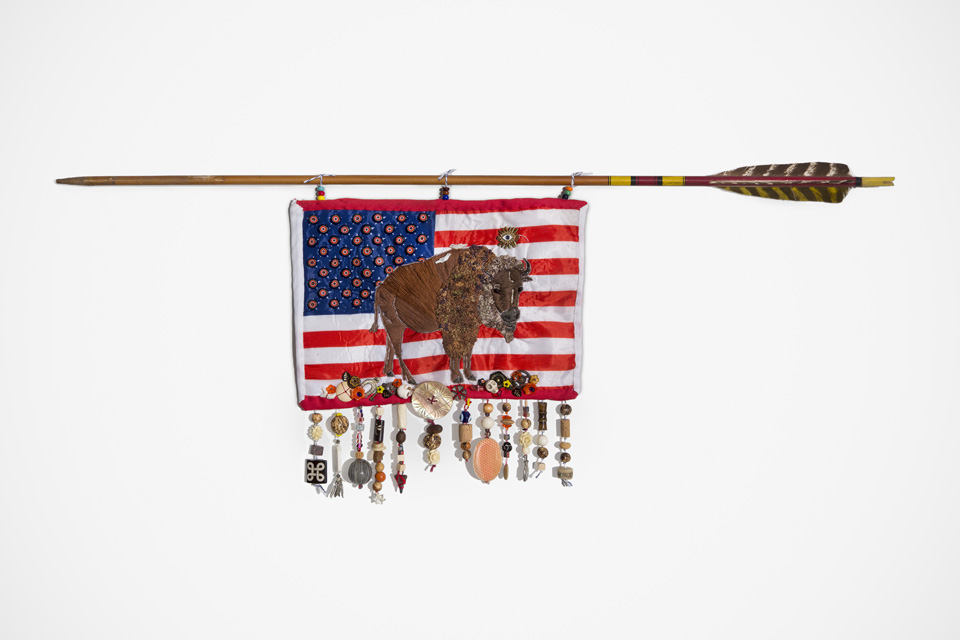
Sarah Rose Sharp, Target, 2020, fabric, arrow, handkerchief, t-shirt salvage, beads, sequins etc., 10” x 7.5”, arrow 29”

A native of California, Sharp devotes a number of her works for Results or Roses to both critiquing and humorously celebrating the Hollywoodized cultural signifiers of the West.  In several pieces, she chooses mass market images of a heroic–and often imaginary–past: mustangs and buffalo, limitless deserts, child cowboys and cowgirls. In her flag-and–arrow assemblage Target, she deftly memorializes the near-demise of both Native Americans and buffalo herds, victims of America’s manifest destiny. In Native Daughter, Sharp makes a flag by embellishing a souvenir California handkerchief with appliqued and embroidered images that symbolize features of the state that may no longer exist.  Jupiter Rising conjures an improbably limitless landscape of mountains, horses running free, a child cowboy and a pickup truck with a mysterious figure (Cowboy Jupiter?) presiding. From this work, it appears Sharp is still engaged in the unresolved process of  locating her stance toward her childhood between appreciation and censure.

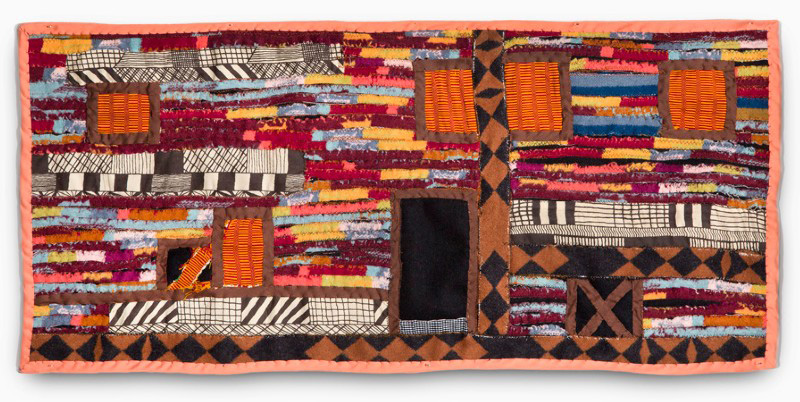
Sarah Rose Sharp, Detroit Patchwork IV, 2020, fabric, wool salvage, hem binding, corset wire, 32.5” x 15”

Sharp’s textiles referencing her more recent home, Detroit, are more straightforward appreciations of the substance of the city.  She pieces together fabrics that describe architectural features, the voids and recent architectural additions, metaphorical renditions of the urban landscape as it stitches itself back together. Detroit Patchwork III is particularly evocative of the highways that span the city, while the fabrics she has chosen reference the ethnic diversity of its many neighborhoods. Detroit Patchwork IV may be the most formally satisfying of the series, a jubilant combination of oranges, browns and blacks that is slightly reminiscent of work by African American textile artist Carole Harris.

With each piece Sharp engages in an ongoing search for a legible reality from found bits and pieces of her life, past and present. Her question:  are the symbols and images we get from mass media legitimate signifiers of some larger reality, or do the small, observed details painstakingly stitched together each day deserve equal weight in our construction of our own history and identity?

UM Institute of the Humanities Gallery 

This review is re-printed with permission from Pulp, the Ann Arbor District Library’s online culture magazine.

Luminous Visions and Path to Paradise @ Toledo Museum of Art

Phillip K. Smith III, Flat Torus 4. Photograph by Lance Gerber Studio

This year, the Toledo Museum of Art added to its permanent collection Flat Torus 4, an ethereal light installation by multimedia artist Phillip K. Smith III.  This work is the visual anchor of the exhibit Luminous Visions. Concurrent with this single-gallery show is a sprawling retrospective of the stained glass art of Judith Schaechter.  As different as these two exhibits are in form and content, they both directly engage with centuries of art history, they both take luminosity as their subject, and they’re both visually mesmerizing.  As such, these two separate shows compliment each other like the varied notes of a musical chord.

The centerpiece of Luminous Visions is Flat Torus 4, a series of wall-mounted concentric rings which, with the aid of computer software and LED lights, moodily project diffused light into the gallery space.  It’s an instillation which recalls the atmospheric light sculptures of Dan Flavin.  Flat Torus 4 is tactfully placed in conversation with an ensemble of other works from the TMA’s collection which literally or metaphorically take light as their subject.  These include a 19th Century painting by Sanford Robinson Gifford of Maine’s Mt. Katahdin, beautifully illuminated by a rising sun.  And a 15th Century sculpture of a seated Buddha speaks to the metaphorical and spiritual associations of enlightenment and illumination.  The works in this exhibit span nearly 700 years, but Flat Torus 4 is the undisputed star of the show; its soft light bathes the whole room in its shifting colors which slowly and satisfyingly cycle over the course of 40 minutes.  This micro-show is an interesting and visually satisfying vignette, and it seems like great starting point for what could be a larger exhibition addressing light and illumination in art across the TMA’s collection.

Phillip K. Smith III, Flat Torus 4. Photograph by Lance Gerber Studio

In contrast to the stately serenity of Luminous Visions, the glass works on view in the traveling show Path to Paradise are loud, irreverent, uncomfortable, and often violent. Yet they’re also undeniably beautiful and cathartic.  Glass artist Judith Schaechter takes her inspiration in equal parts from Northern Renaissance art and the aesthetics of Mad magazine.  Through January 3, the TMA is showcasing forty of her works, supplemented with original sketchbooks brimming with preparatory drawings which offer behind-the-scenes access into Schaechter’s creative process.  Path to Paradise is her first survey exhibition, and given the impressive scale and scope of her body of work, it seems like one that’s long overdue.

The Battle of Carnival and Lent, 2010-2011. Stained-glass panel, 56 x 56 in. Memorial Art Gallery of the University of Rochester, NY; Marion Stratton Gould Fund, Rosemary B. and James C. MacKenzie Fund, Joseph T. Simon Fund, R. T. Miller Fund and Bequest of Clara Trowbridge Wolfard by exchange, and funds from deaccessioning.

Beached Whale, 2018. Stained-glass panel, 27 x 40 in. Courtesy Claire Oliver Gallery, Harlem, and the artist.

Schaechter manages to take a medium that reached its apex in the Gothic era and masterfully translate it into a 21st Century vocabulary. By applying a technique of layering glass which results in subtle gradients and shading, she lends her work a contemporary illustrative quality that you wouldn’t see in a 12th Century rose window.  It’s a tedious process—each work takes months to complete– but much like the Old Masters of the Northern Renaissance, Schaechter delights in the details.

This show presents her earliest works in conversation with some of her most recent, surveying the trajectory of her career.  Among these include The Flood, a triptych which thrust Schaechter into the national spotlight when it was displayed at the Smithsonian’s Renwick Gallery when the artist was 29 years old. The figures that populate her fabricated worlds often seem caricatured, but she demonstrates an impressive ability to switch back and forth between cartoonish imagery and lucid realism, even within the same work.  New or old, all her works are rendered with astonishing detail.  In My One Desire, the background is teeming with plants, animals, and dazzling kaleidoscopic bursts of geometric patterns that snugly fill every bit of negative space, recalling a Renaissance tapestry. The work’s theme of a dying unicorn also situates this work in the tradition of Renaissance art, though the story here remains characteristically enigmatic. This horror vacui recurs frequently in her work. In A Play About Snakes, we encounter an elaborate pattern of twisting, writhing snakes that mimic the ornamental patterns found in medieval illuminated manuscripts– the Cross Page from the Lindisfarne Gospels, perhaps.  Regardless of the subject matter, all her works teem with ebullient detail; no wonder she describes herself as a “militant ornamentalist.”

Although her work is often thematically dark, it can at times be playfully whimsical.  Specimens shows a grid of various imaginary creatures preserved in little jars as if on display in a natural history museum; they seem plucked from the world of Hieronymus Bosch…or perhaps Dr. Seuss.  And her improvisatory Exquisite Corpse is an homage to the silly party game of the same name which famously originated at the dinner parties thrown by Surrealism’s founder Andre Breton.

But much of Schaechter’s work is unsettling. We encounter many images of violence and death, a surprising number of which are actually sourced in Renaissance-era paintings and illustrations. Some of these works directly speak to recent and contemporary events.  Sister is a disquietingly calm work in which the pose assumed by its lifeless subject references the haunting Vietnam-era photograph of the “Napalm Girl.”  But within the work, this young girl inhabits indeterminate space, and Sister (much like Picasso’s Guernica) comes across as a universal statement against wartime atrocity which could apply to any time and any place.  And in Emigration Policy, we see a dog drowning as it desperately tries to catch up with a departing ship (or was it thrown overboard?).  The violence in her work is never gratuitous, but rather serves to encourage empathy and compassion on the part of the viewer.

The Floor, 2006. Stained-glass panel, 36 x 34 in. Collection of Claire Oliver

The subject matter of Schaechter’s work runs the gamut between agony and ecstasy, and is Shakespearian in its scope.  As to the question of why her work is often so uncomfortable, Schaechter responds on her website with a passage excerpted from James Poniewozik essay The Art of Unhappiness: “What we forget…is that happiness is more than pleasure sans pain.  The things that bring us the greatest joy carry the greatest potential for disappointment.  Today, surrounded by promises of easy happiness, we need someone to tell us that it is O.K. not to be happy, that sadness makes happiness deeper.”  Bearing this in mind, as uncomfortable as many of her works might make us, it seems that the body of her work is– in the final analysis—ultimately life-affirming in its unashamed embrace of the totality of the human experience.

The Path to Paradise: An Interview with Artist Judith Schaechter

Toledo Museum of Art  –  The Path to Paradise: Judith Schaechter’s Stained-Glass Art   —  Jan. 3, 2021 | Levis Gallery

Page 36 of 84

Powered by WordPress & Theme by Anders Norén