Critical art reviews of Detroit galleries and museums weekly

Author: Clara DeGalan Page 2 of 5

Writer

Love Songs: Sam Friedman @ Library Street Collective


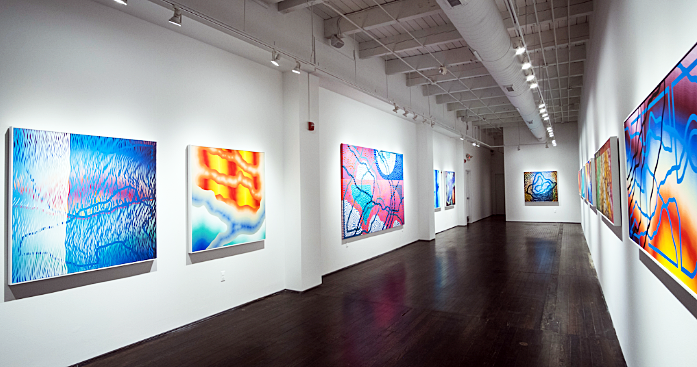
Sam Friedman, Installation image, All images courtesy of Library Street Collective

Sam Friedman’s artist statement for Love Songs, a solo exhibition of paintings and works on paper that opened at Library Street Collective on February 11, mentions the Japanese aesthetic philosophy of Wabi Sabi as an influence in his work. This world view exults the “transience of imperfection; a beauty that is imperfect, impermanent and incomplete.” It’s hard to discern much imperfection or incompletion in Friedman’s imposing acrylic paintings, with their crisp, technically rigorous paint handling. Every mark bears an identical edge that somehow holds its own amid countless other razor sharp edges. Despite this uniformity, areas of Friedman’s paintings break down into surprising illusions of space, dazzlingly beautiful gradations, and vibrating forms that actually seem to move before the eye, and stay burned upon it. You see Friedman’s snaking forms gestures across white walls for several moments after you’ve turned your gaze away from the work.
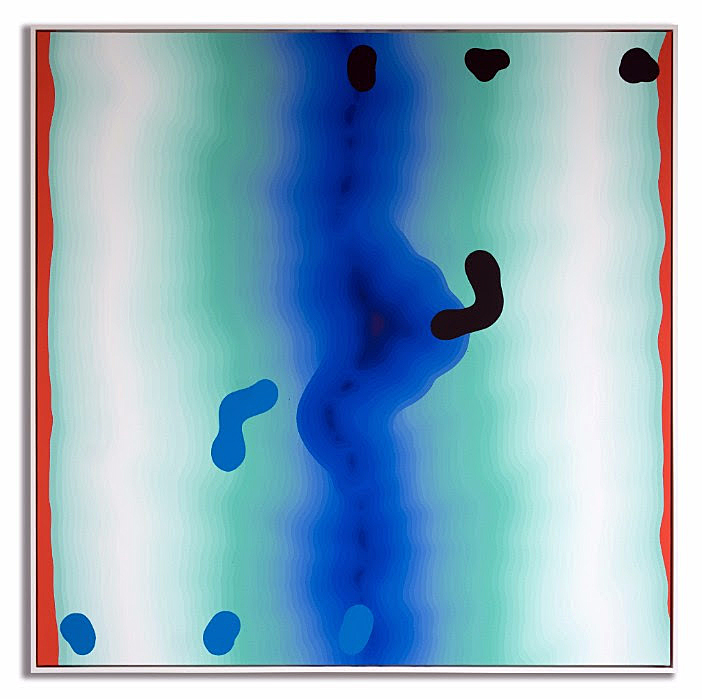
Sam Friedman, Untitled, 2016 (48 x 48 inches; Acrylic on canvas, white floater frame)

Friedman wrings a surprising range of surface effects from a severe economy of techniques. Every one of his identically edged marks is, apparently, applied the same way- in one single, virtuosic stroke that embodies hand skill and discipline. While each painting contains a huge number of nearly identical marks, no mark is valued over any other. This doesn’t flatten the composition, or render it uninteresting. Friedman’s democratic approach to mark-making lets your eye take in both the whole of the work, and miraculous openings into smaller, more intimate moments. It’s an unusual painter who creates such an impression of deep space, foreground and background, with such a uniform, crystallographic approach to the picture plane.
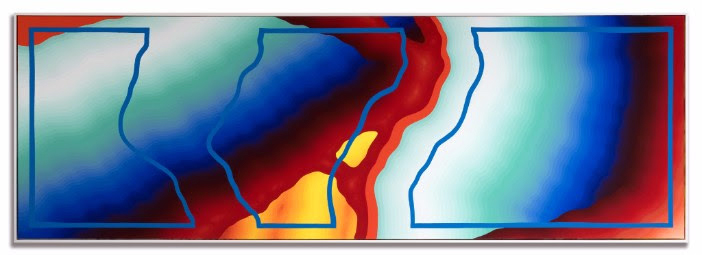
Sam Friedment, Untitled, 2016 (30 x 90 inches; Acrylic on canvas, white floater frame)

Passing from the gauntlet shaped front space of Library Street Collective, where Friedman’s large paintings are displayed, into the more spacious back room of the gallery which houses a collection of smaller works on paper feels like leaving a dazzling, noisy city for a vast, light filled meadow. These works feel both more personal and riskier. This might be due to Friedman’s use of a larger range of media (acrylic, spray paint, silkscreen ink). His subject is a factor, as well- the sun setting over a body of water, revisited again and again, the horizon line splitting each piece into perfect halves that meet precisely at eye level. These works present an eternal template on which Friedman proceeds to meditate on the spatial layers he applied with such closed-loop certainty in his large acrylic paintings. The more organic forms- tall grass, flower petals, atmospheric effects- combined with the unavoidably vernacular icon of sunset over water presented on poster-scaled formats, while not mind-blowing in quite the same way as the paintings, feel vastly more personal. Friedman’s mastery of abstraction comes full circle in these works. The same blunt formal power and ease with materials shows up in them, with an added dose of freedom. The smaller formats and organic, representational subject matter seem to allow Friedman to play a bit more with imagery and surface effects- there’s a feeling that the stakes are lower here, or the imagery more deeply felt.
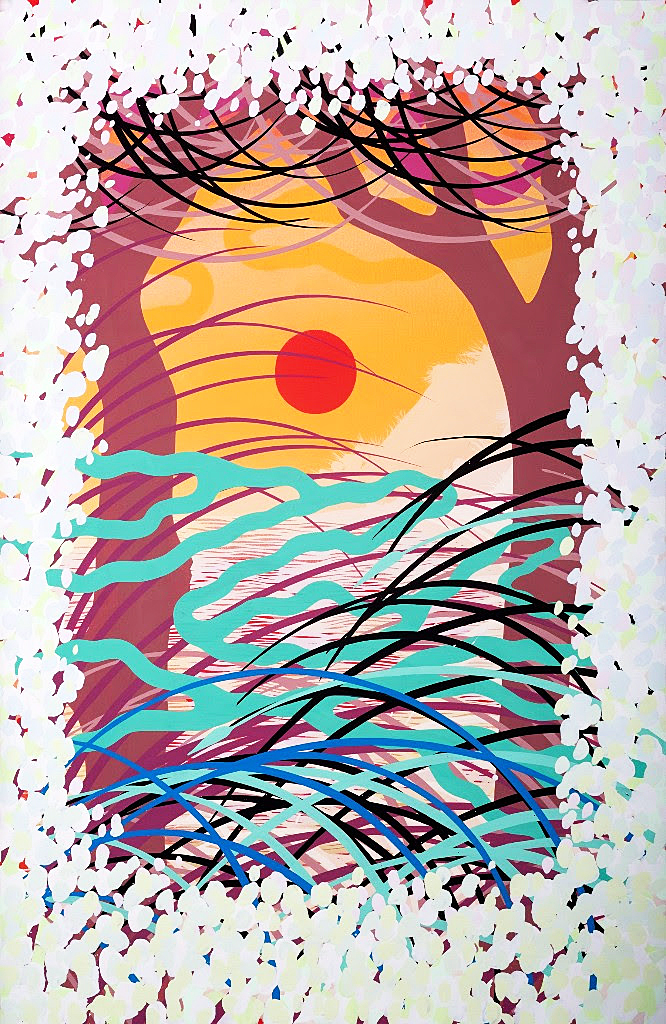
Sam Friedman, Untitled, Untitled, 2016, 54.5 x 37.75 inches; Acrylic and vinyl paints, silkscreen ink, and acrylic spray paint on primed Stonehenge paper

One wonderful thing Friedman’s paintings and works on paper have in common is the above-mentioned whiff of the vernacular. The large, abstract paintings have the dizzy free-fall atmospherics and sophisticated, ambiguous movements of album covers and Trapper-Keeper designs from the Seventies and Eighties, revisited with the same depth and grandeur one felt, mesmerized by them, as a young kid. Friedman’s works make it as if these foundational images grew up with us. The works on paper similarly shadow mass-produced movie or art posters. They communicate in the same language, with the same saturated, iconic forms that, in Friedman’s hands, take on a breath-taking, mature refinement.

Sam Friedman: Love Songs is on view at Library Street Collective  through April 8, 2017.
Experiment of the Modern Gaze @ Popp’s Packing

Untitled Experiment of the Modern Gaze – Oren Goldenberg and Biba Bell at Popp’s Packing

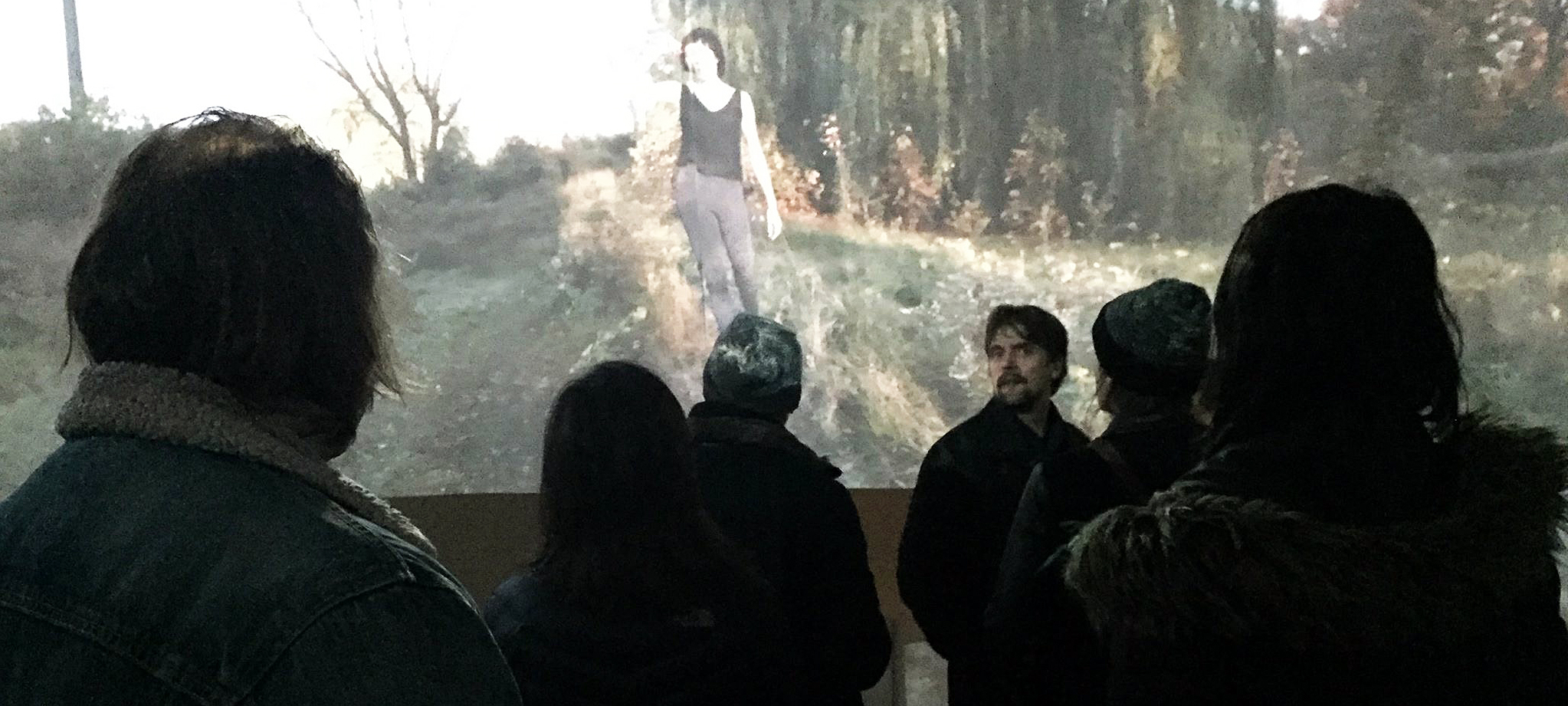
installation-image-untitled-experiment-of-the-modern-gaze-immersive-film

All Images courtesy of Oren Goldenberg and Scott Tallenger

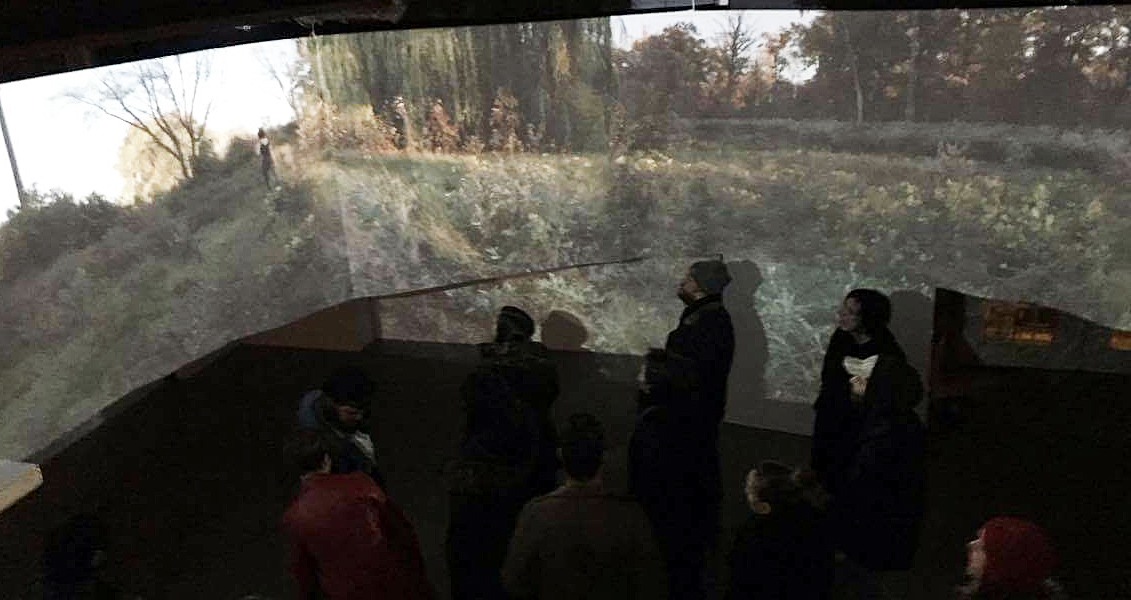
At the outset of Untitled Experiment of the Modern Gaze, a film collaboration by Oren Goldenberg and Biba Bell, a camera-in-the-round, moving across several large screens mounted in a ring, surveys a patch of woodsy, Rococo landscape (brought just barely into contemporary times by glimpses of electric wires and smokestacks on the horizon- otherwise, the golden twilight and delicate, sparsely leafed trees could have been painted by Watteau.)

Whoso List to Hunt

-Sir James Wyatt

Whoso list to hunt, I know where is an hind.

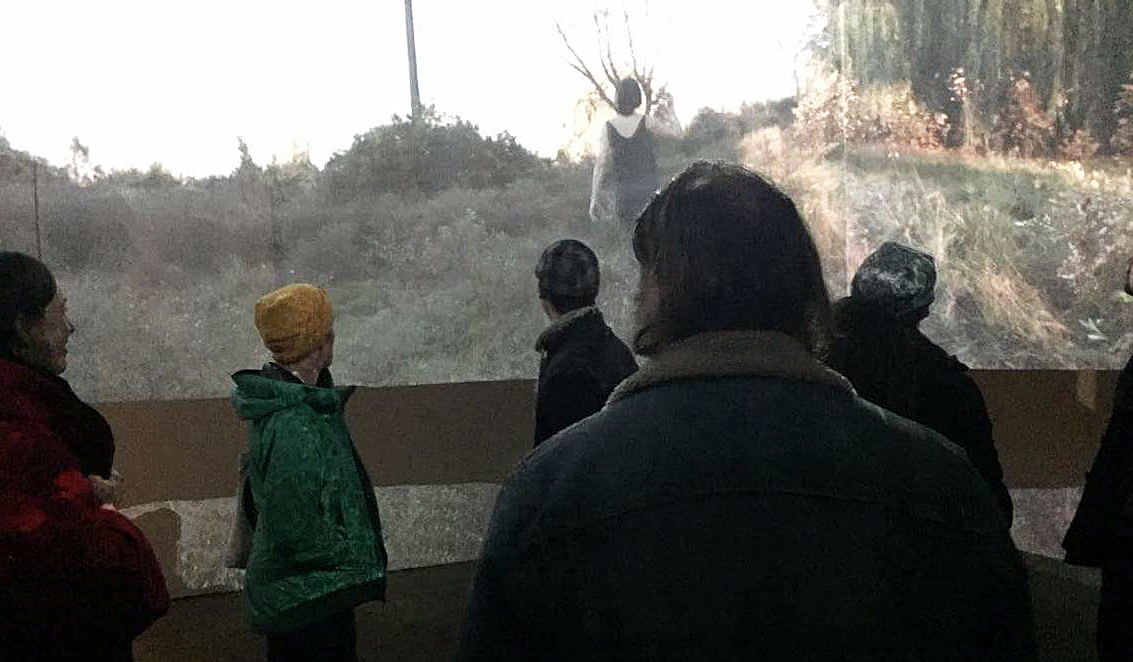
The roving eye of the viewer (I can’t help but signify the viewer as “he”) moves first at a leisurely pace, taking in the magically lit landscape. A dark void follows his gaze around, blotting out, for us, what the viewer is not looking at. A figure materializes from the trees- the powerful form of acclaimed dancer and choreographer Biba Bell.

image-1-untitled-experiment-of-the-modern-gaze-immersive-film

But as for me, helas, I may no more.

The vain travail hath wearied me so sore,

I am of them that farthest cometh behind.

She moves in this strange, wild clearing with natural grace, as if she belongs there. She approaches the viewer like a wary fawn. The viewer’s gaze swings toward, then away from her in a rhythm that visualizes the meter of a sonnet, with its round, half-stepping rhymes.

But may I by no means my wearied mind

Draw from the deer, but as she fleeith afore

Fainting I follow. I leave off therefore,

Sithens in a net I seek to hold the wind.

Untitled Experiment of the Modern Gaze can read, at first, as fairly unexperimental, aside from its installation, coiling around the gallery on screens installed in a huge ring. The scene it captures could be presenting the figure, a woman, as an allegory of nature, as a delicate, wild creature, not quite autonomous, a Pre Raphaelite sylph. The gaze, at first viewing, feels male in its invisibility and its meandering power, turning first toward, then away from, the woman as she floats upon, and interacts with, the landscape. What disrupts this is the woman approaching the camera and returning its gaze in an act that suddenly establishes her as autonomous from her surroundings. The camera, seemingly put off by this direct appraisal, begins to turn more quickly, it’s black void following it, engulfing more and more of the scene. The sonnet winds in toward its break.

image-2-untitled-experiment-of-the-modern-gaze-immersive-film


Who list her hunt, I put him out of doubt,

As well as I may spend his time in vain.

And graven with diamonds in letters plain

There is written, her fair neck roundabout:

Noli me tangere, for Caesar’s I am,

And wild for to hold, though I seem tame.

The allegories of nature and the hunt are inverted as the woman begins to pursue the camera’s gaze, chasing it as it turns faster and faster in apparent confusion. She halts it (the final couplet) and, applying physical strength to the dark voids that surround the gazer’s view, pushes them out of sight, unfurling the full majesty of the landscape, now seen in full circle. In a modern update of Wyatt’s poem, the woman is, indeed, wild for to hold, but she belongs to no one but herself. Once she has halted the camera, she turns and saunters back into the woods.

Untitled Experiment of the Modern Gaze is on view at Popp’s Packing until December 17. An artist talk with Oren Goldenberg and Biba Bell will be held at the gallery Wednesday, December 14, at 7 pm.


Brittany Nelson & Susan Campbell @ David Klein Gallery

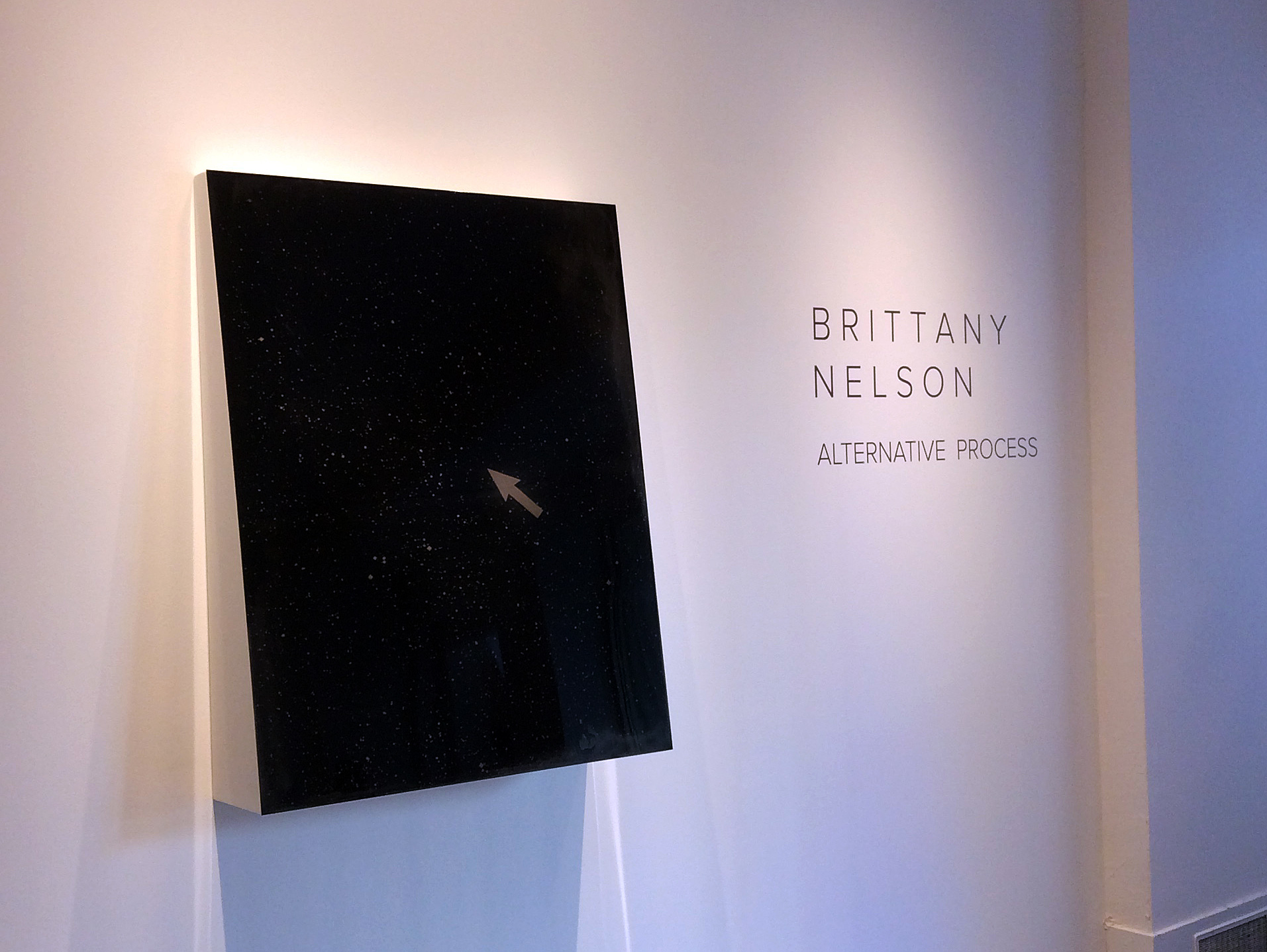
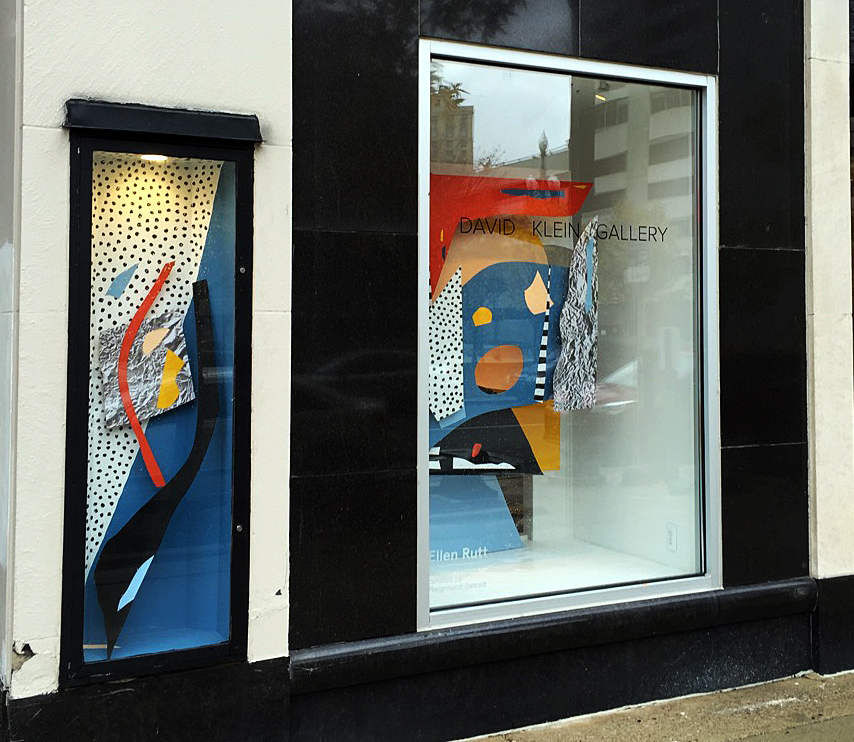
Alternative Process, work by Brittany Nelson, and Chasing Venus, work by Susan Goethel Campbell and window installation by Ellen Rutt.

david-klein-installation-image

Brittany Nelson, Installation image, All images courtesy of the David Klein Gallery

The newest pairing of artists on view at David Klein Gallery’s Detroit space, photographers Brittany Nelson and Susan Goethel Campbell, engage history, science, and formal beauty in ways that reveal what ancient knowledge and antiquated technology can tell us about the visual stake we hold- and the tissue-thin mastery we take for granted- over the natural world.

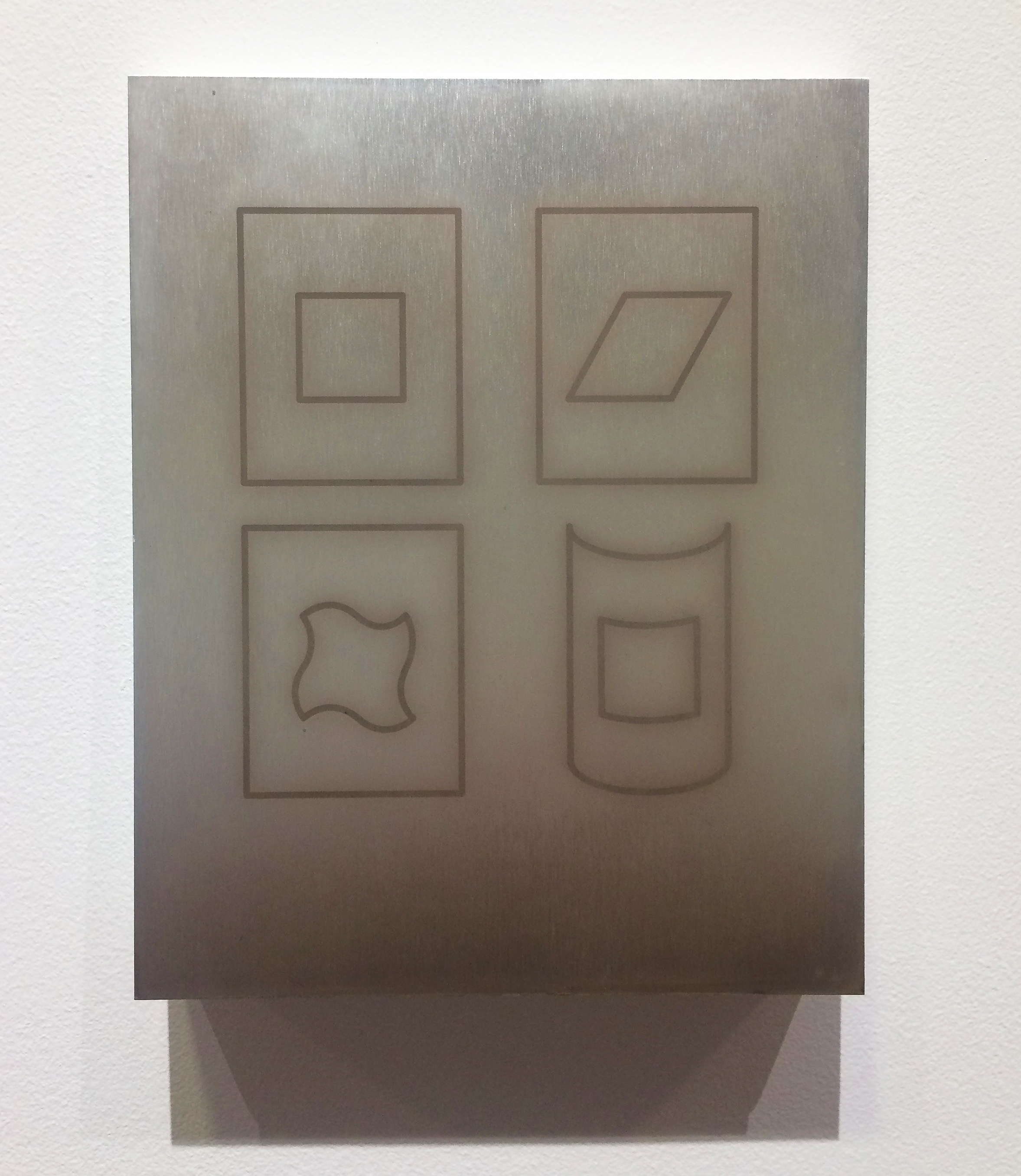
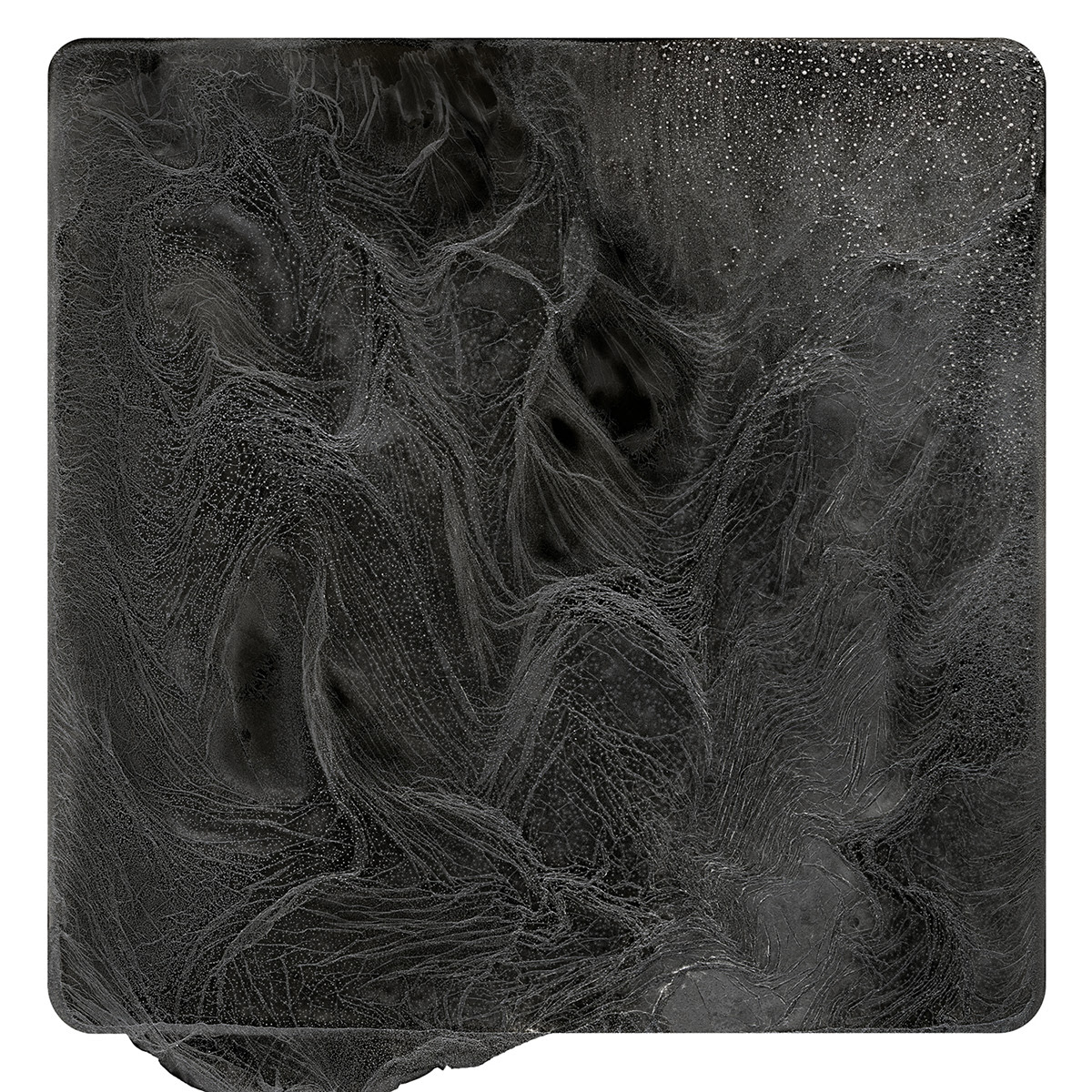
Brittany Nelson’s collages of “science graphics” and 3D Photoshop forms onto tintype prints (one of the earliest photographic mediums) follow a simple, clever formula of overlaying heavy, historic substrates (thickly mounted tintype photographic plates that warp out of foursquare precision and are often hung at a slight angle to the wall, visually reinforcing their whiff of memento mori and the slow melt of age) with graceful, feather-light graphics culled from contemporary modes of visual shorthand- graphics, grids, algorithms, flowcharts.

image-1-brittany-nelson-diagram-i-2016-tintype-photograph-on-poeder-coated-formed-aluminum-10-x-8-x-1-5-in

Brittany Nelson, Diagram I, 2016, tintype photograph on Poeder coated formed aluminum,10 x 8 x 15″

These two modes of information capture dance uneasily with one another on Nelson’s dark grounds- there’s a dissonance to seeing these fleeting, fast-moving graphics inlayed on such iron-clad media, designed to catch and house a physical shadow of a once real, living, or tactile thing. Nelson’s work resurrects something of the uncanny magic photographic technology once held for people in the Nineteenth Century- its strange promise of immortality, its mind-bending harnessing of modern science.

image-2-brittany-nelson-mordancage-4-2011-c-print-72-x-72-in-edition-of-3

Brittany Nelson, Mordancage 4, 2011, C-print,72 x 72, Edition of 3

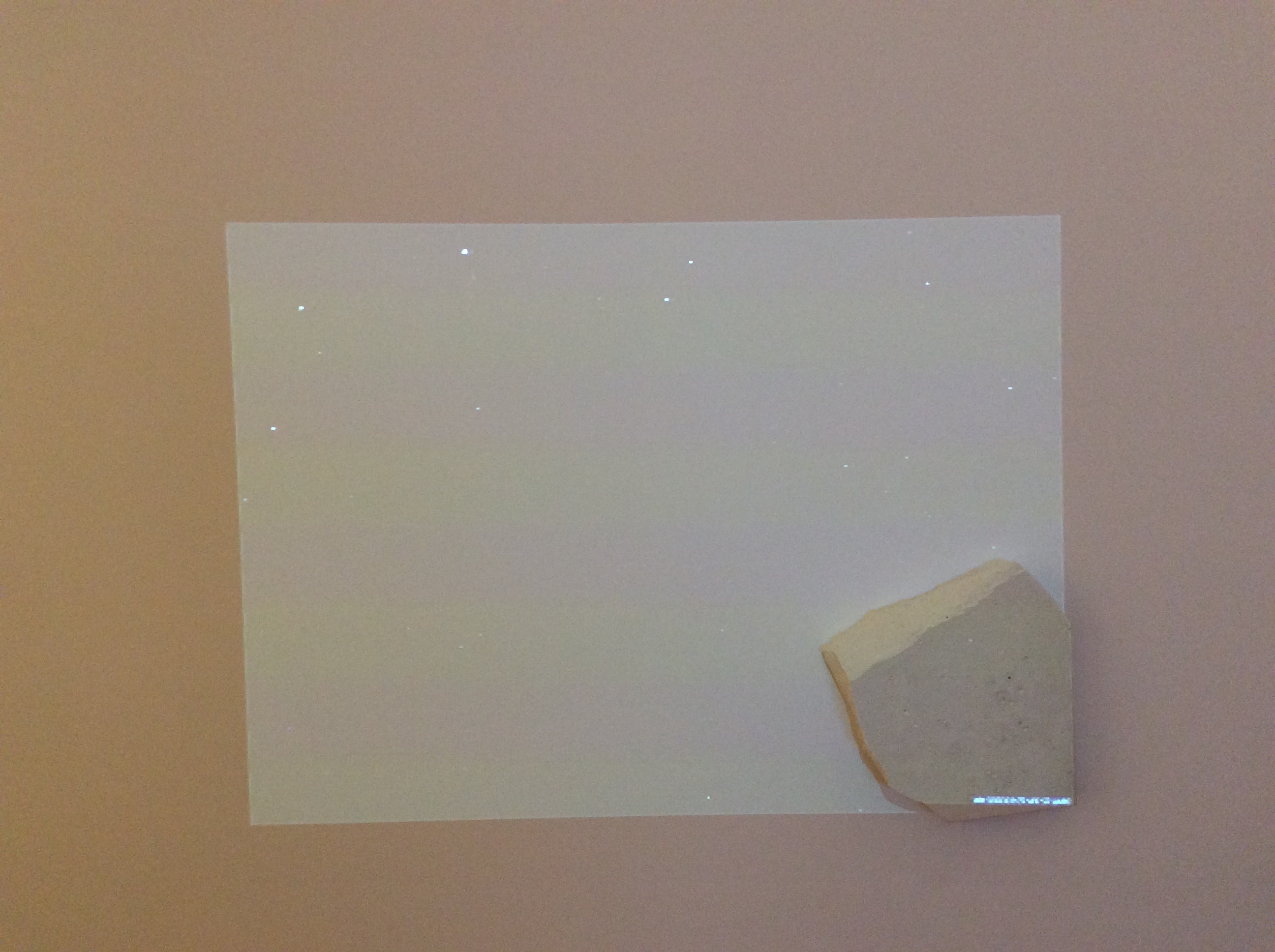
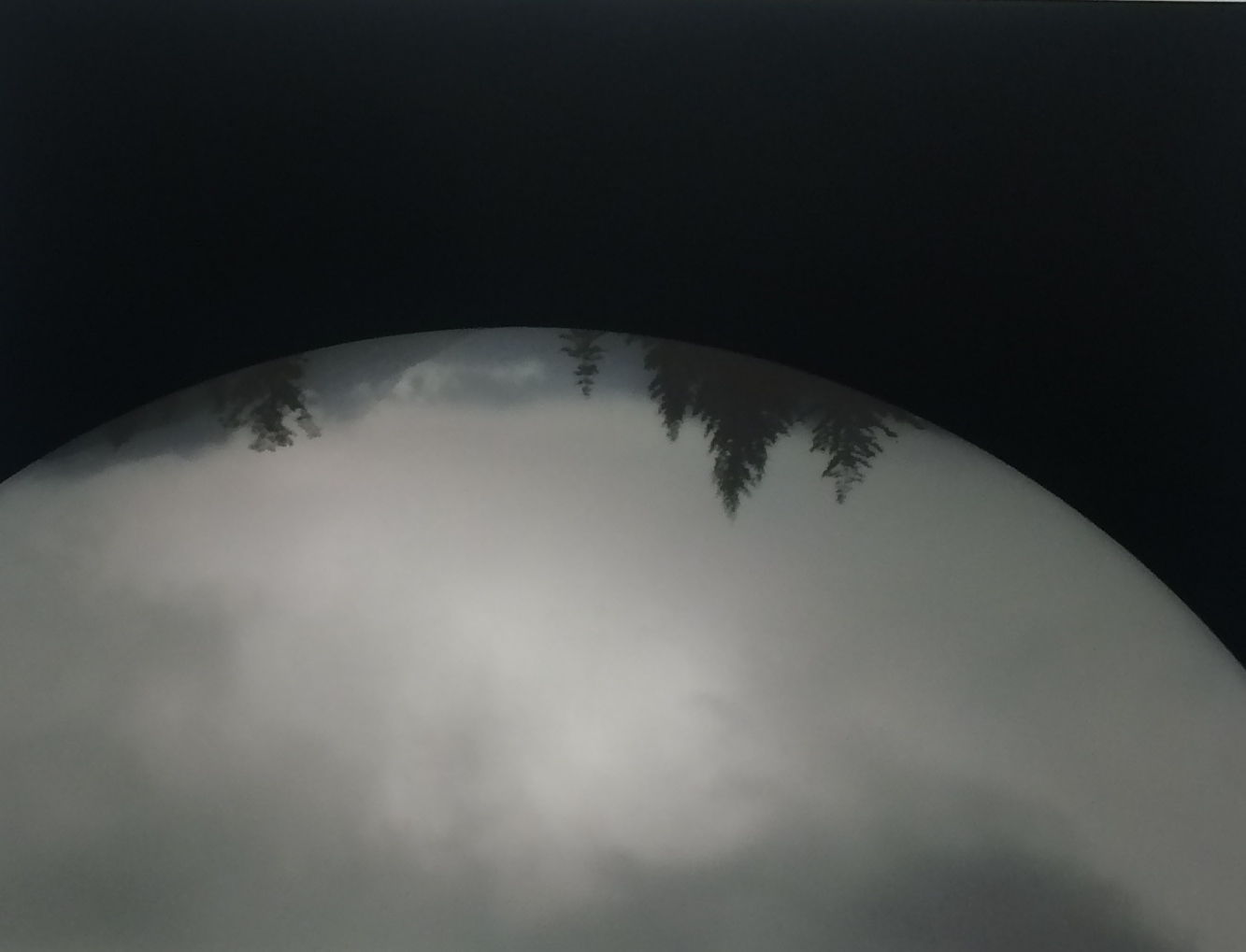
The dark, atmospheric voids characteristic of tintype photography find a visual dialog with Susan Goethel Campbell’s Chasing Venus. This work documents, in film and photography, a patch of sky over the Rocky Mountains in Alberta, Canada, during the Summer Solstice, when the moon appears to be following Venus across the sky.

image-3-susan-goethel-campbell-chasing-venus-1-of-5-2016-3-channel-video-installation-plaster-fregment-1920-x-1080-in

Susan Goethel Campbell, Chasing Venus, 1 of 5, 2016, 3 channel video installation plaster fragment, 1920 x 1080″

Campbell’s work documents, in solemn stills and dizzying, feather-light films, the turning of the planet from day to night, toward and away from an incredible full moon. The faceted surfaces of mountainous landscape, vast sky, and brilliant earth (her installation includes visuals that are nearly impossible to photograph, a video projection of time-lapse sky-scape dancing on a wall mounted with a chunk of granite, a pile of glittering mica poured onto a shallow shelf that casts uncanny tones of light onto every surrounding surface) utilizes straightforward modes of visual documentation to hint at the sublime- crystalizing, in moment-to-moment documentation, both our concept of linear time and the sublime impossibility of conceiving the clock of the universe.

image-4-susan-goethel-campell-chasing-venus-still-i-1-of-5-2016-digital-print-on-polyester-spray-paint-22-x-28-in

Susan Goethel Campell, Chasing Venus, Still I, 1 of 5, 2016, Digital print on polyester spray paint, 22 x 28″

The kernel that unites Nelson and Campbell’s work in these dark, visually haunting twin exhibitions might be an “exposure,” manifested in the beauty and opacity of both artists’ combinations of technique and content, of the failure of such analytical, documentary methods to capture eternity. Watching the sky and drawing it into visual rhymes with small, shiny objects, as the ancients did, distilling the visible into frozen shadows, as more recent generations did, or collapsing the world into descriptive algorithms, as we do now, may, or may not, bring us any closer to a true understanding of the reason we are here, or why we’ve been given these abilities. Alternative Process and Chasing Venus do not attempt to answer this question- they cross-pollinate materials to broaden, deepen, and beautify its scope.

Also on view is a colorful, lively installation by Detroit-based, multi-disciplinary artist Ellen Rutt. Rutt’s window installation provides a vibrant counter-balance to the darkly vibrating grounds and documentary atmospheres of Nelson and Goethel-Campbell’s work.

david-klein-window-installation-ellen-rutt

Ellen Rutt, David Klein, Window Installation, 2016

Alternative Process, work by Brittany Nelson, Chasing Venus, work by Susan Goethel Campbell, and Ellen Rutt’s window installation is on view at David Klein Gallery Detroit through December 17, 2016.


Caledonia Curry @ Library Street Collective

A Light at the End of the Tunnel- Caledonia Curry (Swoon) at Library Street Collective

“…You can start to create little cracks in the façade of possibility and inevitability that overlays all of our lives.”-Caledonia Curry at her TED Talk, 2010 

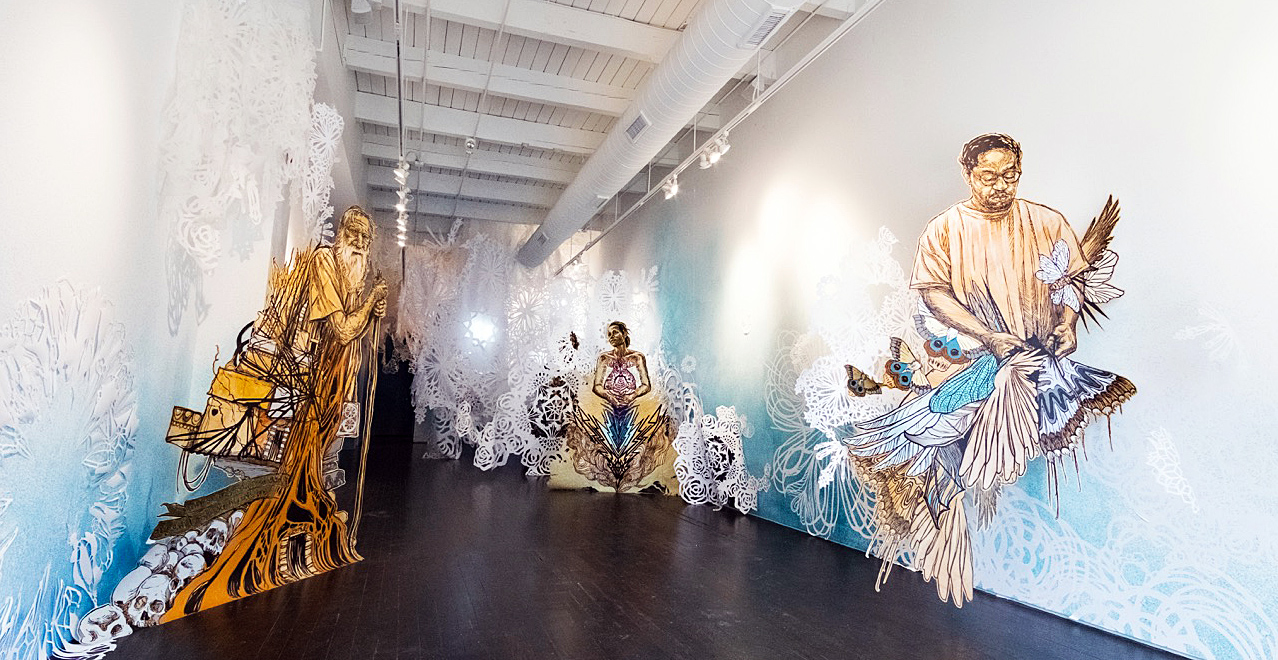
swoon-installation-image

Swoon, Installation Image, All Images Courtesy of Clara DeGalan and Sal Rodriguez

Caledonia Curry (tag name Swoon) seems intimately aware of the ephemeral, fragile nature of both the human body and human endeavor. This sensibility weaves through all of her bodies of work, which make up for the degradability of their materials with iron-clad social consciousness and fierce political engagement. Curry first gained attention on the global art scene for her large scaled, lyrical street art prints, which, like her work at Library St Collective, engage with the figure overlaid with gorgeous lacework of iconic decorative flourishes and symbols. Curry would scout out locations for her prints, then install them, on walls, lamp posts, and other architectural surfaces, using wheat paste. These delicate cut-paper and print collages are not meant to last forever- they fade away, gently and gradually, like distant memories. To Curry, physical immortality of work is beside the point- this seems unusual, given the highly formal, decorative nature of her constructions. What such highly developed technical skill and labor intensive process is meant to foster is less reverence for the made object itself than a holding of space for a new perspective, a chance to recontextualize one’s relationship with place, with symbolism, with one’s own identity.

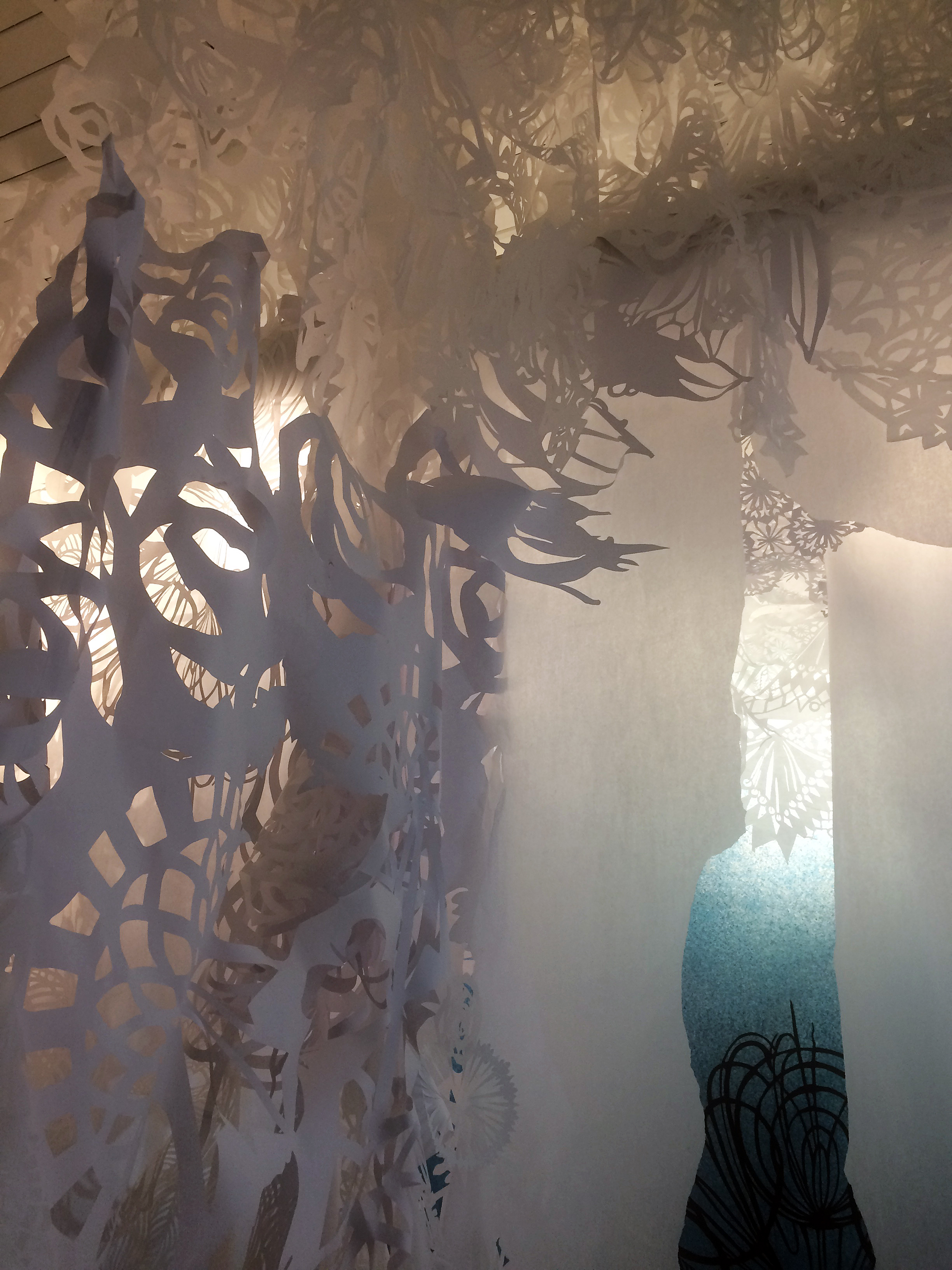
The same curious mixture of preciousness and ephemerality finds its way from Swoon’s street art practice into Curry’s site specific installation at Library St Collective. As lovingly wrought and beautifully realized as Curry’s life-sized figurative prints and elaborate cut paper confections are, they are installed with no greater measure of preciousness or economic value than her wheat pasted public works. Curry’s figurative cut out prints hang suspended from strands of fishing line, freed from the relative safety, and canonical indexing, of traditional wall installation. They move in the breeze- they’re equally visible from front and back. Curry’s incredible paper cut-outs, executed in black and white and resembling every beautiful, lace-like form a viewer can call up, from snowflakes to double helixes to Celtic knot work, drape freely from the gallery’s ceiling and dangle, like the figure cutouts, from strands of fishing line, inviting touch, uncannily mimicking the slight movements of sentient life.

image-1-swoon-cut-paper-intallation-detail

Swoon cut paper intallation-detail

The heaviness of Curry’s concept for her site specific install at Library St is what grounds these floating works. Taking the narrow, tunnel-like structure of the front part of the gallery as inspiration, Curry is attempting, with The Light After, to recreate for the viewer her own narrative of a phenomenon known as “the empathetic death experience.” Curry encountered this phenomenon in a dream of a space filled with falling snow and “blossoms of light,” during which she felt that her mother had died. Upon awakening, she discovered that her mother had, indeed, passed away.

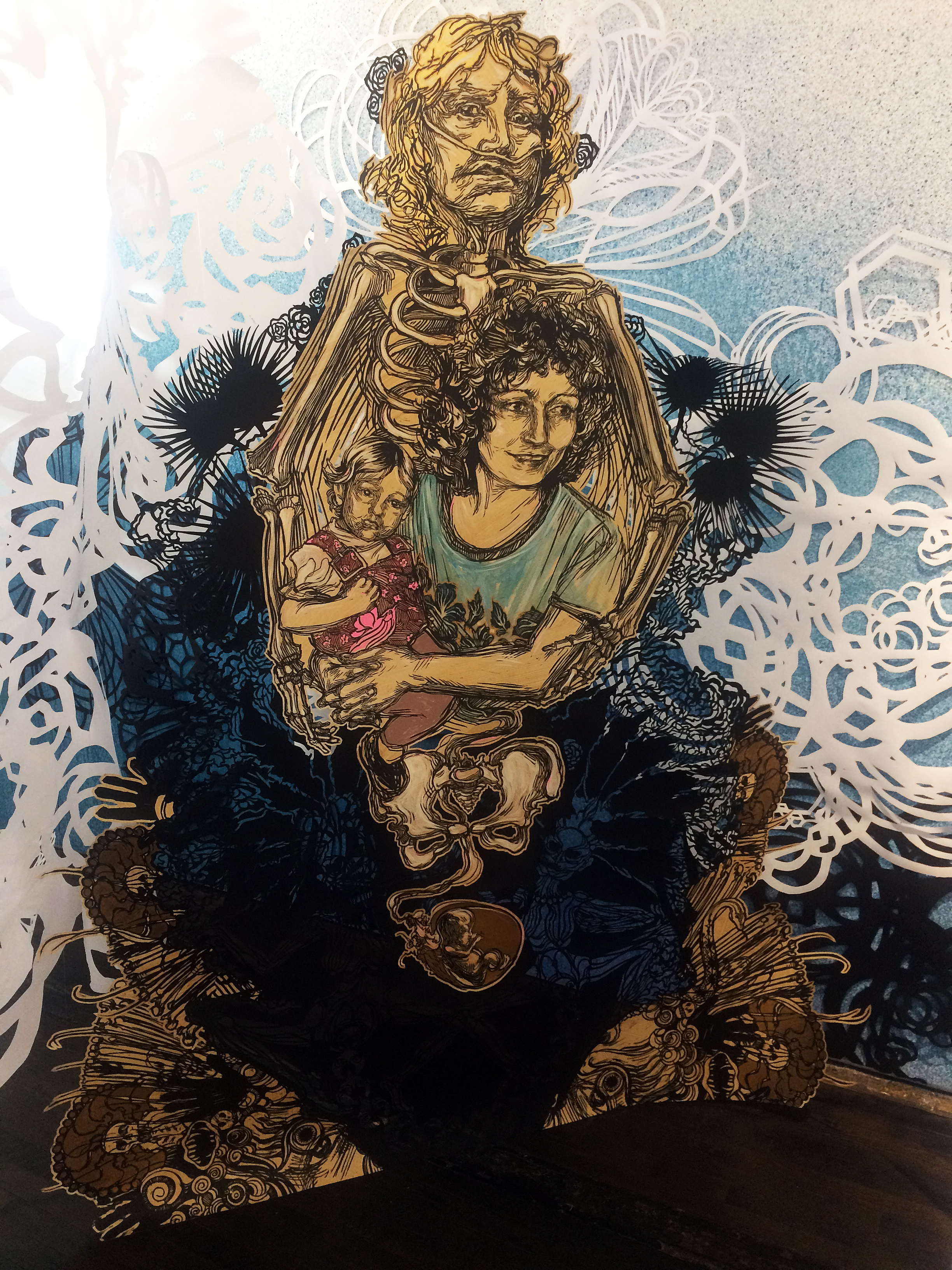
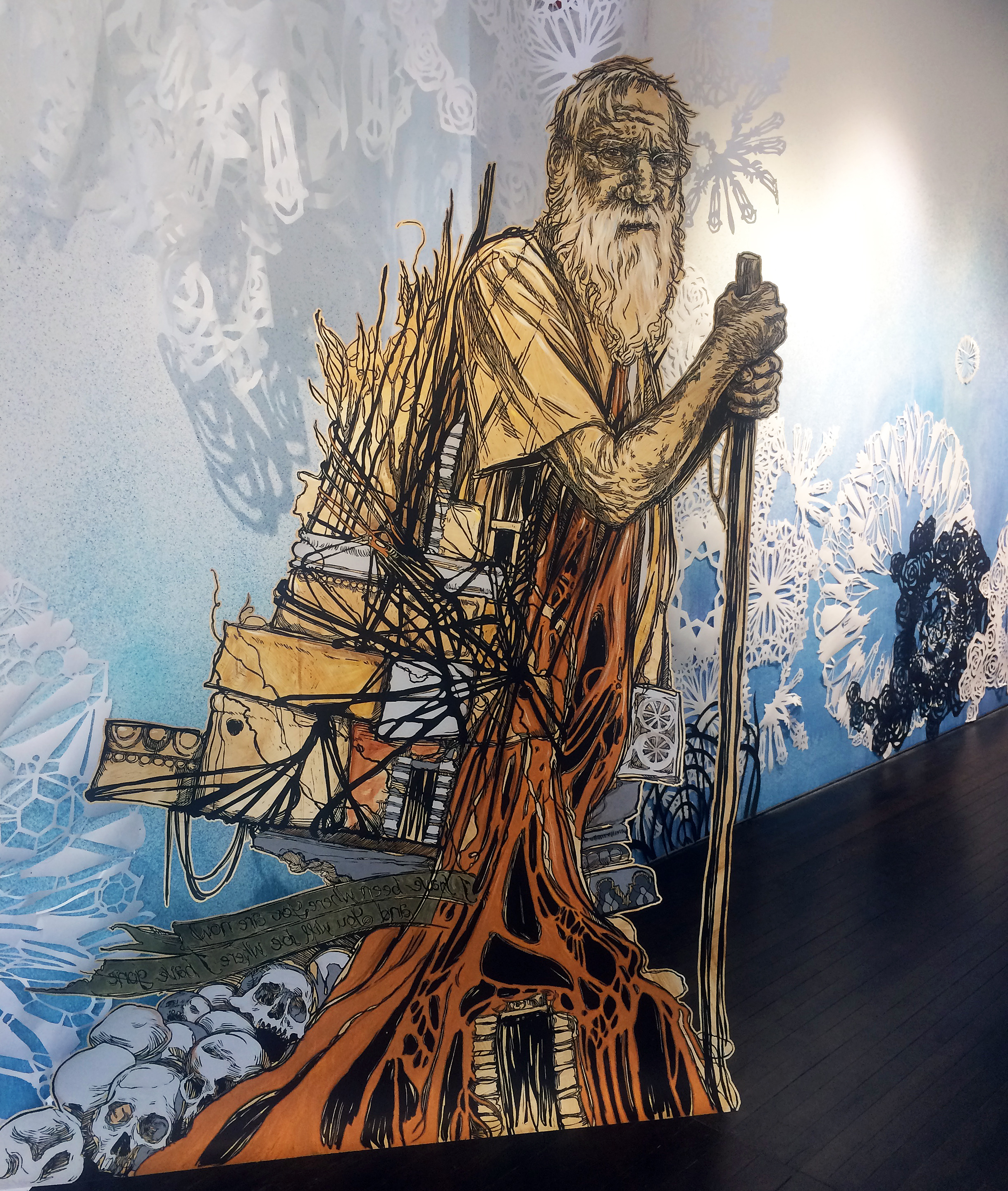
The snow-blossom motif of Curry’s installation occupies Library St.’s space as a tunnel of atmospheric light similar to those described by people who have had near-death experiences. Dispersed around this bright, ungrounding fairyland are Curry’s life-sized figurative prints which, despite their ephemeral construction, nail the viewer with quietly appraising or imploring gazes, each taking the form of a step on the initiation path toward death. Curry’s figures are iconic- an old, bearded hermit leaning on a walking stick, his lower body morphing into ramshackle architecture which crumbles, at his feet, into a profusion of skulls. A heartbreaking double image of a woman filled with youth and vitality, holding a baby, while her forward-projected shadow looms behind her, emaciated, rigged up with oxygen tubes, her eyes engaging the viewer’s in abject, human terror of proceeding down the very tunnel that surrounds her.

image-2-swoon-memento-mori-2016-block-print-on-hand-cut-mylar-edition-3-of-12-84-x-67-in

Swoon, Memento Mori, 2016, block print on hand cut mylar,edition3 of 12, 84-x-67″

Curry takes the viewer through this legendary tunnel, which leads into a stark hallway painted in black and white geometric and organic forms- a nice visual metaphor for the space between the end of the tunnel and what comes after- into the gallery’s larger, airier back room or, as Curry titles it, “The Meadow.” The figurative prints in The Meadow aren’t allegories of death, but of rebirth- the color scheme of The Meadow is warmer, more organic, the 3D elements more tactile and sensual- piles of green velvet take the place of the ethereal cut-paper hangings within the tunnel. Mother-child pairings and figures surrounded by simple, ancient symbols of life and birth- paisleys, triple knots, spirals- gaze invitingly out or, more often, appear turned inward, eyes closed, in a private ecstasy of union with the life-power of the universe.

image-3-swoon-milton-ii-diogenesis-2016-block-print-on-hand-cut-mylar-edition-3-of-6-89-x-66-in

Swoon, Milton II, Diogenesis, 2016 block print on hand cut mylar edition, 3 of 6 89×66″

There’s an uncanniness, a formal directness, and a powerful combination of personal and political narrative to Curry’s work that makes it difficult to contextualize in contemporary studio practice. The bald allegory and mirror-image rendering of her figure-prints awakens the viewer to the power of such imagery as expressed in every layer of our society, from religious painting to Chuck E. Cheese animatronics- all of them evoke the same frisson. Curry’s work reveals why this is so. Confronted with our own image reworked into symbolism, we begin to examine the foundations of universal truths- birth, death, spirit, the afterlife, the sentience of so-called inanimate objects- with the understanding that these truths emanate from our own bodies. Our bodies are ephemeral. What we can do with them, change with them, what we can leave to succeeding generations, is eternal. It is this truth that forms the kernel of Curry’s work in every medium and context that she engages.

“Swoon- The Light After” is on display at Library Street Collective through November 26, 2016.


Senghor Reid @ NCA Gallery

A Diabolical Element – Senghor Reid’s exhibition at the National Conference of Artist Gallery

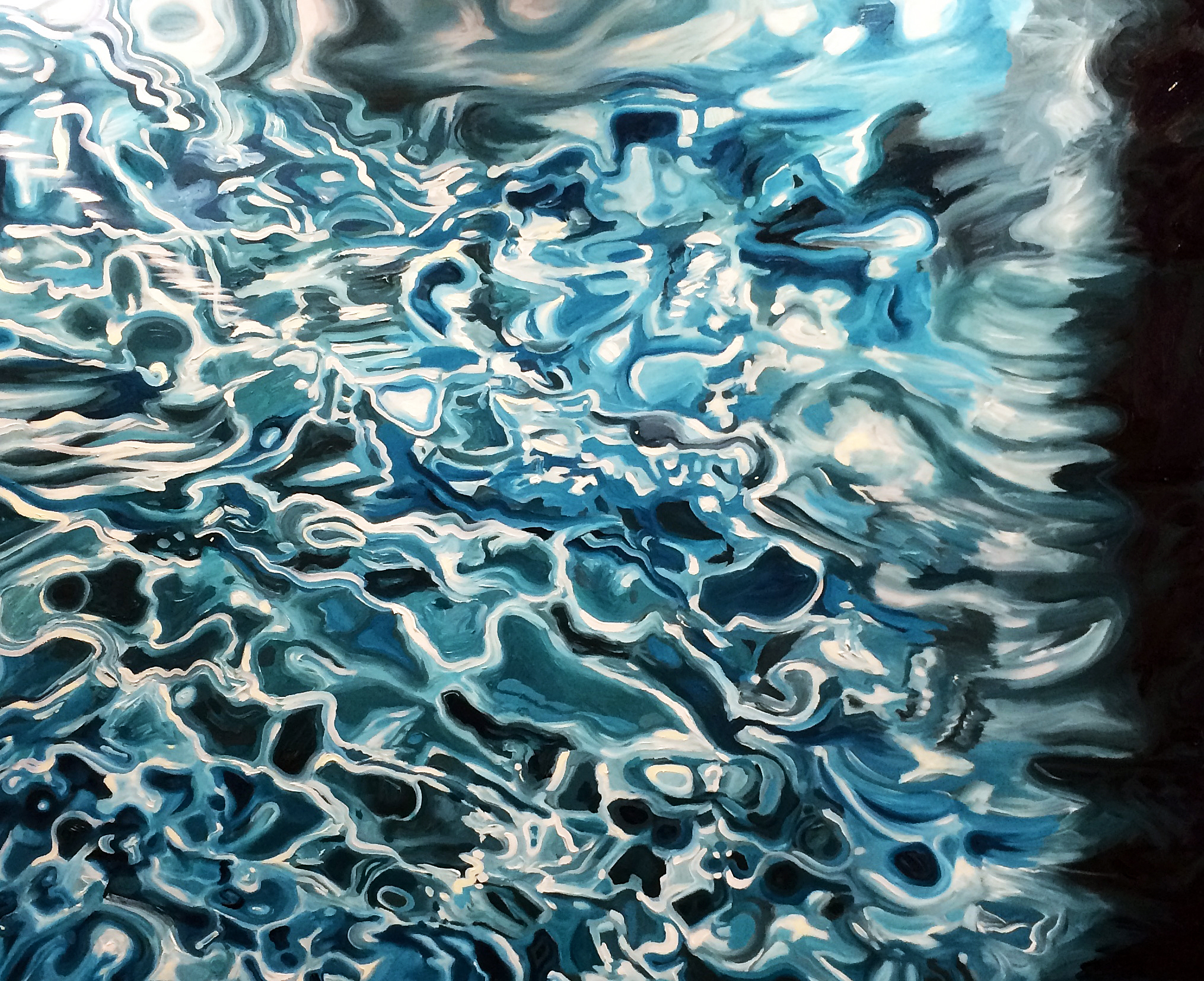
In the hallway outside of NCA Gallery, housed in a vibrant Community Center in Northwest Detroit, you encounter the first wave of Senghor Reid’s solo exhibition Diabolique. The imposing group of large-scale acrylic paintings depict shifting, shimmering surfaces of water in different weather conditions and light. Reid’s dynamic, disquieting treatment of the ever-moving element of water recalls David Hockney’s pool paintings. Both artists weave water as a substance in movements and marks that eerily echo the nature of the element itself- slashes, splotches, dense, doily-like layers of marks that begin to suggest forms even as those forms collapse and drain away before your eyes. Reid’s work evokes Hockney’s, also, in the strange, visually transmitted metaphor presented by both artist’s treatments of this element- that of the complete unknown, the otherworld that mirrors and impacts our own, that lies just beneath the surface.

image-1-senghor-reid-the-ice-storm-2-acrylic-on-canvas-48in-x-60in-2016

Senghor Reid, The Ice Storm 2, 48 X 60, Acrylic on Canvas, 2016

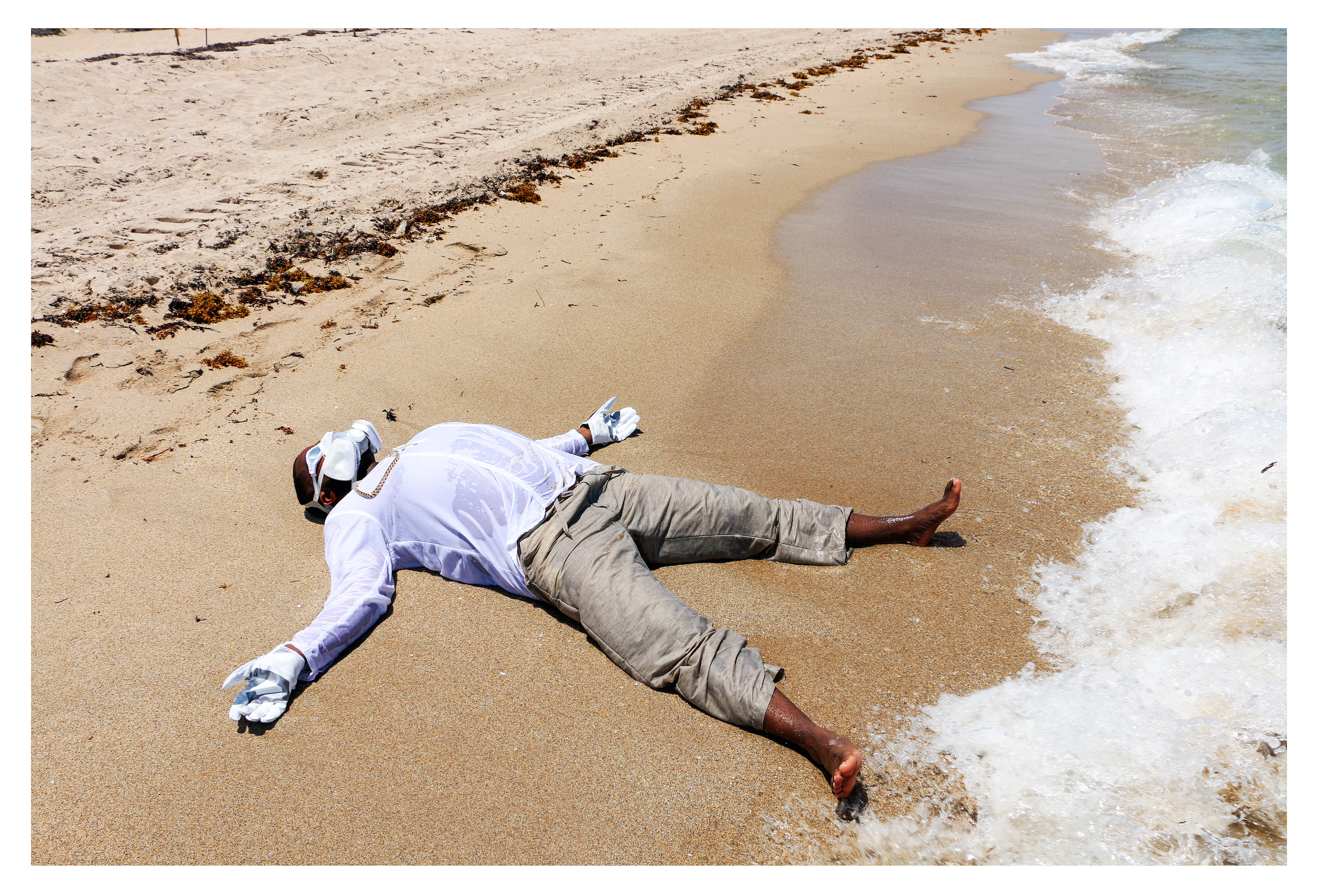
The title of Reid’s exhibition, Diabolique, references the 1955 French film Les Diaboliques, the plot of which revolves around the concealment of a corpse in a body of water. The water swallows the corpse and refuses to yield it up- it appears later, brought uncannily back to life, rising from the waters of a bathtub. The mysterious, treacherous capability of water to give both life and death, to absorb evil only to reveal it later in the most intimate settings, is examined with a plethora of materials and media, through scientific and aesthetic lenses, in Diabolique. True to the origin of its title, the exhibition features a series of self-portraits of the artist washed up on a vaguely tropical shore, an uncanny, amphibious humanoid, his face concealed behind swimming goggles and a gas mask that suggests both survival in a toxic environment and gills. The figure of the artist appears both resurrected and consigned to dwell forever in conditions his body was not designed for.

black-river-photo-4

Senghor Reid, Freshwater Assassins, 12 X 18″, Digital Print, 2016

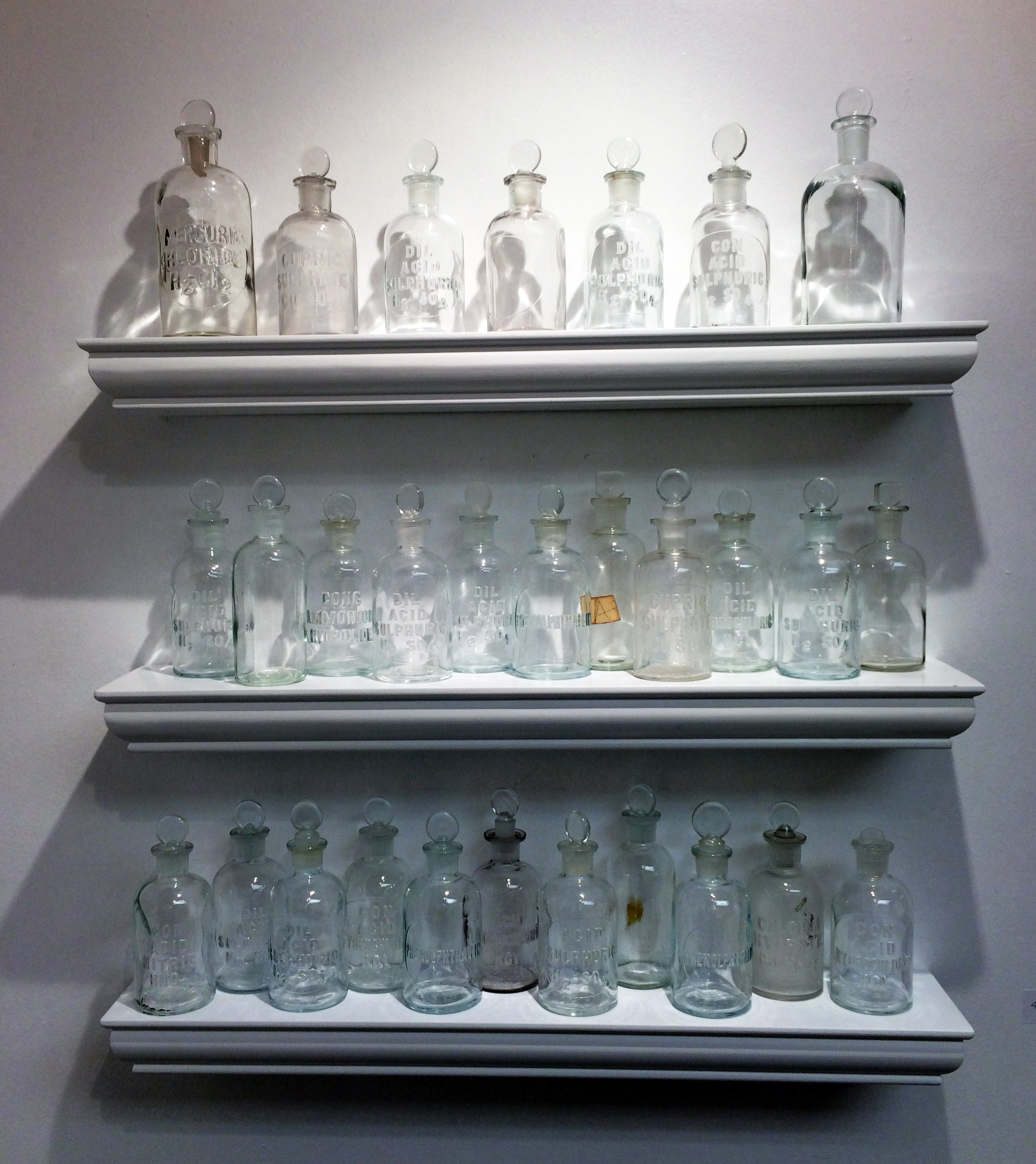
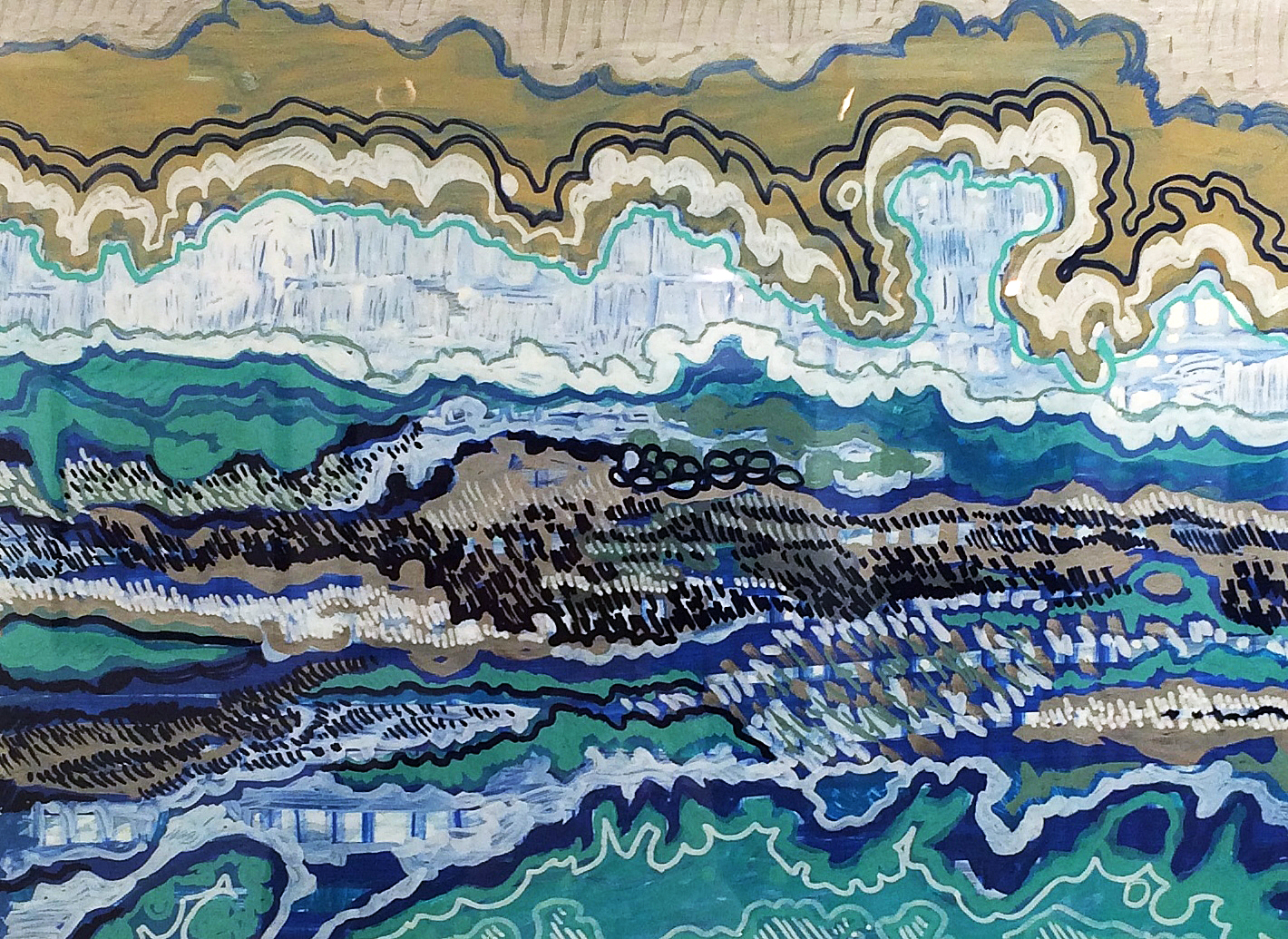
This could be seen as the fate of humanity at the dawn of the Twenty-first Century- our surroundings are now rife with invisible, and not so invisible, contaminants that have resulted from our misuse of the natural world. Reid uses the element of water as the aesthetic touchstone of his exploration of those harmful elements, and their insidious presence in our daily lives. The most sinister elements on the periodic table- mercury, cobalt, lead- are carried into our communities and bodies through the vehicle of water. These same elements, like water, are aesthetically beautiful- possessed of a seductive, ever-shifting sheen. That paradox of beauty, vitality, nature and toxicity is presented in every one of Reid’s works, the large-scale water paintings, the smaller water studies executed in oil pastel and paint marker, the sensuous prints on gold and copper paper, the installation of crystalline vintage bottles labeled with the acids and heavy metals they once held.

image-3-senghor-reid-the-element-of-crime-shelves-and-apothocary-bottles-24in-x-30in-2016

Senhor Reid, The Element of Crime Shelves & Apothecary Bottles, 24 X 30, 2016

The shimmer, and Reid’s capture of it in almost every medium imaginable, wreathes an elegant, fragile dialog between art, science and nature in Diabolique. It is the surface of water, which has become so loaded (the Flint water crisis and Detroit’s ongoing scandal of water shut-offs are only two examples of the element’s presence in crises of health, politics, race, and class) with essential and unanswered cultural urgencies. It is the glint of heavy metals, and the faceted surface of glass, containers and transmitters for elements that delight our eyes and leave putrid, invisible traces. It is deep, lurid, sensuous hues that sing of our love of nature as they paradoxically poison our environment. The shimmer conceals the corpse that will, inevitably, rise up from the murky inheritance of our chemical-spewing forbears. The rest of us may not be so lucky- yet, Diabolique seems to suggest, where there’s beauty, there’s hope.

image-5-senghor-reid-breaking-the-waves-4-paint-marker-11in-x-14in-2016

Senghor Reid, Breaking Waves 4, Paint Marker, 11 X 14″ 2016

 Diabolique,  by Senghor Reid,  at NCA Gallery through October 21, 2016.


Page 2 of 5

Powered by WordPress & Theme by Anders Norén