Critical art reviews of Detroit galleries and museums weekly

Category: Paintings Page 44 of 51

Whitney Snow @ The Scarab Club

Tricks of Magical Realism 
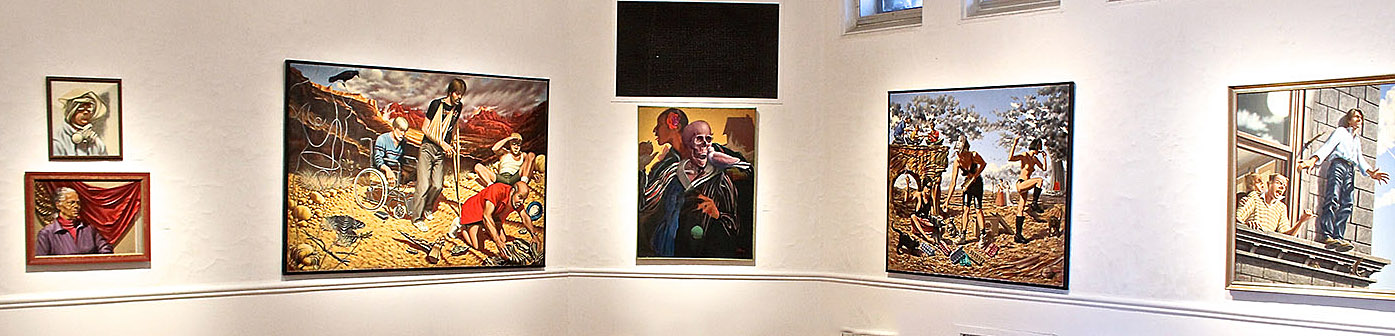
WS1 Install

Whitney Snow, Installation Image, Courtesy of Sarah Rose Sharp

Magical realism is the watchword of the Whitney Snow solo retrospective on display at the Scarab Club – the first since the painter’s passing in 2006. Snow certainly captured the spirit of magic realism, wherein surreal or “magical” elements are introduced to otherwise everyday scenarios. Likewise, his large-format paintings contain many cultural and art-historical allusions, as well as a symbol set designed for sly, if somewhat abstracted, political commentary – another imperative of magic realism as a device is its use in holding a somewhat whimsical or disruptive mirror to society or culture. In these respects – and in terms of realizing technically well-rendered tableaus – Snow’s work is very successful.
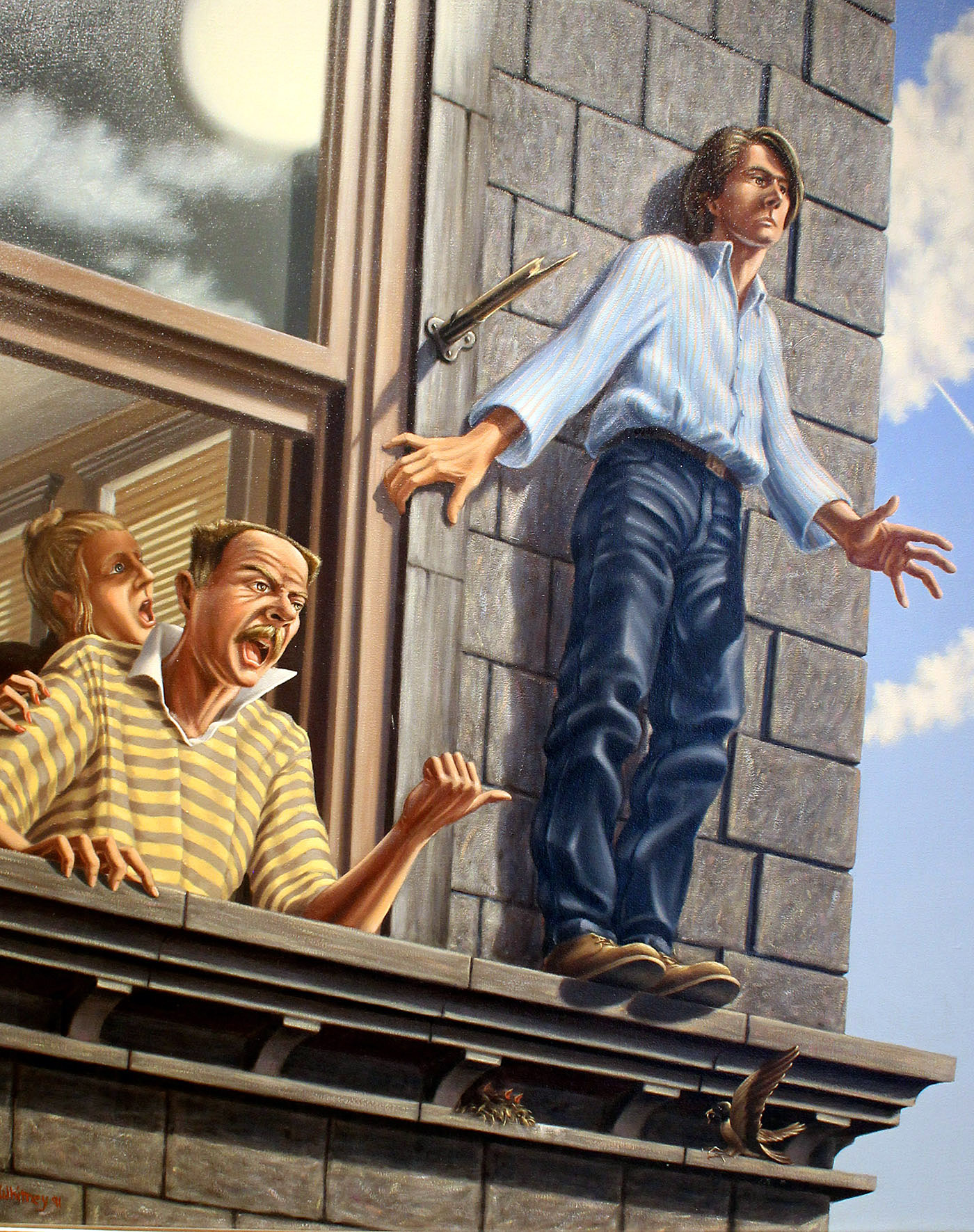
WS3 Living on the Ledge

Whitney Snow, Living on the Edge

But there is a creeping sense of vagueness that makes it hard to digest these images, on some level. Snow’s scenarios are, at times, amusing, but their magical elements leave them steeped in a kind of cartoonishness that makes it a challenge to take them very seriously. There is a fable-like quality to their narratives – again, much in alignment with the history of magic realism – but these protagonists engaged in foolish or nonsensical pursuits seem largely unmoved by their surrounding circumstances. One might expect a glimmer of consternation from the subject of Technology on my Back, who is being ridden like a backpack by a green demon of gambling and internet addiction, but there is barely a frown. One might anticipate high drama from the subjects of Living on the Ledge, a couple standing at the window addressing a third person poised to jump off a high ledge – the man on the ledge seems utterly indifferent, and the one at the window seems, at most, peeved. The de facto expression for Snow’s subjects is a deadpan. The experience of viewing his paintings is much like hearing about a crazy dream someone had last night – doubtlessly, each element is all terribly meaningful…but it lacks a kind of visceral immediacy to engage the viewer. This is particularly surprising, in light of Snow’s rather virtuosic ability to visualize his dreams.
01 American Sunset_800

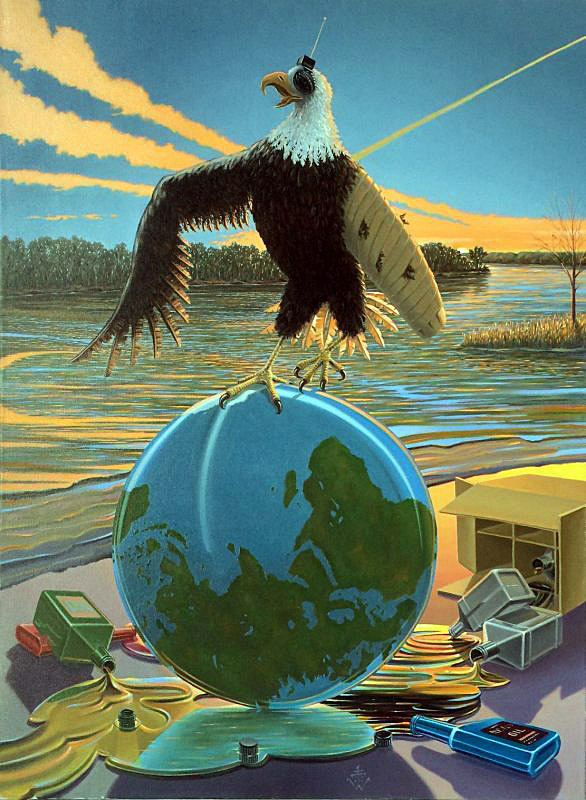
Whitney Snow, American Sunset

Arguably, this does not represent a problem. Indeed, all of these things – dream states, nonsense, and reality-disconnect – fit within the stylistic mechanisms of magic realism, and that being the stated parameters for Snow’s oeuvre, it is rigorously on-target. So, too, there is a wealth of symbolism, both in the form of pop cultural references and the complete canon of art history, from Roy Lichtenstein to the Greek muses. One imagines that a well-versed art historian could be happily occupied for some time identifying and picking apart these Easter eggs. This viewer, however, remains unmoved. Snow’s work seems to be a failing of both the magic and the real – too fine in its details to embrace abstraction, too wedded to some kind of discernible references to transcend the source material. The Easter eggs are just sitting there, right in the middle of the lawn; picking them up offers little satisfaction. And though it is wrong to fault an artist for making work that lacks relevance a decade after his passing, the current-day political stakes honestly feel just a little too high to swallow social commentary as generalized as American Sunset, wherein a bald eagle with a broken wing (get it?) sits atop an upside-down globe (get it???) soaked in a pool of spilled motor oil (GET IT???).
11 Self Portrait of a Painter_800

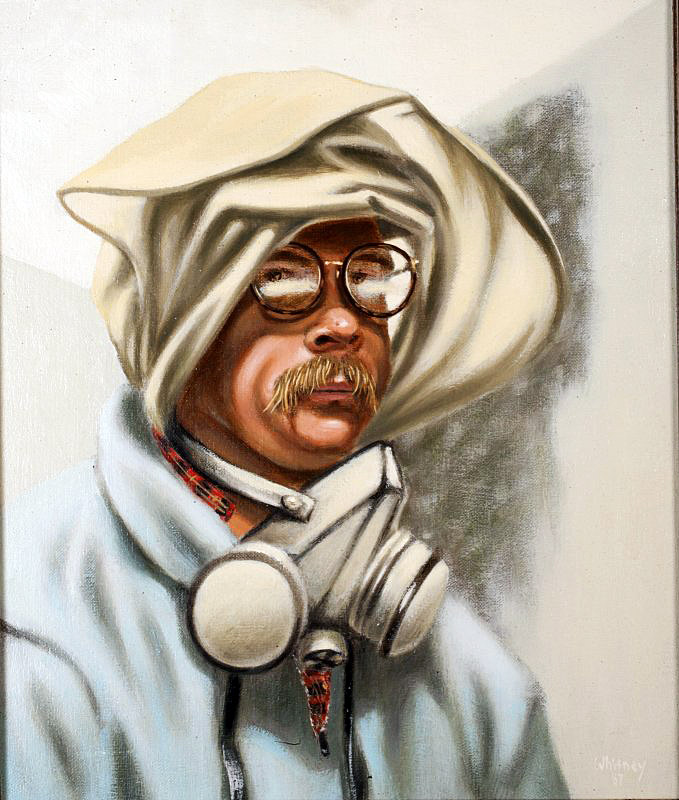
Whitney Snow, Self Portrait of a Painter


Really, this might not stand out so starkly if it weren’t for the striking quality of the few examples of Snow’s “realism” paintings. Denver Skyline is about as straightforward a subject as one could encounter – the view out a window, blind half-drawn against a cloud-filled sky, clock on the sill, and just a few buildings visible. All of Snow’s ability to render fine details is applied to the exhibition sole believable female subject, in Portrait of a Woman. The woman makes piercing eye-contact, actualized to herself, and by extension, actualizing the viewer. Self-Portrait of a Painter seems to suggest that Snow took himself at least a little bit seriously. These images have a kind of quiet dignity, and demonstrate that Snow was capable of something beyond madcap imagery and imagistic political satire. In a poetic missive titled “The Illusion of Light,” Snow reveals a deeply painterly sentiment:

“It can teach us joy through observation and work
and when the day is done, we can return to the dark
with a heightened sense
of the infinite cycle of light and dark.  – Whitney Snow

WS5 Newton's Angel

Whitney Snow, Newton’s Angel

One detects a hint, at least, that this master painter perhaps defaulted overmuch in the direction of his impish spirit; press beyond the magical veil, and you find a more serious sentiment. It is that gravity, more than Snow’s fanciful and magical tableaus, which inspires great curiosity in this visitor to his mind palace.

Scarab Club- http://scarabclub.org


Vagner Whitehead @ Cass Cafe

Where Allegory Meets Autobiography – Vagner M. Whitehead’s “Writings on the Wall” at Cass Café, Detroit, Michigan

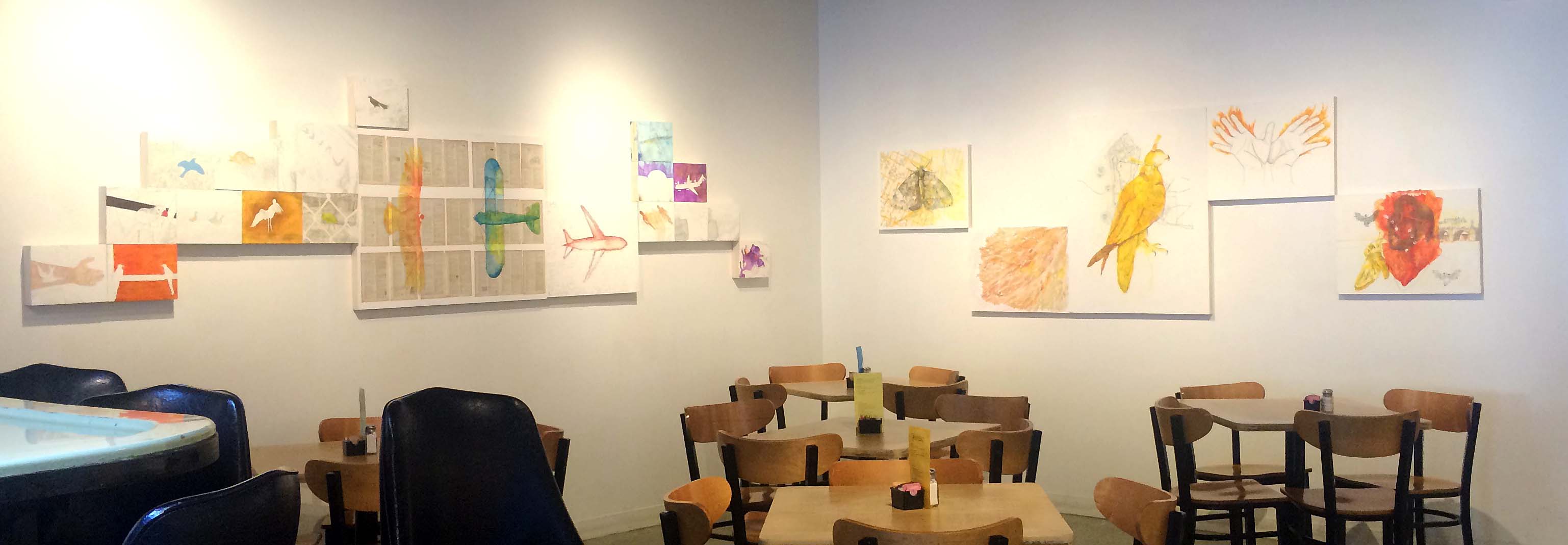
Vagner Whitehead Installation shot

Vagner Whitehead Installation shot, Image Courtesy of Clara DeGalan

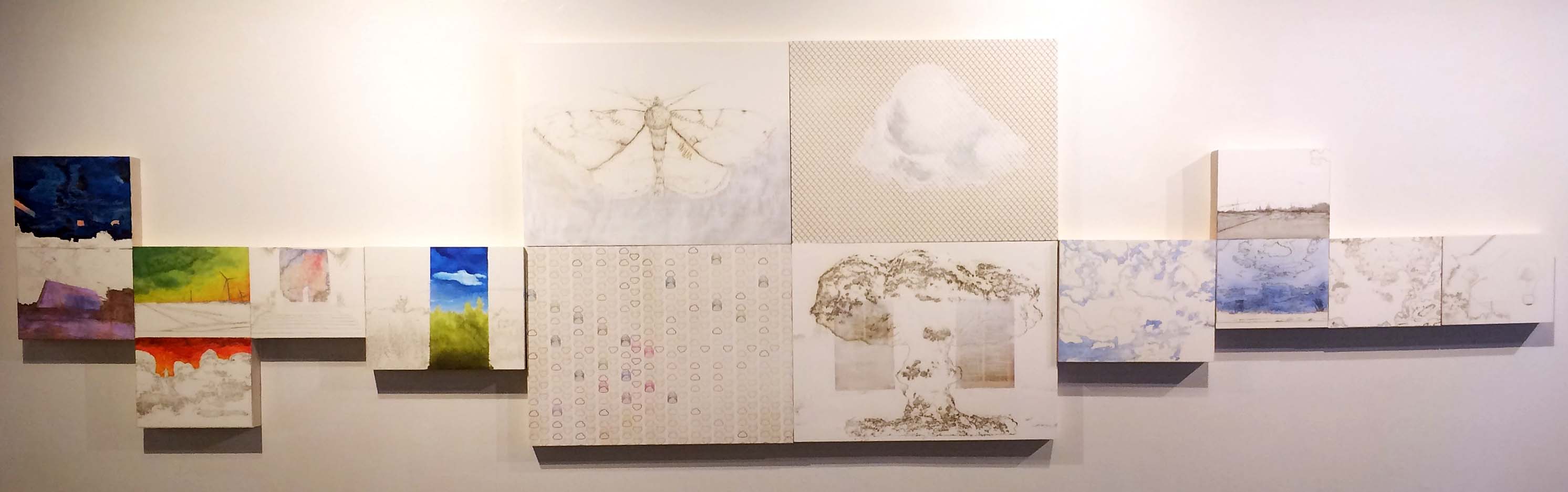
“Writings on the Wall,” Vagner Whitehead’s farewell solo exhibition currently on view at Cass Café (he’s sadly leaving us to take a job in Texas, he’ll be missed on the gallery circuit and at Infinite Mile Detroit, where Whitehead and I were colleagues) provides an interesting counterpoint to the ideas I’ve been juggling lately about identity-based work. Generally speaking, I find it problematic. My definition of the genre ropes in any work that takes as its subject an examination, unpacking, or sounding board of the earthly presence of the maker herself- her body, her biography, her socio-economic place, her sexual orientation, any and all factors that combine to make her who she is. Such work carries the risk of lapsing into self-examination that effectively shuts the door to any possibility for true communication or transcendence. The presence of casual self-portraits and other Snapchat-worthy visual flashes in Whitehead’s work quickly establishes as its subject an exploration of the artist’s identity. Whitehead avoids the drab self-examination so common to this type of work, however, through an intriguing mixture of cross-pollinating media, differing modes of visual communication, and a beautiful, over-arching theme of movement- manifested specifically in flight- that opens up what so often presents as a sealed conversation between the artist and her ego.

Image 1 Vagner Whitehead Computing Clouds 2015 Laser etching collage and acrylic on panel

Vagner Whitehead Computing Clouds 2015 Laser etching collage and acrylic on panel

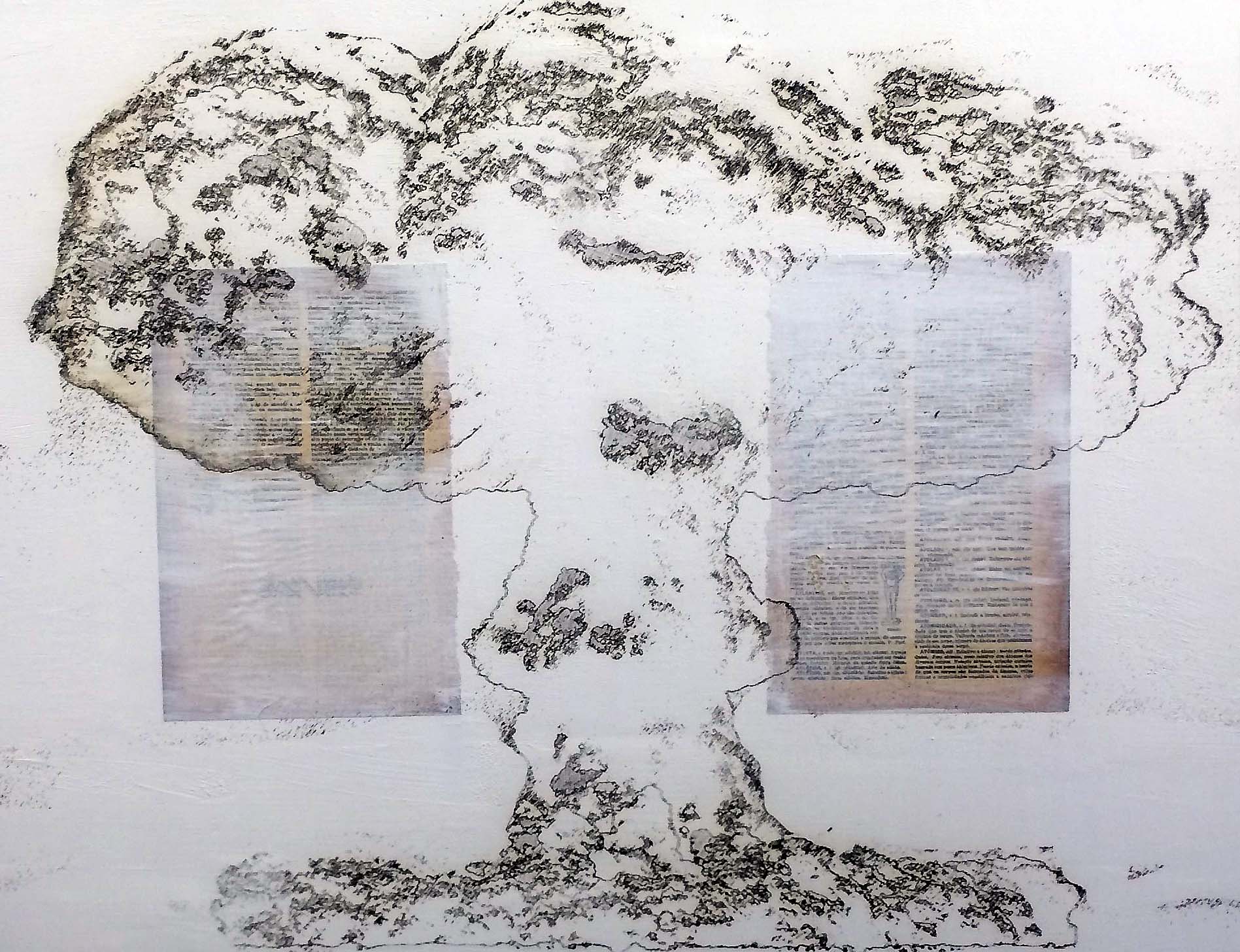
Image 2 Vagner Whitehead Computing Clouds 2015 Detail

Vagner Whitehead Computing Clouds 2015 Detail

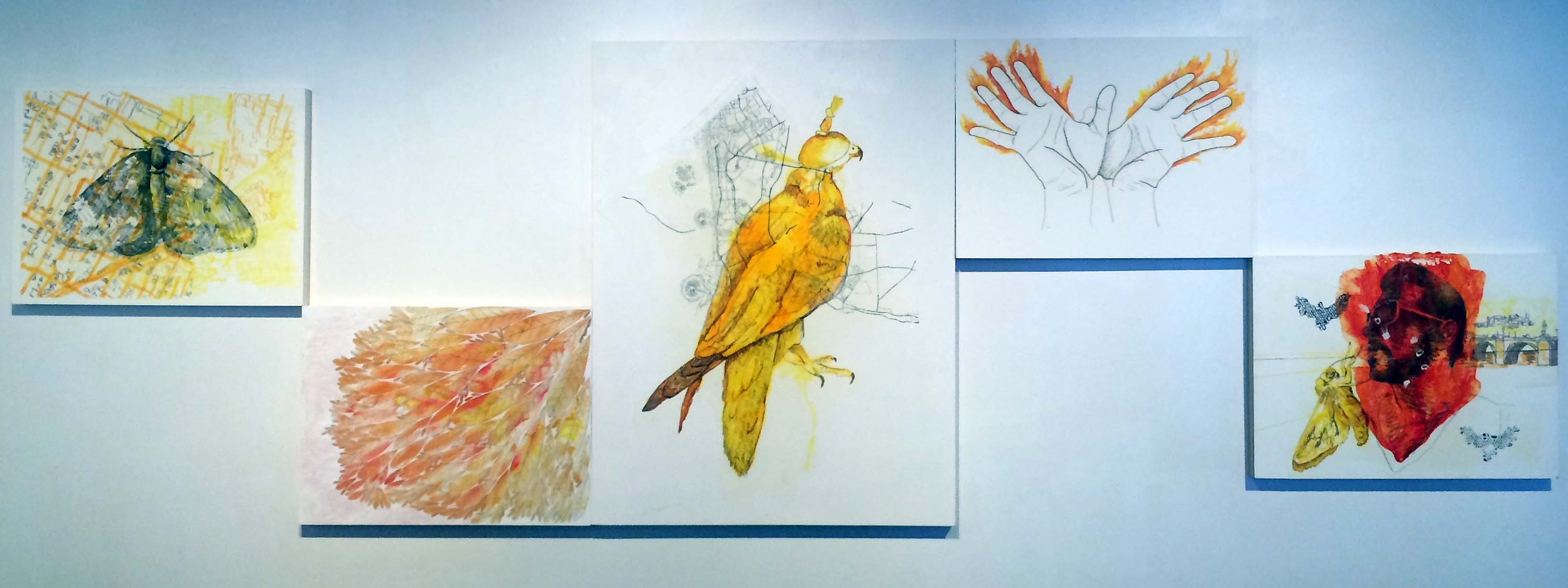
“Writings on the Wall” somehow places its maker both center and off-center through a multi-paneled, open-ended meditation on the rhymes that ring between migration, barriers in communication, and the bridging of these distances by any means necessary- via text (presented in collaged leaves from found books) transcriptions of sign language delivered in drawings of hand movements, gorgeous, juxtaposed studies of airplanes and birds, scaled-up prints of typeface lettering, and, amid the cacophony of rote communication, brief moments of non-verbal respite that read as breaks in a migratory journey- delicate graphite studies of intimate moments of iPhone-captured eye contact with the artist himself, or with lovers on languid, bed-bound mornings.

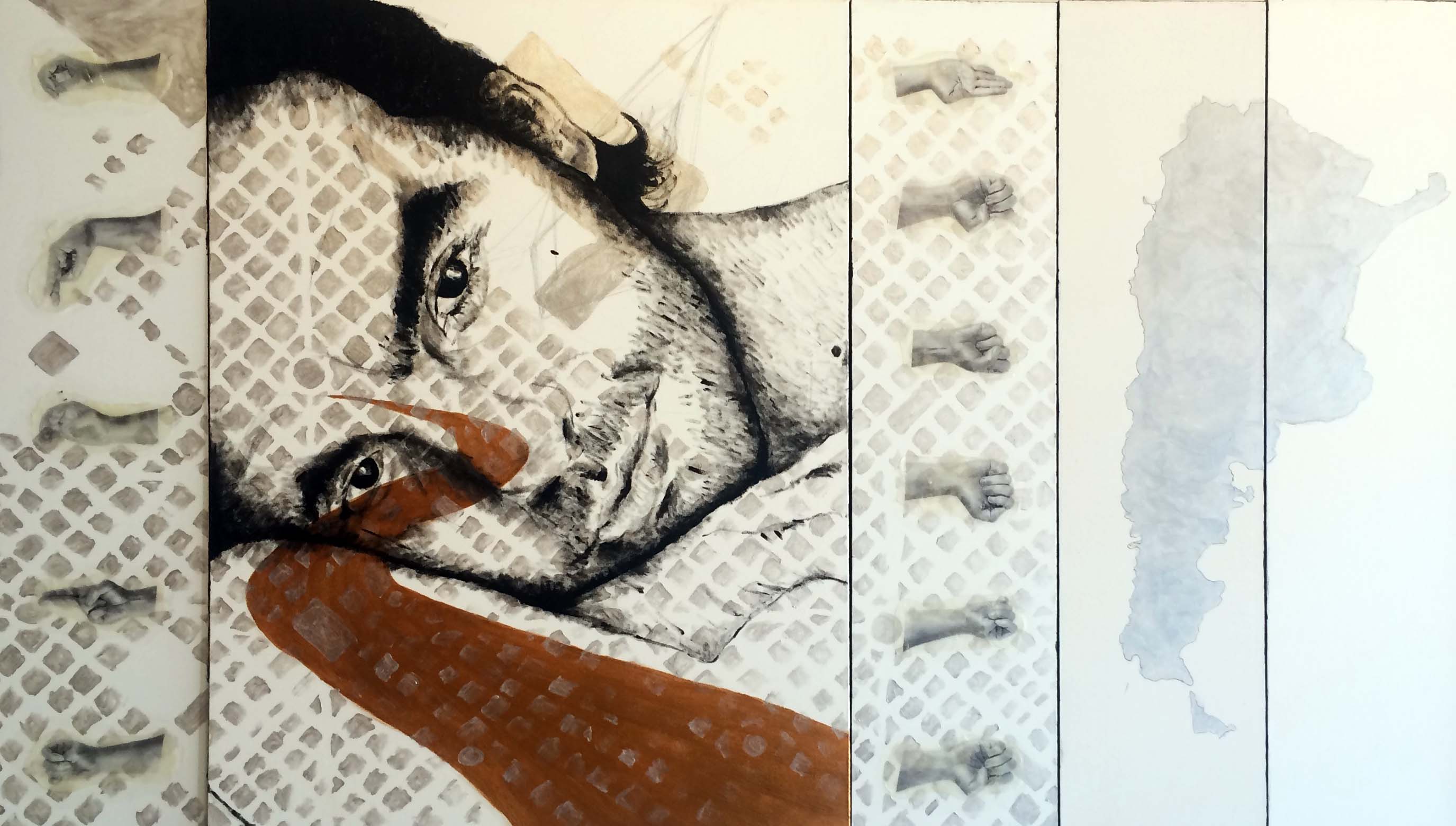
Image 3 Vagner Whitehead Besame Mucho Oz 2012 Acrylic and Inkjet transfer on canvas Detail

Vagner Whitehead Besame Mucho Oz 2012 Acrylic and Inkjet transfer on canvas Detail

Mylar overlays wreath milky glazes over rapid-fire selfies, combining with their carefully considered graphite rendering to elevate them into sacred territory. One gets the impression that the wonder with which Whitehead approaches these mundane likenesses is, somehow, not self-regarding, but universal- that it carries a subtle lesson in the true purpose such images carry in popular culture. Whitehead balances his busy, content-loaded transcriptions of movement with these contemplative, humble moments of stillness (so difficult to grasp these days) that carefully articulate, in dissonantly traditional media, the nearest we can possibly come to identity in a world with a constantly shifting, evolving ground that threatens to swallow us up if we don’t document every moment of quiet autonomy we can. Whitehead’s work in “Writings on the Wall” captures, via quaintly allegorical images and materials, the overwhelming speed with which we must move through an increasingly global, competitive art world, spanning distances similar to those a migratory bird must cover in order to survive. The same distances which technology- airplanes, printed text, smart phones- can cover instantly and effortlessly. The part of us that is still struggling to cross oceans, using only our bodies and what we can articulate with our hands and our brief, snatched experiences of true connection, is one key to the ideal execution of identity-based work. This work can tell us something about how, and why, we build visual narratives around ourselves as we navigate contemporary life.

Image 4 Vagner Whitehead Blind Path 2014-15 Laser etching acrylic and oil on panel

Vagner Whitehead Blind Path 2014-15 Laser etching acrylic and oil on pan

 “Writings on the Wall” is on view at Cass Café in Detroit, MI July 9 through September 17, 2016.  Cass Cafe


Jaume Plensa’s Human Landscapes @ Toledo Museum of Art

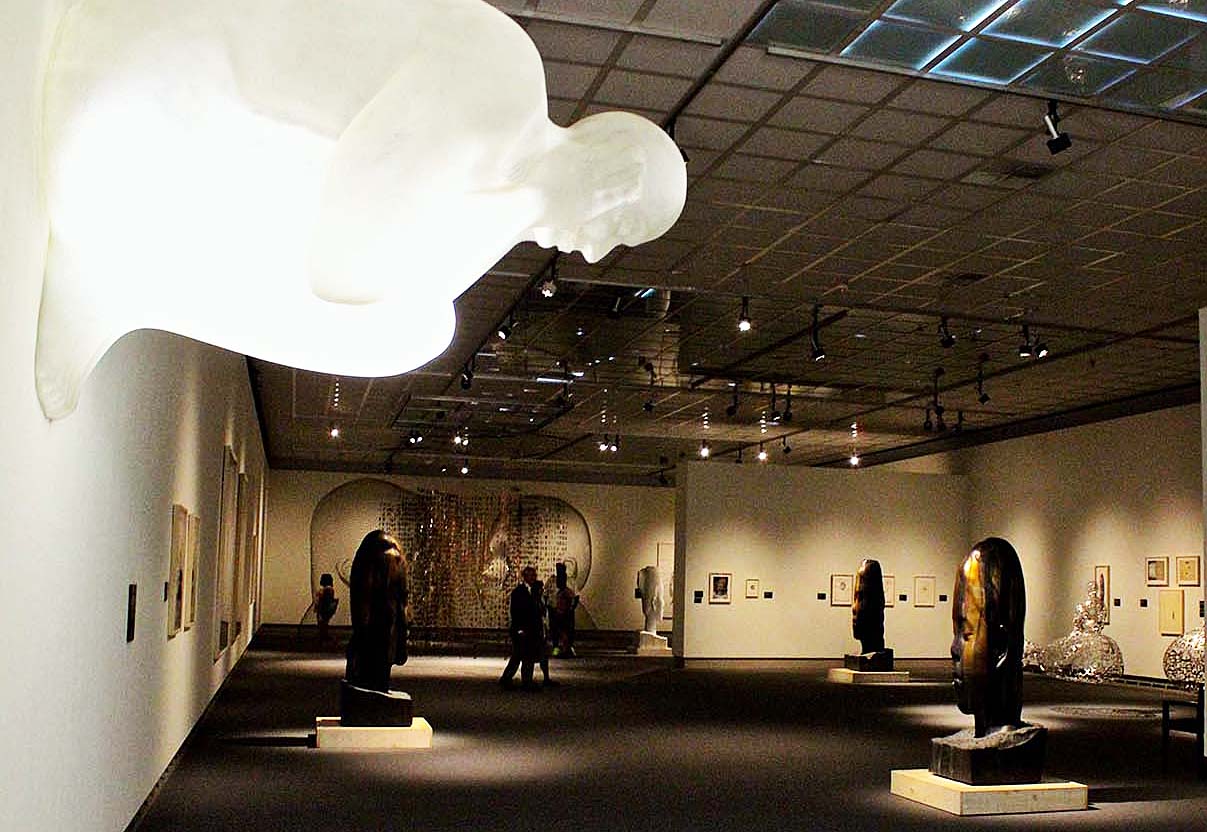
JP1 Installation

Installation, Jaume Plensa’s Sculpture, Toledo Museum of Art

Spanish-born sculptor Jaume Plensa is perhaps best known in the United States for his permanent Crown Fountain installation in Millennium Park in Chicago. This sculpture, which projects recorded footage of the faces of dozens of Chicago citizens into 50-foot towers that flank the fountain, distills Plensa’s abiding interest – the maximizing of human forms to the scale of landscapes. Human Landscape , a quasi-retrospective of Plensa’s recent work has just opened at the Toledo Museum of Art, and features a selection of his arresting sculptures, six exterior works sited on the grounds surrounding the museum, and an array of his lesser-known works on paper. The cumulative effect is an exercise in gazing, quite literally, into the face of humanity.

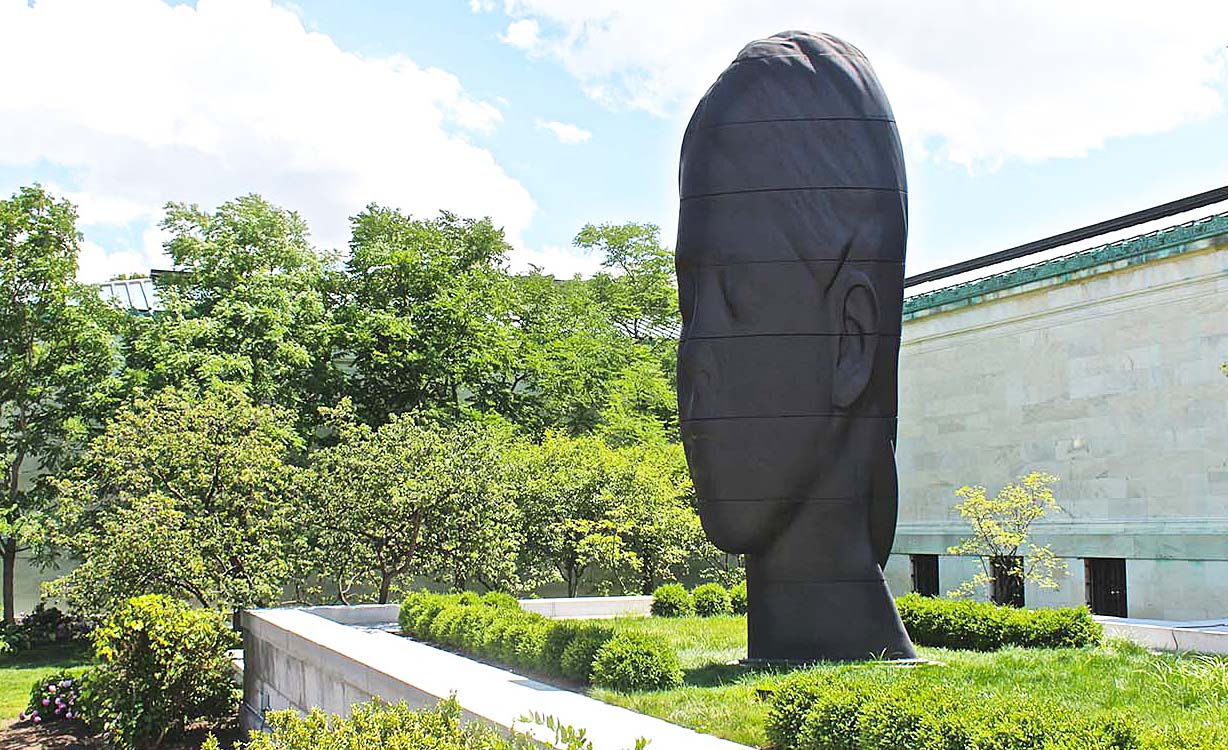
JP11 Pula

James Plensa, Paula, 2013, Bronze

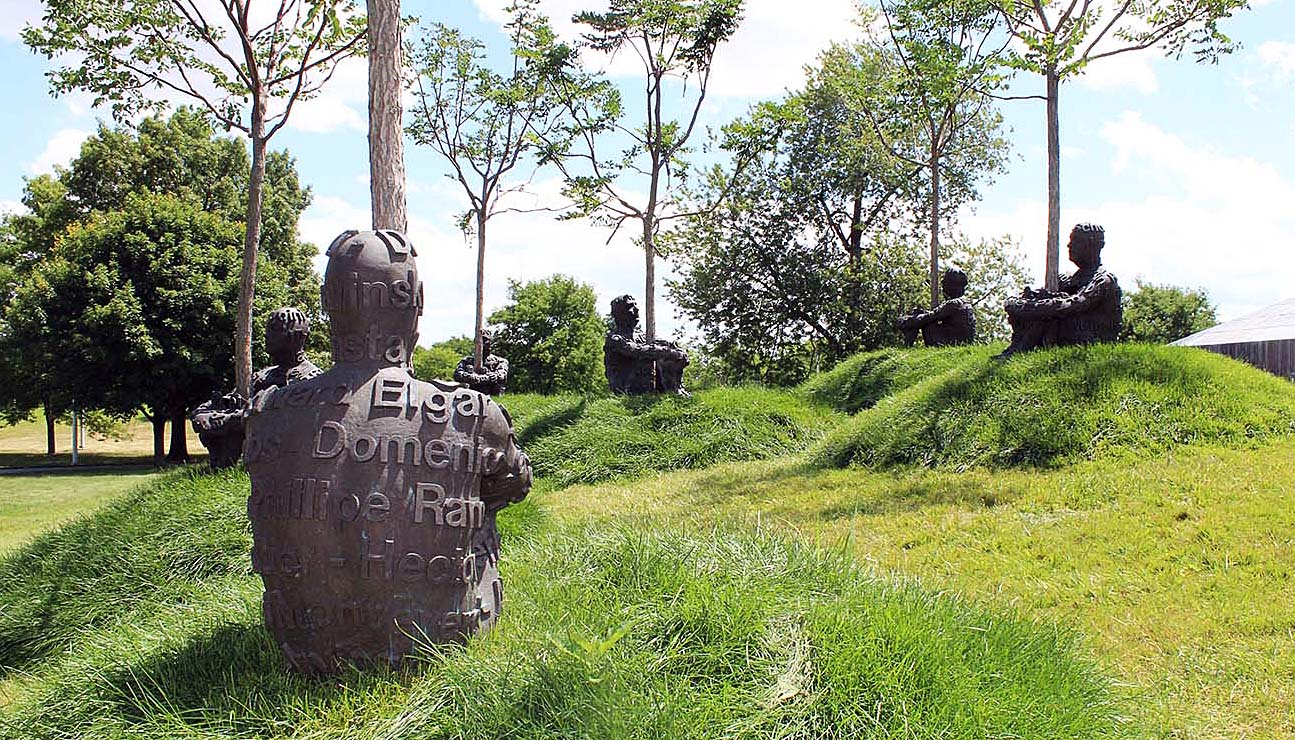
Plensa’s use of scale is nearly enough on its own to inspire awe, casting and carving sculptural neck-up portraits that stand at or above human size. Driving by the museum’s front entrance, one’s gaze is drawn by Paula (2013), a portrait of a young girl from the neck up, rendered in blackened bronze and standing out like an Easter Island head amidst the lush surrounding greenery. Around the museum’s eastern wing another piece, The Heart of Trees (2007) is sited, with 1:1 scale bronze-cast figures sitting in silent meditation at the base of seven live Kentucky Coffee trees, planted into a grove against the hillside and perfectly complimented by the angled verdigris exterior of the Center for Visual Arts. Those driving along Monroe Street by night might find their attention drawn by pieces on the grounds surrounding the Glass Pavilion, two torso pieces – Thoughts (2013) and Silent Music (II) (2013) – and two seated figures, Soul of Words, which are illuminated at night, to emphasize the open weave of their intricate metal work.

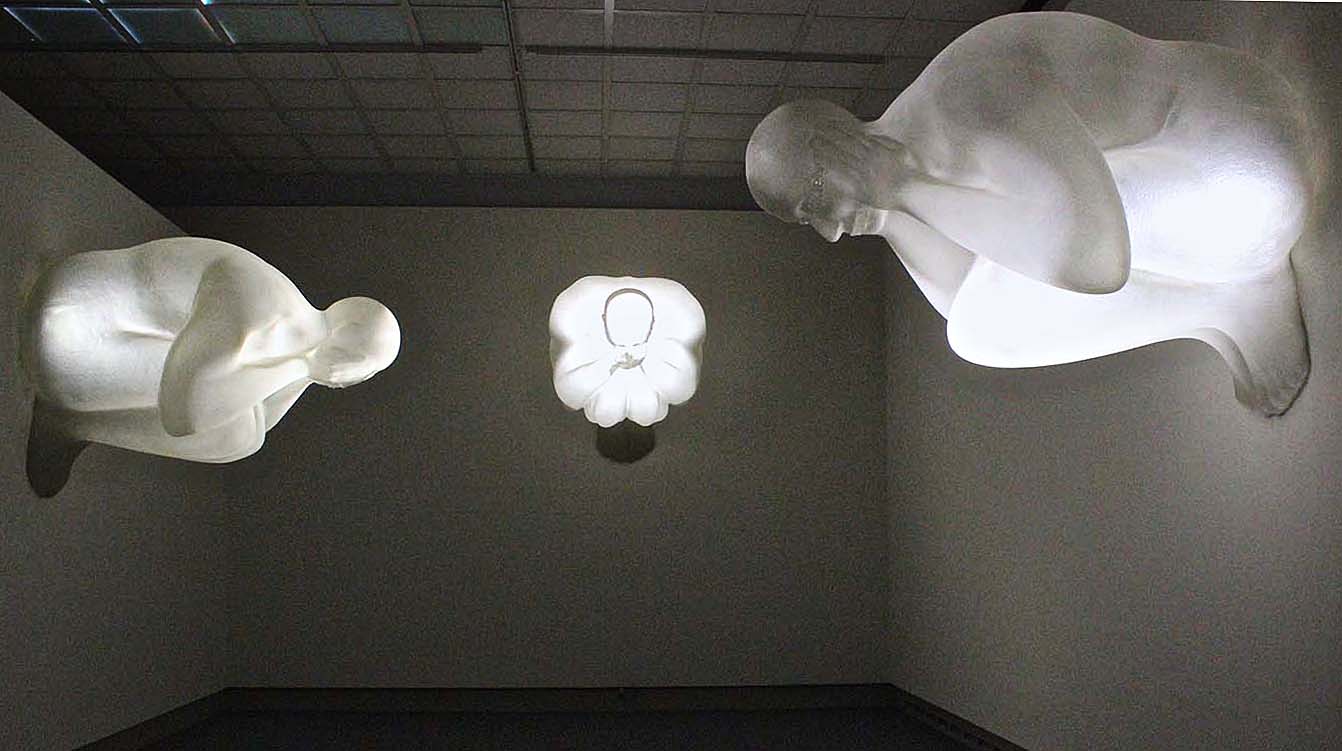
JP8 See No Evil

Jaume Plensa, See No Evil, Hear No Evil, Speak No Evil, 2010, Polyester resin, stainless steel, and LED light, dimensions variable

A figure seated with knees drawn up is a recurring motif for Plensa – at human scale, with The Heart of Trees; at maxi-scale, with Soul of Words; cast in hollow polyester resin, illuminated and mounted on the wall, in an interior trio of works, See No Evil, Hear No Evil, Speak No Evil (2010). This posture, and the tendency for his massive portrait faces to have their eyes closed, suggests that his figures have an interior landscape, as well as the physical one created or augmented by their presence. There is a kind of vulnerability to Paula, even as she towers far above human height, in her closed eyes and solemn expression.

Heart of the Trees

Jaume Plensa, The Heart of Trees, 2007, Bronze (7 elements), Kentucky Coffee trees, 99 x 66 x 99 (each)

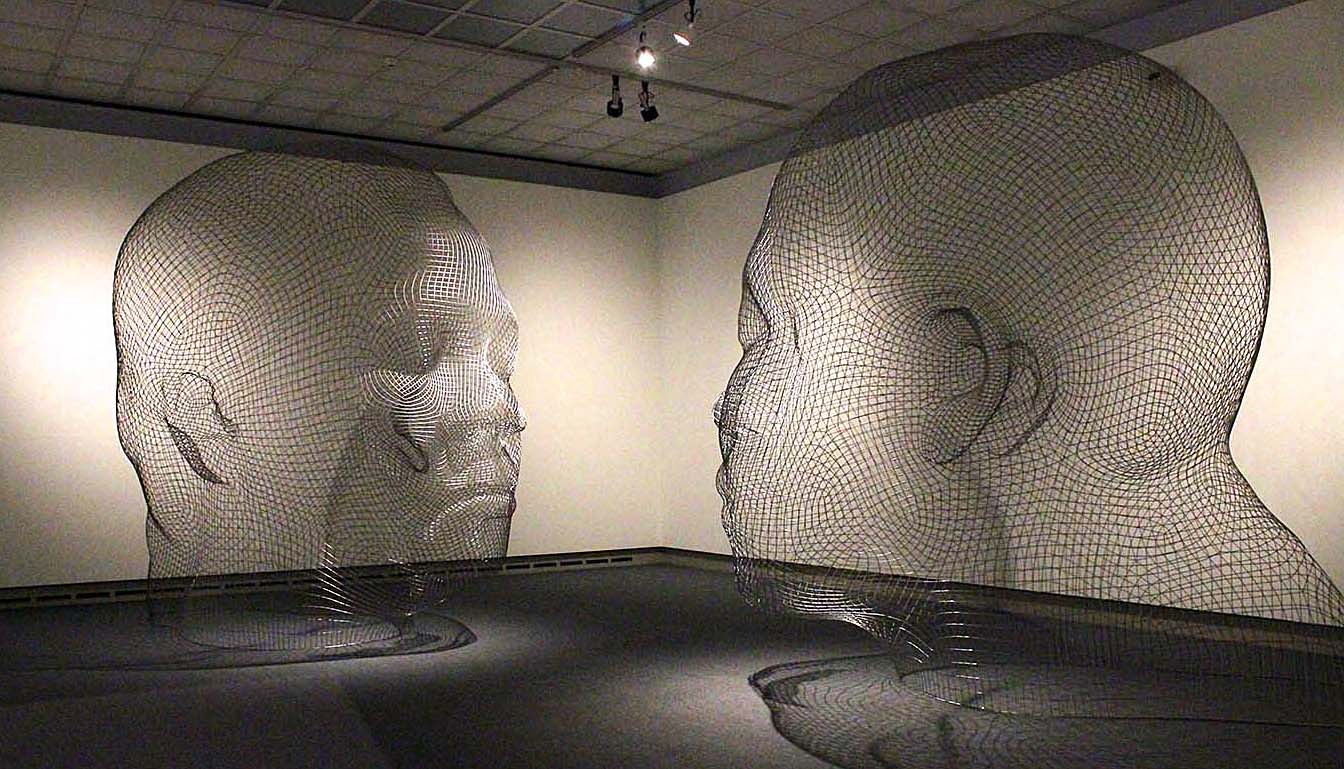
Though Plensa clearly delights in siting his works in open public spaces, the gallery works create all kinds of tableaus, as well. From either of two entry points to the exhibition, the viewer is greeted by a marble portrait head of what appears to be the same woman, Rui Rui (Plensa seems prone to reiterate subjects). Like Paula, Plensa’s head portraits feature an oddly squashed perspective that causes their appearance to shift as one walks around them. What appears to be in correct proportion from one angle becomes slightly or markedly off-kilter from another. The right-hand Rui Rui stands before two massive wire-frame heads in a peaceful sort of face-off in the corner. Images on paper line the walls – it is almost jarring to see subjects with fully articulated features and open eyes after all the smooth lines of Plensa’s abstractions. A curtain of iron letters, Silent Rain (2003), divides this smaller gallery from the main gallery with an ephemeral cascade of language – another of Plensa’s recurring themes.

JP3 Awilda & Irma 2014

Jaume Plensa, – Awilda & Irma, 2014, Stainless Steel, 400 x 400 x 300 cm (each

This focus on multi-lingual creations – some of which contain characters from eight different languages – suggests a keen desire on the part of the artist to find ways of bridging gaps in communication, or at least highlighting language barriers as a critical boundary between human societies. Through works like Silent Music, Thoughts, and The Heart of Trees, Plensa seems to suggest that music might provide a form of more universal connection; other works, like the Evil trio, highlight isolating factors such as anxiety, insomnia, and amnesia.

Talking Continents III

Jaume Plensa, Talking Continents (III), 2014, Stainless steel, dimensions variable

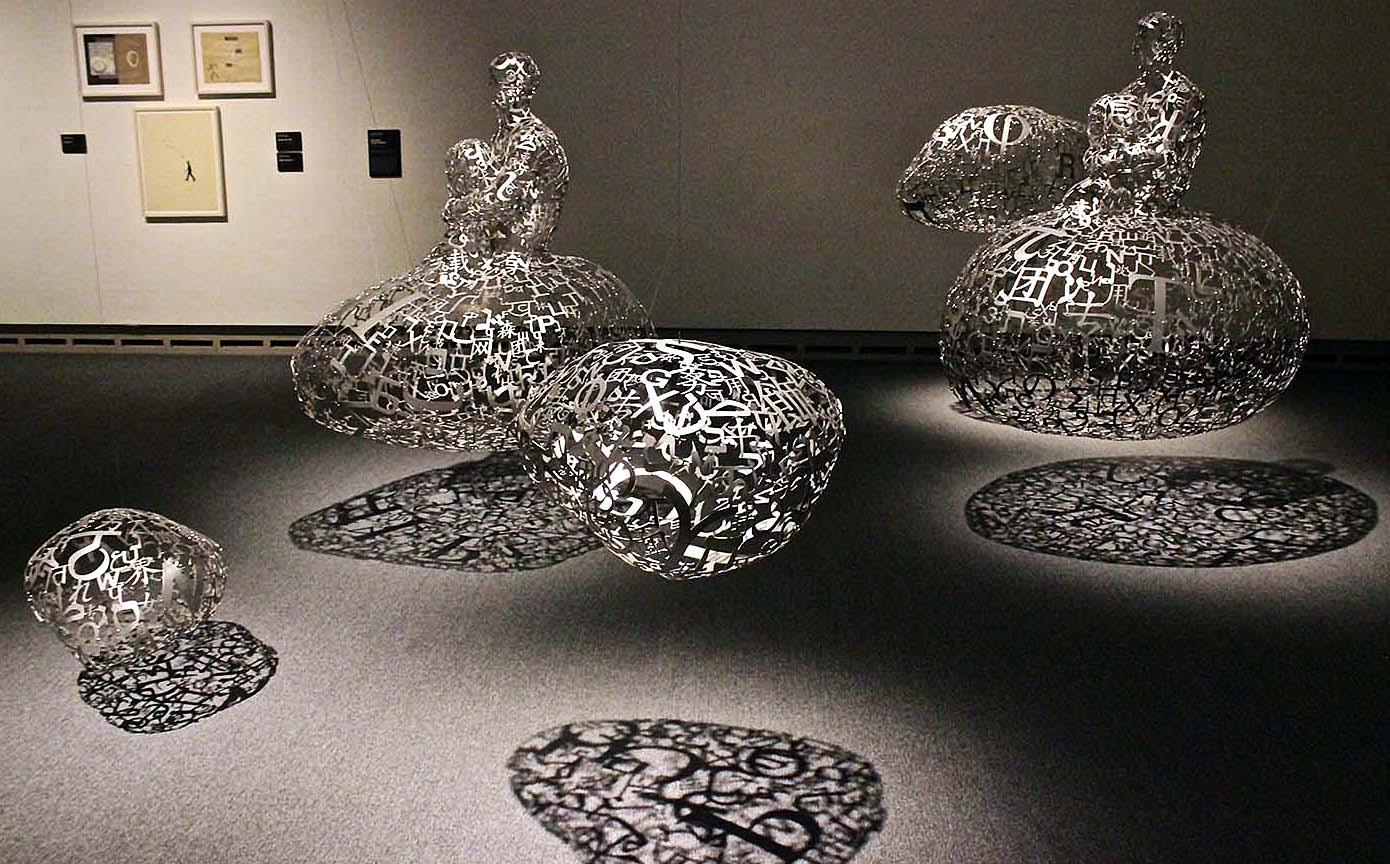
As any portrait photographer can tell you, people love to look at other people. There is a kind of perpetual enchantment with ourselves as subjects, and Plensa’s works play easily into this appeal, while subtly introducing themes of diversity, awareness, and connection – all buoyed by whimsical and unexpected touches. Floating in the main gallery, Talking Continents (III) (2014) features an archipelago of cloud-like forms, a couple of which are ridden by his ubiquitous seated figures. The effect is playful and magic-carpet-like; the seeming effortless lift of the metal forms belies their material structure, and their open motif of linguistic characters throws lacy shadows beneath them. All of Plensa’s environments, expertly installed around Toledo Museum of Art, provide opportunities to pause and wonder at the human condition – arguably one of life’s greatest mysteries, and the one given to all of us, as humans, to contemplate.

Jaume Plensa: Human Landscape, Toledo Museum of Art
June 17-Nov. 6, 2016

Hippie Modernism: The Struggle for Utopia @ Cranbrook Art Museum


Two exhibitions offer a preponderance of material objects to make sense of the past

HM9

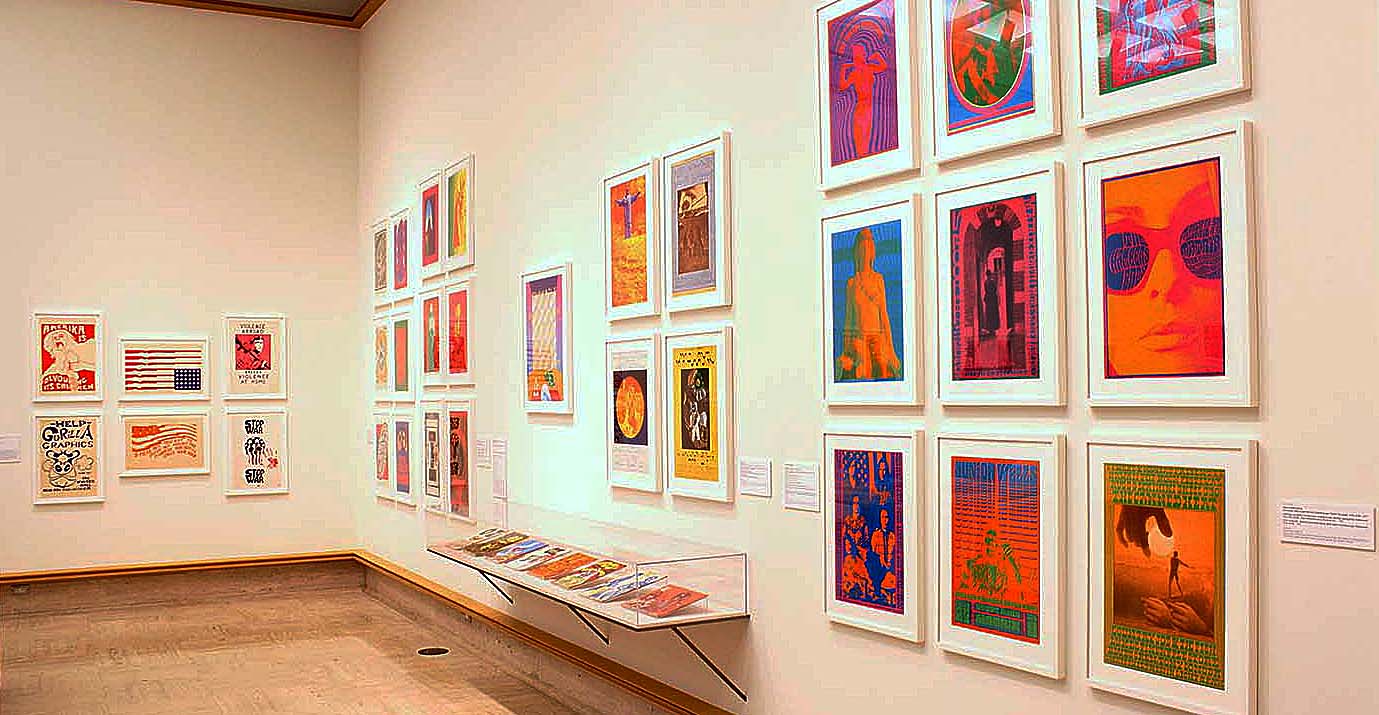
Psychedelic posters and printed matter, installation view

These days, the San Francisco Bay Area is neatly divided into two camps: you either are a tech bro, or you hate them. Back in my day as an errant Bay Area youth, there was a different kind of division: you either were a hippie, or you hated them. I, my friends, was certainly no hippie. Of course, in my time they weren’t even real hippies—although there were still a healthy number of Summer-of-Love burnouts quietly resisting the rising tide of capitalism. They were proto-hippies, the spawn of Baby Boomers, appropriating the fashion or rediscovering the music as it made its 20-year orbit in retrograde. Whether the die-hard originals or the new school posers, hippies were not, by any metrics, modern.

HM18

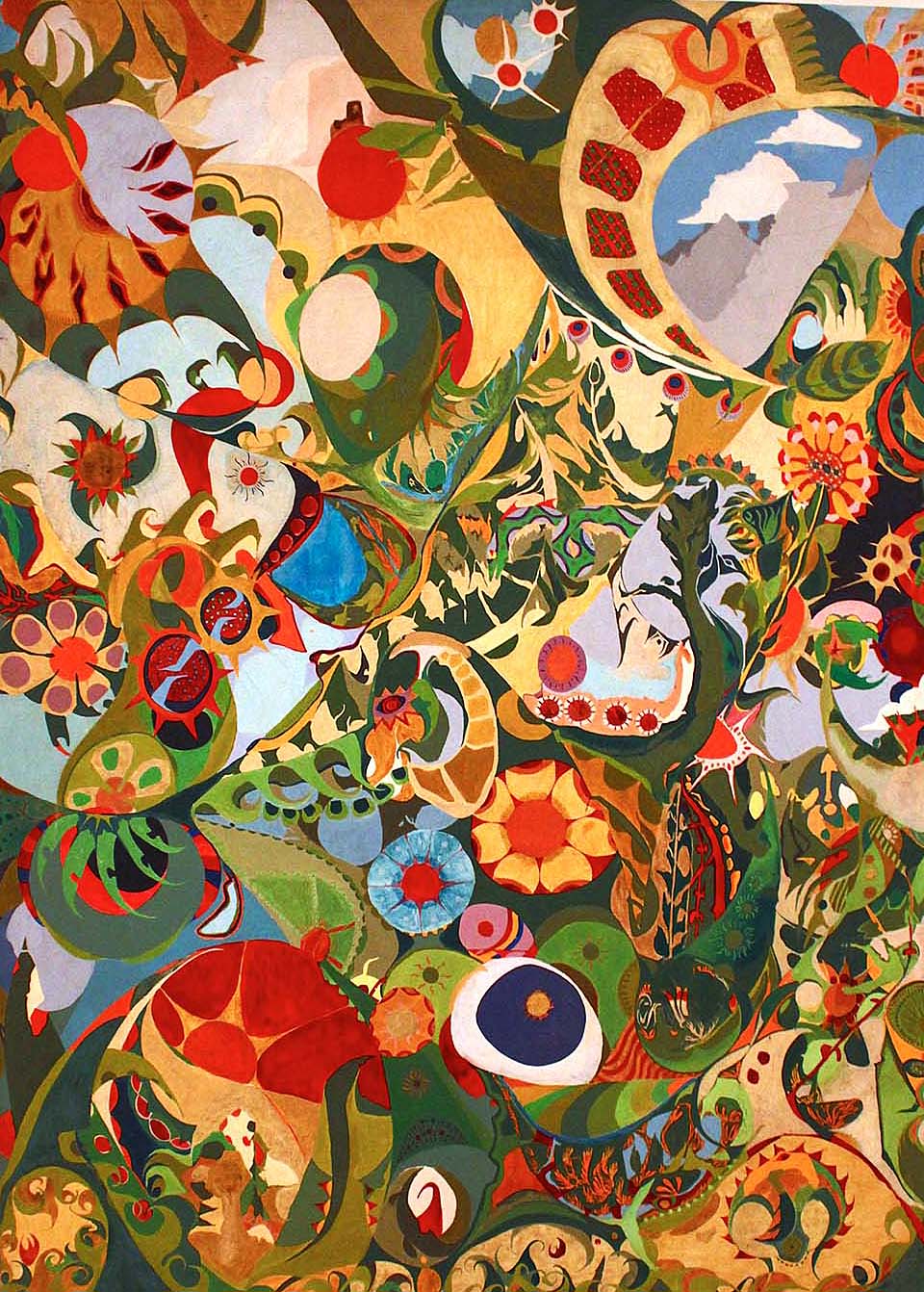
Isaac Abrams, Hello Dali (1965)

In fact, the seeming paradox between hippie and modern sensibilities provides the immediate tension of Hippie Modernism: The Struggle for Utopia—a sprawling exhibition initially organized by Andrew Blauvelt during his tenure at the Walker Art Center, which has subsequently followed him to be presented at the Cranbrook Art Museum, where he took up the mantle of Director last year. Hippies are commonly associated with back-to-the-land movements, eco-sustainability, and the timeless human yearning for peace and simplicity. Modernism is more concerned with technology, rapid progress and development, clean, modular design, and spare, white spaces.


HM8

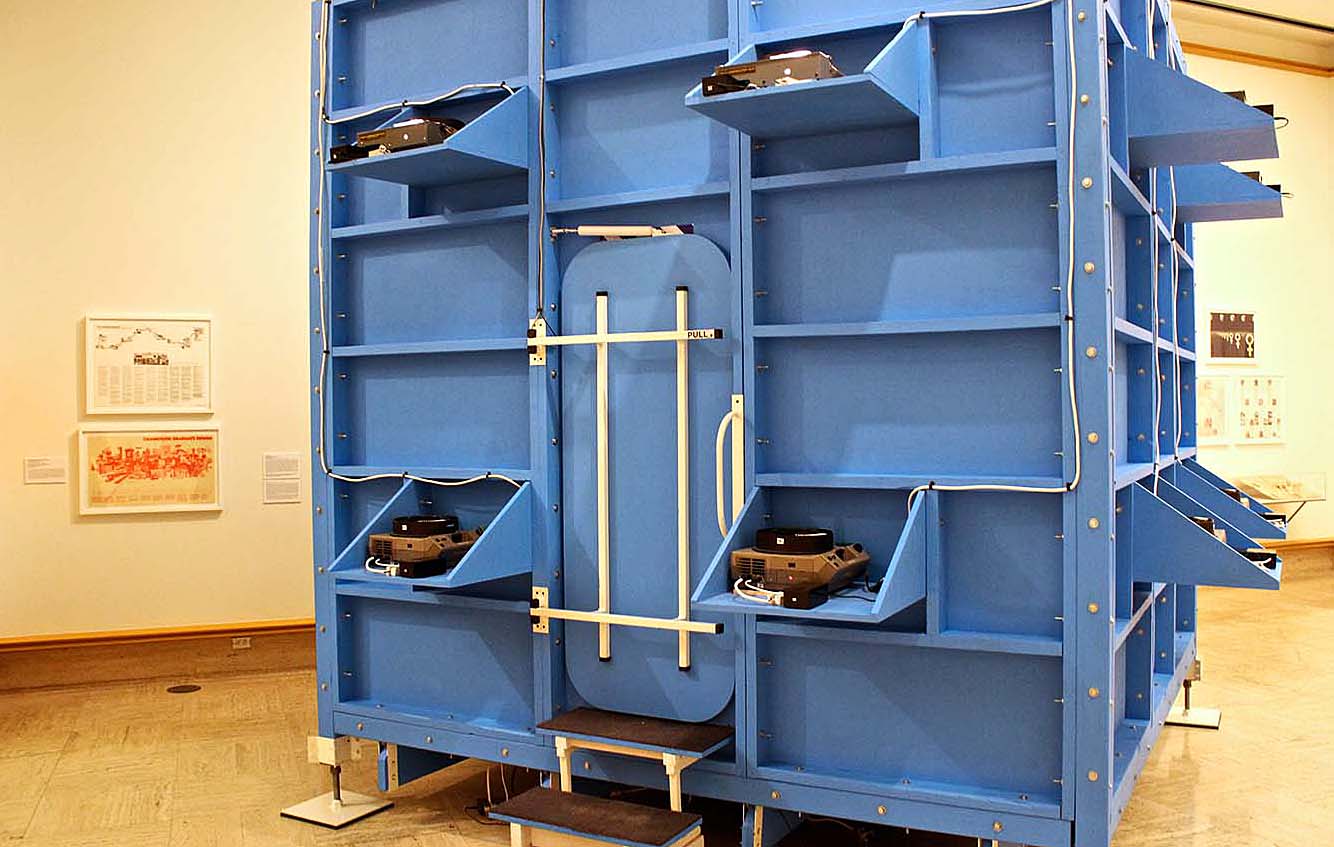
Ken Isaacs, The Knowledge Box (1962-2009)

But, as Hippie Modernism proves, these odd bedfellows forged a powerful connection indeed (who wouldn’t hippies jump into bed with, really?), fused in a social pressure-cooker of late-60s radicalism and wartime unrest. This extremely dense exhibition is not so much an art show as it is a walk through time with an art-historical lens—one which captures facets of hippie culture that have been elided by a typical focus on the flashier and more simplistic culture of drugs, fashion, rock-and-roll, and sex.

HM13

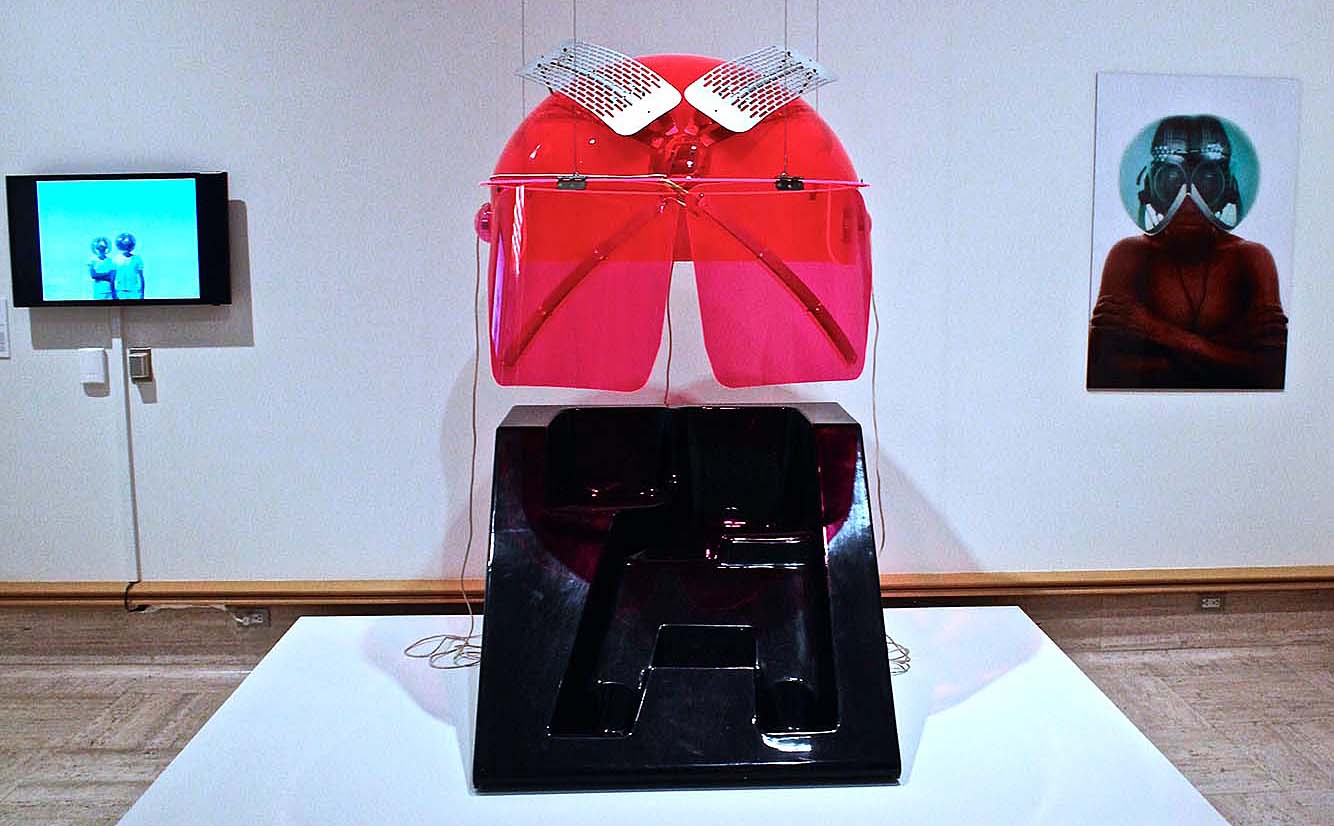
Works by Haus-Rucker-Co, (installation view)

These facets are loosely divided into three galleries: Turn On, Tune In, and Drop Out. Each of these examines a dominant theme of the time period, roughly the mid-1960s through the early 1970s—that of consciousness-raising on an individual level, social awareness on a geo-political level, and active rejection of certain cultural pressure of normativity and technological progress (to name a few). The objects and information on display demonstrate a deep interest in modern design not as an aesthetic exercise but a practical one, as applied to communal and off-the-grid living, mobile housing, and sustainable infrastructure; technology, not at as means of warfare but as a means for more direct powers of computing and personal representation; and tool use as a mechanism for exploring the inner workings of the mind. The exhibition, which occupies the entire main floor of Cranbrook is veritably papered in schematics of ergonomic living solutions, imagined vehicles, and visions of bio-domes (not to mention an actual geodesic dome that features an interactive and highly trance-inducing installation, The Ultimate Painting, by Clark Richert, Richard Kallweit, Gene Bernofsky, JoAnn Bernofsky, and Charles DiJulio.

HM2

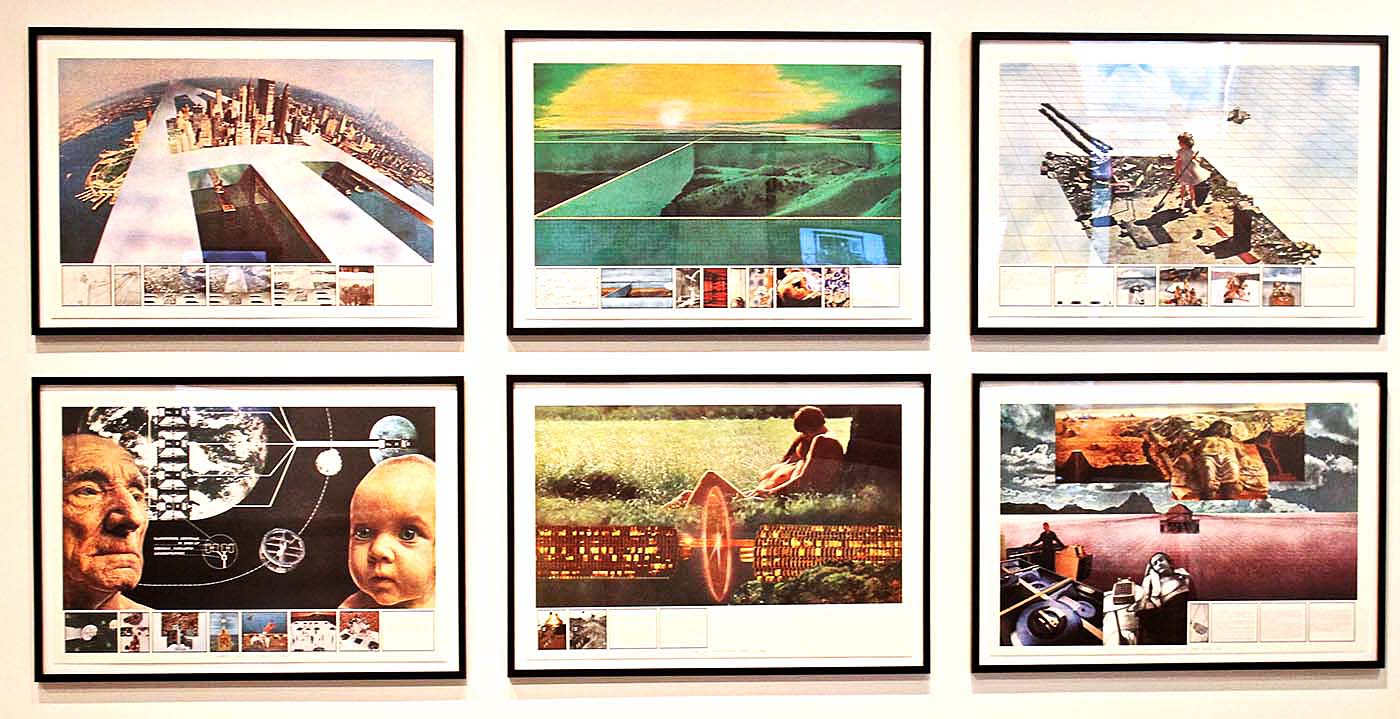
Superstudio, Prints from the Superstudio Series (1969-1973)

Many of the works bear collective credits, the products of communal discussion and creative efforts; many have the earmarks of what today would be considered “social practice art,” but at the time was considered radical politics—leaving the viewer to marvel at the subsequent commoditization of art in the 1970s and 1980s to defang its inherent power as a social catalyst! There are, as one might imagine, a room splashed with dozens of examples of psychedelic poster art—but the collection is not limited to the vivid band promo materials that probably still line the halls of the Fillmore (if they haven’t turned it into a vape bar or something). Rather, there is a kind of radical parallel to the Madison Avenue advertising culture that was taking hold of the market—a conscious and deliberate exploration of type, color, and imagery as a mechanism to promulgate messaging. There are, undeniably, quite a number of chill spaces distributed around the exhibition, and a good thing, too—with so much going on, the opportunities to stop, drop, and contemplate are welcome interruptions. These include a handful of audio/video screening rooms, a Relaxation Cube from Nomadic Furniture 1 (1973) with floor cushions and a soothing slide show, and a full-gallery installation of a work by Hélio Oiticica and Neville D’Almeida, CC5 Hendrixwar/Cosmococa Programa-in-Progress, complete with hammocks.

JG1

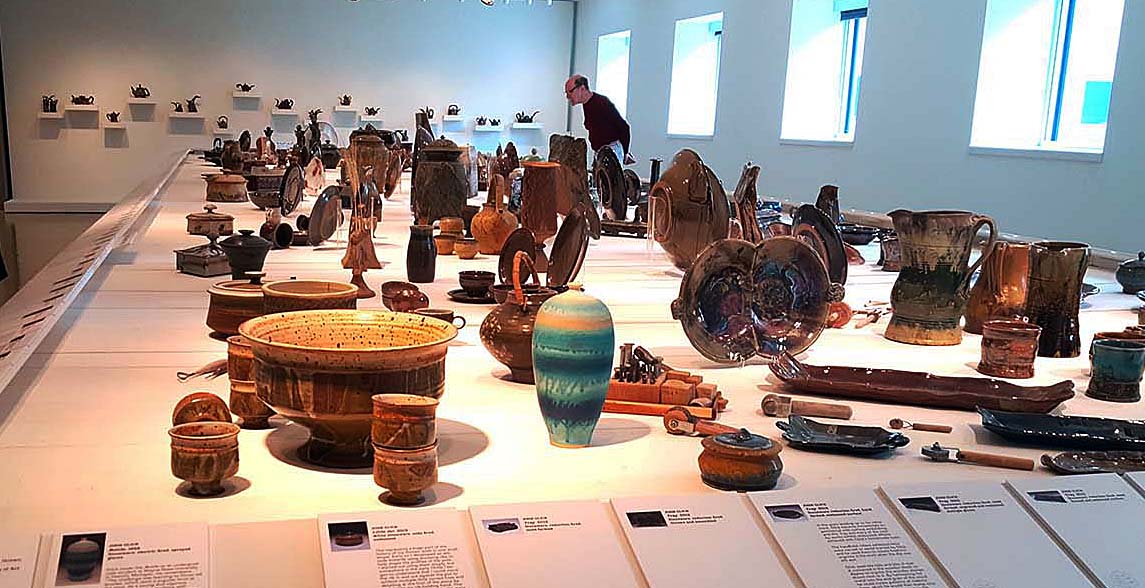
John Glick: A Legacy in Clay, installation view

John Glick: A Legacy in Clay @ Cranbrook Art Museum

It bears mentioning that Hippie Modernism is not the only spectacular exhibition currently on display at Cranbrook Art Museum, though it certainly warrants a visit all on its own. A career survey of ceramic artist John Glick—John Glick: A Legacy in Clay—is a dazzling walk through the life work of a virtuosic artist who managed to find fresh takes on vessels and forms as old as human society. From the wall of teapots, to the hanging friezes, to the physical timeline of Glick’s singular and beautiful ceramic forms, laid out in an engaging and accessible 360-degree display that mimics the sort of tables where they might otherwise be found, the Glick retrospective offers eye candy at every turn.

Food for thought, vessels for food, and much to take in at Cranbrook Art Museum!

Michigan Fine Arts Competition @ BBAC

Birmingham Bloomfield Art Center Hosts the 35th MFCA

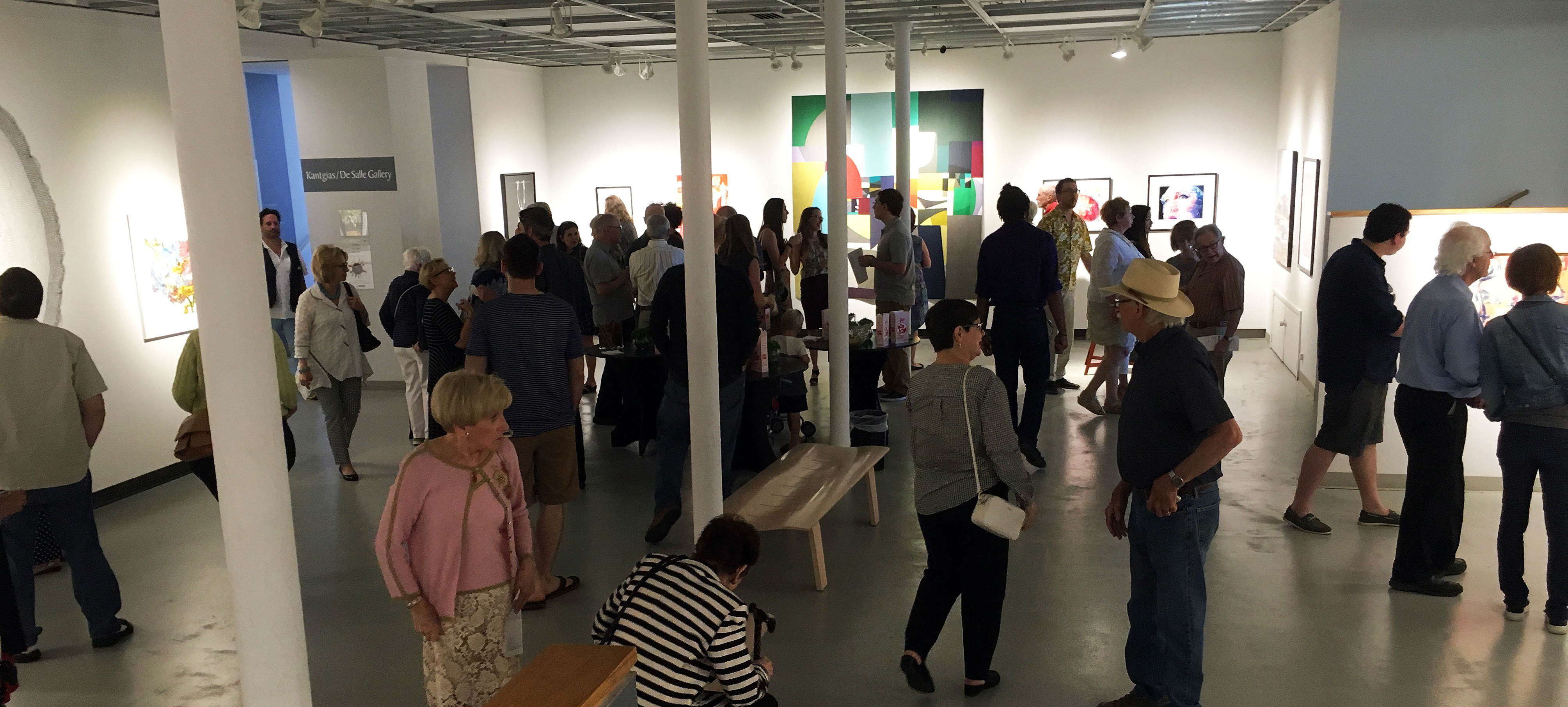
BBAC Install

BBAC / MFAC Installation Image – Courtesy of DAR

The Michigan Fine Arts Competition (MFAC) exhibition opened June 24, 2016, and is one of the best they have had in their long existence, beginning in 1982. Not many know that the competition was previously held by the Detroit Institute of Arts, but with their demise of leadership in contemporary art, they were pleased to find a home at the Birmingham Bloomfield Art Center (BBAC). The key to this year’s success is Terence Hammonds; the juror selected to make this year picks. Originally from Cincinnati, Ohio, he attended the School of the Museum of Fine Arts, Boston for his BFA, and Tufts University for his MA. One of the factors that make this exhibition so exceptional is that it draws on a mid-west region, where more than 500 artists compete from Michigan, Ohio, Indiana, Illinois and Wisconsin.

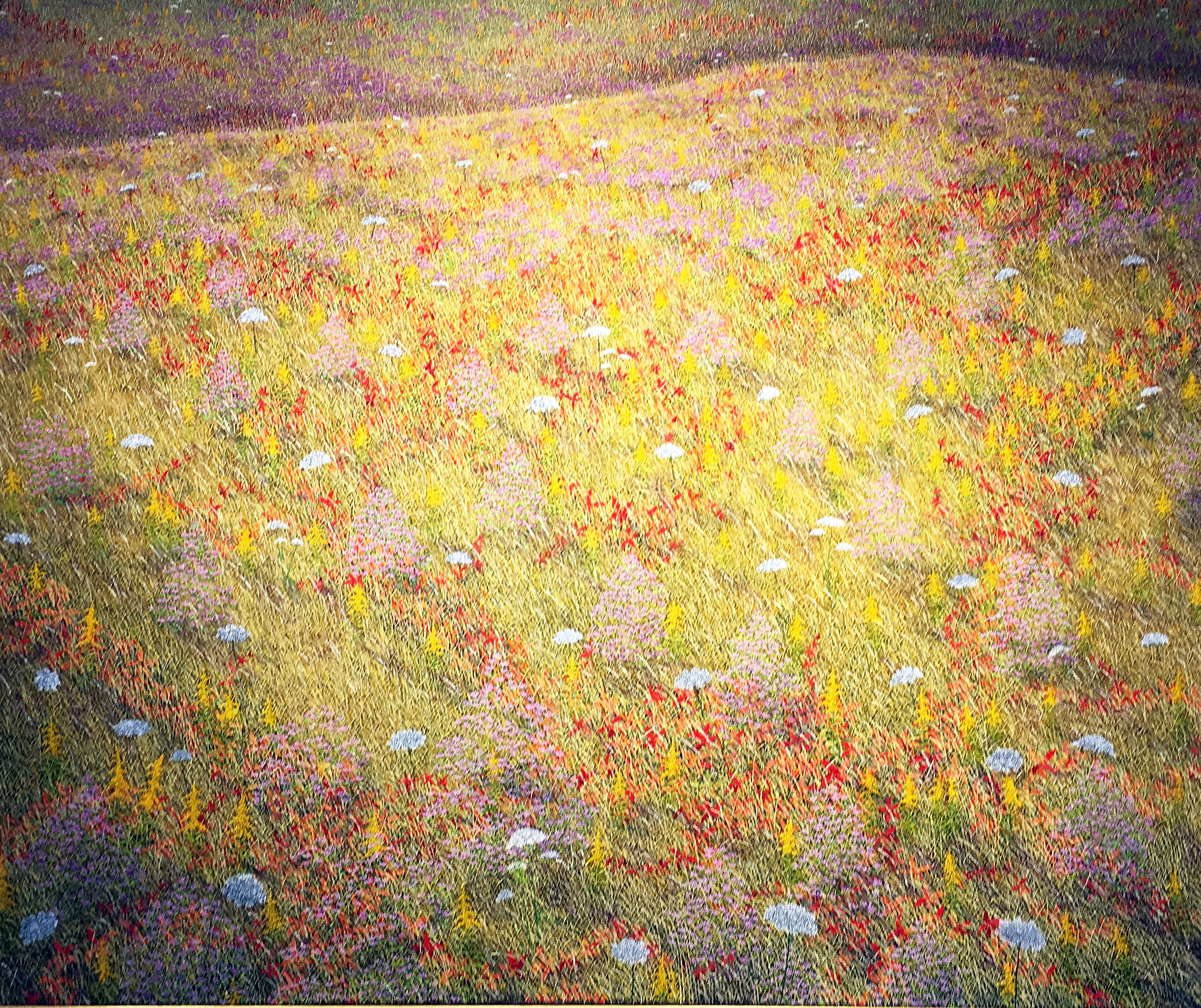
G.Moore

Gerald Moore, Late September Field, Oil on Canvas

Gerald Moore is an expressive landscape painter who holds an MA in painting from Central Michigan University. He says “I work opposite the Oriental painting philosophy that ‘less is more.’ ‘More’ is the engine of my work; ‘more’ is more.” His large landscape painting seems to draw on the landscape as a subject, but flirts with abstract field painting and gives us a little of both. Color field painting, championed by Clement Greenburg in the 1950’s characterized this expression as solid color creating an unbroken surface and flat picture plane. One might view the Wheat Fields of Van Gogh to see early examples.

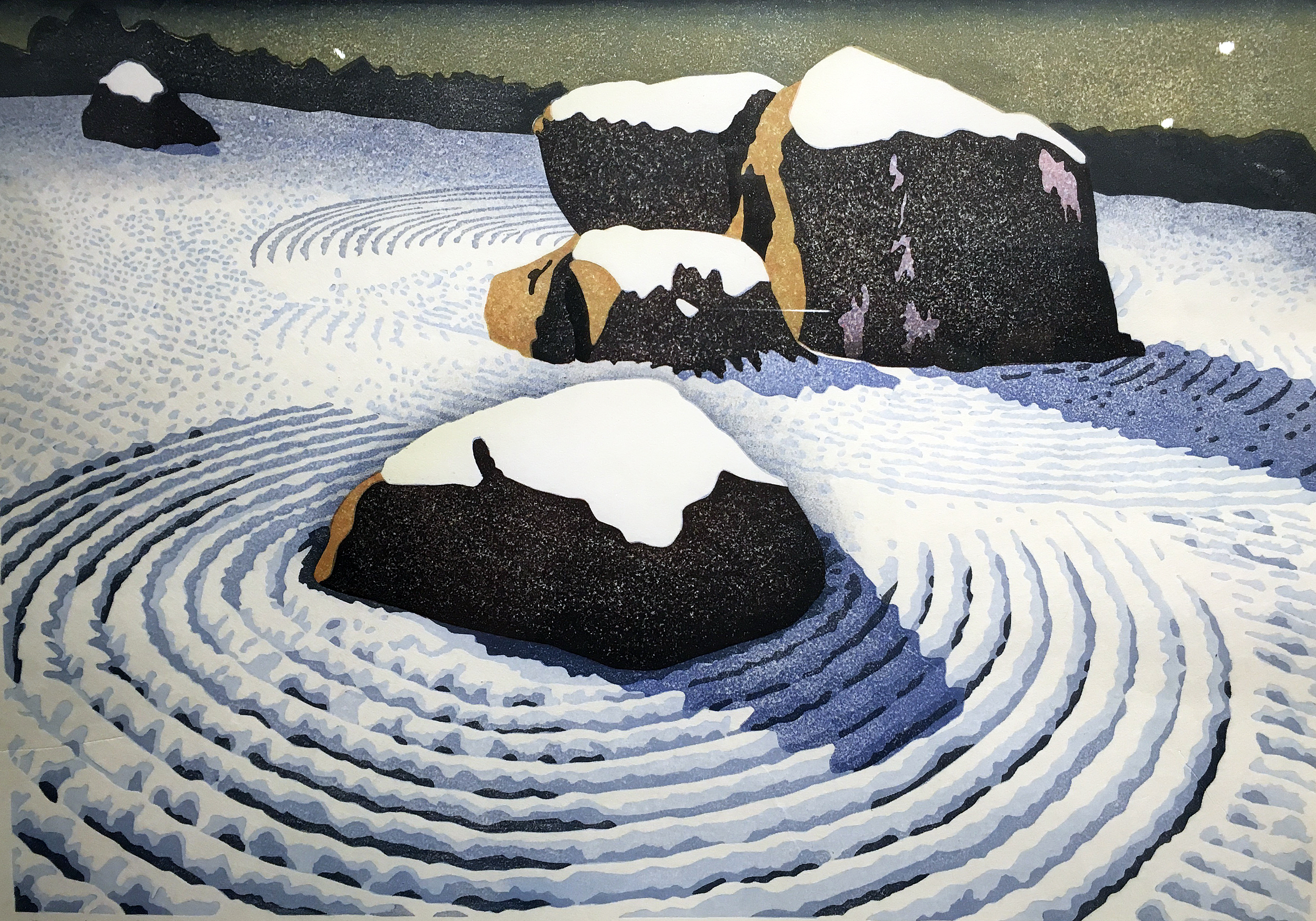
Woodcut

Mary Brodbeck, Blanket, Woodblock Print

Maybe it’s because we don’t see a lot of artists working with wood-cut printmaking, that this landscape with rings and melting snow is so attractive. She says in her statement “ Affected by my travel and study in Japan, notably by visiting traditional Japanese gardens, my landscape prints are carefully designed in abstract and stylized ways that are intended for viewers to have a contemplative experience. “ These Zen-like impressions made by the woodblock can transport the viewer to a place that blends design, craft and a spiritual aesthetic. Ms. Brodbeck holds a BFA from Michigan State University, and an MFA from Western Michigan University.

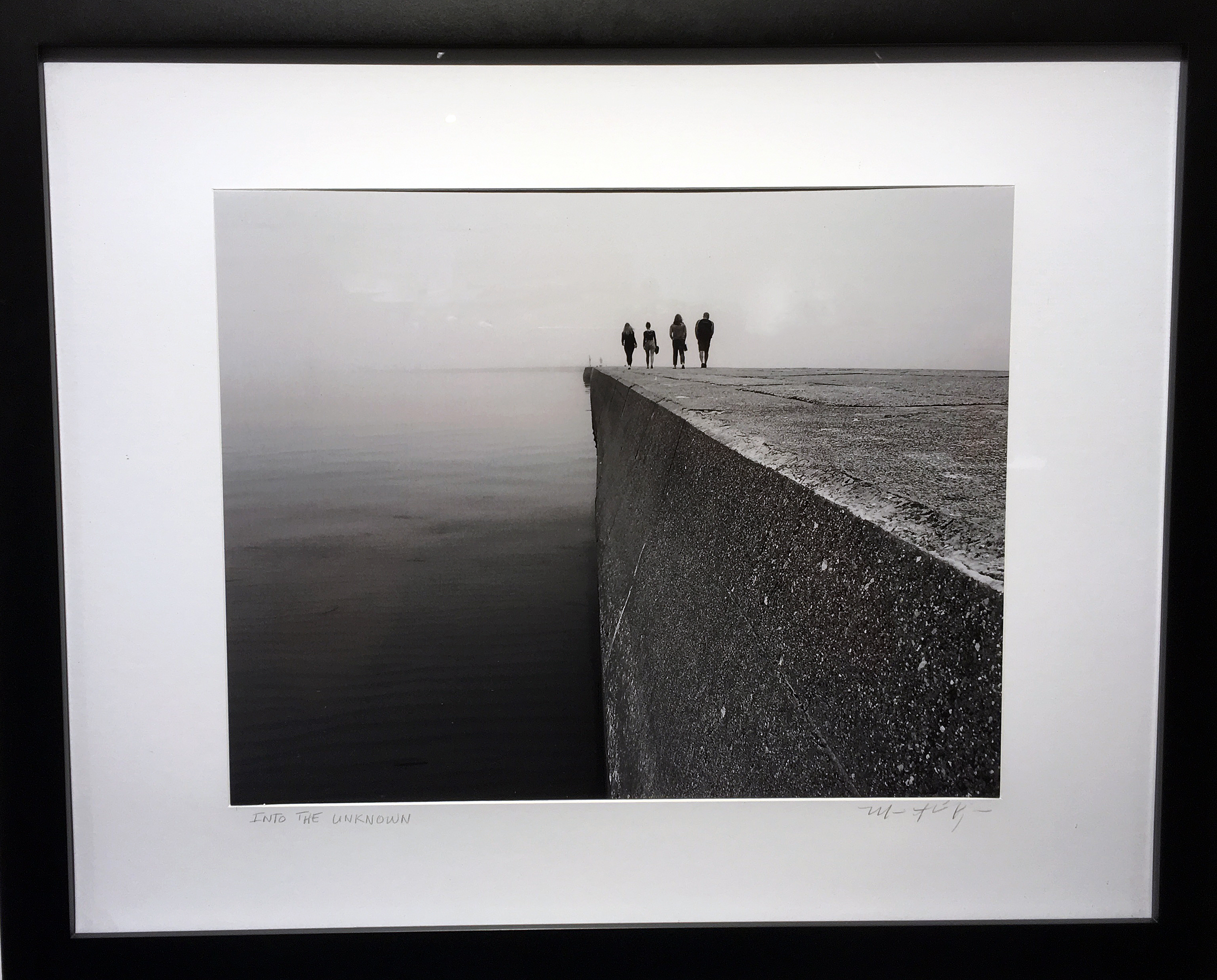
Photo

Mario Inchaustegui, Into the Unknown, Digital Print

Mario Inchaustegui’s digital print “Into the Unknown” draws purely on composition for its power and interest. The geometry along with perspective leads us to four figures on the edge of some type of a concrete pier. This middle school teacher at West Bloomfield Schools has been part of photo exhibitions in Metro Detroit, most recently at the Scarab Club.

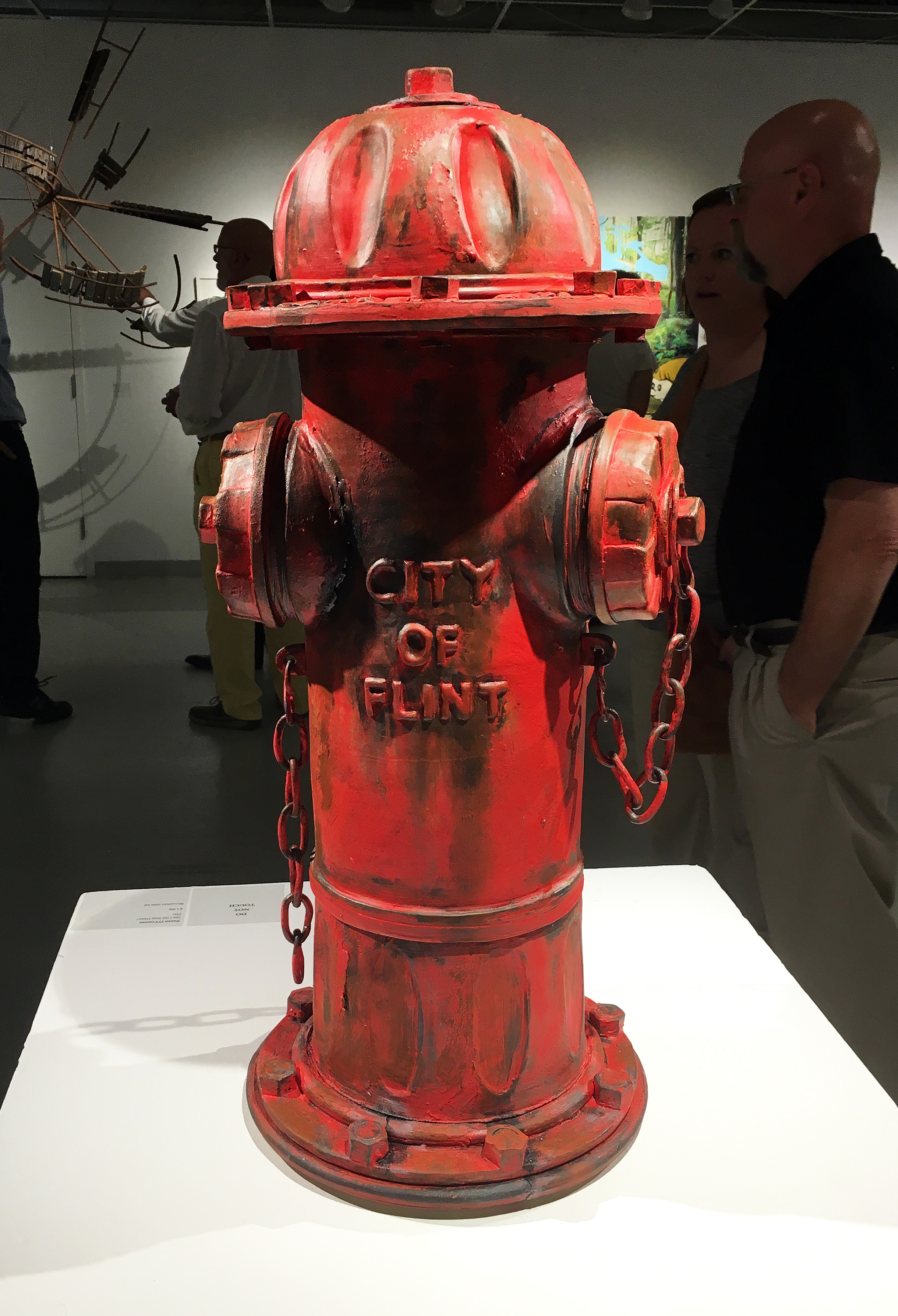
Clay Hydrant

Susan O’Connor, Can I Get Some Water, Clay

Susan O’Connor, who teaches hand-built ceramics at the BBAC, grabs the audience with a pop art object, that also carries a current social message. So, she got me with this Fire Hydrant from Flint, Michigan where the water has been contaminated by a decision leading to elements of lead in the water supply.

This exhibition has many generous prizes totaling $5800 and goes a long way to showcase artists in the Midwest. I will mention here that I usually stay away from covering these large competitive exhibitions, largely because they jury the work from jpegs, which makes the process more of a challenge. In this particular case, I give Mr. Hammonds a lot of credit for getting most of his decisions right. I have heard it many times, that it is the only practical way to conduct such a large undertaking, however when only viewing an image of an artwork, mistakes are made.

The 35th Annual Michigan Fine Arts Competition – June 24 – August 26

Birmingham Bloomfield Art Center

Page 44 of 51

Powered by WordPress & Theme by Anders Norén