Detroit Art Review

Critical art reviews of Detroit galleries and museums weekly

Lauren Semivan @ David Klein Gallery

Lauren Semivan’s Photography : Door into the Dark at David Klein Gallery, Detroit, MI

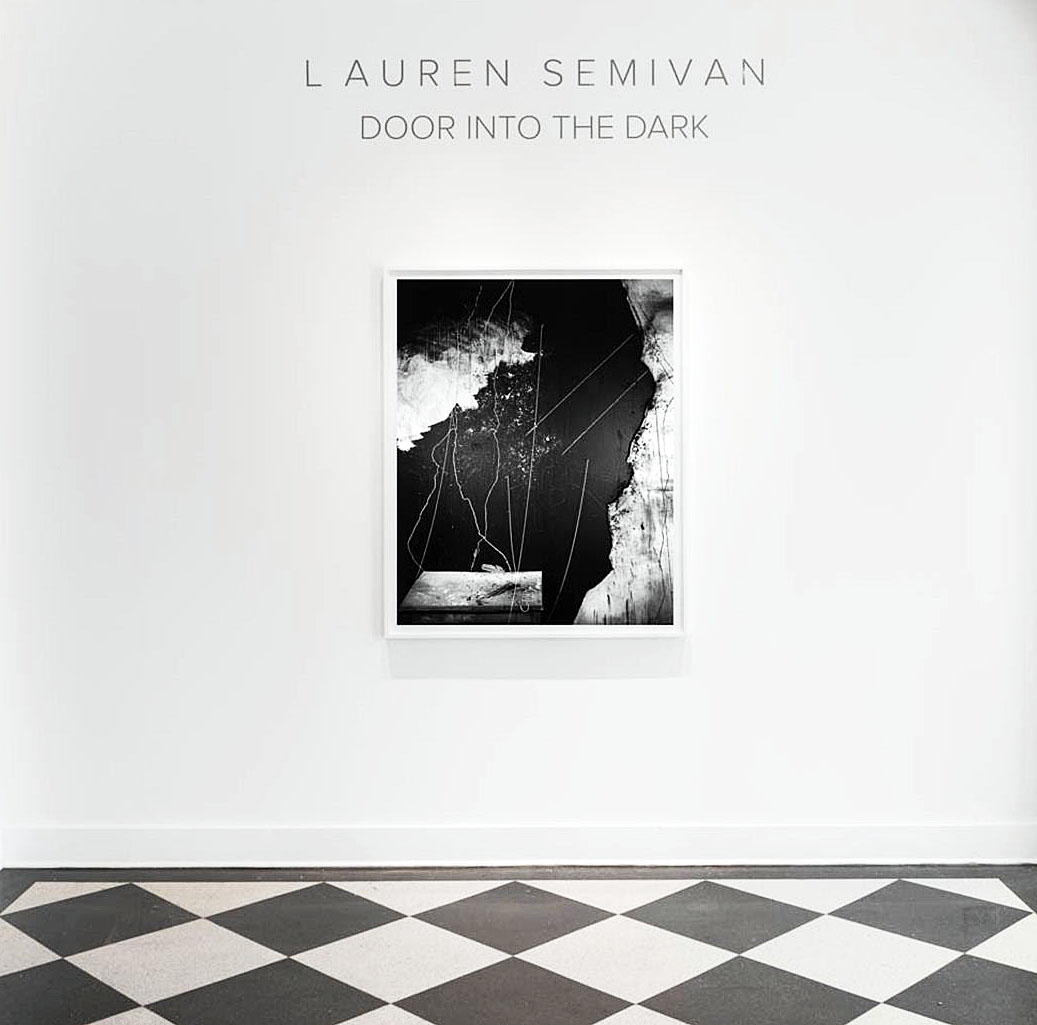
Lauren Semivan, Installation image, all images courtesy of David Klein Gallery 2018

Lauren Semivan is known in Detroit, New York, Paris and beyond for her atmospheric, lyrical, semi-abstract photographs that comprise hand-drawn backgrounds, iconic objects, and, occasionally, her own body. In my past writing about her work, I’ve landed repeatedly on poetic metaphors for context. Semivan’s works have always felt, to me, like poems- narrative, balanced from top to bottom, musical in rhythm, expanding quietly into the psyche. Her new work, currently on view at David Klein Gallery in Detroit, feels similar, and deeply different. What was once an open-ended narrative has become a closed loop, meter circling in on itself, flowering in dark and solitude, like prima materia in an alchemist’s vitrine.

It makes sense that the title of her show at David Klein is “Door into the Dark.” The title is meant to define photography, as Semivan explores it. She describes the medium as “…both a tool for escape, and an instrument for self-knowledge.” The vanishing of grounding, recognizable objects and spaces in her work bears out this description.

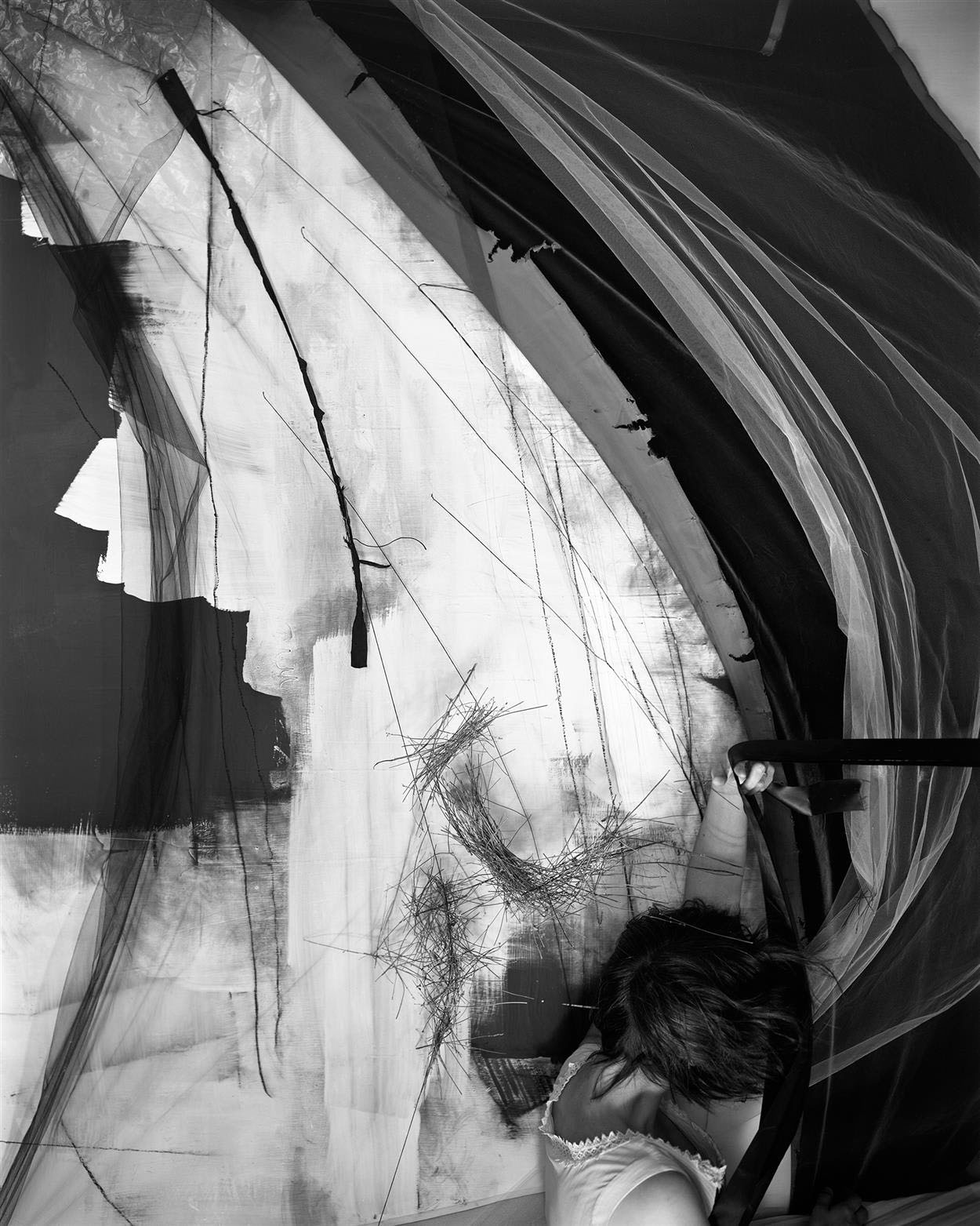
Lauren Semivan, Velvet, Edition 2 of 5, Archival Inkjet print, 2015

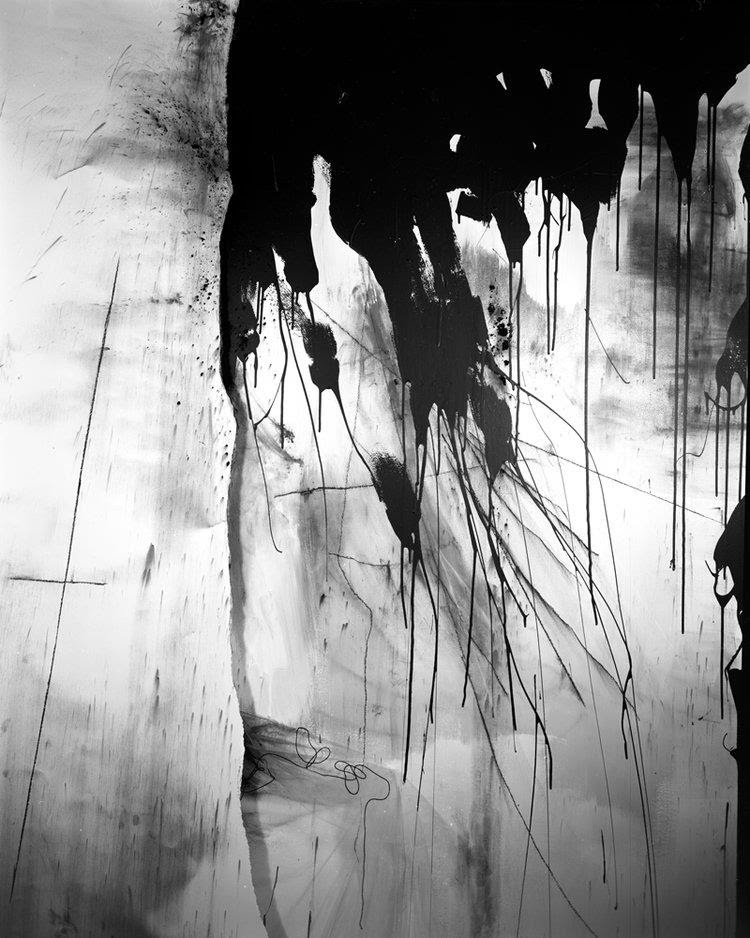
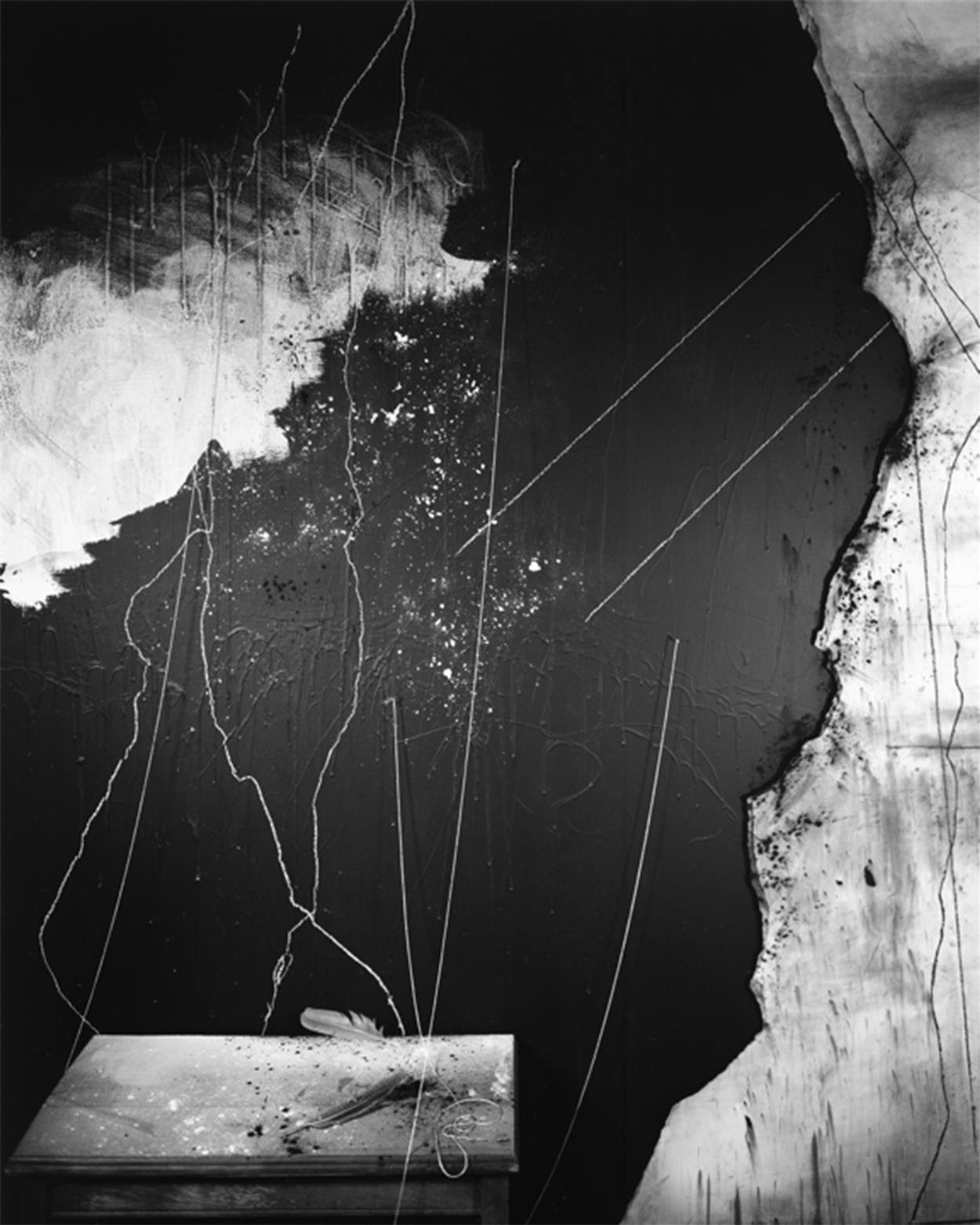
Semivan’s photographs are delicate webs of diamond-hard form. The curves, swoops and taut wedges of space that her carefully constructed environments conjure have always gestured at a vision beyond language. There has previously been a roster of familiar objects placed within her compositions, however, that give things a narrative, documentary feel- feathers, tables, a metronome anxiously dangling from a string. While some objects inhabit Semivan’s new work, more and more of her compositions are given over to amorphous, mute twists of fabric and slashes of paint. It’s as if she’s making the passage from logos to eros- from evoking words and stories to bringing images to light that one can’t navigate with language, that come from a place of pure feeling. This is a brave transition- it’s up in the air whether her pictures can hold the eye unmoored of the evocative objects she’s relied on, hitherto, to ground us in her rippling, canny vision.

Lauren Semivan, Glacier 2, Archival Inkjet print, 2017

Semivan’s own body flickers in and out of the works in “Door into the Dark,” as it has periodically for the last several years. Her face is never fully seen beyond a glimpse of profile. Her costumes, like her environments, are amorphous and billowy, and offer no grounding in specific time or place- the woman who wanders through Semivan’s photographs could be living next door, or long dead. Her wind-swept clothes and hair rhyme visually with their backgrounds, making the figure both an unsettling presence and just another formal element. Her presence is disconcerting in the same way figures in the images of the Twentieth Century photographer Frederick Sommer are- seeming to merge with their environments, more like ghosts or sentient features of their landscapes than individuals. Like Semivan, as well, Sommer experimented with indistinct, unsettling vignettes of beautifully placed, disparate objects and tense, shallow spaces that are grasped with emotional instinct, rather than verbal.

Lauren Semivan, Flur, Chalk, Feathers, Edition of 5, Archival Inkjet print, 2017

“Door into the Dark” is a truly stunning show that draws the viewer deeper into a quiet, interior place where words and story slowly drift away. The technical mastery of Semivan’s photographs, with their deep, velvety blacks, uncannily focused surface details, and atmospheric directional forces, is well worth lingering over.

“Lauren Semivan: Door into the Dark” is on view at David Klein Gallery in Detroit from February third through March tenth, 2018.

Desire as Politics @ Valade Family Gallery

Eight Video Installations at Valade Family Gallery at the College for Creative Studies

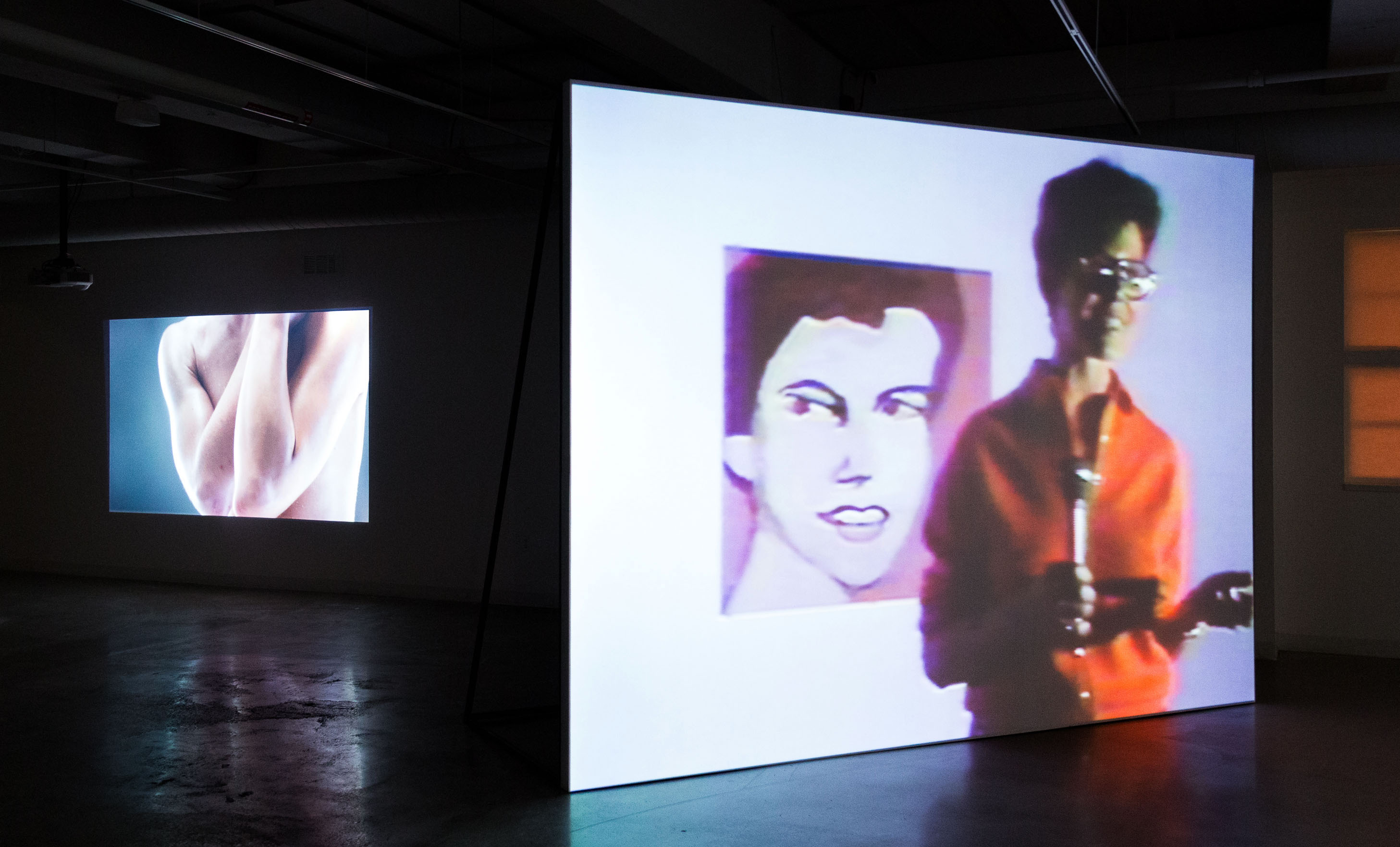
Installation image of Desire as Politics, Valade Family Gallery CCS 2018

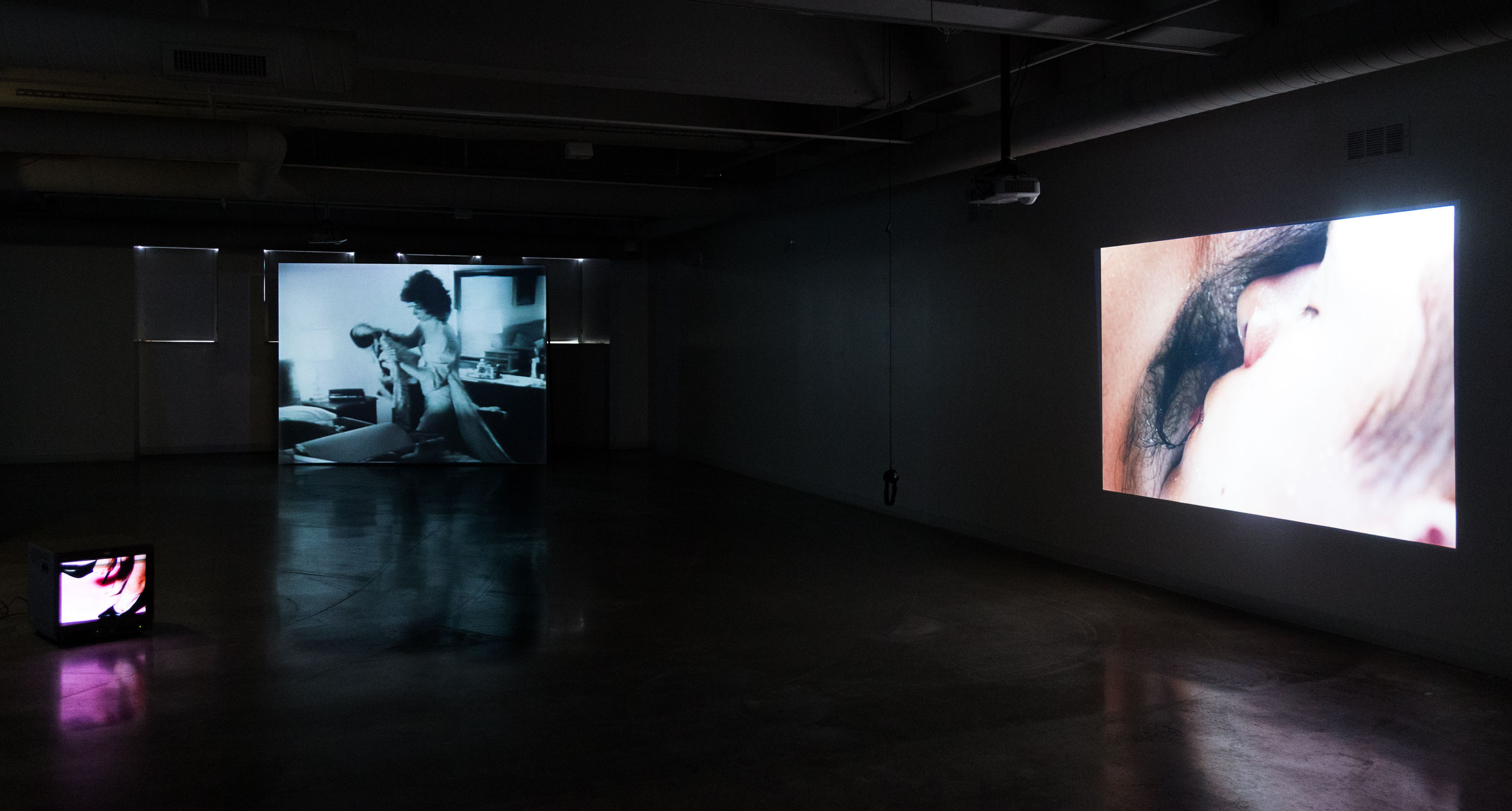
The staging of the current exhibition at the Valade Family Gallery creates an enigmatic equation. Eight separate, strategically arranged, large-screen video installations by eight renowned video artists occupy the darkened gallery. Like the theory of “intersectionality” itself, which holds that all issues of gender, race, and class are interconnected, each video performs a drama of identity construction issues that might face the LGBTQ community; and each has extraordinary dramatic value with captivating characters and stories. Thanks to Exhibitions Manager and co-curator Jonathan Rejewski, the Valade space is perfectly articulated to allow for quiet, meditative viewing, but at the same time demonstrates, like a Venn diagram, the overlapping issues from piece to piece, from artist to artist, of sexual, racial discrimination, homophobia, and class elitism. The layout is a compelling stage for one of the most compelling issues of our time. By the same token, “Desire as Politics” performs a galvanizing a vision of the crippling emotional effect of our dire human landscape.

The eight artists were selected by College for Creative Studies assistant professor Scott Northrup of the Entertainment Arts faculty. As an artist and experimental filmmaker himself, whose own work is concerned with identity construction, Northrup’s selection covers a period in which the language and politics of sexual identity have undergone radical changes. From the catch-all term “queer,” to “gay or lesbian,” to LGBTQ, from basically 1985 to present, the shift from a binary language (queer or straight) to a nuanced dialectic has broken down the binary into open forms, and has become part of mainstream culture.

Cecilia Dougherty speaking in “Gay Tape: Butch and Femme,” 1985


The earliest video, Cecilia Dougherty’s 1985 “Gay Tape: Butch and Femme,” is a strikingly complex and even, in retrospect, humorous documentary, for its diverse representation of lesbian identity. Shot in Ollie’s Bar, “a lesbian dive on Telegraph Avenue in Oakland (CA),“ it features five women’s impromptu statements about their sexual identities. At one point Dougherty herself bemoans the need to “validate our homosexuality” while heterosexuals don’t have that pressure. What is borne out in the work is the complex semiotics of the old terms of “femme” and “butch.” At one point a black woman who self-identifies as butch does a veritable standup comic routine on the semiotics of butch and femme clothing, behavior, and mores. It is brilliantly detailed and really funny how much, like a semiotician, she has paid attention to the difference between herself and “femmes.”

Like any social critique, each of the videos is complex and supports multiple readings. Filmmaker Matt Lambert’s “His Sweat,” 2016, is a four-minute, erotic exploration of sweating male nudes, and while homoerotic in style, could be seen as simply an exploration of the sculptural beauty of the male form. It’s in that difference that “Desire as Politics” is a polemic as much as a collective documentary on sexual identity.

Ira Sachs, “Lady,” 1994, 28-Min. and Matt Lambert, “His Sweat,” 2016, 4-min


Even more complicated is Ira Sachs’ “Lady” (1994), an engaging, 28-minute narrative portrait of a female “actress” who rambles from one identity to another, from lesbian portraying a gay man, to playing a gay man portraying straight women. We really are never sure of the psychic make up of the speaking subject. Emotionally “Lady” is suffused with a strange, unresolved longing for something, for a satisfaction that is stalemated by indescribable forces. The piece prefigures Sachs’ later film, Leave the Lights On (2012), that develops this frustration into a critically acclaimed feature, where uncertainty of sexual identity between two male characters is the prevalent dynamic.

While seemingly humorous, “Women’s Size Eight” (2017), a four-minute video by College for Creative Studies’ student Zachary Marsack, portrays the torturous effort to “shoe-horn” a battered “male foot” into a dainty, spike-heeled shoe. The physical torture notwithstanding, the metaphor of fitting a masculine-assigned figure into a feminine form is perfectly and simply stated. Marsack’s video is the only one projected on a TV, which appropriately sits on the floor where feet belong.

“Desire as Politics” executes an amazingly astute, while very human, analysis of our hybridized sexual landscape and, by so doing, suggests the deep critical readings of the so-called heterosexual landscape as well. Because of the dazzling collection of images and voices, the most eye-opening video is Rashaad Newsome’s “Stop Playing in My Face,” 2016. The title was taken from a performance by transgendered Samantha James Revlon and, through a video collage of baroque jewelry and architectural elements, Newsome designed a head-shaped sculpture and video that speaks of the patriarchy of straight life and the desire and need to break it down. In this he has employed the voices of various feminists, such as bell hooks and trans activist Janet Mock, to speak their critiques from collaged mouths in the sculpture. The selection and arrangement of videos in and of itself creates a stunning deconstruction of our gendered landscape.

Group installation view, Valade Family Gallery, 2018

“Desire as Politics” at College for Creative Studies’ Valade Family Gallery – through March 10, 2018.

African Bead Work @ Flint Institute of Art

Ubhule Women: Bead Work and the Art of Independence at the Flint Institute of Art

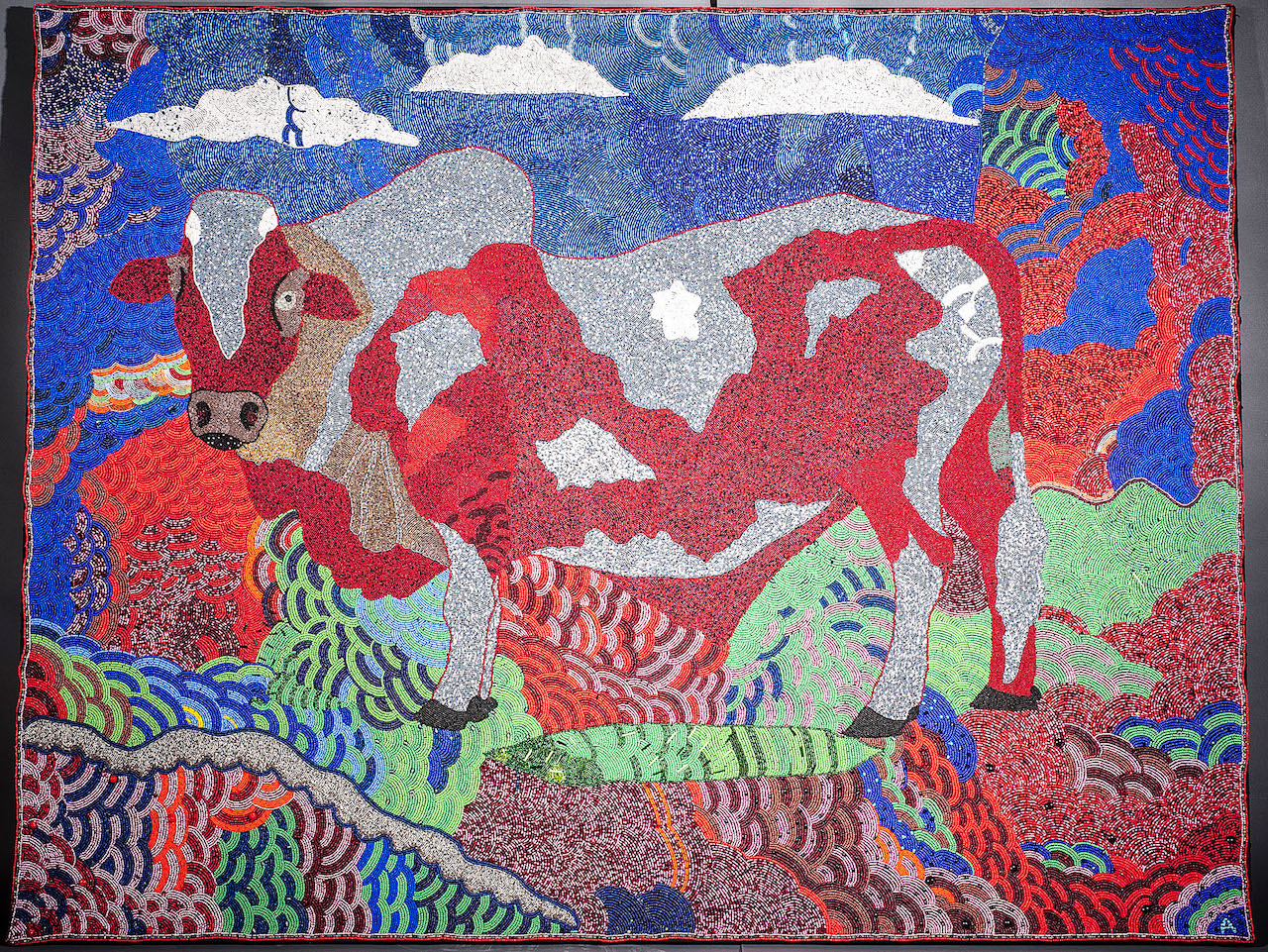
Zondile Zondo. I am ill, I still see Color and Beauty: Jamludi The Red Cow, 2012. Glass beads sewn onto fabric. 49 × 64 1/4 × 2 in. (124.5 × 163.2 × 5.1 cm). Private Collection.

In 1999, two South African women, Ntombephi Ntobela and Bev Gibson, established an artist’s community on a former sugar plantation in the rural outskirts north of Durban. The goal of the Ubuhle (Ub-buk-lay, Zulu for “beauty”) community was to use traditional bead-art as a way for women to develop a skilled trade and become financially independent. Since then, the work created by this small, tightly-knit group has experienced meteoric success and has been shown internationally, including an exhibition at the Smithsonian in 2013. Through the end of March, Ubhule Women: Beadwork and the Art of Independence ambitiously fills the spacious Hodge Galleries at the Flint Institute of Art, and is well worth the visit.

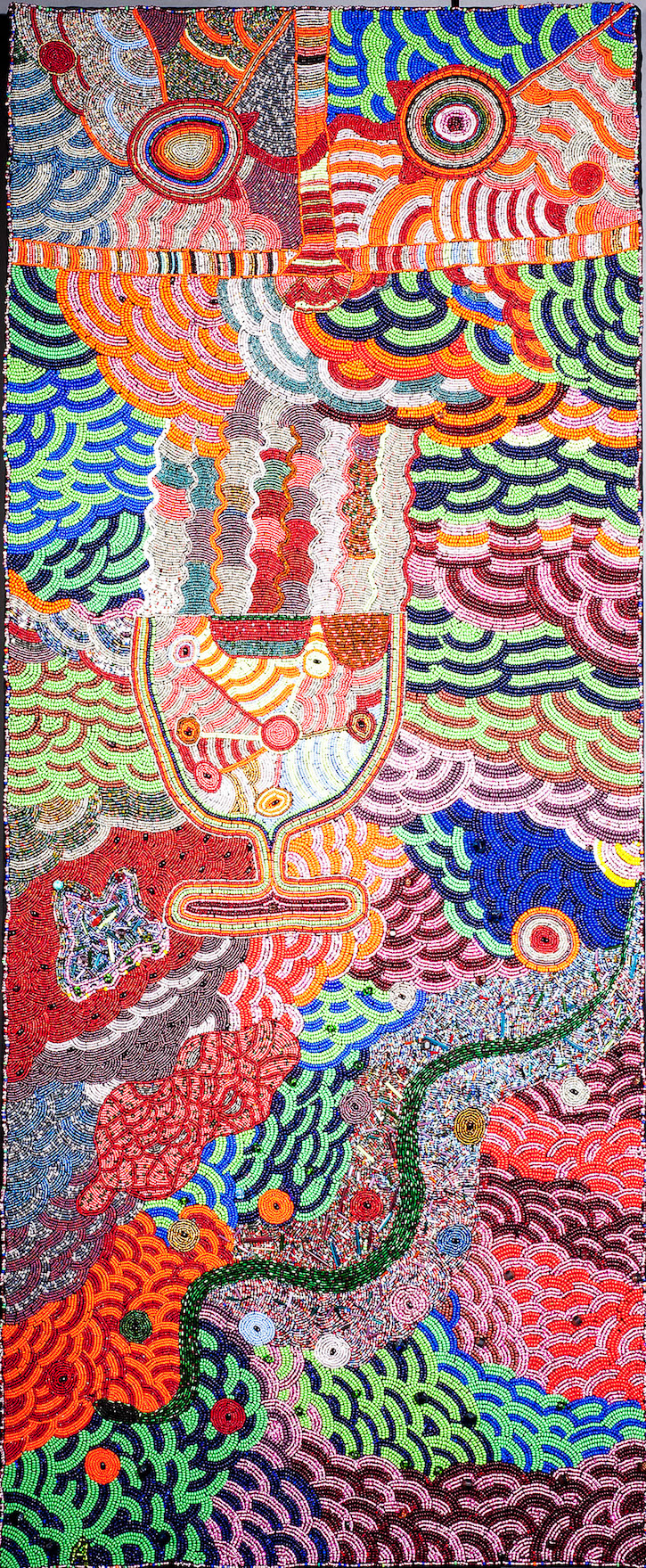
Zondile Zondo. Flowers for the Gods, 2012. Glass beads sewn onto fabric. 51 × 21 3/8 × 2 in. (129.5 × 54.3 × 5.1 cm). The Ubuhle Private Collection.

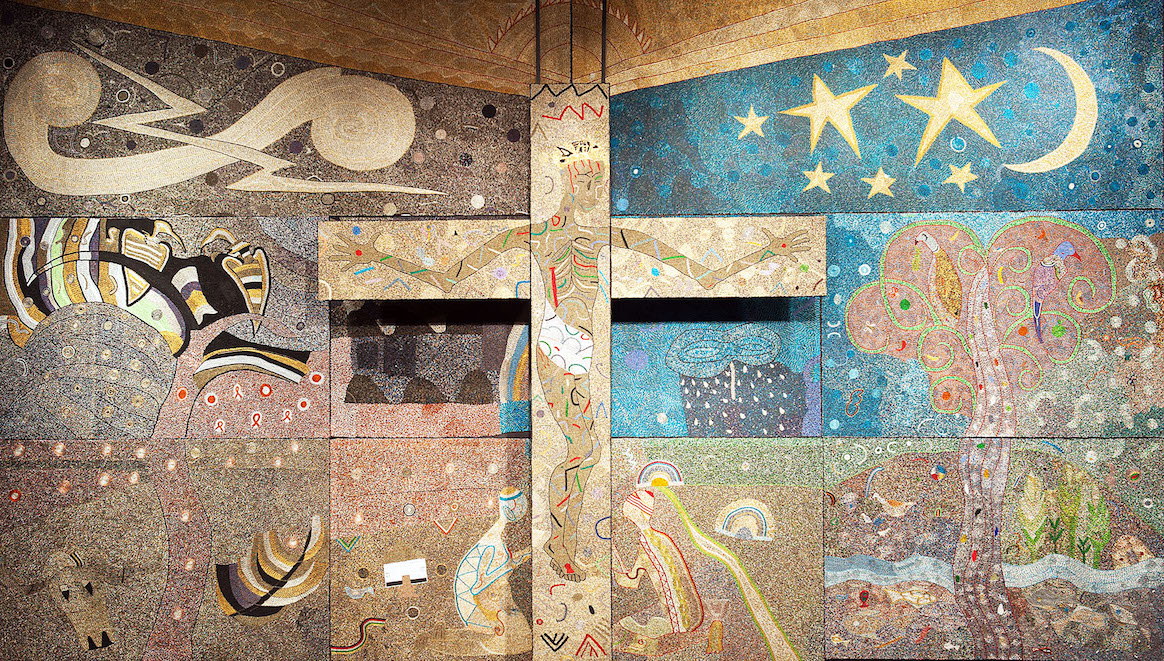
This is an exhibition that can only be experienced firsthand; the arresting luminosity of these textile and bead-works, much like the ethereal shimmer of light on a Byzantine mosaic, is entirely lost when reproduced in photographs. The Ubuhle women created a modern innovation on traditional South-African bead-art; they stretch textile (ndwango) across a canvass, into which they meticulously hand-sew tens of thousands of infinitesimal Czech glass beads. The completed result recalls Seurat’s pointillism, but enhanced with striking luster as the images reflect actual light. These ndwangos range from figurative to abstract, and the vibrant plains of color deny any sense of illusory depth. Visitors who lean in close will notice the artists frequently applied the beads in a complex array of circular patterns and spirals, another special-effect that doesn’t translate well in photographs.

Ubuhle Women comprises 30 works by five artists, and the subject matter is intensely personal, often making use of abstract symbols to reference autobiographical events. Some works pay tribute to those of the Ubuhle community who have died since its founding from HIV (about half its number); red ribbons are a recurrent motif. The time-consuming process of bead-sewing itself functions as a form of therapy and coping—just one panel can take nearly a year to complete. For the Ubuhle women, beading is both catharsis and a visceral way to make tangible the memories of those lost.

Nontanga Manguthsane. African Crucifixion, n.d. Glass beads sewn onto fabric. 177 1/2 × 275 3/4 × 16 inches (450.9 × 700.4 × 40.6 cm). The Ubuhle Private Collection & Private Collection

The culmination of the exhibition is the ambitiously-large African Crucifixion, a sprawling work comprising seven panels created by seven Ubhule women. Originally conceived as a visual focal-point for the Anglican Cathedral of the Holy Nativity in Pietermartzburg, South Africa, the work is a complex tableau that addresses specific local issues like apartheid and the HIV crisis, as well as broader, universal themes of life, death, and redemption. A suspended golden crucifix dominates the composition, flanked by a menacing Tree of Defeat (replete with vultures, representing politicians who feed off people) and the Tree of Life, comfortably situated in an idyllic, fertile landscape. In the panel depicting Mary and John at the foot of the cross, a white house in the background personalizes the image, uncannily reminiscent of Thando Ntobela’s reductive portrayal of the Ubuhle community in her 2011 work Goodbye Little Farm. The African Crucifixion is a triumphant and virtuosic demonstration of the potential of beadwork, every bit as grand and pathos-driven as an early Renaissance fresco.

Looking at these works, my initial response was to mentally liken them to comparable works of art with which I was already familiar; the bright, smack-you-with-color fauvist paintings of Matisse, for example (and there really is a resemblance).   But these ndwangos, as luminous as they are allusive, pugnaciously defy any easy comparison with any equivalent in Western art. Furthermore, they represent the power of art to—in a small way—affect real social change, as demonstrated by the determined effort of the Ubuhle women who, through their craft, achieved financial independence one glass bead at a time.

Ubuhle Women: Beadwork and the Art of Independence was developed by the Smithsonian Anacostia Community Museum, Washington, DC in cooperation with Curators Bev Gibson, Ubuhle Beads, and James Green, and is organized for tour by International Arts & Artists, Washington, DC.

Flint Institute of Art  – through March 2018


Romare Bearden @ N’Namdi Center for Contemporary Art

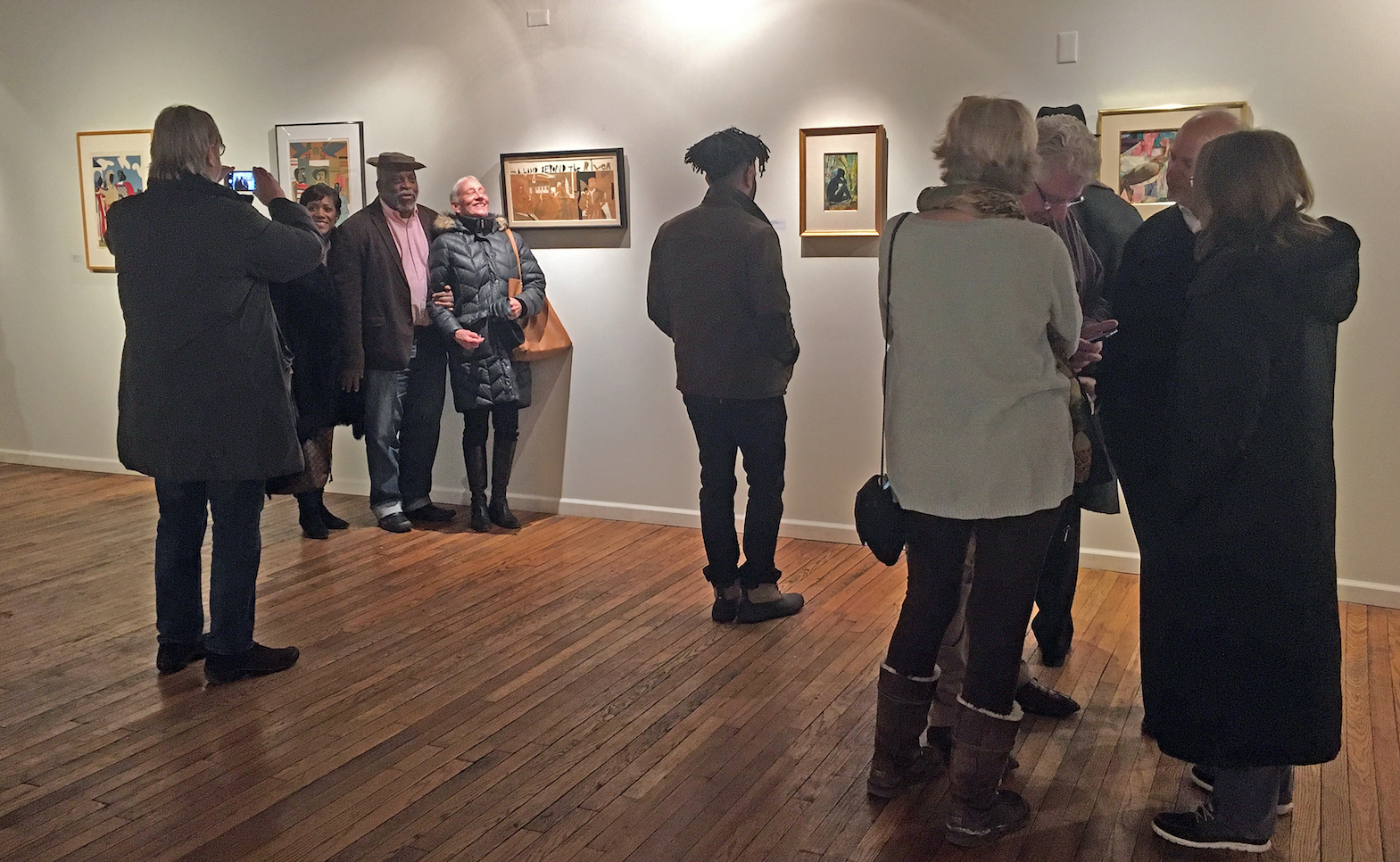
Installation image, N’Namdi Center for Contemporary Art, All images courtesy of the Detroit Art Review

Black History Month during February is an annual celebration of achievements by African Americans and a time for recognizing the central role of blacks in U.S. history, a story that begins in 1915, half a century after the 13th Amendment abolished slavery in the United States. It was in September, the Harvard-trained historian Carter G. Woodson and the prominent minister Jesse E. Moorland founded the Association for the Study of Negro Life and History (ASNLH), an organization dedicated to researching and promoting achievements by black Americans and other peoples of African descent.

George N’Namdi’s Center for Contemporary Art opens this new exhibition in celebration of the work of Romare Bearden, an African-American artist renowned for his collages and photomontages, a technique he began to experiment with in the 1950s, establishing his reputation as a leading contemporary artist.

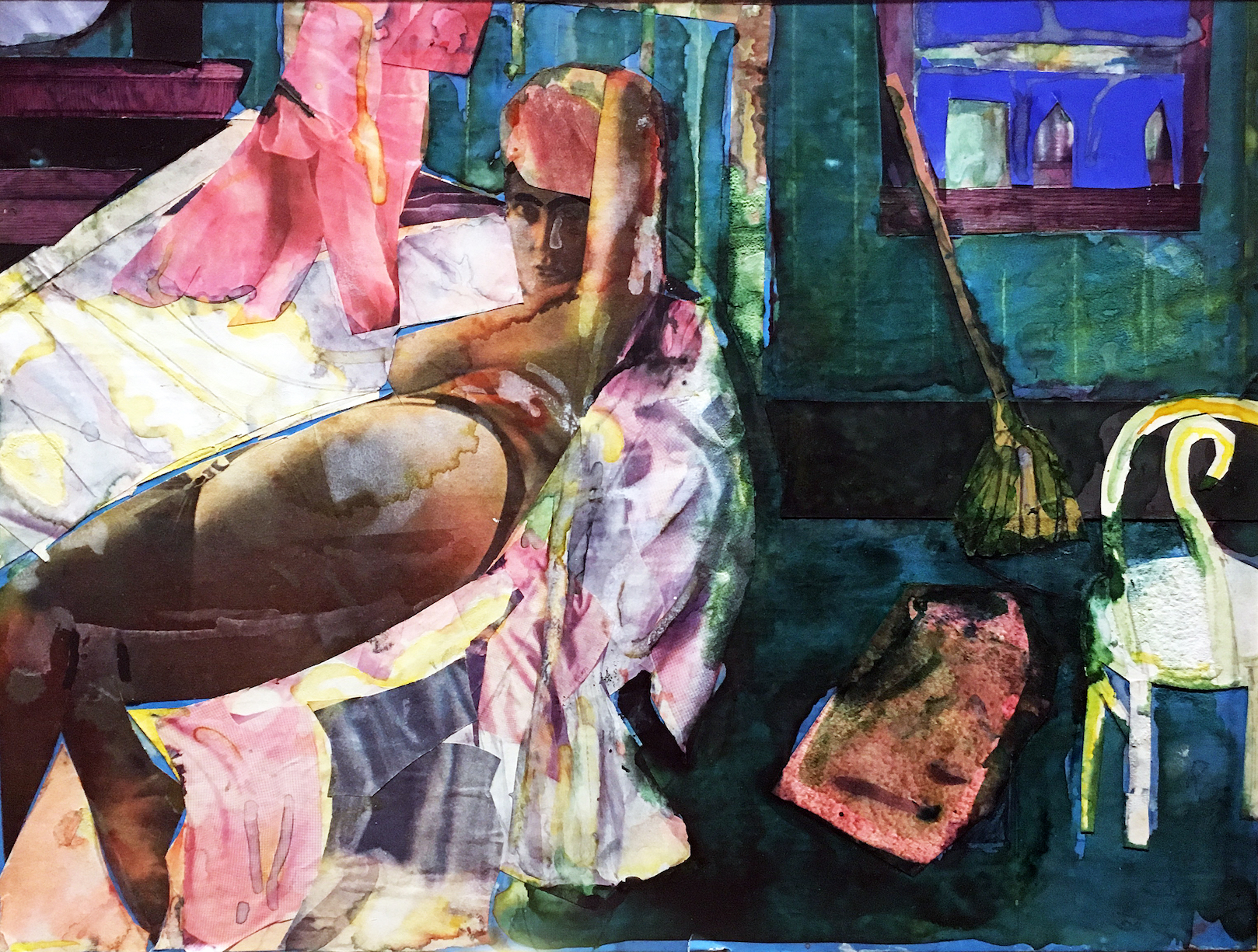
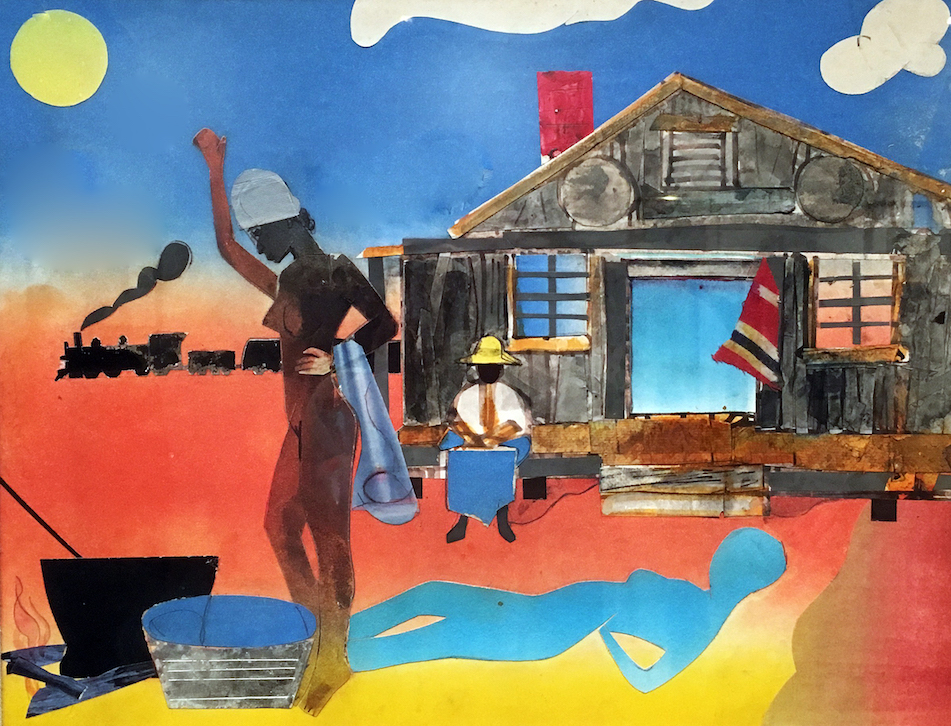
Romare Bearden, Cora’s Morning, Collage and Watercolor, 11 x 14, 1986

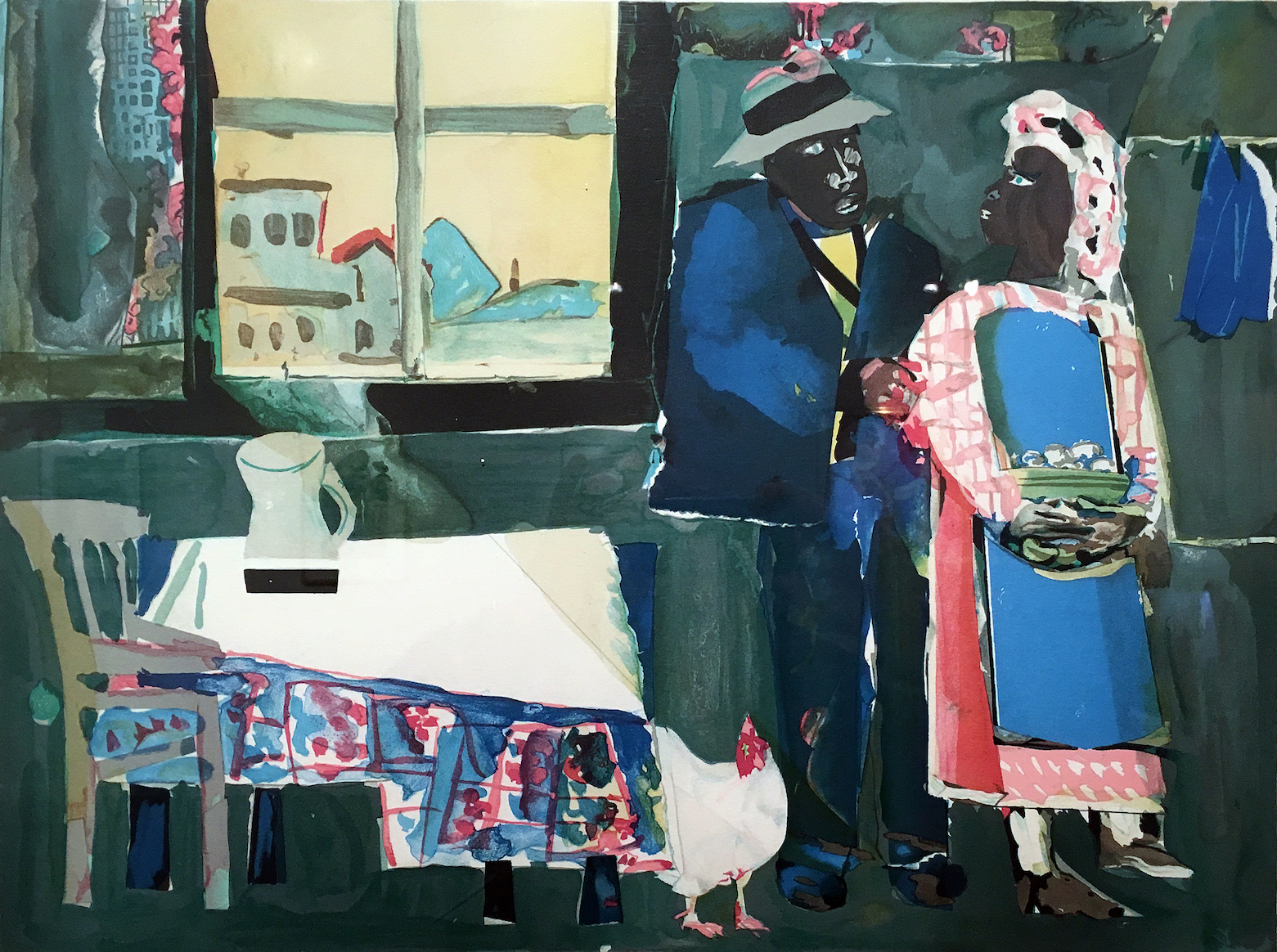
Although influenced by modernists such as Henri Matisse, Bearden’s collages also derived from African-American slave crafts such as patchwork quilts and the necessity of making artwork from whatever materials were available. In this exhibition, he uses images from mainstream pictorial magazines such as Look and Life, and black magazines such as Ebony and Jet. Bearden inserted the African-American experience, its rich visual and musical production, and its contemporary racial strife and triumphs, into his painted collages, thus expressing his belief in the connections between art and social reality. Georges Braque and Pablo Picasso introduced collage into the modernist vocabulary. As a result, Bearden located a methodology that allowed him to incorporate much of his life experience as an African American, from the rural South to the urban North and on to Paris, France.

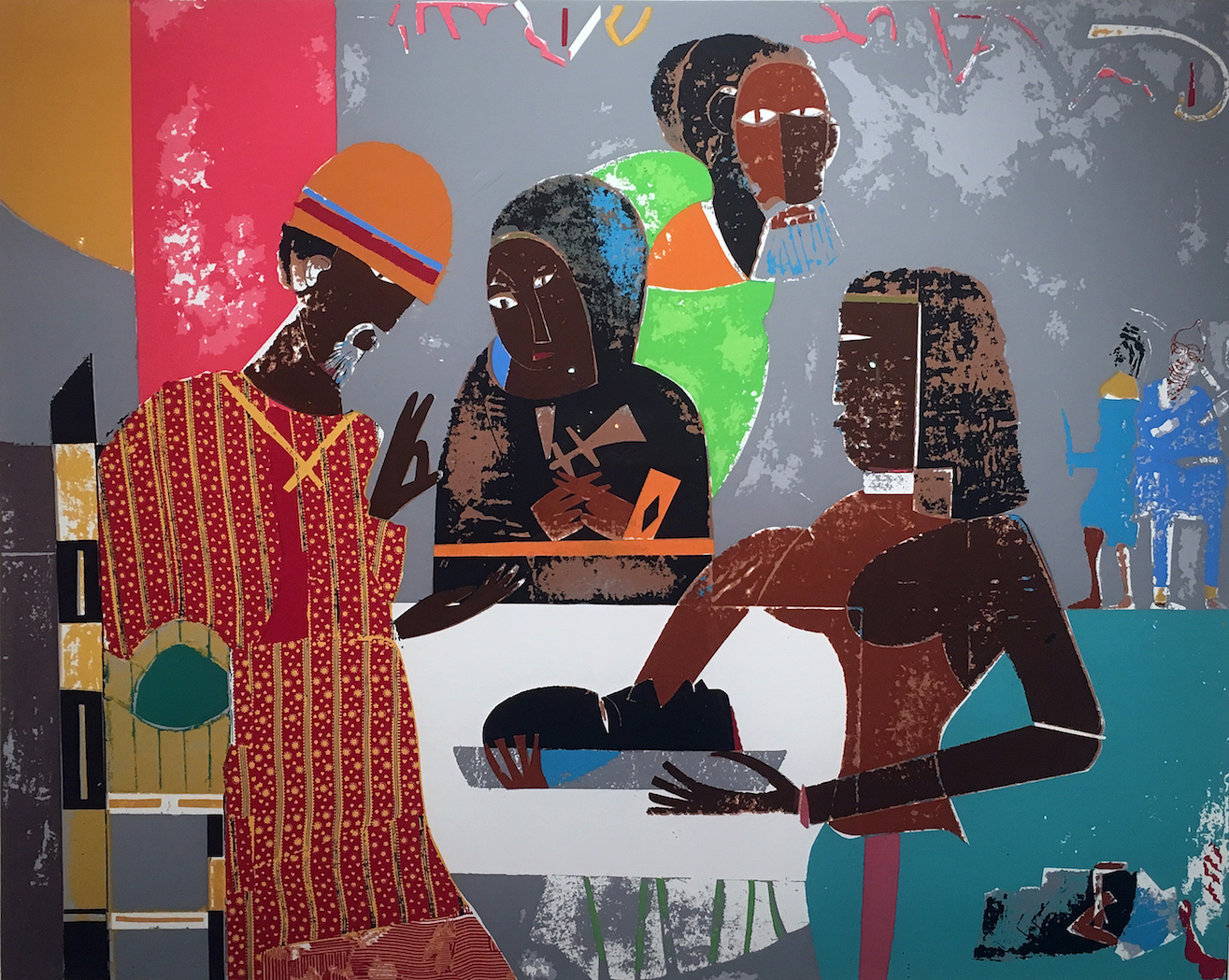
Romare Bearden, Salome with the Head of John the Baptist, 35 x 29″, 1974

From a series of prints called the Prevalence of Ritual, Bearden reconfigured age-old stories as allegories of modern life. In John the Baptist he drew on the biblical story of Salome, who had performed a dance for King Herod that so pleased him he offered to grant anything she might ask. At her mother’s urging the young girl requested the head of John the Baptist, who had spoken out against her mother’s marriage to the king. The masklike heads of the figures in John the Baptist blend West African and Egyptian visual traditions with a narrative about vengeance and naïveté.

Romare Beraten, Mecklenburg Memories, Collage and Watercolor, 14 x 17″

Drawing upon the recollections of his Southern roots for inspiration, Bearden conjured up both his childhood memories and the shared memories of his ancestors. Bearden absorbed the traditional rituals of the church, the hymns and gospels, sermons and testimonies; as well as the traditional rituals of the family, the music of the kitchen, the outdoor wash place and fire circle, which permeated his upbringing. The work in many of these watercolor/collage pieces is the flatness of the composition combined with the strength of strong primary colors.

Bearden’s career as a painter was launched in 1940 with his first solo exhibition in Harlem and then another, four years later, at the G Place Gallery in Washington, DC, while he was serving in the Army. In 1945, shortly after his discharge, he joined the Kootz Gallery on 57th Street and exhibited there for the next three years. He then traveled to Paris on the G.I. Bill in 1950 where he studied philosophy at the Sorbonne. In 1964, he was appointed the first art director of the Harlem Cultural Council, a prominent African-American advocacy group. He was elected to the American Academy of Arts and Letters in 1972. He died in New York City in 1988.

Romare Beraten, Autumn of the Rooster, Lithograph, 18 x 24″, 1983

Romare Bearden’s museum retrospectives include those organized by the Museum of Modern Art in New York, NY (1971); Mint Museum of Art in Charlotte, NC (1980); Detroit Institute of the Arts in Detroit, Michigan (1986); Studio Museum in Harlem in New York, NY (1991); and the National Gallery of Art in Washington, DC (2003). His work is represented in public collections across the country including the Metropolitan Museum of Art, New York, Museum of Modern Art, New York, Whitney Museum of American Art, New York, National Gallery of Art, Washington, DC, Philadelphia Museum of Art, PA, Museum of Fine Arts, Boston, and Studio Museum in Harlem, NY.

Romare Bearden – through March 31, 2018

N’Namdi Contemporary Art


NAIAS @ Cobo Hall, Detroit, Michigan, USA

Floor View of NAIAS

So last year, I wandered out onto the farthest fringe of the fine art community and made a decision to write about the 2017 North American International Auto Show (NAIAS). At the time I declared it to be an exhibition in the Detroit metro area worthy of our time and effort. Now, the new 2018 review comes on the heels of writing a review of Monet: Framing Life, an exhibition now at the Detroit Institute of Arts.

In my 2017 Auto Show review, I gave recognition to the Eyes on Design competition and to the College for Creative Studies for their exemplary Transportation Design Program. In addition, I acknowledged all the fine artists who worked in the automotive design process by day, and do their own personal and private fine art work in their home studios on weekends and by night. I did this review based on attending the 2017 public viewing of the auto show, packed with a widely diverse audience of families and individuals from all walks of life. When the review was published, I did get positive feedback from NAIAS officials as they recommended that in 2018, I should apply for a press credential. For the 2017 Detroit Art Review, I went about my business and selected a luxury production car, the 2017 Lincoln Continental, as having the highest level of overall aesthetic appeal, followed up by my reasons for the selection and why.

There were critics, of course, both writers and artists who thought I had lost my mind by comparing the design elements of a car to the exhibition of paintings by Van Gogh or Edward Hopper, but many more could easily see the connection between the artisans who work in the automobile design departments and their personal artistic talent, of which many men and women exhibit in galleries, museums, and fine art competitions right here in Detroit.

But that was last year. In December of 2017, I contemplated a new review of 2018 NAIAS. Should I do another?  I began by applying for a press credential and was rejected and then rejected again on appeal. Then I approached the Chairman of the CCS Transportation Design program by email and asked for his input. He said he supported the idea whole-heartedly, but soon his emails stopped and he could not be reached. After the rejection by NAIAS for press access, they suggested that I should simply attend one of the Industry Preview Days. I did that and paid dearly for the, um, privilege. $110 for the ticket, $15 for parking and $4 to hang up my coat, all in a good effort to provide publicity and good will to the auto industry. (I am happy to report that using the men’s room is still free.)

Audi V-10 R8 Coupe convertible

The first thing I bumped into on the showroom floor was the new Audi R8 V-10 sports coupe powered by a 10-cylinder gas guzzling engine with a 14mpg (they may have fudged on the mileage). Considering the price tag of $175,000, that seemed like enough money and cylinders for four cars.

I moseyed up to a high platform where the view consisted of thousands of white men, aged 30-60 years old, in dull slacks, dress shirts, short hair, and glasses. Many were clustered in groups and held an itemized pad for notes and iPhones for taking pictures.

Several times I asked those working the show what was meant by Industry Preview Day. Their responses varied greatly. “Mostly engineers…looking at the competition,” or “VIPs from headquarters” or “today is for the auto designers and their teams,” or “it’s mostly a perk for suppliers or dealers.” My guess is they all were provided with a free ticket.

Bluntly, it was a sea of Caucasian men as far as I could see. I did see an African American security guard in a red coat, and an African American cleaning lady, in that same red coat. To be fair, there might have been one or two women there, probably VIP spouses, and a few Asian engineers. Notable were several undercover police officers with sniffer dogs, and at each entrance, African American security guards (in their red coats) doing body scans with an electronic wand. Well, good. I felt safe, but there was a new experience ahead.

As you might recall or imagine, the Cobo exhibition hall is a large, circular space filled, in this case, with very expensive sets are individually designed and assigned to each automobile manufacturer. What I didn’t expect to see was a section devoted to automotive suppliers. I guess that means more revenue for NAIAS and Cobo Hall.

The first supplier exhibit I came across was Aramco Transport Technologies, which provides technology that improves mileage, emissions, and efficiency. I asked a representative where their headquarters were, and they said, Novi, Michigan. Apparently, they are also located in other parts of the world, like Paris, France. When pressed, they said they were a division of Saudi Aramco in Dhahran, Saudi Arabia, the state-owned oil company that is the world’s top exporter of oil and natural gas.

To be fair, Aramco has developed a Mobile Carbon Capture technology that captures the Co2 before it leaves the car, which is then stored and unloaded for reuse. Although there were electric cars, like Volkswagen’s concept car, in most of the displays, but I did not see a supplier of passive energy sources for automotive use.

There was Denso North America, leaders in corrosion prevention and sealant technology, headquartered in Kariya, Japan. There was a large display by Aisin Group that specialized in powertrain components, also head quartered in Japan, but I asked myself; who is coming to NAIAS to look into the technical parts of a car or cross-sections of a transmission? Are they lobbyists? I would be remiss if I did not mention the Michelin Tire Display, fudge from Kyba’s Mackinaw Island and the candied almond vendor.
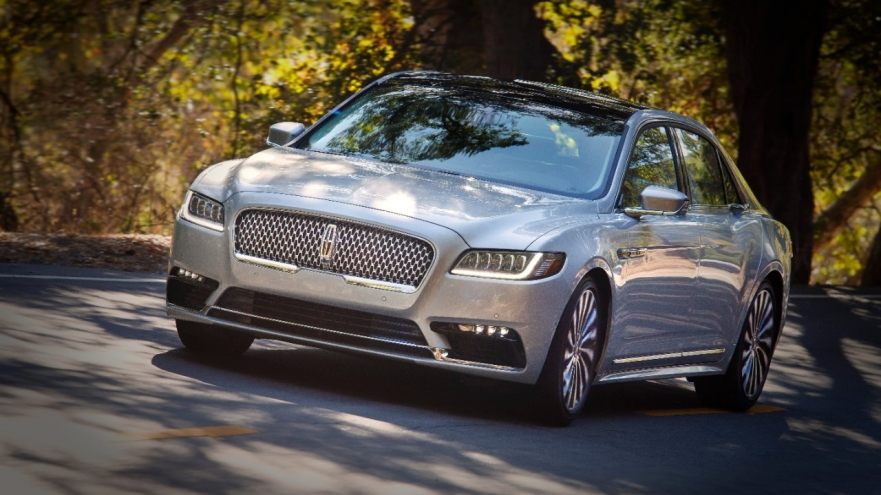
2018 Lincoln Continental

But back to my mission to find a car that has the highest level of overall aesthetic appeal, which leads me to another revelation: The design of production cars changes very slowly, as this year’s models demonstrated. I was drawn back inexorably to the Lincoln Continental. The understatement of line, shape, and proportion still provides the viewer with a feeling of strength and security. The lines curve down and inward, an aesthetic sometimes seen in European sports cars. The repetition of roundness is soothing. Stylish elements abound, like the way the E-latch door handles provide a graceful inset in the side door, and five LED lamps create a slender design to what used to be a larger headlamp.

2018 Lincoln Continental Grill Detail

The front grill is refined, delicate and proportionate to the front profile, while the small openings in the grill repeat a similar shape of the car logo. A sleek console serves to open up the cabin, while the sophisticated push-button gearshift integrates seamlessly with classic knobs and buttons. The leather-wrapped, hand-stitched steering wheel is mounted ahead of a 12.3-inch fully configurable digital instrument cluster that displays easy-to-read driver information clearly. Sitting in the car, looking closely at its design elements, I was left with what I experienced last year, which is that the Lincoln Motor Company, the luxury automotive brand of Ford Motor Company, is committed to creating an exquisitely designed vehicle that places itself above their competitors.
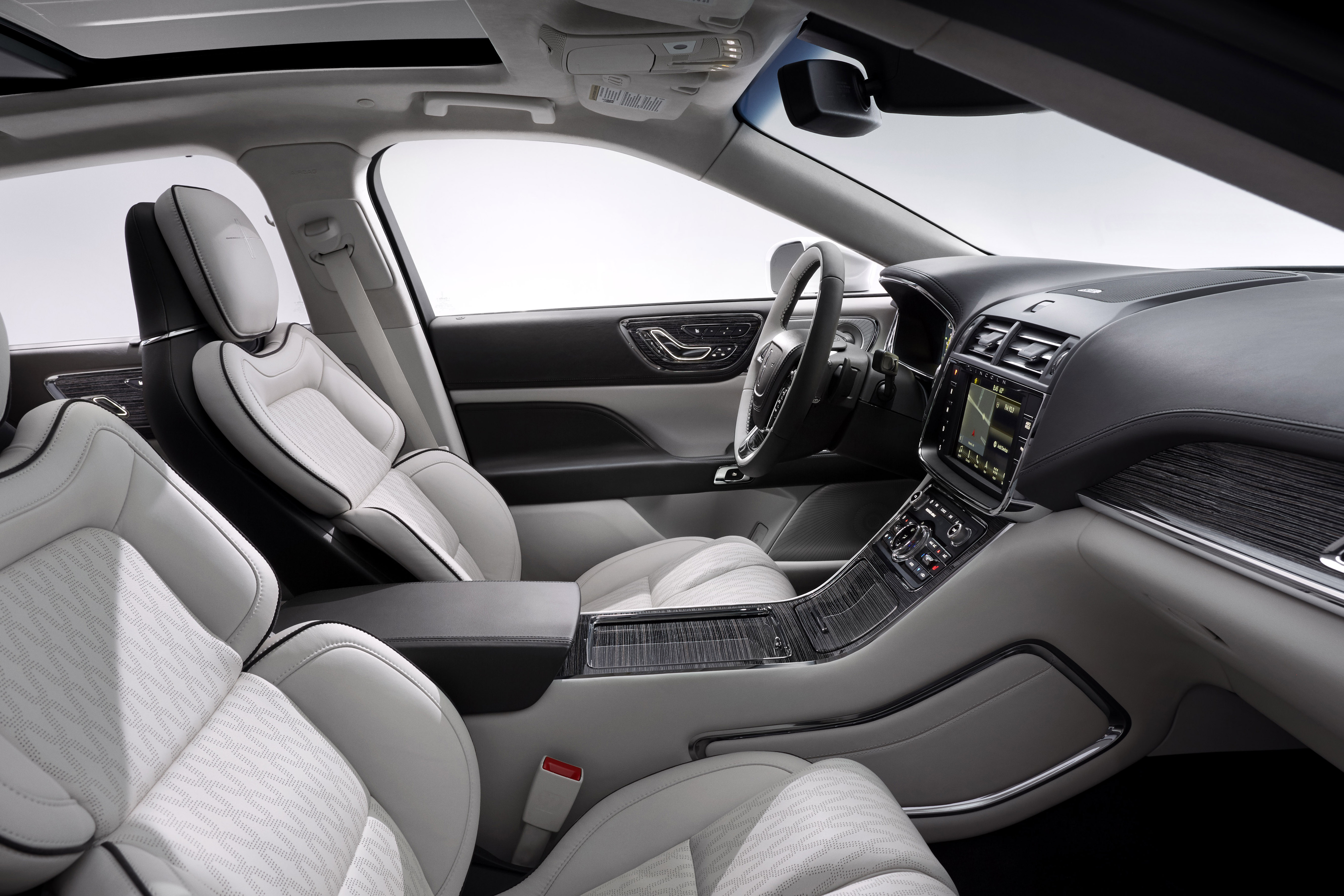
2018 Lincoln Continental fron interior


Everything I experienced with the cars themselves remains the same, particularly when it came to recognizing the designers who work hard at deserving their much-earned success around the world. As I mentioned, NAIAS has its own Eyes on Design program, and this year they gave the KIA Stinger their choice for Best Production Car award. (South Korea is hosting this years Winter Olympics) If you’re curious, the awards are decided on by four chief judges, and thirty-two regular judges who must work together on a process that I cannot imagine, but it is their official program, highly honored and celebrated. Congratulations! But as for my experience with NAIAS 2018 Industry Preview Day, it was enlightening and disappointing. The cars were sleek and shiny, the crowd was bland, and the diversity of people packed into Cobo Hall on this day…was racially offensive.

NAIAS 2018 @ Cobo Hall, Detroit


Page 58 of 84

Powered by WordPress & Theme by Anders Norén