Detroit Art Review

Critical art reviews of Detroit galleries and museums weekly

Nabil Mousa @ Arab American National Museum

Flag of a Complicated Nation: Nabil Mousa’s Vision of the American Landscape at Arab American National Museum in Dearborn, MI
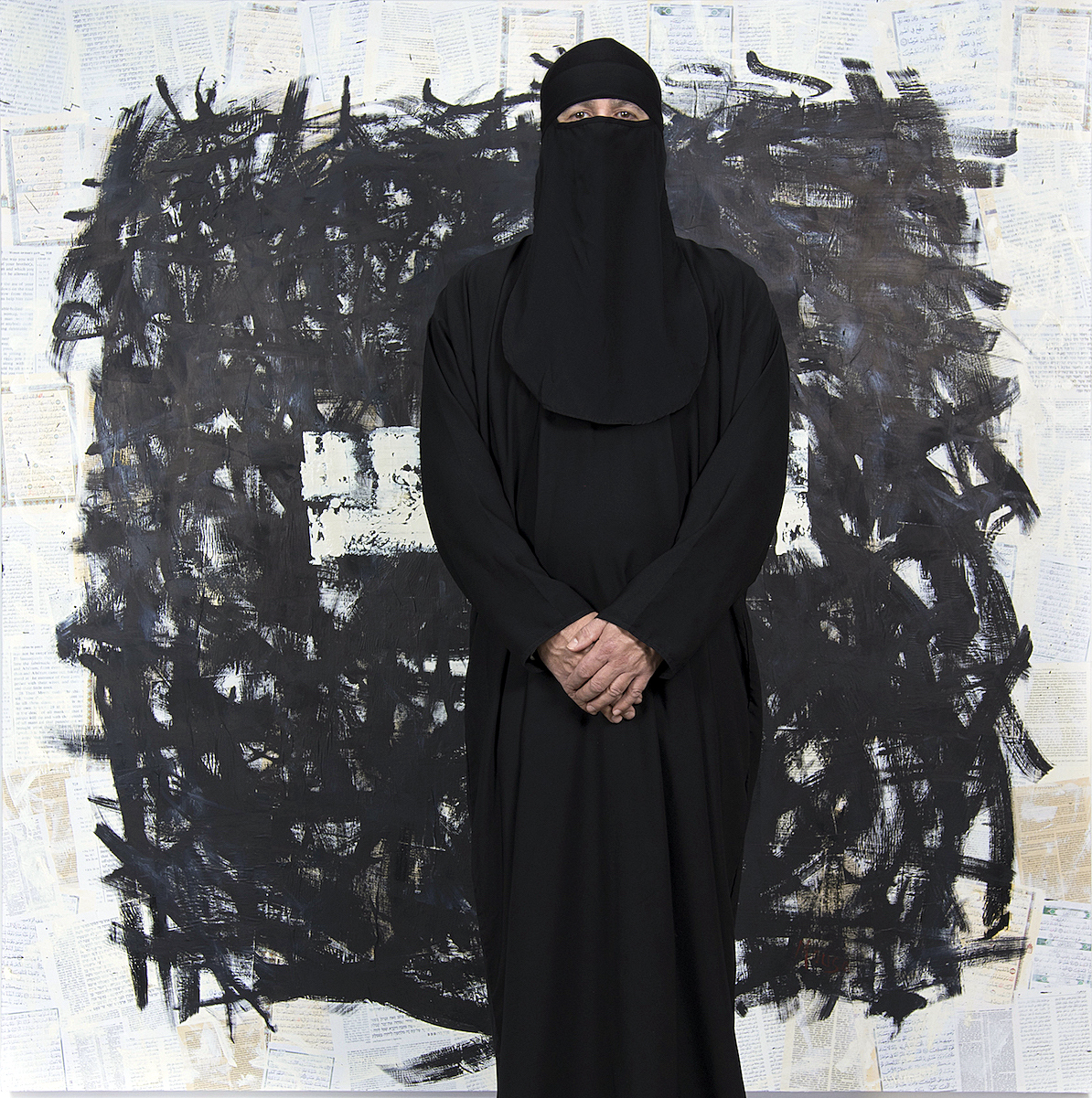
Image Courtesy of Artist

It is a complicated time in the United States, with polarizing politics pushing questions of what it means to identify as American. In truth, ideas of nationalism in most countries are increasingly complex, due to the up-tempo of immigration and displacement, and the generally more global nature of contemporary times. Flags, as a starkly graphic symbol of national identity, tend to fall short as representational entities for countries full of individuals with radically divergent backgrounds, experiences, and inter-cultural connections.
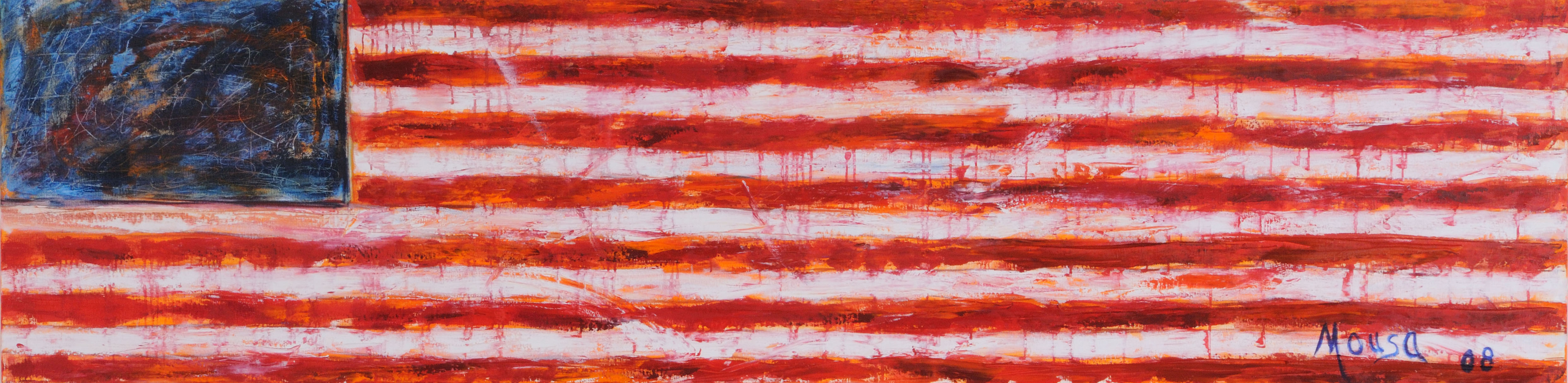
Nabil Mousa, American Landscape #38, Mixed Media on board, 24 x 96″, 2008

Perhaps this is why Nabil Mousa’s, American Landscape—a series that includes some 40 works produced by the artist between 2008 and 2012—feels so timely and resonant. Nine of these works are on display at the Arab American National Museum, and most of them incorporate the American flag, as a literal or symbolic material. The series is a way for the artist to reconcile his own questions of identity, both as a Syrian immigrant and an openly homosexual man. Mousa came to the States with his family in 1976, at the age of 12, and since coming out as gay, has been estranged by his family, according to their stringently Christian beliefs. It stands to reason that the flags he presents are emotional, messy affairs, with blurring lines, dramatic brushstrokes, mottled palette, and populated by little icons representing anonymous men and women of the LBGTQ+ community.
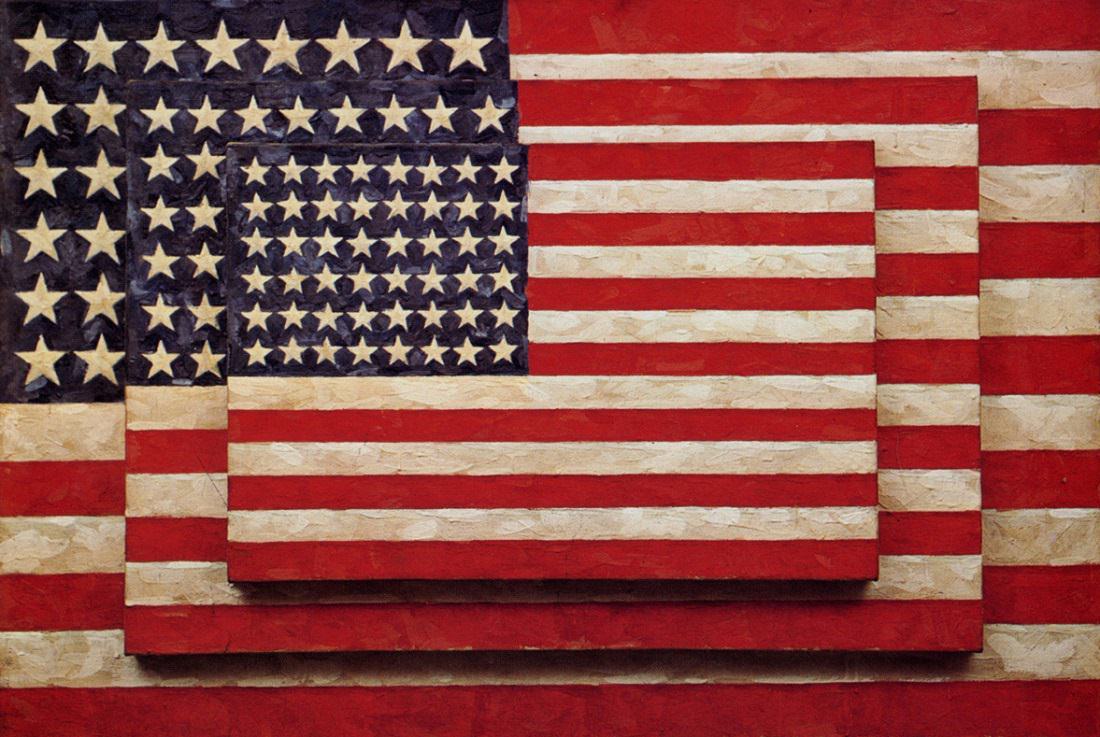
Jasper Johns, Three Flags, 77 x 155cm, Pigment & Warm wax, Image courtesy of the Whitney Museum

Flags in general, and the United States flag in particular, have a long history of use in contemporary are for their symbolic value. Jasper Johns first began to iterate the symbol with the encaustic painting Flag (1954-55), following his discharge from the United States Army, and returned to the flag as subject matter numerous times over the course of his career. Political artist Dread Scott first presented his controversial work, What is the Proper Way to Display a U.S. Flag? In 1989, prompting the passing of the “Flag Protection Act” in Congress. In protest, Dread Scott and two other artists burned a U.S. flag on the steps of the Capitol Building, which resulted in a federal court case that made it all the way to the Supreme Court in 1990. Artist David Hammons famously created the African American Flag, which is in the permanent collection at the Museum of Modern Art. Flags provide pre-loaded symbolism, and evoke strong feelings in those that choose to identify with them as a form of national identity, thus making them appealing to artists who question where they may fit in with such broad social representations.
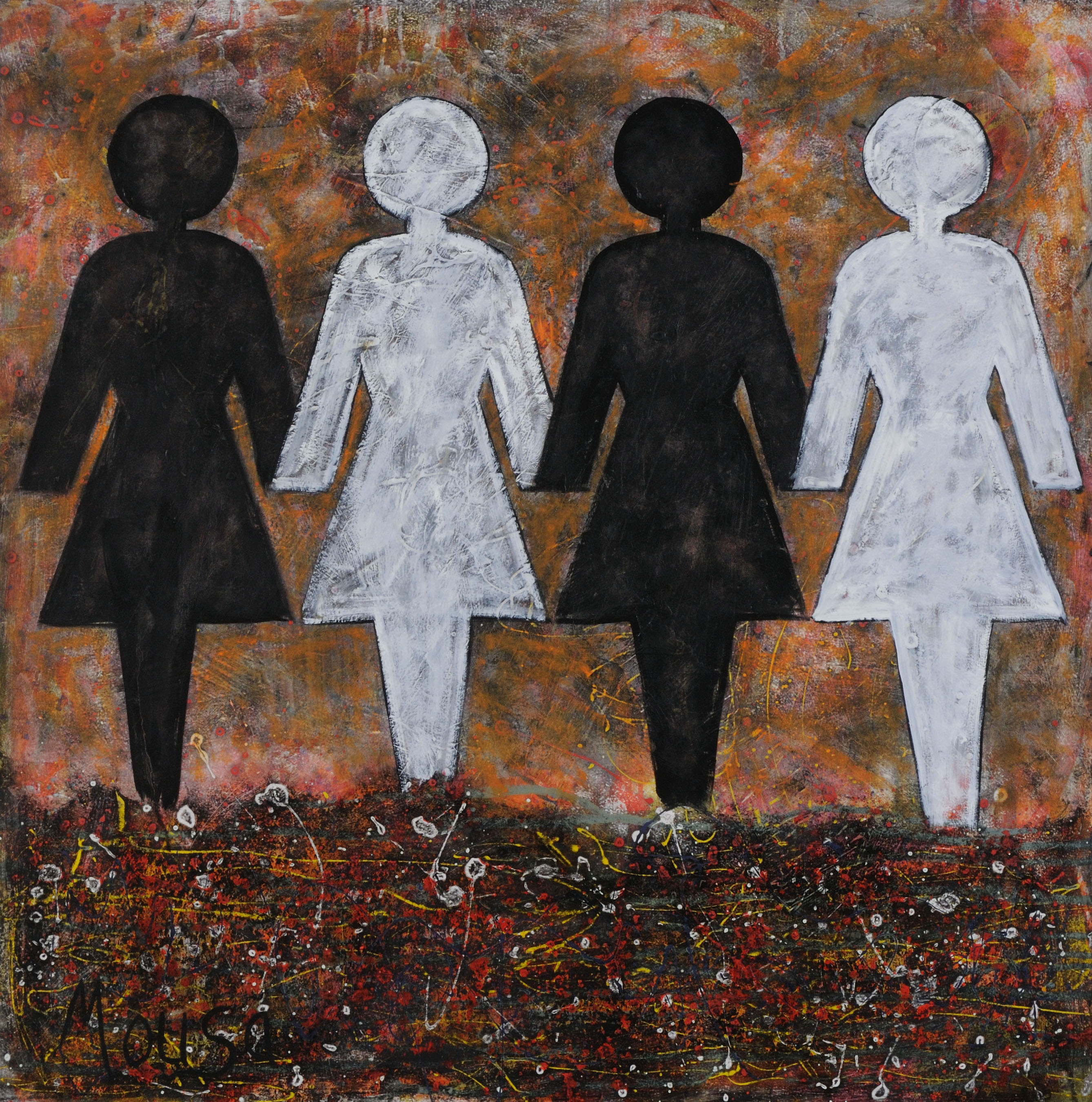
Nabil Mousa, American Landscape, # 34, Mixed Media on oil board, 48 x 48″, 2009

As a member of (at least) two populations that are often vilified, singled out, or marginalized, Mousa has a great deal of personal experience in alienated nationalism to work through in his paintings, yet with American Landscape, he has chosen to present these themes using some of the most universal symbols available—aside from the flag, the majority of figures in Mousa’s landscapes are the male/female icons designating gender on public restroom doors. In Mousa’s context, these figures appear exclusively in same-sex couplings or groups; four women holding hands across an apocalyptic and bleak multi-media landscape in American Landscape #34 (2009), or dozens of men holding hands in rows that fill out the stripes of a 12-foot-wide American Landscape #1 (2009), which dominates the entire entry wall of the gallery, and, as the largest work, serves as the focal point of the exhibition. The figures seem to blend with flag behind them, suggesting their invisibility, and in many of Mousa’s works, the flags themselves smear and drip, or even fragment—as in the case of American Landscape #19 (2009), which incorporates cut-up pieces of an actual U.S. flag in the foreground, obscuring portions of the large-scale male figures in the painting, including the place where they are (presumably) holding hands.
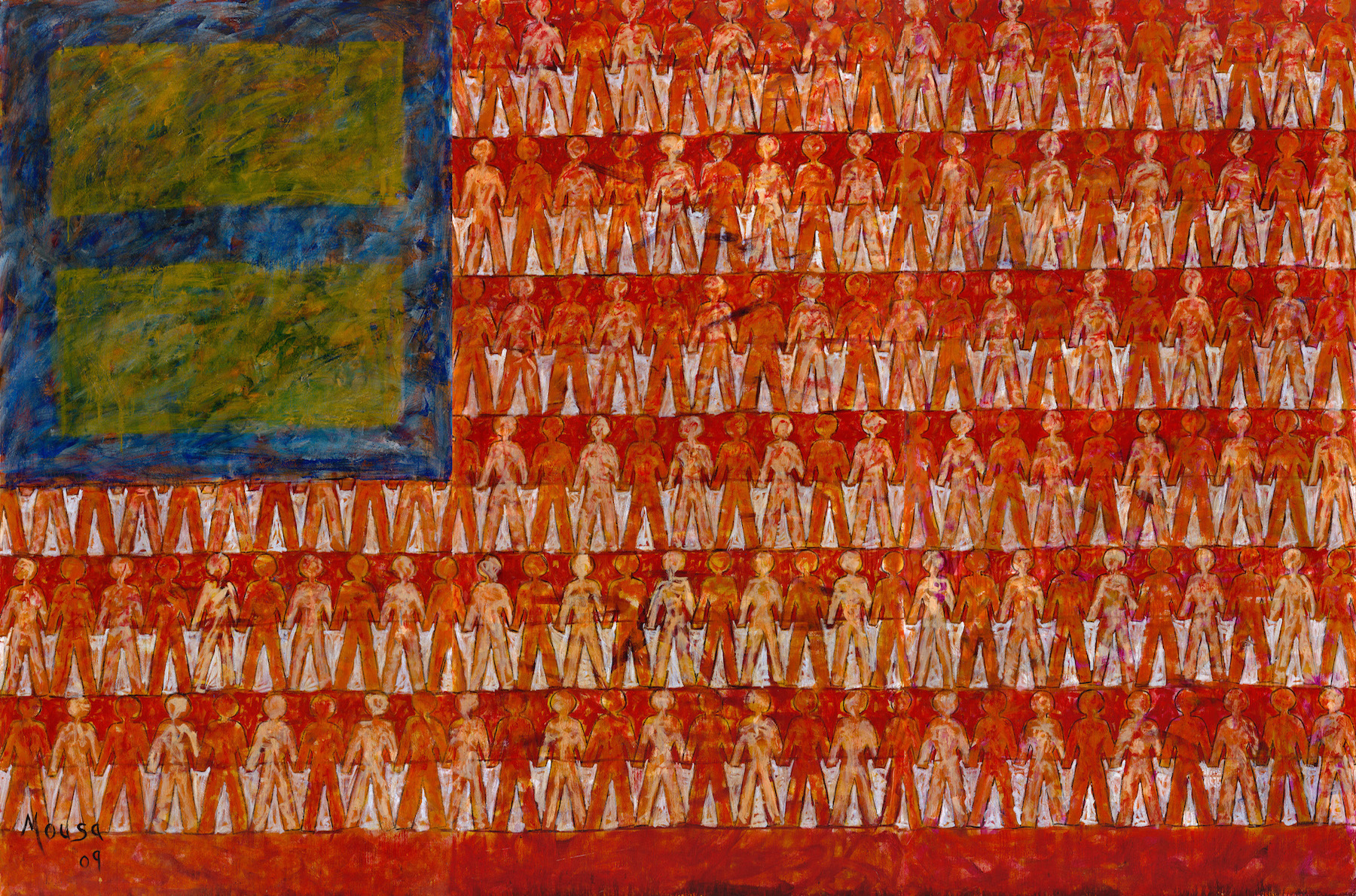
Nabil Mousa, American Landscape #1, Oil on Board, 90 x 144″, 2009

In some ways, Mousa’s work at AANM might be trading in the bluntest symbolism, but the emotive nature of his brushstrokes and the frenetic energy of such bold and colorful works in a relatively small gallery space make the work personal and the exhibition space feel extremely dynamic. Perhaps this is a show that seeks to connect with those who feel excluded by the conventional presentation of the flag, which blithely assumes a one-for-all American spirit that is obviously not borne out in issues of policy-making, opportunities, justice, or social equity. With American Landscape, Mousa has complicated the flag, and in doing so, raised a new version, which seeks to include people whose American identities are more complicated than simple red, white, and blue.
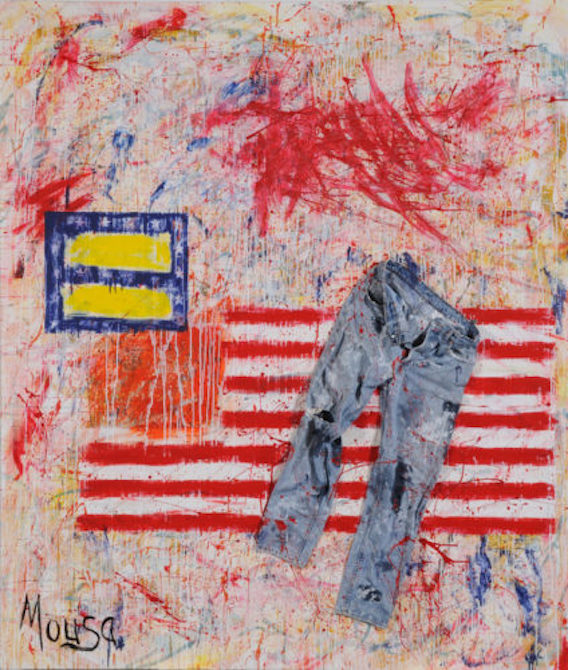
Nabil Mousa, American Landscape, #20, Mixed Media on Board, 96 x 72, 2009


Nabil Mousa: American Landscape continues at the Arab American National Museum in Dearborn, Michigan through April 8.
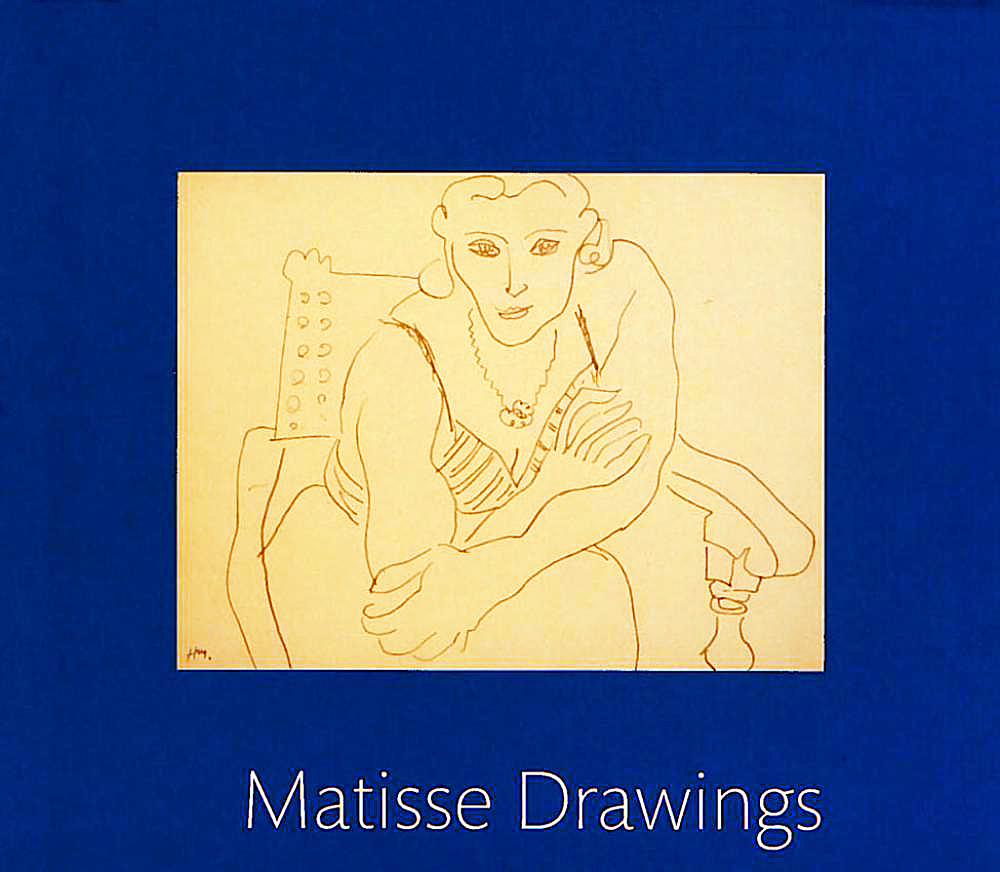
Matisse Drawings @ UofM Museum of Art

Matisse Drawings: Curated by Ellsworth Kelly from The Pierre and Tana Matisse Foundation Collection

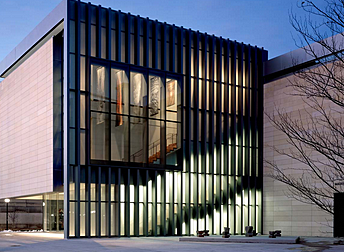
UofM Museum of Art, Exterior, 2017 Images Courtesy of Levi Stroud

Matisse Drawings, a traveling exhibition currently gracing the University of Michigan Museum of Art’s cathedral-like A. Alfred Taubman Gallery, presents a spiritual meeting of two Twentieth Century titans- Henri Matisse, one of Modern Europe’s most beloved painters, and Ellsworth Kelly, king of the hard-edged color field painting that branched from Abstract Expressionism in mid-century America. The exhibition, lovingly curated and meticulously arranged by Kelly, encompasses an unbroken row of neutrally framed drawings that snakes around the walls of the Taubman Gallery. Nestled in a smaller gallery next to Taubman is a collection of Kelly’s own lithographs, made during a stay in France, inspired both by Matisse and the landscape that inspired the Fauvist master.

Henri Matisse, Catalog of Drawings from exhibition 2017

Coming into the presence of a Matisse painting is invariably moving, profound, and difficult to describe. He was a master of emotive, ecstatic visual expression. As formal, flattened, and abstracted as his work can be, there is always, uncannily, a sense of natural light, and plenty of breathing space. Though formidable, Matisse’s works never feel closed off- they invite the viewer in to dance with them. Ellsworth Kelly himself points to this phenomenon in an interview enclosed in UMMA’s gorgeous exhibition pamphlet- “Matisse evoked space. For instance, when he would do leaves or fruit or still lifes, he would leave openings. Like this would be a leaf (gestures in a vaguely C shape in the air). But my drawings are about shapes: the forms are closed.”


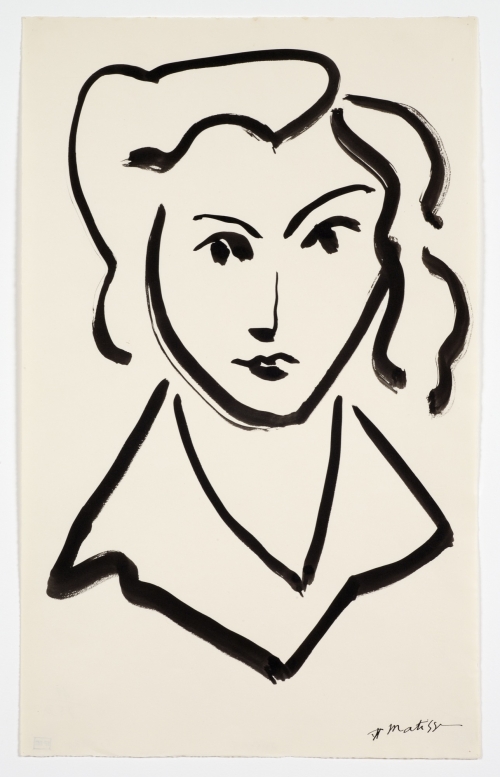
Henri Matisse, Drawing, Head of Woman, 1945

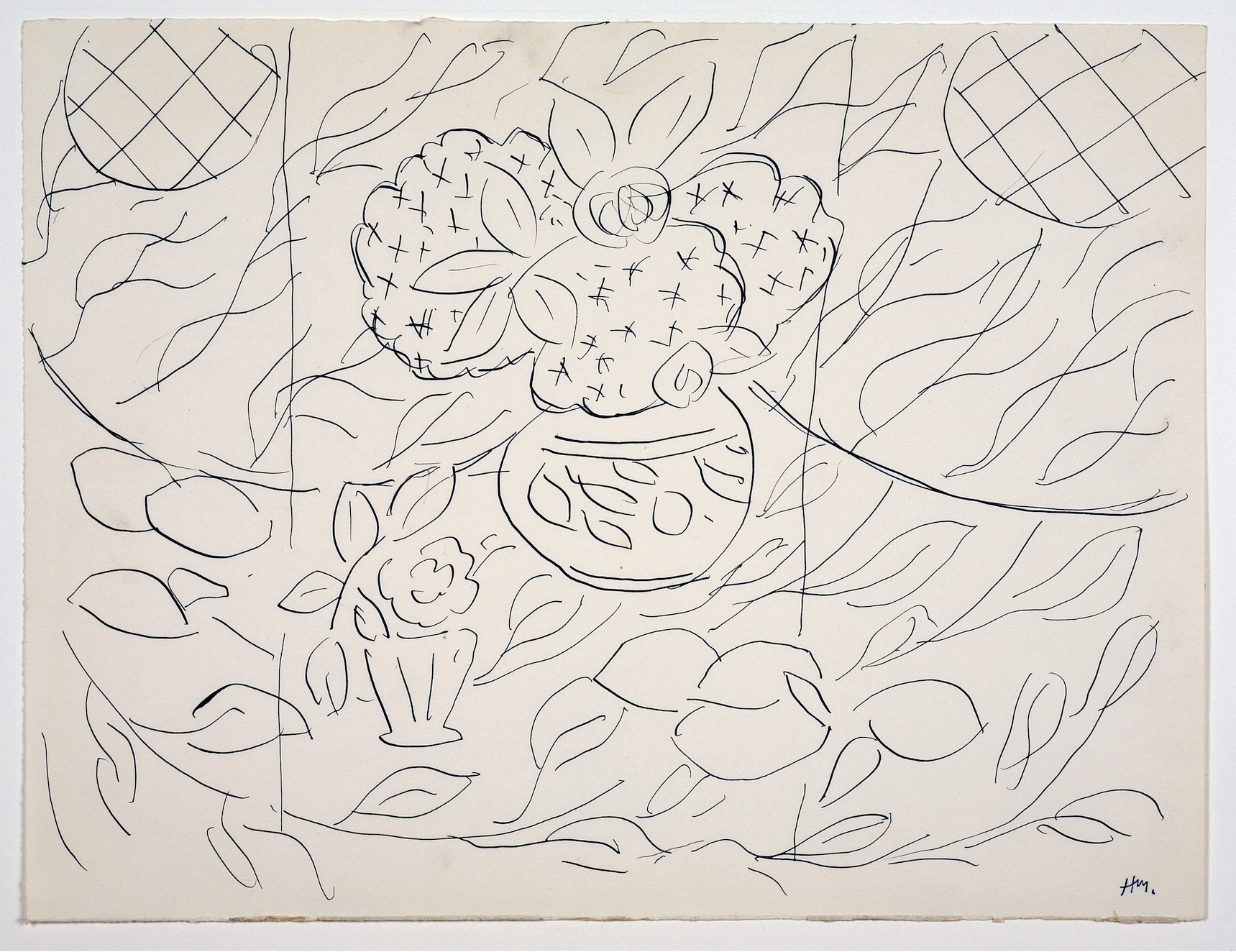
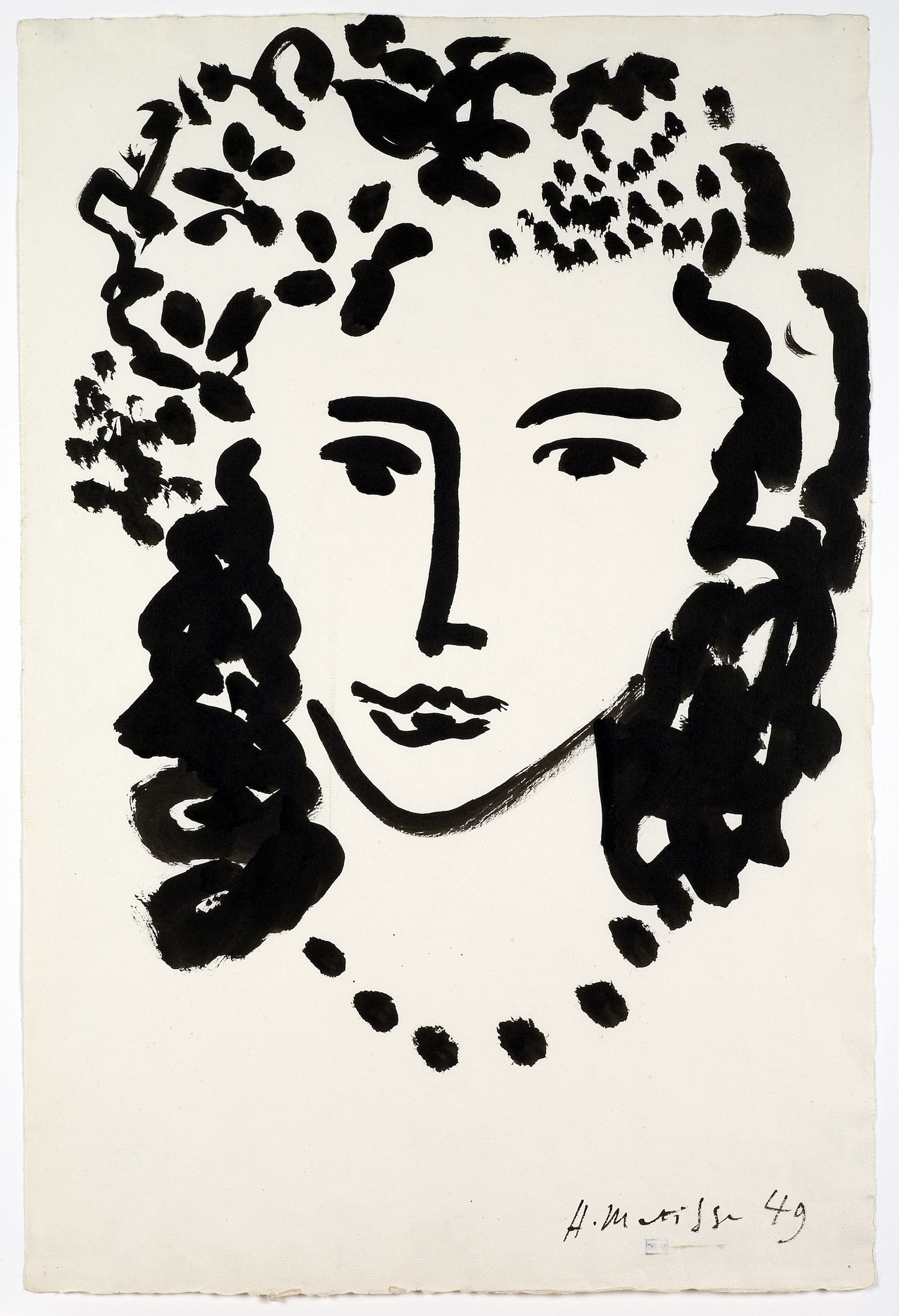
Matisse was a magician of open form. The feeling of completeness, along with the lack of fussy detail, gets more astonishing with each passing drawing. The graceful bend of a plant stem, the nuanced tilt of a woman’s head, the fleeting glance of the artist himself peering around his drawing board in a self-portrait, are conveyed with a mind-bending economy of marks. Matisse’s marks contain multitudes. The shift from point to edge of drawing tool in one sweeping contour imply light, shadow, movement and space with such apparent effortlessness that one is first skeptical, then seduced, then transcended in following it along the curve of a cheek or the plume on a hat. This strikes the deepest in Matisse’s studies of shoulders and arms- as simply as they’re drawn, they distill the formal heart of the Odalisque in bent, foreshortened elbows as hands reach up to tousle hair, the sensuous weight of a torso rests on crossed forearms. There’s a purity to these drawings that somehow transcends Orientalism in way’s Matisse’s predecessors and contemporaries did not- they’re about life, movement and muscle, the glorious freedom of the sensuous body.

Henri Matisse, Drawing, Sketch for Lemons & Mimosas, 1944

Ellsworth Kelly, as curator, positioned his own works adjacent to Matisse’s, not mingling with them- a nice gesture of deference to a master, as well as a sly, unique lens for perspective. According to the exhibition’s press release, the viewer is meant to see Kelly’s lithographs first, and then approach Matisse as if through Kelly’s eyes. I went in the opposite way, washing up to Kelly’s lithographs dazzled by Matisse. The two artists complement each other like a tall glass of water after a shot of bourbon. As Kelly points out in the above-mentioned interview, his forms are closed- sparing in detail like Matisse, but quieter, humbler, more about shape than movement. They are, in their way, as beautiful as Matisse’s drawings- scaled and composed masterfully, describing plants found in the French countryside with a graceful observance not readily apparent in his more famous paintings. The major difference is that Kelly’s minimalism seems wrought from disciplined restraint, while Matisse’s economy of line erupts, magically, from abandon and delight.

Henri Matisse, Drawing, Large Head, 1949

Matisse Drawings- Curated by Ellsworth Kelly is on view at the University of Michigan Museum of Art November 18, 2017, through February 18, 2018.

UofM Museum of Art

Virginia Rose Torrence @ Trinosophes Gallery

Virginia Rose Torrence, Ceramic, Installation image courtesy of Ali Lapetina.

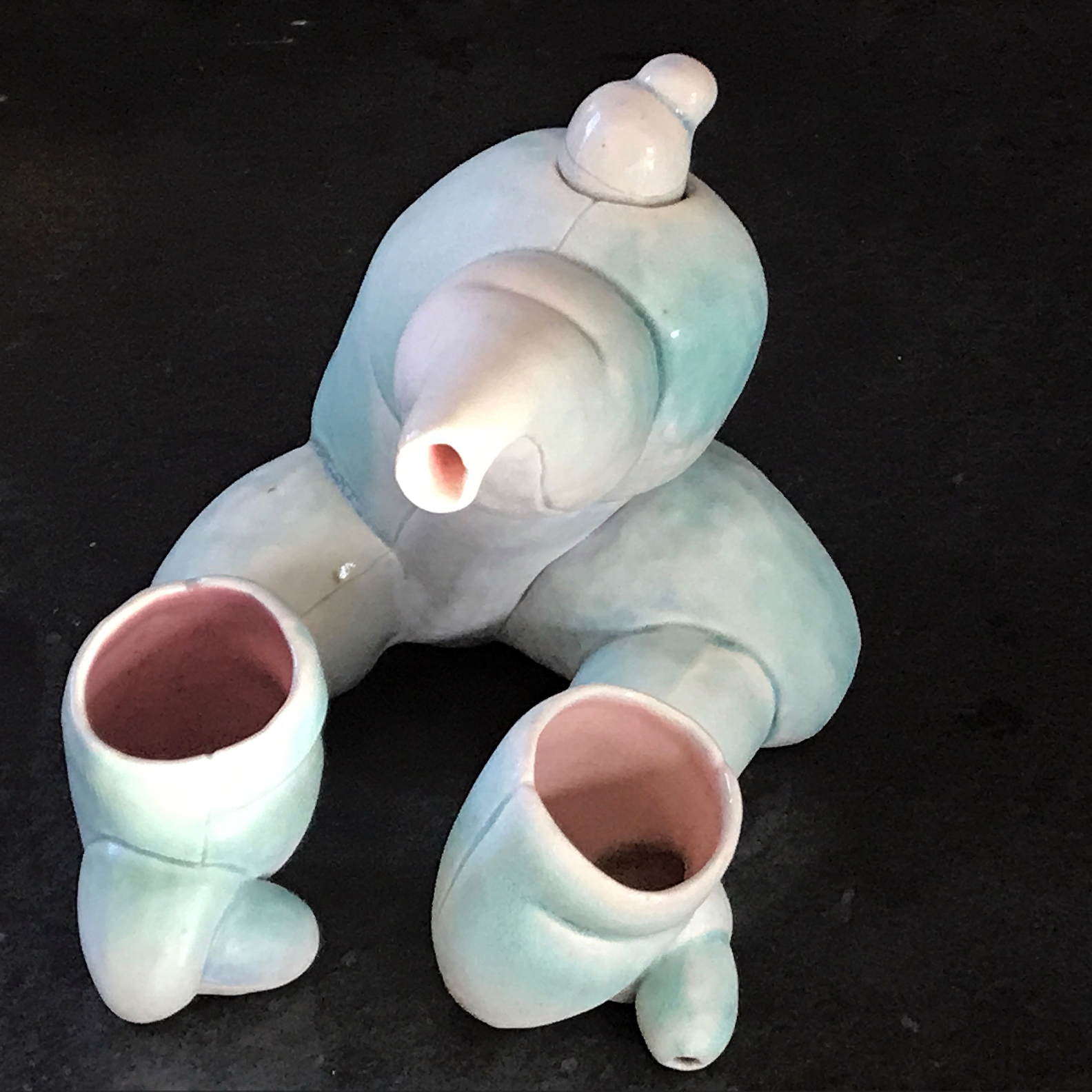
Wandering through Professor Tom Phardel’s department studio at the College for Creative Studies several years ago, I noticed an enigmatic shaped tea set— two small cups and tea pot—sitting on a shelf waiting to be fired in the kiln, that could as well have been made by an artist from the early 20th century. Seductive, biomorphic shapes bulging with curves and openings, lip-shaped edges, and resting in feline-like posture, it was nevertheless restrained, unassuming and, quite simple and strangely beautiful. A few weeks later at the annual CCS student show, I discovered it once again on a display shelf, but now it had a slightly glistening, pinkish, and minty skin like pigmentation; they were now complete and transcendent.

Virginia Rose Torrence, “Untitled (teapot),” 6”x6”x7,” ceramic, 2011  Archive photo.

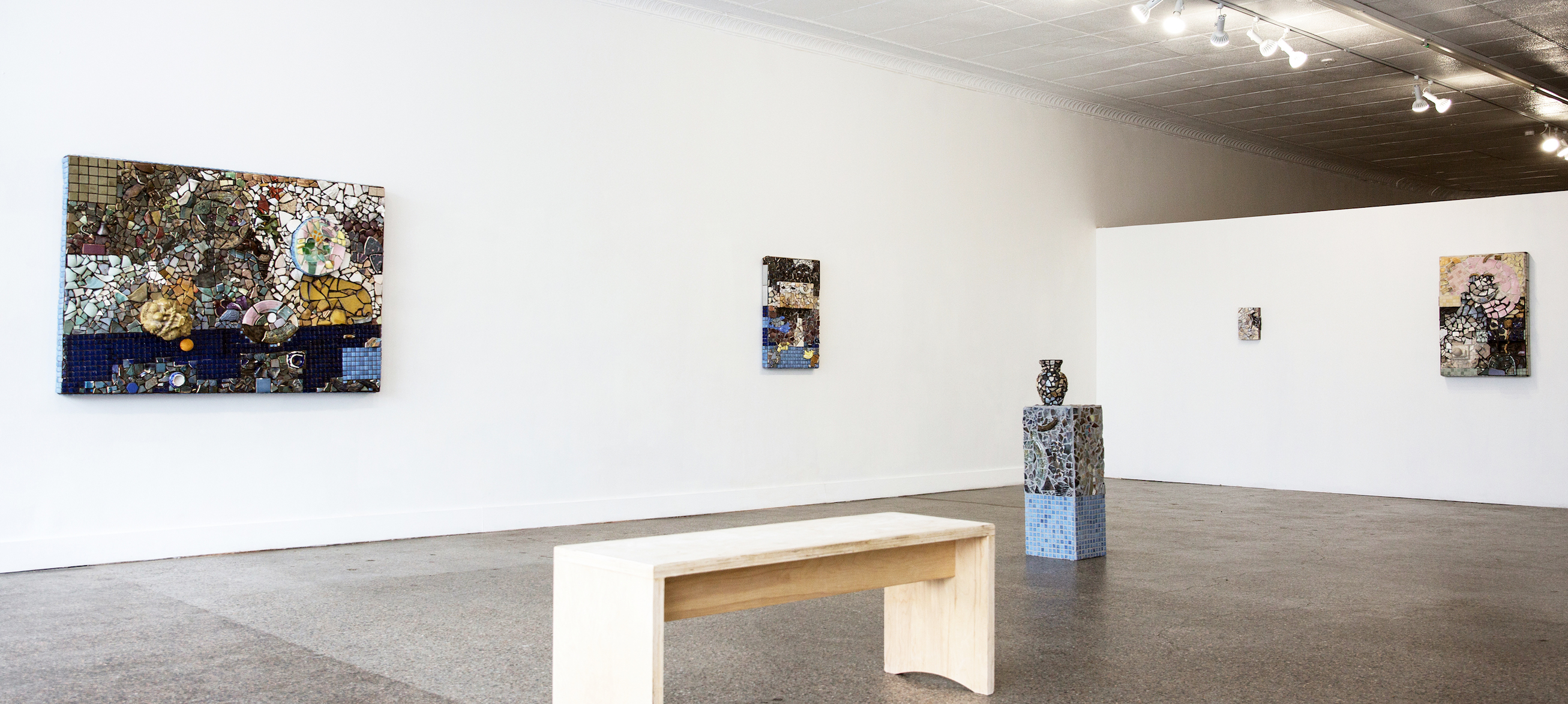
I only mention these earlier works of Virginia Torrence because of the radical change in the new work exhibiting at Trinosophes Gallery in the market area of Detroit. Since her precocious student work, Torrence has shifted perspectives. Moving from celebrating the palpable and bodily in remarkable forms, the new work’s focus is on the act of assembling parts, to picture, in a painterly-like space, in mosaic, a collage of fragments. It was not just a case of a need for change of artistic strategy but it seems a philosophical and psychological relocation. The time-honored tradition of Detroit artists mining the local landscape for materials to make art seems to have grafted on to her new art process. With her husband, artist Henry Crissman, Torrence has become a tenant of the city, living in an iconic Hamtramck neighborhood and working in Cass Corridor gallery and like all the artists who have lived there before, scouring the landscape for pieces of history. Instead of a focus on an inward awareness and desire (in her writing she speaks of “desire” as the emotional engine that drives artists to make art) her perspective is from the center outward.

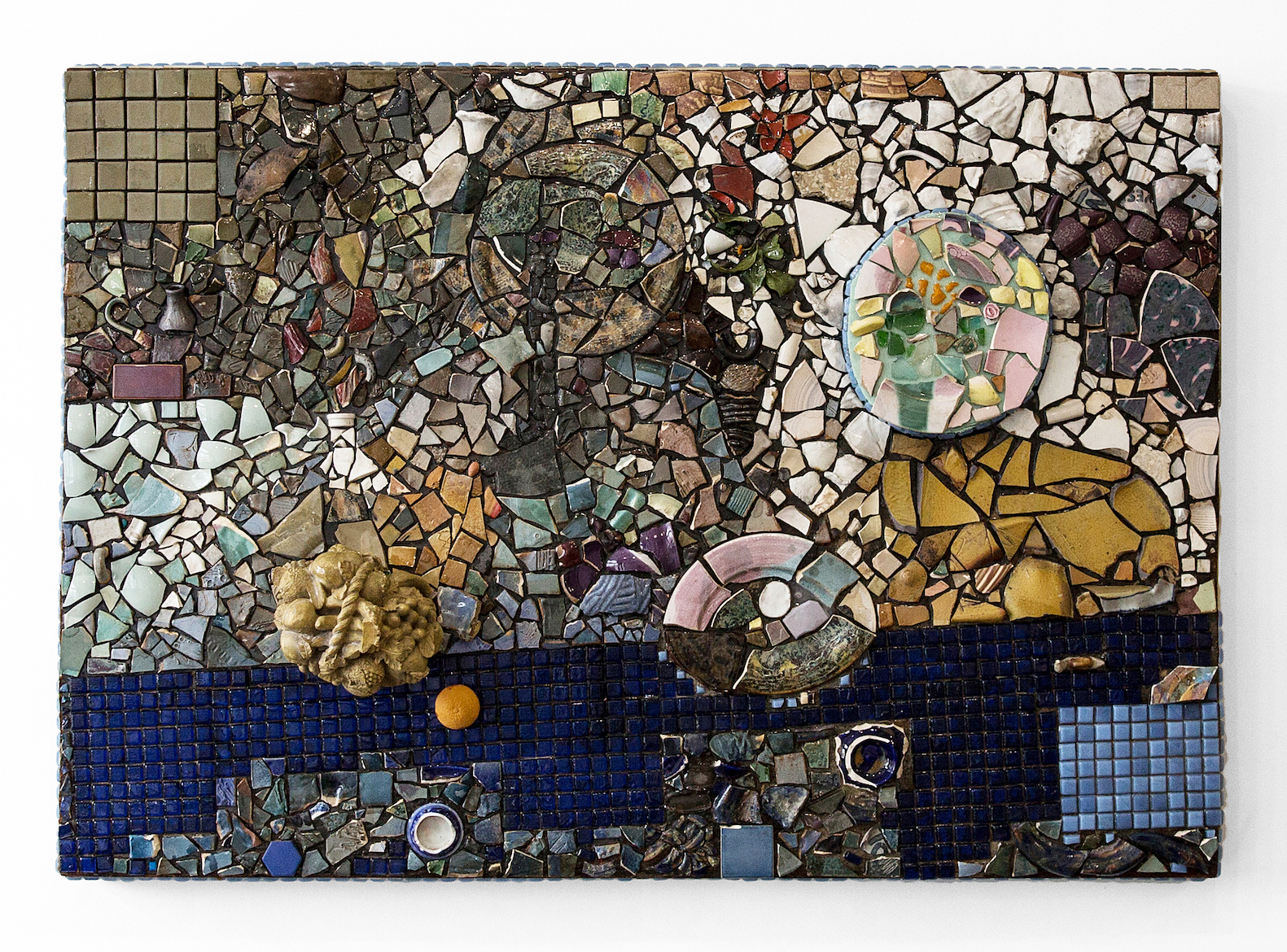
Virginia Rose Torrence, “Untitled,” 48”x69,” ceramics, glass, orange peel, foam, leaves, resin on wood, 2017. Image courtesy of Ali Lapetina

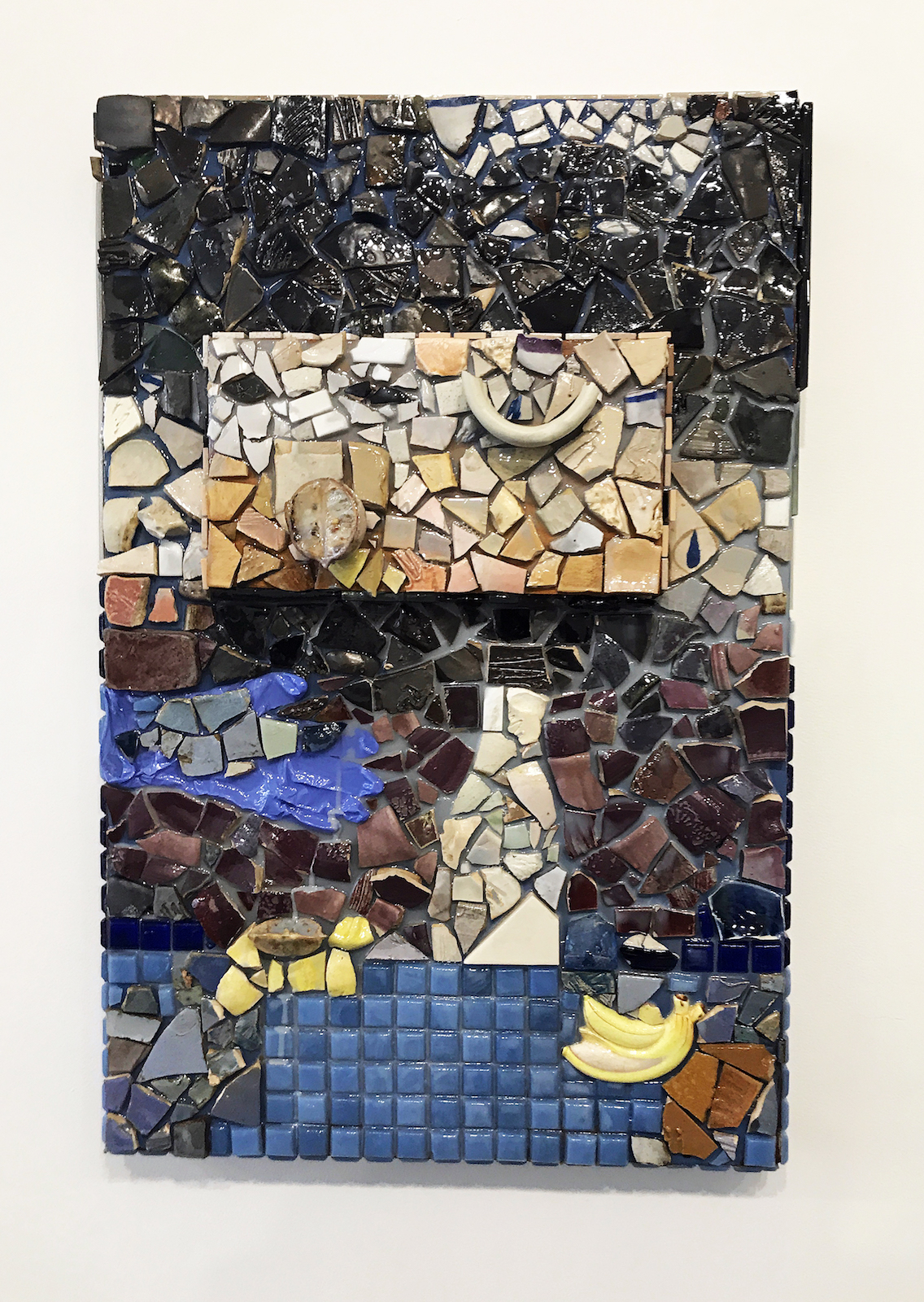
Assembled from gathered ceramic shards and kitschy objects from all over the place—from the shore of Detroit’s Belle Isle, to distant suburban thrift shops, Dollar stores and Craig’s list and remnant shards from other artist’s studios—Torrence has embedded the city in her mosaics. And like her biomorphic tea set her mosaics exhibit a brilliant sensibility. Arranged in a less than a planned scenario, each mosaic suggests an intuitive series of gestures, not unlike the operation of an abstract expressionist painting, that suggest fragments of images and ideas, but not composed narratives. The eye behind the assemblage of shards is fascinating. At once like making a puzzle—finding which shard “fits” where—while composing the spaces between at the same time. It merits a long look, suggesting the honored life of byzantine religious mosaics while revealing the kitschy and derelict simultaneously: a discarded, periwinkle-blue latex glove, an exploding banana, a vase. Torrence’s is a charged poetic strategy.

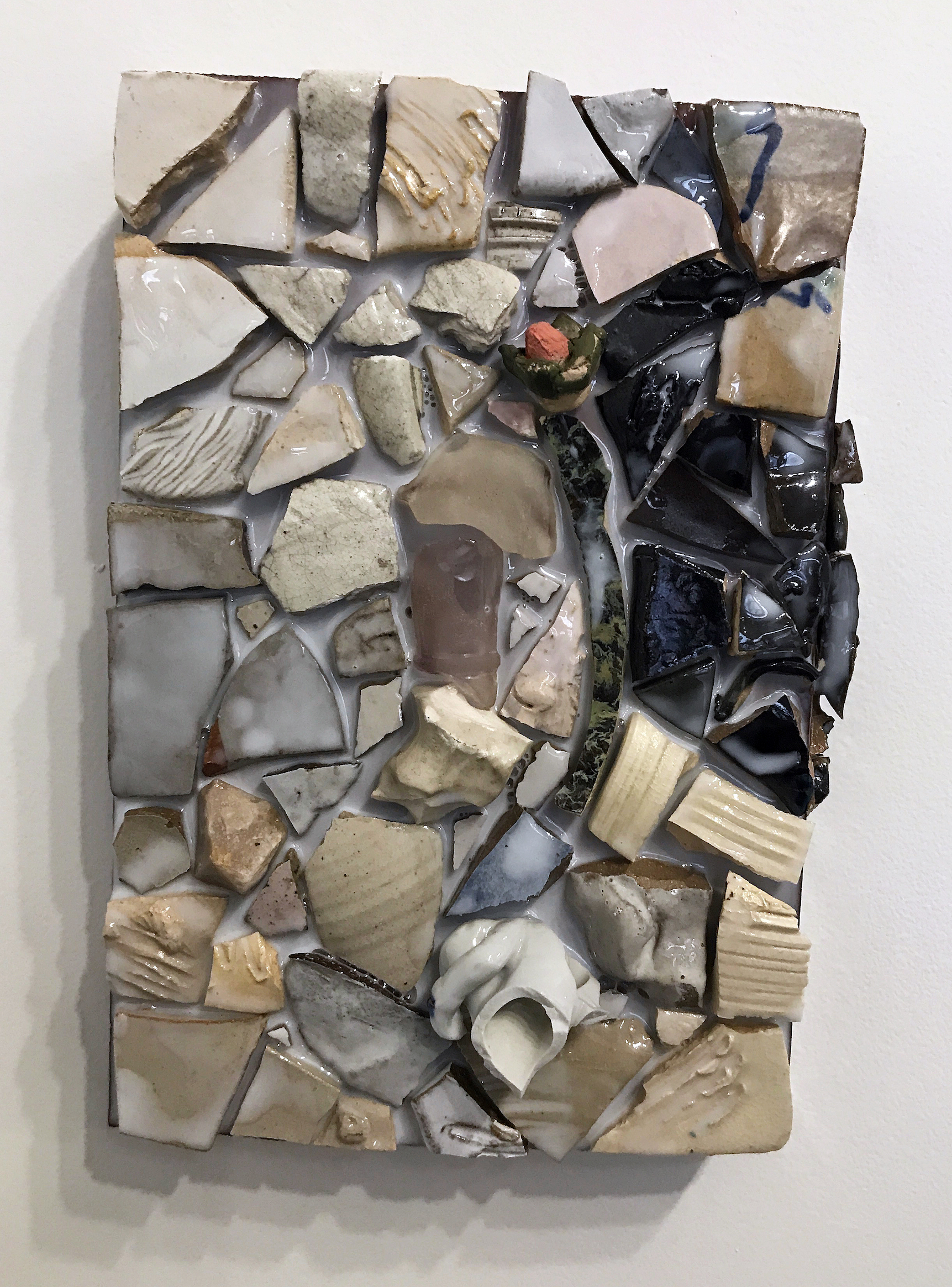
One can find these “pictures” in the mosaics–references to eating, plastic and real fruit, like sections of an orange or banana, flowers and engaged figures and maybe even self-portraiture and still-lives, even to biblical stories (there’s even a serpent and pear in one mosaic) — but the overall impact of Torrence’s mosaics is celebratory. Each tesserae and object of the eight mosaics is embedded in either a plastic (resin) medium or cement-like grout. The use of plastic resin as a grout gives a glistening, “juicy” (to use Torrence’s word) sensuous vitality to the surface. The mosaics seem to be alive with an inner light and activity and, due to their impeccable positioning, each tesserae seems to vibrate like a molecule. A close-up of one mosaic suggests an ocean tide pool teeming with foamy life, or an erotic flower spreading its seeds.

Virginia Rose Torrence, “Untitled,” 11”x8,” ceramics, glass plastic, resin on wood, 2017. Archive image.

This change, from voluptuous, animal forms to flat, chance driven arrangements, is similar to the shift in the work of the great French-German artist Jean Arp who went from sculpted torsos early in the century, to colorful, flat abstract amoebic shapes by midcentury. In Torrence’s shift, and it seems in Arp’s as well, it is a change from the individual, body-personal to the collective, body-politic, from the sensuousness of smooth sculptural forms to the tantalizing arrangements of objects found in her new space and arranged by the energy of one shape encountering the Other, of Torrence encountering new elements in a new landscape. In a short text about the new work, Torrence said, “I am searching for the piece as I make it. The process is a collaboration between myself and the materials, vestiges of time, that I am piecing together onto a singular plane.” The hybrid mosaic form and expressionistic strategy she employs is an ideal fit in reviving an ancient art for a modern cause.

Virginia Rose Torrence,”Untitled,” 33”x22,” ceramics,glass,rubber glove, lemon, resin on wood, 2017. Archive image.

Trinosophes Gallery – Virginia Rose Torrence’s work through end of January, 2018

1464 Gratiot Avenue, Detroit, MI. 48207     313-737-6606

Basquiat @ Cranbrook Art Museum

BASQUIAT BEFORE BASQUIAT: East 12th Street, 1979-1980

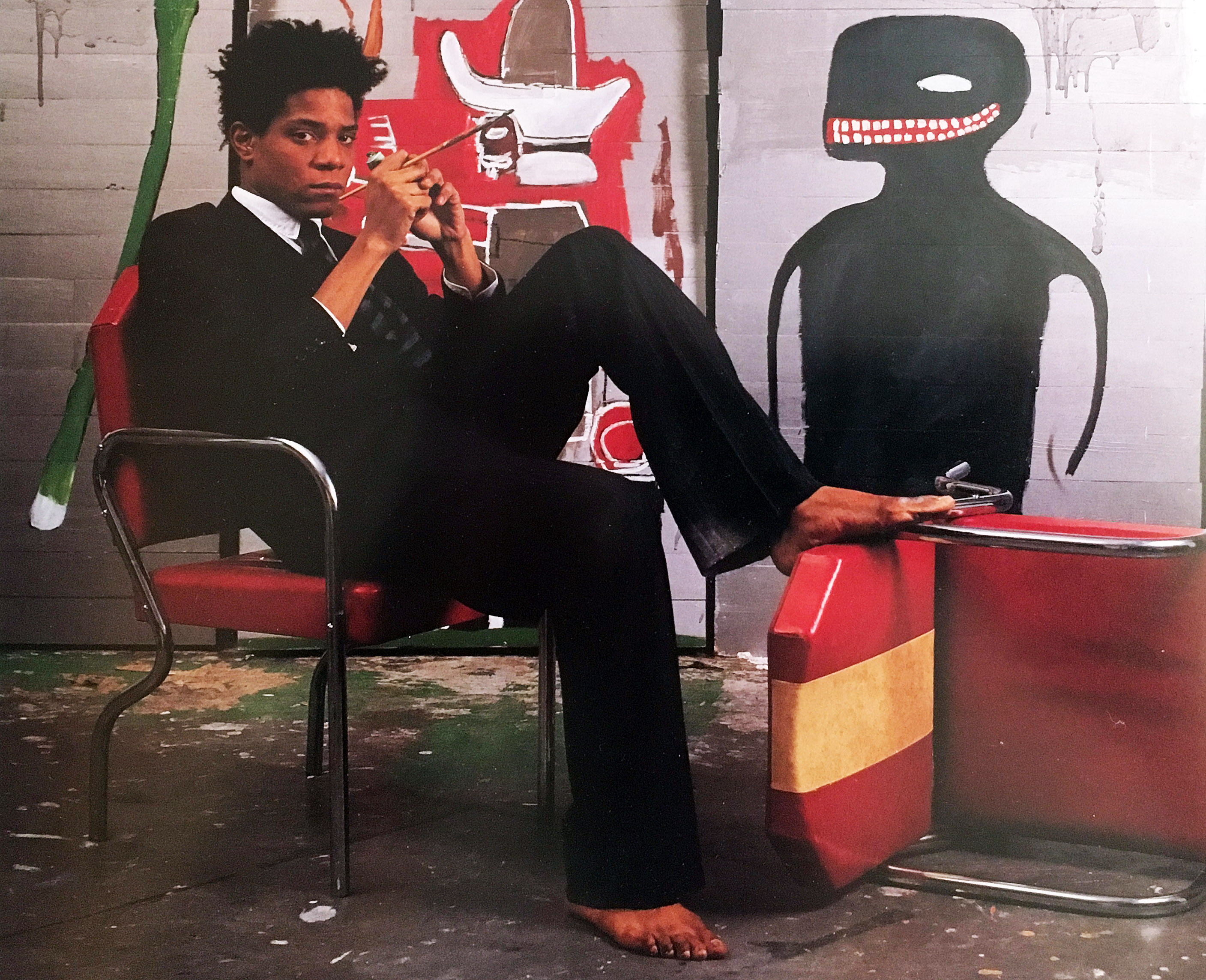
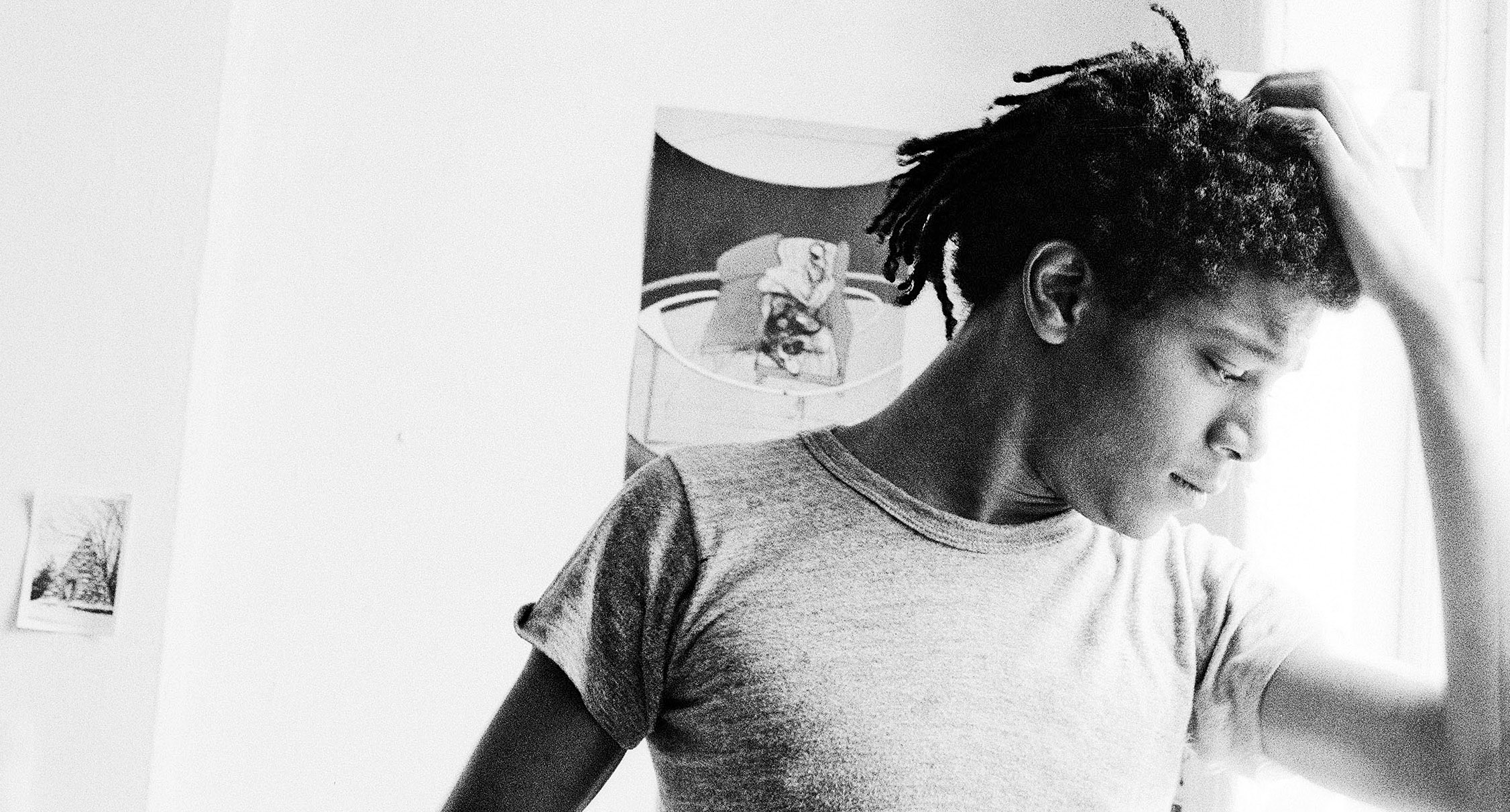
Jean-Michael Basquiat at Great Jones Studio, 1985

In the spring of 1971 when I had just graduated from Wayne State University with an M.A. in painting, I was making surreal landscape paintings. I had not heard of Jean-Michel Basquiat, of course, because he was only ten years old and attending St. Ann’s Catholic school in New York City. Soon after that he was bound for San Juan, Puerto Rico with his father and family for three years, before returning to Brooklyn and finishing high school.

And it wasn’t until the late 1990s when my son Julian Teachworth was finishing his senior year at The Cooper Union in NYC that he told me Basquiat’s work had influenced his painting. It was only then that I became familiar with his work, and that was ten years after his tragic death from a heroin overdose at the age of twenty-seven in 1988.

Andrew Blauvelt, Director of the Cranbrook Art Museum, said, “The exhibition and accompanying catalogue presents New York City in the late 1970s and early 1980s through the prism of Jean-Michel Basquiat’s art and provides a window into the art-rich time that he inhabited and impacted so profoundly. Ultimately, this exhibition will attest to Basquiat’s virtuosity in formation–the creative impulses that yielded a distinctive voice, but also the many diversions or paths he explored as he was developing a signature style.”

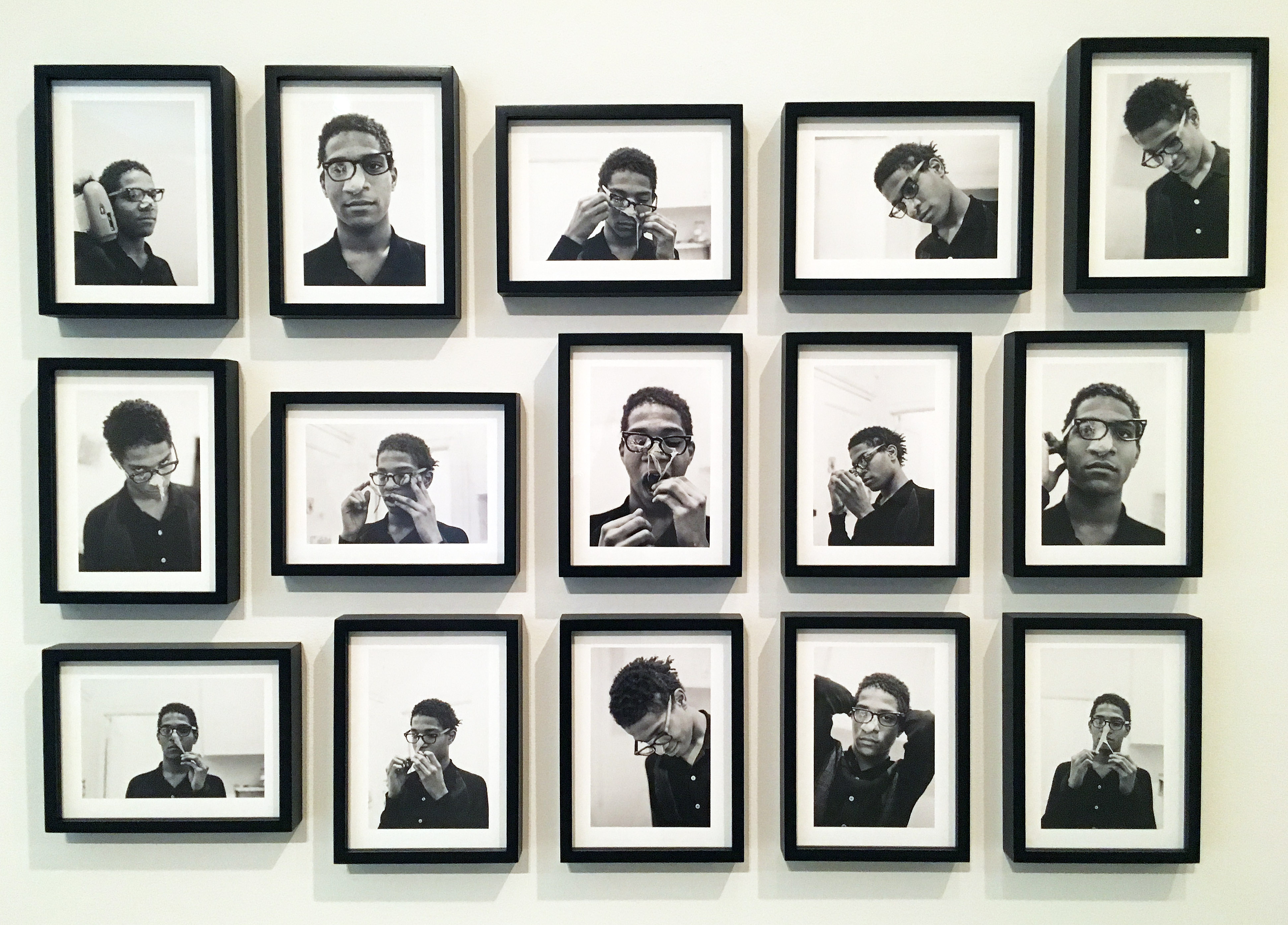
Alexis Adler, B&W photographic images of Basquiat performing in the apartment, 1979

Jean-Michel Basquiat first appeared in New York City in 1980 depicting street graffiti using neat block letters and his SAMO© tags on the surrounding streets of lower Manhattan. It was these early years when Basquiat started dating Alexis Adler and living with a close friend, Felice Ralster, that is the subject for this new exhibition at Cranbrook Art Museum: BASQUIAT BEFORE BASQUIAT: East 12th Street, 1979-1980 that opened November 17, 2017. Basquiat and Adler moved into a small apartment at 527 East 12 Street, commonly referred to as the East Village, and became part of the punk culture largely based around musicians and artists at the Mudd Club scene.

Jean-Michel Basquiat, Untitled, Acrylic and Oil Stick on canvas. 1984

It was at P.S. 1 in a group survey show, New York / New Wave where his work was a step above graffiti street art, as illustrated by his ability for putting things together: masks, words, marks and disconnected phrases. The exhibition included Keith Haring, Robert Maplethorpe, and Andy Warhol. The day after the opening he returned home to Brooklyn around 6:00 in the morning to proclaim to his father, “Papa, I’ve made it!”

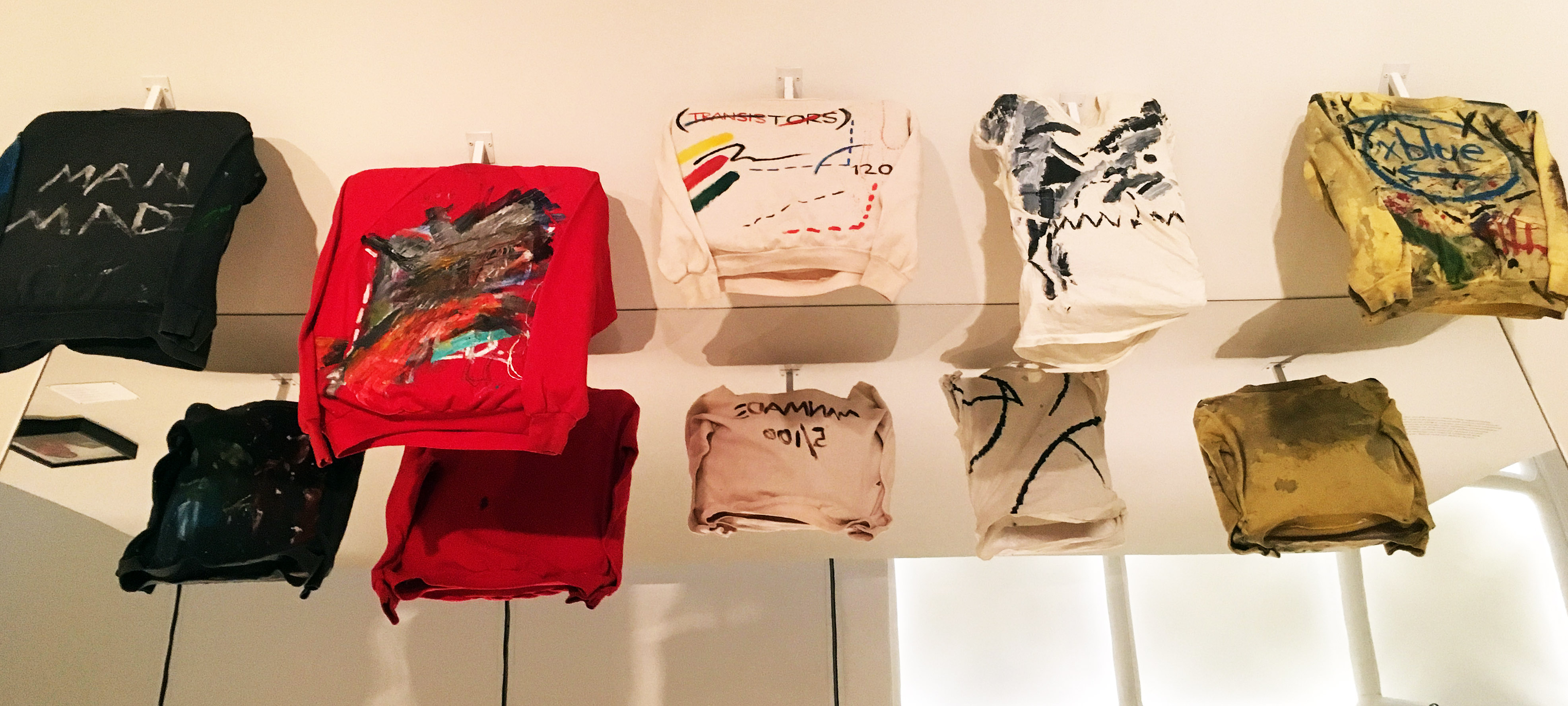
Basquiat made money for paint and his share of the rent by selling T-Shirts on the street. 1979

Basquiat’s riff with his father and his association with Keith Haring and Kenny Scharf, led him to Club 57 and a strong and close relationship with who would become his mentor, Andy Warhol. Back then, Basquiat made his living by selling clothing on the street. On display at the Cranbrook exhibition are T-Shirts he transformed into living works of art to be worn and celebrated as part of his artistic practice.

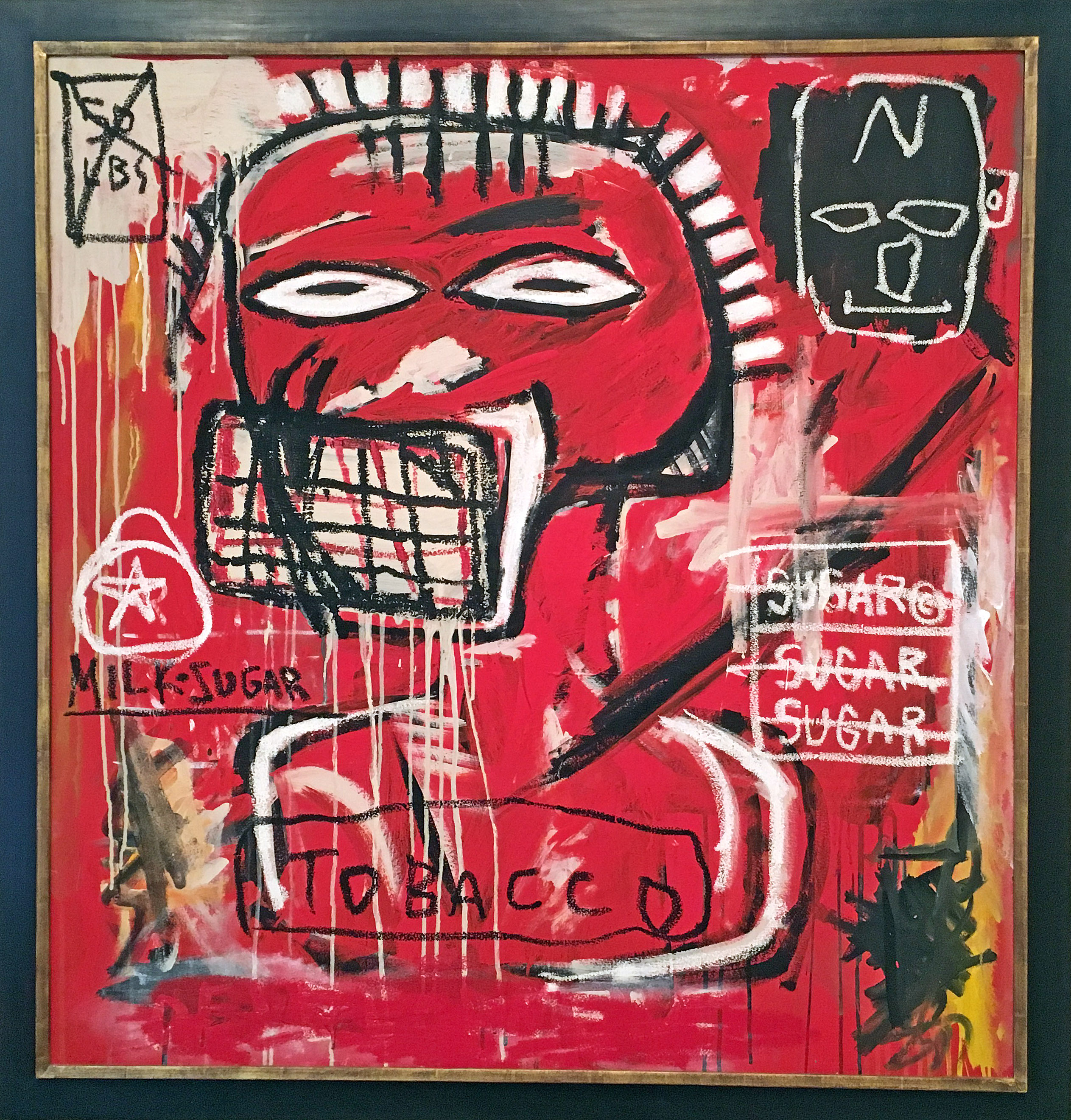
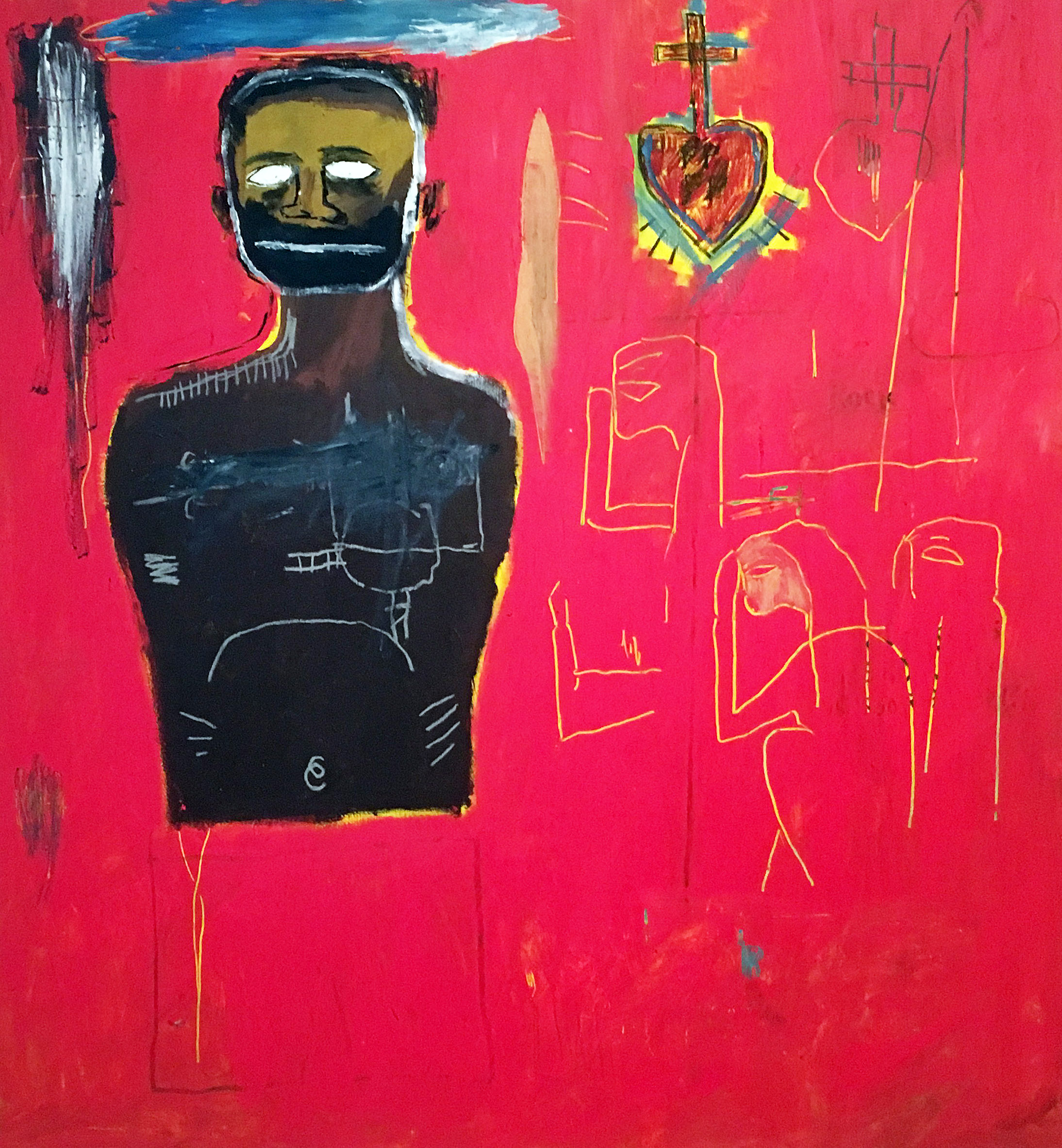
Jean-Michel Basquiat, Untitled (Cadmium) Oil, oil stick, acrylic on canvas 1984

Looking back, I think we see Jean-Michel Basquiat as an artist who emerged from being a graffiti artist during the “punk scene” era, and then ended up as a celebrated artistic phenomenon. Skillfully, he brought together disparate traditions, practices and unconventional styles that established a baseline for artists to come. He was an African-Caribbean artist, who came along at a time when the art world was dominated by exhibitions of Minimal and Conceptual art.

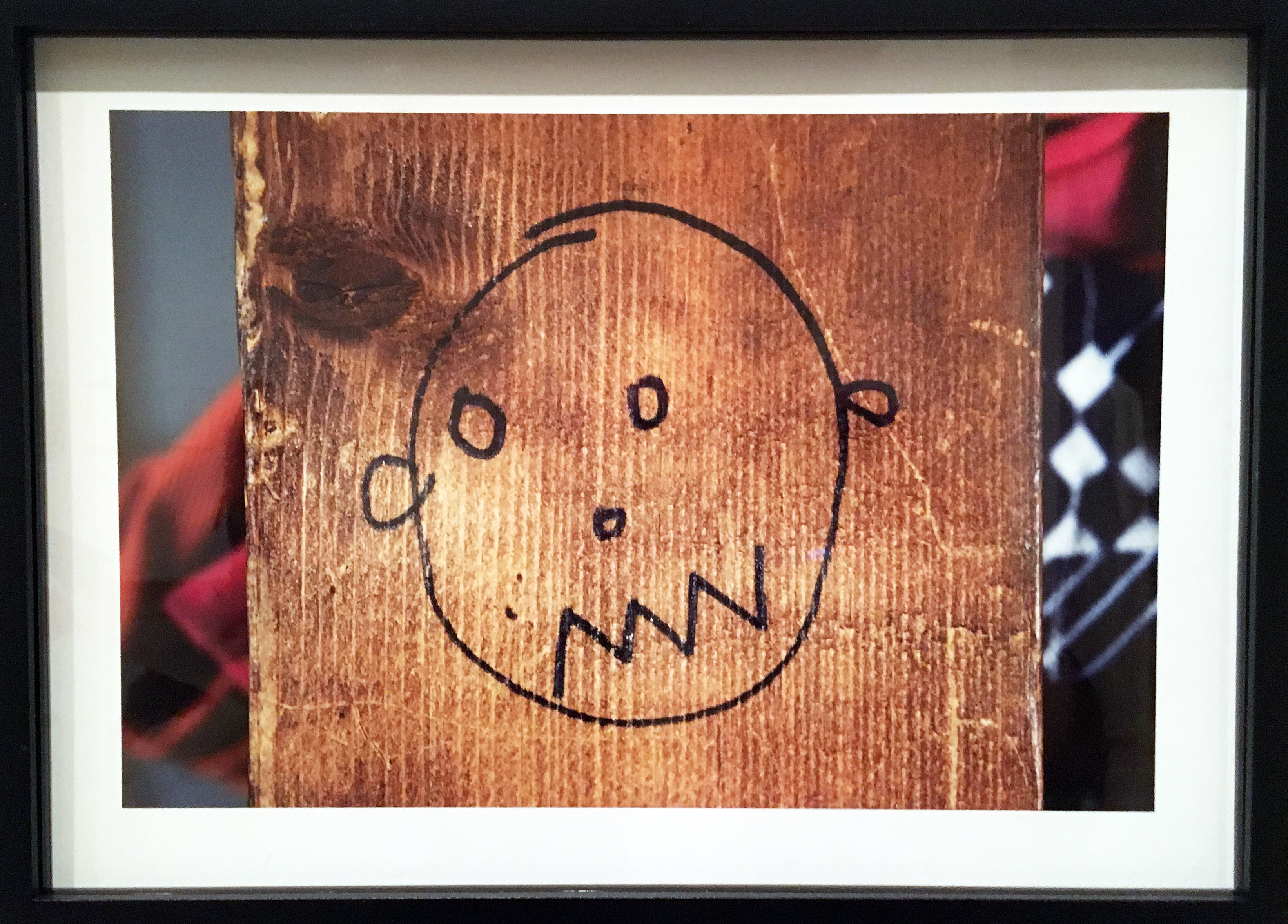
Alexis Adler, Drawing by Basquiat on wall of apartment, Archival pigment print, 1980

Using an archival approach, much of this exhibition comes from the collection of Alexis Adler, and a visit to the exhibition Basquiat Before Basquiat deepens your understanding of this artist while simultaneously providing the viewer with a context of his early work in 1980s New York City. Concurrently, the museum is hosting exhibitions by Keith Haring, Maya Stovall and Ryan McGinness.

Alexis Adler, B&W photograph of Baquiat in the apartment, 1981

BASQUIAT BEFORE BASQUIAT: East 12th Street, 1979-1980, organized by the Museum of Contemporary Art Denver.

Cranbrook Art Museum

Through March 11, 2018


Culture at the Crossroads @ Toledo Art Museum

Glorious Splendor: Treasures of Early Christian Art

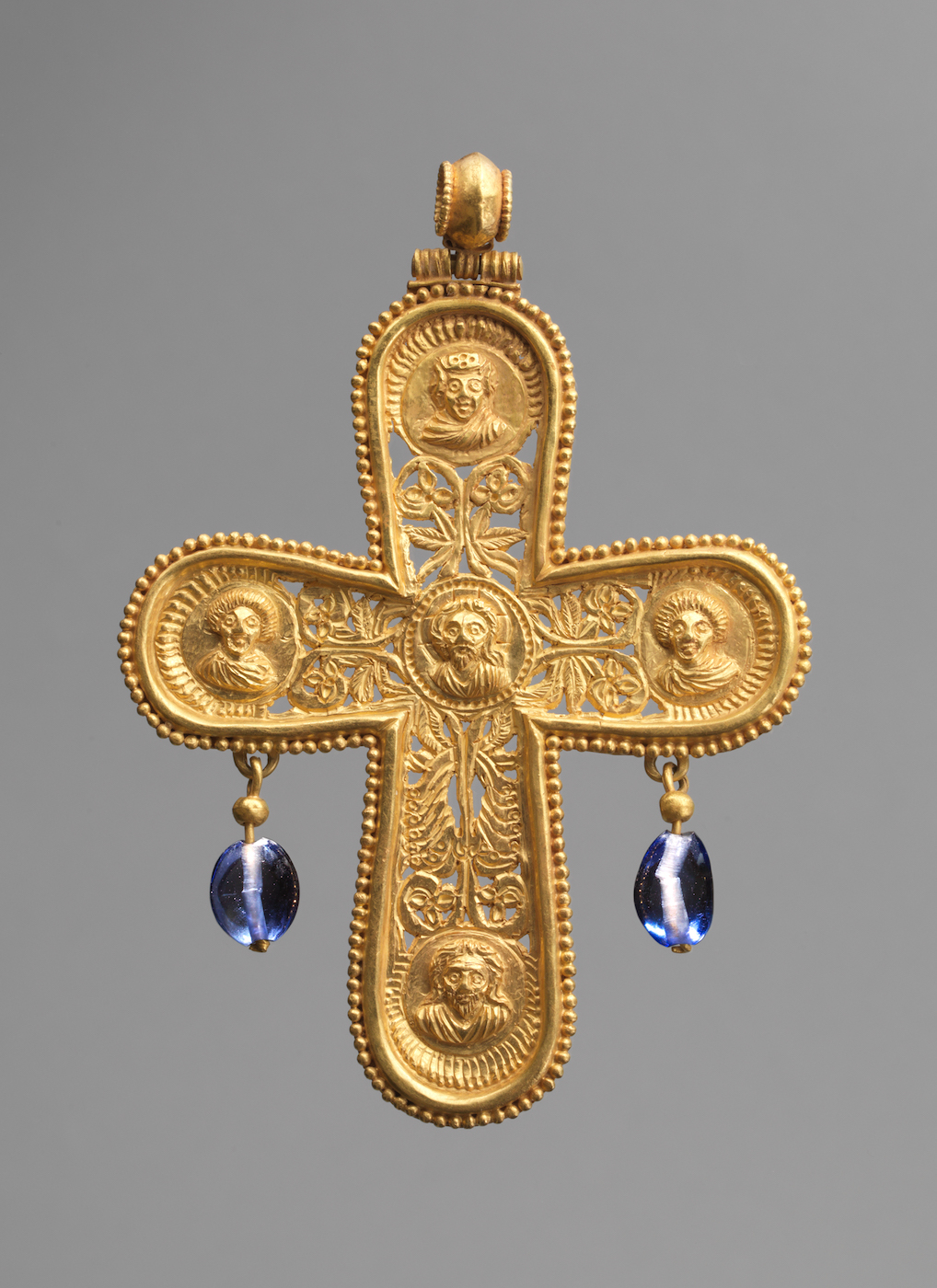
Byzantine, Gold Pendant Cross with Openwork Decoration and Sapphires, 6th–early 7th century. 11.3 x 8.0 cm; weight: 64.8 g. Private Collection, North America


It was a family feud that would irrevocably shape the culture of the Western World. In 312, Constantine, who for years had challenged the legitimacy of Emperor Maxentius— his brother-in-law— led an army toward Rome seeking to depose the alleged usurper. Establishing an encampment near the Tiber River, on the eve of battle Constantine famously had a vision of a cross in the sky, which he interpreted as mystical assurance of victory. The following day, he ordered the symbol painted on the shields of his soldiers, who subsequently defeated Maxentius’ army at the Battle of Milvian Bridge, establishing Constantine as the emperor of Rome. Whatever the precise details of the account (and they do vary), it’s hard not to see the battle as one of history’s decisive turning points. It resulted in the legalization of Christianity in Rome and, eventually, the establishment of a second Roman capital in Constantinople, later the heart of the Byzantine Empire.

Glorious Splendor: Treasures of Early Christian Art, on view at the Toledo Art Museum through February 18, offers a compelling glimpse of cultures at the crossroads, revealing the fluidity of Roman visual culture during the empire’s slow transition toward Christianity. The exhibition is an intimate single-gallery display of 30 precious objects– mostly on loan from other collections– dating from the 2nd through 7th century. The instructive selection of objects highlights the perhaps surprising cross cultural exchange between Christian and Pre-Christian Rome, not merely in subject matter, but in media, style, and technique

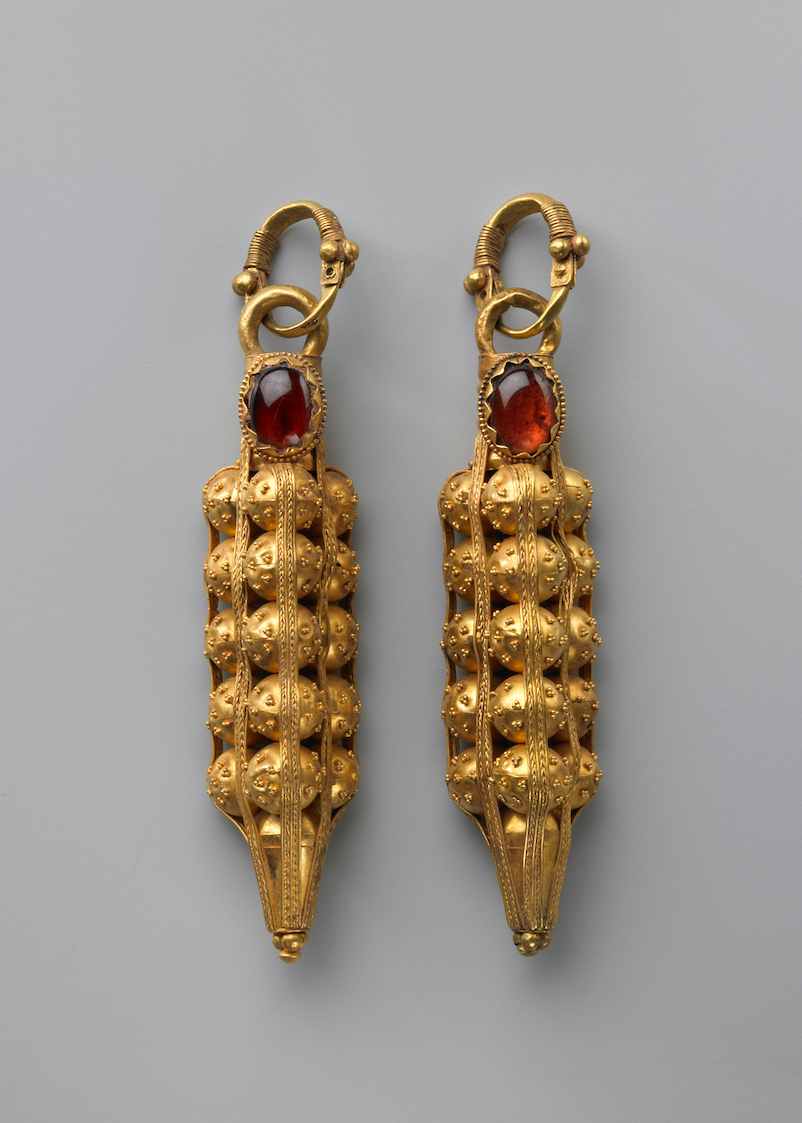
Parthian, Gold Earrings with Woven Wire, Granulation, and Garnets, 1st century A.D. Length of each: 8.0 cm.; weight: 11.2   and 11.4 g. Private Collection, North America


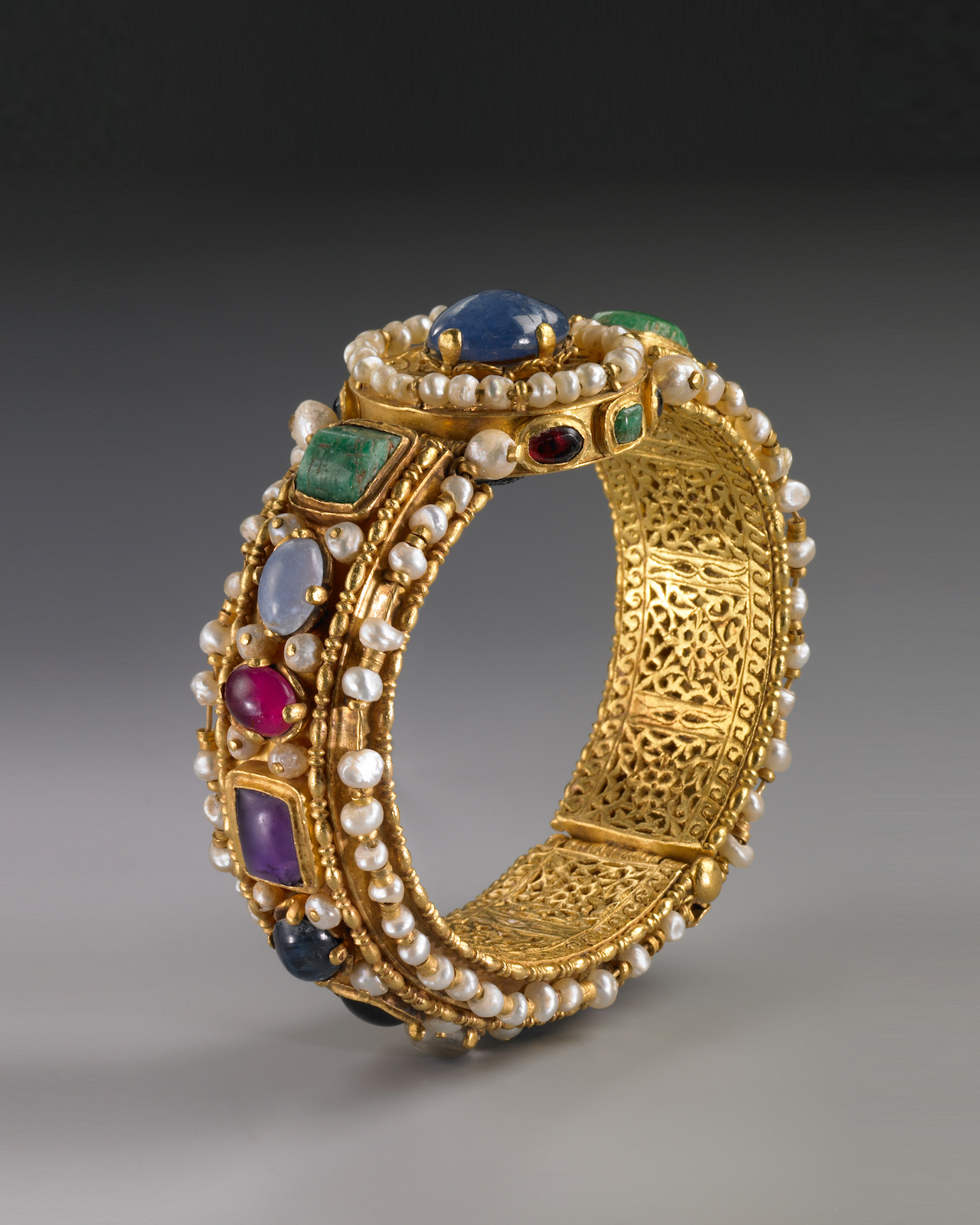
Upon first appearance, these nearly two-thousand year old objects are perhaps disappointingly small, but they reward close inspection. Several pairs of magnifying lenses, thoughtfully supplied by the museum, allow visitors to get in close. Most of these artifacts loosely fall under the umbrella of decorative art, and include pendants, bracelets, broches, rings, earrings, cameos, belts, and other finely crafted jewelry. They’re almost all made of gold and are frequently adorned with precious stones.

Byzantine, Gold Openwork Bracelet Set with Gems and Pearls, 6th century. 10.5 x 9.5 x 4.0 cm; weight: 239.6 g. Private Collection, North America


Most of these artifacts are comparatively small, but all are exquisitely handcrafted. A Byzantine cross-shaped gold pendant is a tour de force, its surface adorned with vegetal patterns and sapphires. The exhibition’s pièce de résistance is a dazzling 6th century bracelet studded with gems and pearls, the sinuous intertwining tracery on its interior anticipating the elaborate 8th century Hiberno-Saxon decorative knotwork later made famous in illuminated manuscripts like the Lindisfarne Gospels and the Book of Kells. An explanatory note on the display case reminds us that these fine works were crafted after the fall of the Roman empire, checking the notion that the dark ages marked a universal cultural decline.

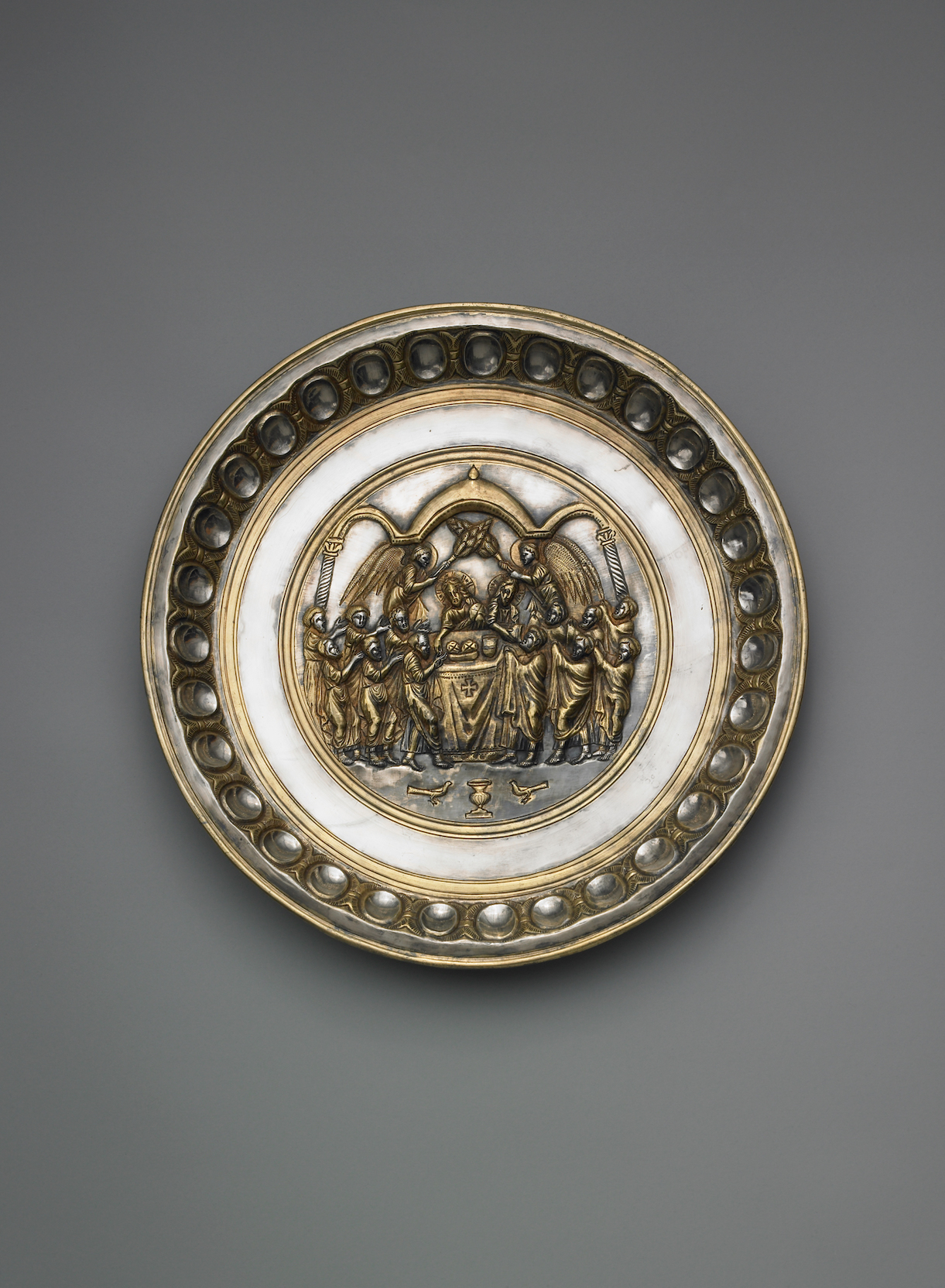
Byzantine, Silver Paten Depicting the Communion of the Apostles, 547–50. Diameter: 40.2 cm; weight: 1813.0 g. Private Collection, North America


Some of these objects are freighted with real historical significance. A small golden bust of the assassinated Emperor Licinius II is a rare image of the emperor that survived his damnatio memoriae (damnation of memory), a posthumous dishonor in which the Roman senate required all images of the disgraced emperor to be destroyed. And a silver patin (a plate used to hold the bread during the celebration of the Eucharist) from the 6th century portrays the earliest known depiction of the Communion of the Apostles.

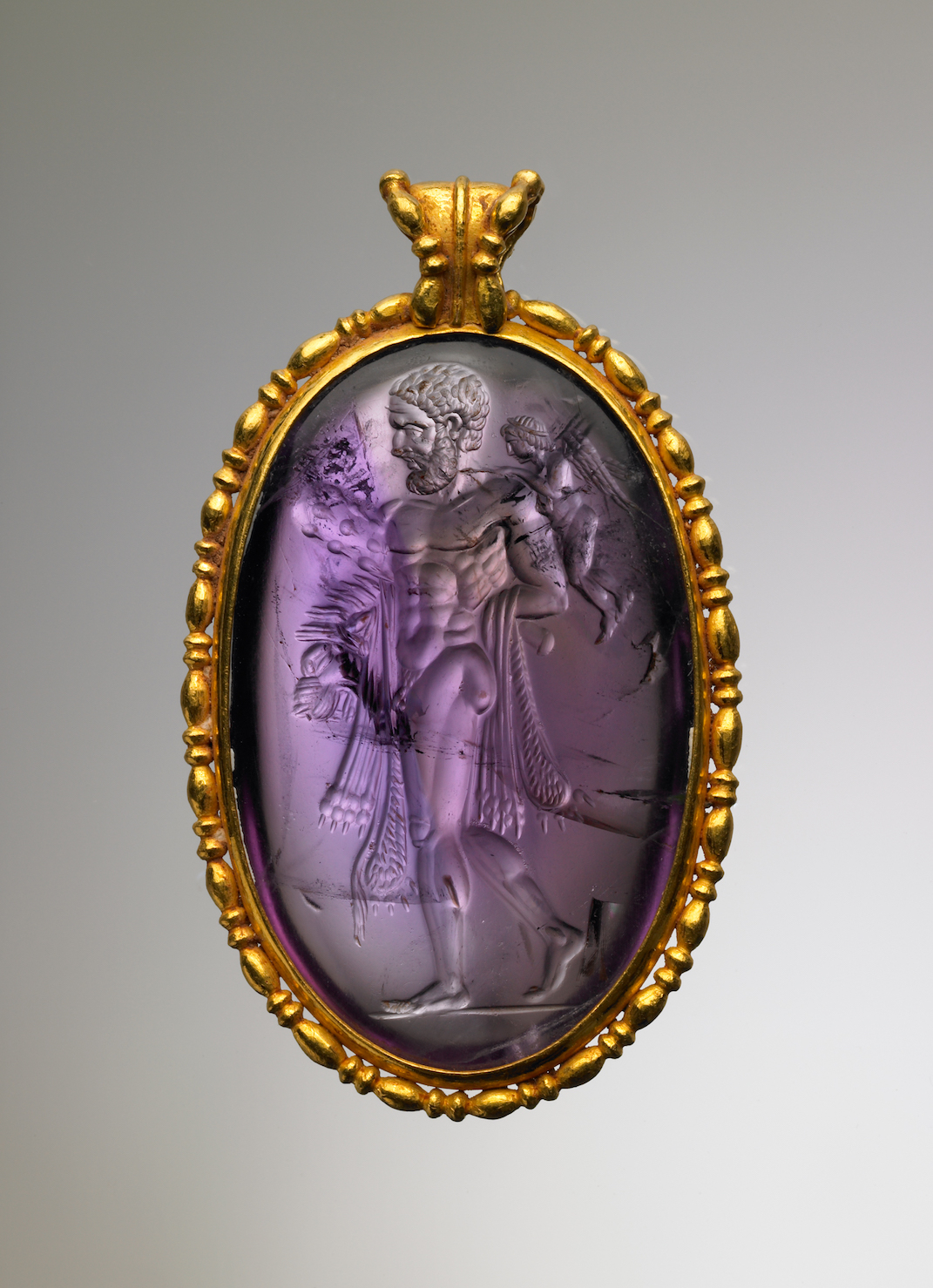
Greek, Amethyst Intaglio Depicting Eros Binding the Arms of Herakles, Set in a Gold Pendant, 2nd Century B.C. 6.5 x 3.8cm; gem: ca. 4.8 x 3.0 cm; weight 39.3 g. Private Collection, North America

Perhaps the biggest surprise of the exhibition is that most of these works, despite the title of the show, are hardly “Christian” as we might expect. There’s an abundance of imperial propaganda, including a handsome silver shield portrait of Rome’s first emperor, Augustus, who more than any other Roman emperor capitalized on art as a means of political persuasion. There’s also an abundance of mythological characters which (in a very literal sense) make cameo appearances– Helios, Eros, Herakles, the Three Graces, and Venus (who also appears in her Greek iteration as Aphrodite). In some of these works we see prototypes for the more explicitly Christian visual culture which would follow. A golden pendant depicting the sun god Helios shows thorny rays of light emanating outward from the deity’s head, a visual precursor of the halo, so ubiquitous in subsequent Christian art.

Glorious Splendor is a small but worthwhile exhibition that hints at the gradual seismic shift in Western visual culture during Christianity’s first few centuries, reminding us that early Christian art didn’t emerge in a vacuum. While the battle of Milvian bridge is understandably viewed in retrospect as a decisive, watershed moment, this exhibition reminds us that the view from the ground was much more nuanced, and offers a rare opportunity to see lucid examples of Christian and Classical visual culture jostling at the crossroads.

Toledo Art Museum  – Through February 18, 2018


Page 59 of 84

Powered by WordPress & Theme by Anders Norén